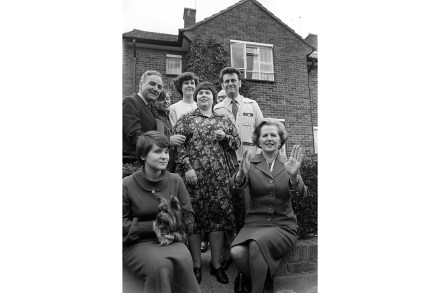
Margaret thatcher

My message to the Trumpists

Social media benefit from creating continuous belligerence in politics. For them, Donald Trump is the perfect politician. As I wrote last week, I think he is doing exciting things and I feel relieved that Kamala Harris lost. But it is impossible to support everything Mr Trump says or does. He never regards himself as bound by what he has previously said, so why should his followers seek to justify each piece of Trumpery? Since his victory in November, I have noticed several otherwise intelligent friends, all of them men, going crazy-culty about the dawning era – defending, for example, the removal of the security detail of Mike Pompeo, John Bolton and Brian Hook, or his pardon for all those convicted in the 6 January riots. It is nasty score-settling.

How Margaret Thatcher’s son went missing in the Sahara

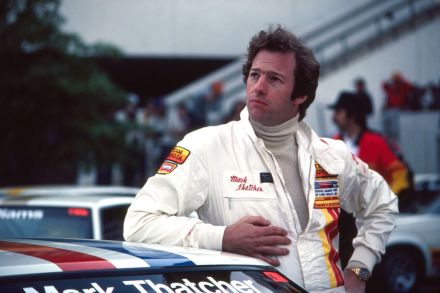
The year was 1982. Prime minister Margaret Thatcher rerouted an RAF Hercules over foreign territory and requested the scrambling of jets and choppers and ground troops. The diplomatic cables burned back and forth. President Ronald Reagan expressed concern. The situation was desperate. This wasn’t the Falklands War – that came a few months later. This, in fact, may have been more emotional for the Iron Lady. Her only son, 29-year-old Mark, had gone missing. A privileged and rather bored young man who’d failed his accountancy exams three times, Mark Thatcher was searching for some meaning in life and caught the motor racing bug.

Does Kemi Badenoch have a plan?

We are nearing the 50th anniversary, next month, of Margaret Thatcher becoming leader of the Conservative party. Only one other woman has ever become leader while the party was in opposition, and that is Kemi Badenoch. Mrs Badenoch is well aware of the strategy her legendary predecessor pursued between becoming leader of the opposition in 1975 and prime minister in 1979, and is sensibly emulating it: a willingness to include rivals in her shadow administration, and to take her time setting out policies (there is, after all, unlikely to be an election before the spring of 2028, by when anything could happen); but to precede the announcement of specific policies by statements of principle, to give a broad idea of what the Conservatives stand for.

Letters: How to argue with Trump voters

Unhealthy debate Sir: Matthew Parris is absolutely right to say that the time has come for facing populists with honest argument (‘In defence of the liberal elite’, 9 November). This call would be all the more persuasive if it were not embedded within the rotten foundations of current lamentable public discourse. Honest argument presupposes the ability to engage with one’s opponents in terms that they would own and recognise: ‘steel-manning’ rather than erecting a flimsy straw man. What Mr Parris, and many others, fail to own is that the concerns of Trump voters, though unpalatably incarnated in Donald Trump himself, are in their essence not only legitimate but good.

How Maggie took her whisky

The whirligig of time brings in his… astonishments. Who would have thought it? Even a couple of decades ago, the notion that the Tory party could be led by a black woman would have seemed incredible. I remember 1975, and the doubts that were expressed about Margaret Thatcher: much louder than any adverse comment about Kemi Badenoch now. There seemed to be a widespread belief that the country was simply not ready for a female PM. When she was PM, she had to be dissuaded from serving English wine in No. 10 I recall a lunch with Barbara Castle not long after the 1979 election. A former street-fighting termagant, she seemed to have eased into post-partisan serenity. When I confessed that I was a Tory, she merely responded with a tut-tutting smile, as if I was an errant grandson.

The SAS explode from the shadows in six days that shook Britain

Ben Macintyre has a knack of distilling impeccably sourced information about clandestine operations into clear, exciting narrative prose. His latest book, about the April 1980 Iranian embassy siege in London, starts as it means to go on – with a snapshot of seven Range Rovers, two Ford Transit vans and two furniture lorries pulling out of Bradbury Lines, the then headquarters of the Special Air Service (SAS) in Hereford. Lying low inside were 45 soldiers and ‘enough weaponry to fight a medium-sized war’. Each man carried a submachine gun, mostly the ‘reliably lethal’ Heckler & Koch MP5, which fires 13 rounds a second, with four 30-round magazines of 9x19mm parabellum bullets.

The trivial details about royalty are what really fascinate us

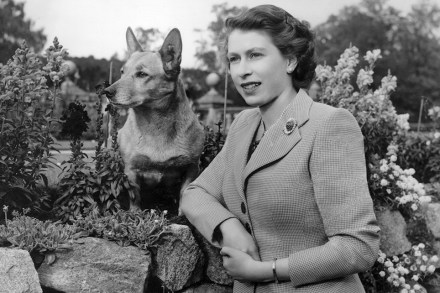
For the moment, can there be anything new to say about Elizabeth II? In time, the archives will open up and more of her correspondence and any of the diary we know she kept will be made available to the public. (I wouldn’t get too excited – no monarch’s diary since Victoria’s has had much to tell us about its writer). But for now you would be forgiven for thinking every scrap has been gone over, every anecdote and every major or minor event in a long life. In an excruciating encounter with HM, Brown told her the plot of The Resistible Rise of Arturo Ui The first published biography of Elizabeth II came out in 1930, when she was four years old. When she died in 2022, she had been constantly written about for almost a century.

I will miss my vote

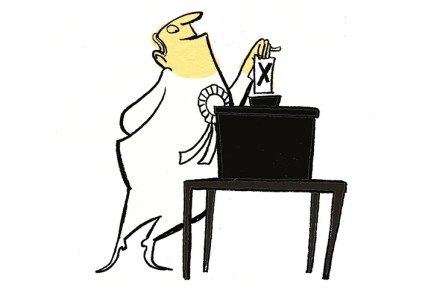
I feel as if I first took part in a general election even before I was born. My father was the Liberal candidate in Tavistock in 1955 and 1959, and although I was alive only for the latter, featured reading Peter Rabbit in his election address, the two weaved into my infant consciousness. At that time, modernity had not reached rural Devon. Noticing that two neighbouring villages had extremely small Liberal clubs, my father proposed they join forces. ‘Oh no,’ he was told, ‘We were on different sides in the war.’ ‘The war?’ he replied. ‘Surely we were all against the Germans?’ ‘No, the Civil War.

The atmosphere of a historic country house cannot be bought

The Historic Houses Association can congratulate itself. This pressure group for country houses, founded in 1973, has proved to be one of the most effective lobbying organisations of our time. When it came into being, the future, according to the architectural historian John Cornforth, was ‘full of gloom’ for the country house. The Destruction of the Country House exhibition of 1974 revealed the extent of the crisis, which had set in a century earlier with the agricultural depression of the 1870s. That was when aristocrats who had previously relied on the income from their estates built their hopes on landing a transatlantic beauty with ‘plenty of tin’. The supply of heiresses dried up in about 1912, just before the first world war.

The costly legacy of Margaret Thatcher’s monetarism

Post-war British economic history is littered with failed policy panaceas. Keynesian demand management would solve the unemployment problem; the Exchange Rate Mechanism would provide an anchor for stability and end sterling’s perennial weakness; the Barber and Kwarteng budgets – separated by 50 years – would throw off the shackles of Treasury orthodoxy and put the country on a path to higher growth. On the face of it, monetarism – the theory that if you control the money supply, you control inflation – fits squarely into this paradigm. As soon as government sought to control the money supply, the historic relationship between money and inflation broke down.

There’s much to be said for nostalgia

Michel Barnier, the chief negotiator for the EU Commission, called Brexit an expression of ‘hope for a return to a powerful global Britain, nostalgia for the past’ – a mood that ‘serves no purpose in politics’. Popular historians have echoed his view of nostalgia as a syndrome which affects declining societies such as Great Britain. The yearning for a happier past got Donald Trump elected and may re-elect him; it breeds xenophobia and locks societies into a doom loop of reruns, remakes and Facebook feeds of photographs from olden times. Or does it? Two new histories of nostalgia are sceptical about how pervasive or dangerous it really is. Agnes Arnold-Forster’s shrewd, digressive book is the more accessible of the two.

Why the fuss over The Spectator’s sale?

This diary is late. Two months late. The columnists who missed my Evening Standard deadlines often had elaborate excuses. Mine is that I’ve been involved in working out who is going to own this magazine. We’ve seen some oddities in this particular drama. Those vehemently opposed to government interference in a free press suddenly calling for government laws to regulate press ownership. Columns from advocates of free trade and open investment in every industry except, it turns out, their own. I don’t doubt some are motivated solely by high principles; but it’s worth asking the question of others: do their high principles happen to accord with their view of who in practice they’d like to see own The Spectator and the Telegraph?

How much does Britain still ‘love’ the NHS?

‘Of course I support the NHS. Everybody supports the NHS, or says they do,’ poked the comedian Frankie Boyle in one of the many campaigns promoting the health service. To admit you don’t believe in this national institution is as taboo as not caring about Britishness, about goodness, about people. The public is keen to find evidence for this collective belief. Nigel Lawson famously said that ‘the NHS is the closest thing the English have to a national religion’ – words which tend to be heard as praise. But his comment was laced with criticism. He continued, ‘with those who practise in it regarding themselves as a priesthood. This made it quite extraordinarily difficult to reform.

Is Gary Neville following in the footsteps of Thatcher – or Trump?

A video loop on the homepage of Gary Neville’s new website shows the ex-Man Utd captain turned businessman, broadcaster and now BBC Dragon’s Den star in various action poses. The clip changes at such speed it’s hard to keep up without becoming nauseous. And that’s the problem with Gary the dynamic middle-aged wannabe politician-tycoon: he makes everyone feel a bit sick. Neville is in the football stand cheering on his team, decked out in an expensive suit fielding questions from an adoring audience and zooming around Manchester in his car. He’s like a luxury watch model but the looks aren’t quite there.  ‘Relentless’ is Neville’s slogan and the name of his lucrative investment business.

Is Margaret Thatcher ultimately to blame for the current social housing crisis?

By the time she was 25, the journalist and broadcaster Kieran Yates had lived in almost as many houses. Having rented for more than a decade, I feel her pain. I’ve lived in flats that made me physically unwell (mould has a lot to answer for) and survived housemates whose approach to kitchen hygiene made every day a salmonella minefield. I would visit a former boyfriend whose bedroom was, essentially, a glorified crawl space in a cold artists’ warehouse. He was 6ft 6in and couldn’t even kneel up in it, but, aged 24, I thought it was cool. Now I see it for what it was: an indictment of London’s rental market, embodied in grey concrete and exposed piping.

What do we think of when we think of Essex?

Apparently much of the notoriety – or perhaps by now it has become allure – of Essex is my fault. In 1990, weeks before Mrs Thatcher was defenestrated, I wrote an article in the Sunday Telegraph called ‘Essex Man’, in circumstances that Tim Burrows describes entirely accurately in this exceptionally well-written and intelligent book. Although the Iron Lady was about to be history, the part of England that had come to exemplify her achievement and her legacy was throbbing with capitalist energy more than ever – which motivated the profile of Essex Man and his hard work and ability to seize opportunities in a society where native ability counted for more than class.

Thatcherism is a cult the Tories should not follow

Friedrich Nietzsche may not be the most fashionable member of the conservative canon, but doubtless he wouldn’t care much. He knew that one of the main symptoms of a civilisation in decline is ‘herd thinking’. Regardless of the victor, this summer’s Conservative leadership contest has been a case in point for Freud’s narcissism of small differences. None of the candidates have dared deviate from the dogma of Thatcherism. Grant Shapps said it loudest: like Thatcher, he would confront union ‘Luddites’ to save an ailing economy. Liz Truss wants to to ‘crack down’ on trade union ‘militants’ by making it harder for them to call strikes.

It’s time for Tory socialism

The Conservative leadership contest has descended into a low-tax auction, which is not a good thing. The implication is that the Conservatives think government should be minuscule at the very moment when private enterprise is letting us down – the energy companies are raking in cash and spending it on stock buybacks – and the state seems to be on its knees. We live in a country where it’s become widely accepted that if you call an ambulance, it won’t show up for several hours; the borders are wide open; social care is under-funded; and the police have ceased investigating certain crimes. If anything, this is a moment to rediscover an older Tory tradition of state-building.

Yours for £45,000, the car that drove Margaret Thatcher into history

‘A new girl drops in at the palace,’ announced the London Evening News on the front page of its ‘election special’ of 4 May 1979. The accompanying image showed a beaming Margaret Thatcher (pre-implant teeth in evidence) waving from the rear seat of a ministerial car, on her way to meet the Queen and receive her official invitation to form a new administration. Another ‘new girl’ (or boy?) might be dropping in at the palace soon – but if he or she wants to do it in the same car, it will cost them.

Solving the mystery of mass almost ruined Peter Higgs’s life

In 1993 William Waldegrave, the science minister, was looking into a project being planned on the continent. Cern, the European research body, was upgrading its particle collider to create what it called the Large Hadron Collider. This underground apparatus ran beneath the French-Swiss border and it was so vast that its diameter equalled that of the Circle Line. Two beams of subatomic particles called protons would be fired around this subterranean loop in opposing directions and smashed together at 99.99 per cent of the speed of light. The scientists’ aim was to prove the existence of a fundamental particle called the Higgs Boson, which they hoped would appear momentarily from the sub-atomic luminescence. Waldegrave grasped the significance of the project.