London

You’re spoiling us: The Ambassadors Clubhouse reviewed

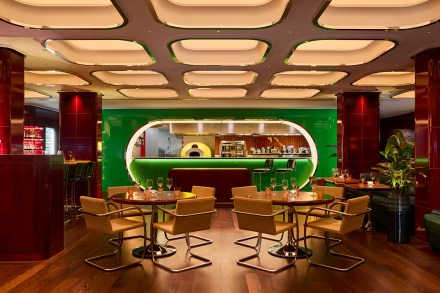
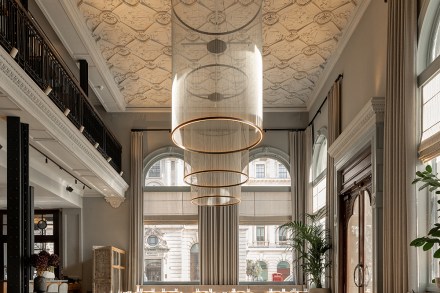
The Ambassadors Clubhouse is on Heddon Street, close to Savile Row and the fictional HQ of Kingsman, which was a kind of privatised MI6. I wonder if the Kingsmen eat here, being clubmen. Heddon Street needs fiction because its reality is one-dimensional. It is an alleyway behind Regent Street, and it used to be interesting. There was an avant-garde café under the Heddon Street Kitchen called The Cave of the Golden Calf. Ziggy Stardust was photographed for his album cover outside No. 23; from Heddon Street you could hear the Beatles play their final concert on the roof of 3 Savile Row in 1969. This is dense, fierce, very sophisticated food and it is all superb But that is over.

An otherworldly London: The Great When, by Alan Moore, reviewed

Is occult knowledge even possible in the age of the internet? If a recondite author obsessed you back in the day, it took hours of fossicking in far-flung dusty bookshops to feed your hunger. Oh, the joys of hunting down a shabby collection of Arthur Machen weirdiana! Now a few keystrokes will do the job. The magic has been lost. Magic is Alan Moore’s business, and he’s also a Machen devotee. The graphic novelist is well known for issuing his illustrators with exceptionally detailed written instructions for series such as The League of Extraordinary Gentlemen and From Hell, which perhaps accounts for the throbbing prose style of this fantasy novel.

The stark, frugal world of Piet Mondrian

In September 1940 the Dutch abstract artist Piet Mondrian arrived in New York, a refugee from war and the London Blitz. He was 68, a well known figure in modern art circles in Europe but as yet little appreciated on the other side of the Atlantic. His visas, his travel and his accommodation had been sorted out for him by well-wishers in Britain and he was welcomed in America by Harry Holtzman, an artist some 40 years his junior. On the evening of his arrival, Holtzman entertained the stiff, fastidious, well-dressed Mondrian to dinner in his apartment and introduced him, via the phonograph, to boogie-woogie. He recalled: Mondrian’s response was immediate, he clapped his hands together with obvious pleasure. He sat in complete absorption to the music, saying, ‘Enormous! Enormous!

Fog, tea and full English breakfasts: Monet and London, at the Courtauld, reviewed

For the maids on the top floors of the Savoy, everything was in turmoil. The 6th had been commandeered by wounded Boer War officers, and since February 1900 a suite of rooms on the 5th had been taken over by a French painter, who was using one as a studio. The officers were nice enough, but the Frenchman spoke almost no English and you could smell the turps down the corridor. Whatever was the management thinking? ‘Without the fog, London wouldn’t be a beautiful city.

Familiar scenarios: Our Evenings, by Alan Hollinghurst, reviewed

There’s a certain pattern to an Alan Hollinghurst novel. A young gay man goes to Oxford. He’s middle class and riddled with suburban self-consciousness – a kind of complicated awareness of his non-posh failings and resulting subtle superiority. He meets another young man – possibly gay – who is posh. An intricate dance ensues of social slip-ups and huge townhouses in Notting Hill, bags of money and country piles. It’s a formula which can be transposed between Edwardian drawing rooms and 1980s parties with only the slightest changes. Sometimes our protagonist is the aristocrat himself; sometimes he even went to Cambridge. He’s always cultured – interested in poetry, theatre and Henry James. Hollinghurst’s fiction was, for a period, radical.

An inedible catastrophe: Julie’s Restaurant reviewed

At Julie’s at the fag end of Saturday lunchtime, Notting Hill beauties are defiantly not eating, and the table is covered with crumbs. Restaurant Ozymandias, I think to myself. This is no longer a district for the perennially wracked, or unrich. The Black Cross – Martin Amis’s ideal pub in London Fields – is now a sushi joint. Of course it is. The omelette is bright yellow and tough, like a hi-viz croissant Julie’s, which is named for its first owner, the interior designer Julie Hodgess, mattered in the 1980s.

Are you Beatles or Stones?

You find me in the south of France, holed up in that inn of near perfection called La Colombe d’Or in St Paul de Vence. I escape here twice a year and marvel at how little has changed since the 1950s, when it was Mecca for artists of all types, painters such as Chagall and Picasso (Matisse was an early fan between the wars) and stars of stage and screen, Brigitte Bardot, Yves Montand, Simone Signoret, all looking breathtakingly cool, smoking of course. One can still catch a glimpse of the fabulous Dame Joan C and her husband Percy sipping ice cold glasses of rosé. It is a place where the living is easy but civilised – not something one can say about London these days. Oh London, what have we done to you? ‘To be tired of London…’ Hmm, sorry Dr J, but that is no longer true.

As good as Noble Rot: Cloth reviewed

Cloth is opposite St Bartholomew the Great on Cloth Fair. People call this place Farringdon, but it isn’t really: it belongs to the teaching hospital and the meat market and William Wallace who died a famous death here and has only a little plaque in turn. Smithfield embraces the dead. Sherlock Holmes met Dr Watson here and, for BBC1, jumped off the roof of the hospital. If Cloth calls itself a ‘neighbourhood wine bar’, which sounds less threatening than ‘restaurant’, its true customers are the dead, and that is no criticism. The chips are marvellous, and this matters. I always judge a restaurant on the chips I am early, so I sit in St Bartholomew the Less – this is how buildings fight!

The SAS explode from the shadows in six days that shook Britain

Ben Macintyre has a knack of distilling impeccably sourced information about clandestine operations into clear, exciting narrative prose. His latest book, about the April 1980 Iranian embassy siege in London, starts as it means to go on – with a snapshot of seven Range Rovers, two Ford Transit vans and two furniture lorries pulling out of Bradbury Lines, the then headquarters of the Special Air Service (SAS) in Hereford. Lying low inside were 45 soldiers and ‘enough weaponry to fight a medium-sized war’. Each man carried a submachine gun, mostly the ‘reliably lethal’ Heckler & Koch MP5, which fires 13 rounds a second, with four 30-round magazines of 9x19mm parabellum bullets.

The deep sorrow of losing a sibling

My sister died last summer, before her time, at 58. Her death has left me shaken with sorrow and remorse: we did not always get on. The other day I accompanied her daughters and husband to scatter her ashes on the Thames at Greenwich in south London where she and I had grown up. The great muddy waterway would take Clare’s ashes out to sea eventually. People like Liz Truss live in Greenwich now, but in my time the inhabitants were Labour-voting bohemian types. Daniel Day-Lewis (a brattish schoolboy) lived down the road from us on Crooms Hill with his poet father Cecil. At Greenwich Theatre opposite, Max Wall performed his anarcho-comic piano sketches on Friday nights. Claire Tomalin was a near neighbour (as was, later, Jonathan Sumption).

I was wrong about staycations

I hadn’t intended to go on a ‘staycation’ this summer. Quite the contrary, I’d booked a family holiday to Norway. Last August, I made the mistake of renting a villa in Majorca and it was so hot it was impossible to do anything, including sleep. So this year I insisted on going north and arranged to borrow a log cabin near Trondheim. The two oldest children were so unimpressed – they loved the nightlife in Majorca – that they refused to come, which was fine by me. The flights were £200 each way and it meant we only had to rent a Fiat Uno instead of a six-seater. One of the legacies of having been a journalist for 40 years is that I’ve done a lot of travel pieces and find it painful to pay for foreign trips out of my own pocket.

A slice of Paris in Crouch End: Bistro Aix reviewed

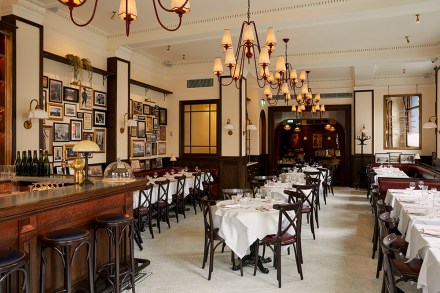
There is a wonderful cognitive dissonance to Bistro Aix. It thinks it is in Paris but it is really in Crouch End, the flatter twin to Muswell Hill, a district so charismatic it had its own serial killer in Dennis Nilsen. (He killed more people in Willesden, but Willesden doesn’t receive its due: here or anywhere.) We pick our way through the Versailles of north London, past Little Waitrose and the clock tower I have never thrived in Paris. My sister says I always go with the wrong men, which is unfair, because it was a school trip and I had no choice about the (very small) men. I prefer the Paris of my imagination, which is quite a lot like Bistro Aix in Crouch End.

A French restaurant Glastonbury would be proud to host: Café Lapérouse reviewed

I am working my way around the restaurants of the Old War Office (OWO), now an acronym and Raffles hotel on Whitehall, because the swiftness with which the great institutions of the state have become leisure opportunities for the wrongfully rich is dark, mesmerising and, if you don’t mind too much anarchy, funny. I have reviewed the cold, painted Saison, and the lively Italian Paper Moon, which a kind reader wrote to say he loved and which I do not expect to survive. It is too joyful and well-priced for the wrongfully rich and their internal landscape of nude cashmere and paranoia. It squeaked through. The transience of the exterior is not mirrored within. The opposite is true Here, now, is Café Lapérouse in the courtyard.

Jeremy King has done it again: The Park, reviewed

The Park is the new restaurant from Jeremy King, and it sits in a golden building to the north of Hyde Park, just off Queensway. This is an interesting district compared with Knightsbridge – it is still capable of reality – but isn’t every-where interesting compared with Knightsbridge? The Park is Art Deco of course: the presiding aesthetic of familiarity, snatched joy and inevitable doom. It looks like an exquisitely appointed cruise ship of the mid-20th century King is a specialist in grand cafés. He opened the Wolseley in Piccadilly and the Delaunay on the Aldwych, though he lost them to his feckless backers in 2022, and has begun again with Arlington by the Ritz, Simpson’s on the Strand, pending, and this. Queensway has a grand café now, and I am pleased for it.

How Margaret Thatcher could have saved London’s skyline

Looking around London on the eve of the millennium, it would have been difficult to think that the UK government had an adviser on architectural design. The 1990s had been a dismal decade. Yet such a body existed in the quaintly named Royal Fine Art Commission, refounded in 1924. The original Commission had been created as a way of giving Prince Albert, recently married to Queen Victoria, something to do – contriving the decorative scheme for the new Palace of Westminster. Fresco, the chosen medium, was not ideal in that damp position beside the Thames since the plaster took three years to dry; and the Duke of Wellington did not help the project by declaring he could not remember having met Blücher on the field of Waterloo, as depicted by Daniel Maclise.

More Mr Pooter than Joe Orton: George Lucas’s gay life in London

In January 1948, George Lucas, an unremarkable 21-year-old Roman Catholic who had just been demobbed from the Pay Corps, was living unhappily in Romford with his ill-matched parents, who relentlessly taunted him about his homosexuality. He would shortly get a job at the War Office and so embark on a lifetime’s career as a civil servant, commuting to central London every day to work at his desk and spend his evenings in search of sex and companionship, largely among the servicemen who hung around Marble Arch. In later life Lucas would trawl the pubs, streets and urinals of central London, more often than not paying for sex, and always keeping a detailed account of his exploits and expenses in his diaries.

Women don’t want women-only clubs

In my experience, men offer this infuriating comeback when challenged about the continuing exclusion of women from clubs such as the Garrick (for now at least – the Garrick is voting on 7 May on the admission of women as members). ‘But why don’t you set up your own women-only clubs,’ they sulk, ‘and leave us alone?’ My interlocutors are often members of not one but multiple men-only clubs. My husband, father and brothers, for example, frequent a combination of White’s, the Beefsteak, Pratt’s (men-only until last year) and the Garrick. Two of my siblings à l’époque graced the Bullingdon at Oxford.

Navalny’s final agony at the Polar Wolf gulag

One winter’s night before the Ukraine war, I was on a train that stopped at a remote station deep in the Russian arctic. It was late November. The mercury stood at 15 degrees below zero – the hard, dry frost of the far north. The train stood silent, wreathed in the coal smoke of the stoves that heated every carriage. The village’s name was Kharp. Though I did not know it at the time, Kharp is home to the FKU IK-3 penal colony, a Soviet-era arctic facility known as Polar Wolf where Alexei Navalny has just died. It was here that the Putin regime, with its rigid deafness to irony, chose to imprison Navalny for his final agony I wanted to catch a glimpse of the Northern Lights, so I pulled on a couple of coats and headed outside.

The pure joy of grandchildren

‘My grandchildren are my world,’ writes a woman on social media, summing up a certain type of grandparent. There are, however, two ways of looking at it and I see many whose worlds revolve around their grandchildren because they have no choice. I used to chat with them at the school gate. If their families were not strictly ‘the rural poor’, they were certainly of the group Theresa May described as ‘just about managing’: both parents had to work and grandparents took up the slack, unless they were still of working age, in which case arrangements were more haphazard. I see many whose worlds revolve around their grandchildren because they have no choice Because I had my last child late, I was as old as some school-gate grandmothers who had become parents when very young.

‘The chocolate soufflé is too good for people’: Pavyllon at the Four Seasons Hotel, reviewed

One in, one out, as Rick says in Casablanca. Le Gavroche, which was the first restaurant in Britain to win three Michelin stars – and this was before Michelin stars indicated poor mental health in gifted chefs – closes in January, which is serious news in the land of London restaurants: a kind of Congress of Vienna with Michel Roux bowing out with the blood of infinite chickens on his knife. I don’t love Le Gavroche the way other critics do but I admire it, even if it means ‘urchin’, which is not witty when you consider its prices. There was a scandal involving staff’s tips going to management – an ongoing obscenity, though this one was resolved – and I also think that if you desire French food you could just go to France. It’s not far, at least in miles.