London

Have I been blacklisted by the binmen?

Monday, and Camden council have yet again failed to empty my food waste bin. They never miss my rubbish or dry recycling – it’s only ever the smelly stuff. I give my neighbour’s brown bin a little kick. Emptied! This feels personal. I call the council. ‘Look, this is a nightmare,’ I say. ‘This is the second week in a row. Are we on a blacklist?’ Pause. ‘Our operatives are too busy to keep lists,’ says the lady. Hang on – you mean if they weren’t so busy, they would?

The supreme conjuror Charles Dickens weaves his magic spell

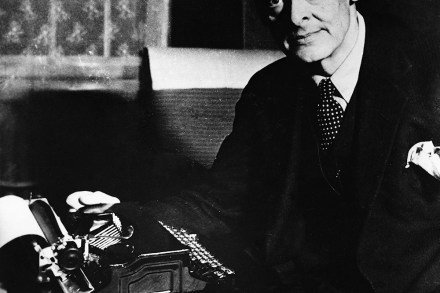
As Charles Dickens lay in his coffin, his will was read out to the assembled mourners. ‘I conjure my friends,’ he sternly instructed them, ‘on no account to make me the subject of any monument, memorial or testimonial whatever.’ It’s an appeal that later generations have studiously ignored, as can be seen in the piles of commemorative merchandise that are available to purchase online. These range from a fully poseable Dickens action figure (‘with quill pen and removable hat’) to a T-shirt featuring his face and the slogan ‘I put the lit in literature’. They can also be seen in the shelfloads of biographies and critical works published every year.

How to get a table at Audley Public House

The Audley Public House is on the corner of North Audley Street and Mount Street in Mayfair, opposite the Purdey gun shop where you can buy a gun and a cashmere cape, because the world has changed. The Audley is a vast pale-pink Victorian castle, and it meets Mayfair in grandeur and prettiness. If the Audley looks like it could puncture you with an ornamental pinnacle, it also seems frosted with sugar – but that is money. This is the tourist Mayfair of the affluent American imagination: the pharmacies and grocers have gone, replaced by fashion (Balmain, Simone Rocha) and the spirit of Paddington Bear. Woody Allen shot Match Point in the Audley, and that is the most normal thing about it now.

Is this London’s most anti-car borough?

In a city at war with the car, there’s plenty of competition. Lambeth has hiked the cost of residents’ parking permits by as much as 400 per cent, Islington has installed wavy kerbs to deter drivers and more than half of Hackney is covered by Low-Traffic Neighbourhoods (LTNs). But Labour-run Hammersmith and Fulham, in west London, must surely have a claim to being London’s most anti-car borough.  Not content with raking in £11.

London needs the Prince Charles cinema

The suggestion that the Prince Charles cinema in London’s West End could be closed down was the least surprising news of the week. This sort of thing, fuelled by soaring property values, has been happening in Soho and its periphery for three decades now and shows no sign of relenting. The Prince Charles isn’t strictly in Soho, being just south of Shaftesbury Avenue, but it has always felt like it belonged there, with the other left field, misfit and seedy enterprises that gave the place its character and reputation. It was built in 1962 but, on the edge of Chinatown, was just too far off the main drag of Leicester Square to ever really thrive. By the 1970s the Prince Charles was mostly screening soft porn: Emmanuelle and later Caligula.

Is a soul the only thing unavailable in Harrods?

The Harrods bookshop, which I browse for masochistic reasons, is mesmerising: an homage to the lure of ownership. The first book I find is called, simply, 150 Houses. Is that enough? Then I find Luxury Trains, the Porsche Book, the Lamborghini Book and the Jaguar Book. Then I find a book designed for a lifelong self-guided tour of the world of James Bond, who is a fictional British civil servant. Then I find books called Dior, Balmain, Prada and Gucci. I didn’t know they did words. I want to tell you that the Harrods bookshop is entirely advertorial for the life I can’t afford, but that would be unfair. Because I also find a copy of Mansfield Park in the same colours as a Minion: custard yellow and bright blue.

In defence of British food

Recently in Spectator Life Rob Crossan laid bare ‘the unpalatable truth about British food’ – namely that it is, er, in some establishments he’s been to, done badly. Leaving aside the fact he’s looking for his fish and chips in the wrong place (outside the M25 it wouldn’t be such a struggle), encountering a few dodgy versions of British fare is not a good reason to sit idly by and allow our culinary heritage to disappear. British food can compete with the world's best – if we allow it to. In many ways we have had to develop a thick skin when it comes to the loss of treasured bastions of food and drink.

Partridges and the slow death of Chelsea

Partridges, purveyor of ‘nice things for the larder’ to the well-heeled, will close the doors of its Chelsea shop for the last time next month. After 53 years of serving SW3 delights such as ox tongue, macadamia nuts and glace cherries, the shop, run by the Shepherd family and in possession of a royal warrant, will soon carve its last slice of wafer-thin mortadella. Its landlord, the Cadogan Estate, has thanked Partridges for helping to ‘make Chelsea so special’. What Cadogan Estates omits to say of course, is that a branch of Whole Foods, that artisan behemoth beloved of American bankers and vegan, coeliac Gen Z-ers, is soon to take its place down the road.

The victory of Instagram over food: Gallery at the Savoy reviewed

The Savoy Hotel is a theatre playing Mean Girls with a hotel attached to it, so you can expect it to both dream and fail. That is a polite way of saying that its new restaurant, Gallery, is not a success, but the Savoy will survive it. Though it didn’t survive the Peasants’ Revolt. It burned down, courtesy of medieval far-leftists who I would suspect were less annoying than modern far--leftists. They could hardly be more so, and I’m sure Geoffrey Chaucer, who wrote some of the Canterbury Tales on this site, would agree.

The unpalatable truth about British food

Last year a friend who lives in Lyon came to visit me in London. It was only her second trip to the UK and she was determined to venture deep into our indigenous food culture. ‘So, where can I get good fish and chips?’ she asked me. Now, if I was a citizen of Vienna and she was asking me where to find really good sachertorte, I suspect I wouldn’t struggle to reel off myriad cafes. If I lived in Athens and was questioned about where to get decent souvlaki, I would probably have a list as long as Hercules’s personal meat skewer. But fish and chips? In London? I could, in all good conscience, recommend only two places in which, during my quarter of a century in the capital, I’ve had a half decent chippie tea.

Not worth its salt: Wingmans reviewed

I see this column as an essay on cultural polarisation: artisanal butter can only take you so far into wisdom. I cower in Covent Garden, mourning Tory romanticism, and stare, cold-eyed in St James’s, at oligarchic mezze. Sometimes I eat by mistake. I couldn’t get into the fashionable noodle place in Soho, whose Instagram-made queue stretched to Cambridge Circus on Saturday night. It reminded me of the crowds at royal weddings: both camp for dreams. So, I went to Wingmans instead.  Wingmans – it lost the apostrophe, it’s a decadent age – calls itself ‘London’s best wings’. They are chicken wings, not angel wings, and this is Pottersville, not Bedford Falls. (Some people think Pottersville is more fun and that may be, but not here. This is not a wonderful life.

The worst hangover in the world

I awoke in the early afternoon of 31 December 1995 face down on the carpeted floor of a mansion house flat in Notting Hill with the worst hangover I have ever had.  It is customary when writing about hangovers to quote the best description of the condition – by Kingsley Amis: ‘A dusty thudding in his head made the scene before him beat like a pulse. His mouth had been used as a latrine by some small creature of the night, and then as its mausoleum. During the night, too, he'd somehow been on a cross-country run and then been expertly beaten up by secret police. He felt bad.’ And there’s also, of course, P.G.

My business predictions for 2025

Headed for ‘the worst of all worlds’ is not where any of us would wish to find ourselves at the start of the new year. But that was the phrase used by the CBI economist Alpesh Paleja to sum up the predictions of member businesses – of reduced hiring and output, rising prices and weak growth. Since that survey, a revision to zero of the official growth figure for the third quarter of 2024 and reports of depressed pre- and post-Christmas consumer spending have provoked even darker whispers of a return to recession. Whence cometh such pessimism? Has it bubbled out of the Tories’ black hole of fiscal shame? Can we blame the Bank of England and the Treasury ‘blob’? Or the rare alignment of planets that’s expected in three weeks’ time?

Something out of a Spectator reader’s dreams: The Guinea Grill reviewed

Back to the past: it’s safer there. There is a themed restaurant dedicated to George VI of all people, near Berkeley Square – a sort of Rainforest Café for monarchists who won’t sink to the Tiltyard Café at Hampton Court. I was looking for a restaurant my husband might like – Brexit, meat, maps of the Empire at its height in colour – and I found the Guinea Grill in Bruton Place. George VI isn’t a vivid monarch. He lived in the shadow of queens – one Mary, two Elizabeths – and on film he is always crying, or dying. In The Crown (Jared Harris, marvellous) he lost his lung. In The King’s Speech (Colin Firth, good, but handsome) he lost his happiness. I like to think George was tougher and less pitiable than the chronicles suggest.

Goodbye, Earl’s Court

Earl’s Court as I first remember it was where Australian travellers found a cheap bed for the night. It was also the place to go for beers with unfamiliar labels, and bags of kiwi fruit, a rare delicacy in the 1980s. And at a time when Neighbours was riding high in the TV ratings there was fun to be had eavesdropping on conversations littered with ‘fair dinkum’ and ‘strewth’. There are some troubling details: skyscrapers being built in a largely low-rise Victorian neighbourhood and the way streets at the perimeter of the site will be overlooked and overshadowed  Older generations will remember earlier waves of immigrants. There were the Polish soldiers who were resettled there after the second world war and set up shops, cafes and clubs.

Ideal for winter: The Dover reviewed

For British people, America is an idea brought by cinema, and The Dover, the New York Italian bar and restaurant in Mayfair, meets a version of it. It’s not quite the ballroom in Some Like It Hot, not quite Rick’s Café in Casablanca, but it’s as close as you will find near Green Park Underground, and that has a charm to it, because Americans can speak. It’s from Martin Kuczmarski, formerly of the once preening, now ragged Soho House. He has named his company Difficult Name. There’s a message there, and a story, and it made a glorious restaurant with the tagline ‘A good place to be since 2023’.

The Swedish model: Ikea’s restaurant puts others to shame

Ikea has opened its first high-street restaurant in the UK. There's not a flat-pack in sight – but a hotdog is 85p and a children’s pasta dish with tomato sauce (plus soft drink and piece of fruit) is 95p. A nine-piece full English will set you back £3.75, while a serving of their famous meatballs (with mash, peas, cream sauce and lingonberry jam) is £5.50. Vegetarians are amply catered for. It’s open 12 hours a day (and that may be extended further to enable dinner). There’s free wifi and somewhere to charge your phone. Even better, there is no music. It’s not pretending to be anything it isn’t.

A light in the darkness: Home Kitchen reviewed

Home Kitchen is in Primrose Hill, another piece of fantasy London, home to the late Martin Amis and Paddington Bear. It is a measure of the times that Elizabeth II had no literary chronicler – no Amis, no Proust for her – but was, almost against her will, given Paddington Bear instead. When I saw the small bear at her memorials, I thought: is that her genre? Infants’ fiction? Couldn’t she do better? The question that follows is, of course: would they have eaten together at Home Kitchen? The barley is doughty, fragrant and from the earth.

The appalling truth about London’s ambulance service

‘An old lady’s fallen down – quick! She’s bleeding. Come help.’ An elderly woman lay on the entrance steps of the block of mansion flats, food from a Tesco bag spilled around her, blood spreading on the stone. It was clear she’d tripped and banged her forehead, opening a large gash over her right eye. The courier had already tried to call an ambulance, but been put on hold. He had to continue his delivery run, so he’d begun ringing doorbells to summon assistance. The lady was groggy but awake. I asked her name – Daphne. I helped her sit up, slowly, and propped her against the doorway’s cold brickwork. Checking she wouldn’t keel over, I ran inside for a box of tissues. We wadded up handfuls and pressed them on the wound to staunch the bleeding.

Gen Z love ecstatic dance. Would I?

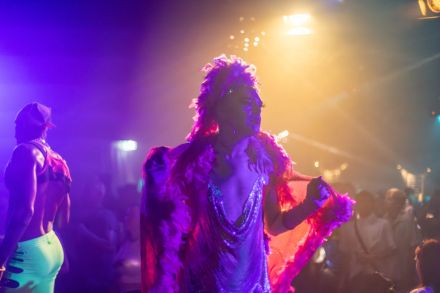
Two months ago I moved to London and found it a disorientating experience. Most of my friends were already settled when I got here, and I found myself overwhelmed, isolated and always on the wrong Circle line train. Everyone seemed to have their ‘thing’; something they belonged to. What was mine? I tried a 5 a.m. run club. It was horrendous. I tried the East London conceptual art scene, but couldn’t keep a straight face. Then one Friday night I found myself in church, but not for a prayer service. This church was deconsecrated, converted and the activity that evening was something called ‘ecstatic dance’. Yet the setting was appropriate because, as I discovered, for wellness-obsessed millennials and Gen Zers, ecstatic dance is a sort of religion.