London

Inside the recharged Battersea Power Station

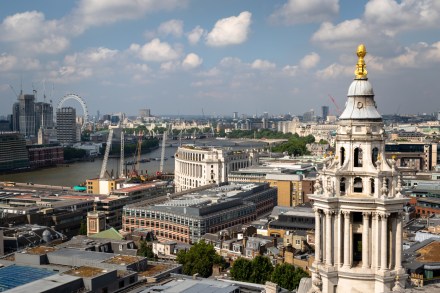
At its peak, Battersea Power Station supplied a fifth of London’s electricity, including to Buckingham Palace and parliament. Today, the most electric thing about it is the virtual reality gaming venue on site. Times have changed – but the reopening of the power station allows us to rediscover one of our finest pieces of industrial heritage and to take stock of the neighbourhood's £9 billion makeover. The iconic Grade II*-listed building was decommissioned and shut down in 1983. Over the past ten years, in Europe's largest urban regeneration project, it has been restored and repurposed. The project reaches its climax today when the power station reopens as a residential, retail and hospitality development.

Lost property: where have London’s overseas buyers gone?

It has been almost a decade since the first apartments at Battersea Power Station went on sale. Such was the excitement about its redevelopment that buyers queued in the chilly dawn for the chance to pick up a £343,000 studio flat or a £6 million penthouse. Most were from overseas, and in four days in January 2013 they collectively spent £600 million. These kinds of scenes are something London’s housebuilders and estate agents can today only dream of. Although we have moved on from worst ravages of the pandemic, and traveller numbers are very much in recovery, many foreign property buyers – for years the mainstay of prime London’s property market – remain missing in action.

What a greasy spoon in West London tells us about the threat of nuclear war

All-day diners feasting on the full English, the cheese omelette or the celebrated sausage sandwich (£3.80) at George’s Café, at 36 Blythe Road, Hammersmith, probably don’t realise they are dining at an address which is pivotal in global cultural history. So pivotal, in fact, that it might just tell us whether human civilisation is about to be extinguished in a nuclear holocaust. A claim like that needs fleshing out. Here it is.

The return of the speakeasy

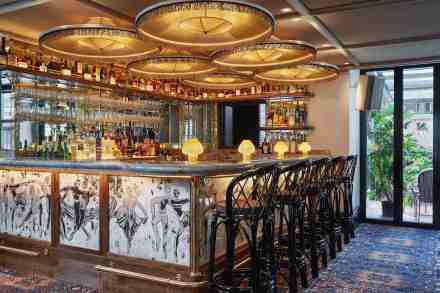
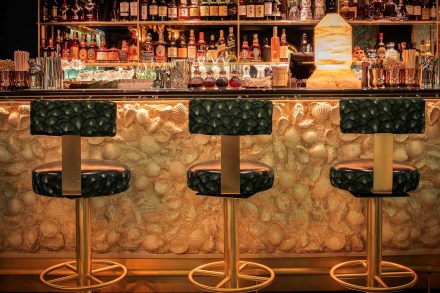
A global pandemic, a booming stock market giving way to painful economic shock, a technological revolution… there are many parallels to be drawn between the 1920s and the 2020s. But if you look very closely, you might find there is another thread linking the two eras: the rise of the speakeasy. These clandestine drinking holes rose to prominence during America’s Prohibition era (1920-33). Following the hardships of the first world war, speakeasies provided a sense of raucous escapism – where jazz music boomed and genders and races mixed freely.The same search for escapism (and nostalgia) is what draws drinkers to them today, says Marco Matesi, bar manager of Downstairs at The Dilly, one of London’s newest speakeasies.

Sadiq Khan’s strange stabbing statement

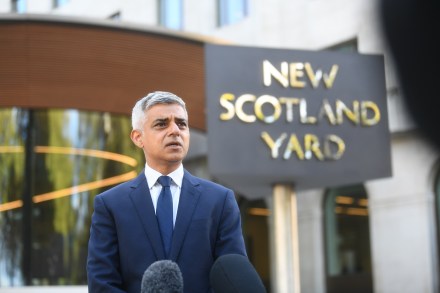
What an odd thing Sadiq Khan said following this morning’s stabbings in central London. Shortly before 10 a.m., three people were attacked by a man on a bike in Bishopsgate. The criminal is still at large, according to the Telegraph. This horrifying incident was no surprise to Londoners, so you would think that the Mayor would – from experience – strike the right chord. Instead, Khan had this to say: The good news is, it’s not a terror attack. And another piece of good news is the three victims of the stabbing are not in life-threatening situations, thank God. But it’s just a reminder of the dangers of carrying a knife… Where was the Mayor while the carnage was unfolding?

The secrets of London by postcode: W (West)

It’s the area that unites James Bond, Rick Wakeman and both Queen Elizabeths. In the first of our series looking at the quirky history and fascinating trivia of London’s postcode areas, we explore the delights to be found in W (West) – everything from fake houses to shaky newsreaders to dukes who are women… The BBC News TV studios are mounted on enormous steel springs to prevent the damage that would otherwise be caused by the Bakerloo line, which runs underneath Portland Place, right down the side of New Broadcasting House. Can’t have vibrations from the Tube trains sending Huw Edwards all wobbly, can we? The same problem was faced by the radio studios that used to occupy the basement – you would occasionally hear the trains on air.

What the weak pound means for London property

Having written recently about how Prime Central London is enjoying a time in the sun after almost a decade in the doldrums, buying a property there just got even more tempting – if, that is, you’re spending dollars. And 66 countries worldwide are linked to the currency and affected by fluctuations in its value. A property in Kensington and Chelsea will now cost dollar-based buyers two-thirds of what it would have cost them in 2014 Over more than four decades it’s been clear that the fortunes of PCL are affected more by geopolitical events and exchange rates than by domestic interest rates. Any global ‘black swan’ event – such as the removal of the Shah of Iran, the introduction of the euro, the LTCM collapse – has had an effect.

Neon signs have a curious power

In a corner of St Pancras station, Tracey Emin is always turned on. ‘I want my time with you’, a neon sculpture by the artist, has been on show here since 2018. It was part of the ‘annual’ Terrace Wires public arts programme, in which a new work is commissioned every year to hang from the station’s roof; but the pandemic distended time, and Emin’s words have stayed put. Though a new commission was unveiled yesterday, an installation by Shezad Dawood, that hangs on different wires, elsewhere in the terminus. Assembled from bright pink tubes, and shaped like Emin’s looping script, ‘I want my time with you’ looms over the grand Victorian concourse that sends the Eurostar to the continent.

The enduring appeal of Arnos Grove station

It's not in Whitehall nor Westminster; not on the central London tourist trail. Instead it’s ten miles away, on the wrong side of the North Circular, an obscurity in the suburbs, rarely visited for its own sake. But Arnos Grove Tube station is one of the masterpieces of 20th century British architecture – and this week it celebrates its 90th anniversary. Until September 1932, the northern branch of the Piccadilly line ended at Finsbury Park. Then five new stations were built: Manor House, Turnpike Lane, Wood Green, Bounds Green and, finally, Arnos Grove, all commissioned by Frank Pick and designed by Charles Holden. Suddenly it was only 20 minutes to Leicester Square.

Why the global elite are buying London property again

If you’re looking for a bellwether for the world economy, you could do worse than consider what’s happening at the very highest end of London’s property market. Over several decades, Prime Central London – or PCL – had become a repository for cash from wealthy foreigners, whether they actually wanted to live there or not. This had several side effects – namely that PCL became mostly lined with empty properties and prices went into ‘trophy’ mode. This is a world controlled by a cabal of high-end agents operating completely off the grid Then Brexit appeared on the horizon, and for some time rich international buyers avoided London out of fear of complications that might arise from being outside the EU.

Try them while you can: London’s best pop-up restaurants

There’s something quite delicious about a deadline. The prospect that if you don’t book now you might never get to try the dish of the moment is enough to pull in queues and queues of customers. But in most cases the attraction of a pop-up eatery is not solely hype. Some of these temporary dining rooms offer the chance to sample the oeuvres of up-and-coming chefs – often those at the cutting edge of cuisine but without the resources for a permanent gig yet. Others give seasoned chefs an opportunity to test new concepts outside the constraints of an established space. Plenty of pop-ups have popped up in London this year as rising costs and post-Covid uncertainty deter some chefs from opening permanent locations.

How to survive the queue for the Queen’s lying-in-state

The news that mourners may have to line up for 35 hours to pay their respects to the late Queen has made headlines – and unsurprisingly so. They say we Brits love queueing, but surely that love affair has its limits.  Elizabeth II's lying-in-state in Westminster Hall is open to the public 24 hours a day, from 5 p.m. today until 6.30 a.m. on Monday. Last night Whitehall released the details of the military-style logistics operation that they hope will see the event run as smoothly as possible – with more than 300,000 mourners expected to form a five-mile human line stretching from SW1 along the South Bank and past HMS Belfast into the borough of Southwark.  https://www.youtube.com/watch?

london

Cockburn’s letter from London

From our US edition

Following the death of Queen Elizabeth II last week, every national TV network in America dispatched crack squads of producers to London to cover the aftermath. Staff shortages meant that The Spectator opted to send Cockburn over on an economy flight, although he bets that if it was anyone else, they’d be flying classy. After Cockburn got over the screaming kids and bad liquor on his JetBlue plane, he decided to start at Buckingham Palace. This was, in hindsight, a huge mistake. In fact, Cockburn would go as far to say that the British royal family’s HQ is host to a cabal of the worst humans on earth. Loud, crying Americans, British oiks taking smiling selfies, Instagram moms laying flowers down seven times to make sure that their dutiful camera man got the best angle of their ass.

Welcome to Herne Hell, Boris

When I lived in north London as a postgraduate student, my flatmates amused themselves by shouting abusive names at the then member for Henley as he cycled past on his way to the Commons from his house in Islington. But judging by the reaction from my old neighbours in Herne Hill, Boris Johnson is likely to receive an even less affable greeting there. The erstwhile prime minister and his wife have reportedly bought a five-bedroom home in Herne Hill, the leafy liberal, left-leaning pocket of south-east London where I lived for almost 20 years before moving to Norfolk last summer.

What Soho House has got right: Electric Diner reviewed

Electric Diner is from the Soho House group, which has done terrible things to private clubs, luckless farmhouses, domestic interior design and even its own restaurants. The Ned, its City hotel with ten restaurants, is genuinely insane, like Thorpe Park for people who are scared of roller-coasters; and no restaurant for adults should sell fishfinger sandwiches, even at Babington House, a Soho House hotel which is Clown Town for grown-ups but near trees. But Electric Diner is much finer: the sort of restaurant that attacks its parent with a spade, like Oedipus.

The mathematical formula that proves London is over

Some years ago, an Australian neurologist was in the habit of walking barefoot across his lawn. This being Australia, the lawn was slightly prickly, and the experience was painful but not intolerable; until one day, when one of the pricks in his heel was more pronounced than usual. He had been bitten by a snake and, again this being Australia, the snake was highly venomous. Doctors saved his leg and he made a complete recovery. But there was one lasting side-effect: he now found walking across his lawn agonising. In terms of the stimulus to his feet, nothing had changed. What had changed was how his brain processed the stimulus. What was once a mildly aversive discomfort was amplified by a learned fear into something much more painful.

London’s best tasting menus

Once the preserve of only the fanciest of fancy restaurants, the tasting menu has come into its own post-pandemic. Set menus make economic sense for cost-cutting restaurateurs and their harried staff, of course – but customers benefit too, with no nasty surprises or bust-ups when the bill arrives. And for those of us who suffer from perennial food envy, tasting menus remove the gut-wrenching anxiety of having to choose between the 'succulent hand-glazed cod' and the 'succulently foraged kobe beef' – both it is. But pairing multiple dishes with distinctive wines and then placing them in some kind of coherent order takes real skill – so who does it best?

How to join the Greenwich set

The steamy Netflix period drama Bridgerton might not immediately put you in mind of the Tory inner circle. (Liz Truss for one has professed to be fan of grittier TV dramas such as Scandi crime thriller The Bridge.) Yet the two have some common ground – and it can be found in Greenwich, south-east London. Forget the Notting Hill set of the Cameron era and the Islington mafia of the Blair years. It seems that a verdant corner of the (Labour) royal borough has turned blue, with Truss, potential chancellor-in-waiting Kwasi Kwarteng and former Brexit minister Lord Frost (now tipped to head up the Cabinet Office) all living in the period streets of West Greenwich – where Bridgerton has been filming on their Regency doorsteps.

Why George Orwell’s ‘perfect pub’ deserves to be saved

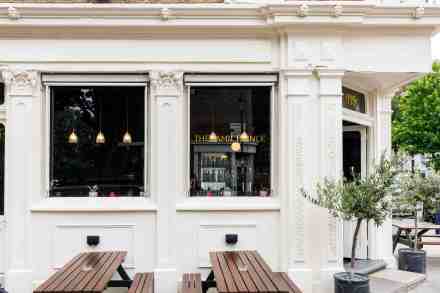
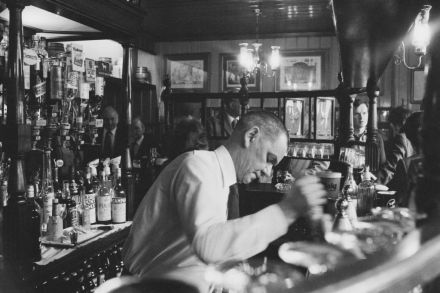
Eleven days after turning 45, I sent my first ever letter of complaint to the council. A real coming of (middle) age. The topic of my complaint? My local pub. I followed the British protocol for complaining – I made it clear I’m ‘dismayed’ and ‘appalled’ and hope people can ‘see sense’ – about an issue that has instilled such rage in me that a stiff drink is required. You see, my local, the Compton Arms in Islington, north London, is under threat of closure. This is no ordinary pub. Tucked away from the busy stretch of Upper Street, on a picture-perfect back road, is an establishment that has been serving the public since the 16th century, open near continuously since the 1800s.

Among the best puddings I’ve ever eaten: Richoux reviewed

Cakeism is offering the voters everything they desire, knowing you will never give it to them because you live in a haunted mirror in which the only thing that matters is your survival. This duplicity is important to understand, because the road from Cicero to Caesar is so short it may lack potholes. Cake is less urgent, but at least cake won’t lie to you. And here is Richoux, still filled with cake, if you can afford it. It is, for many people, marvellous and theoretical cake. Richoux was a cake shop on Piccadilly – a street I can never eat in without thinking of Alexander Litvinenko sitting, doomed, in Itsu, when it still pleased Vladimir Putin to kill people individually – for so long it was forgotten. It is 113 years old, or one seventh of Yoda.