Ireland

It’s pointless arguing with an Irishman

‘Why are those pipes sticking out of the wall like that?’ said the bathroom fitter, surveying the work the plumber had done. He stood musing over the way the tubing poked through a stud wall at an upwards angle so you couldn’t attach it to a sink unless you bent it round and then he said: ‘Hmm, they do sometimes do that here. I’m sure it will be fine.’ The bathroom fitter is English, the plumber Irish. Who’s to say which one of them is right when it comes to the exact angle that new pipes ought to come through a wall?

If you hate the Irish, you’ll adore this play

Faith Healer is a classic Oirish wrist-slasher about three sponging half-wits caught in a downward spiral of penury, booze, squalor, sexual repression, bad healthcare, murderous violence and non-stop drizzle. The mood of grinding despair never lets up for a second as the healer, Frank Hardy, along with his moaning wife and their Cockney sidekick, motors around the British Isles trying to cadge pennies from cripples in exchange for bogus cures. Every cliché in the rich thesaurus of Celtic misery is brought together in this rancid melodrama about mob justice.

Irish voters have refused to erase the family

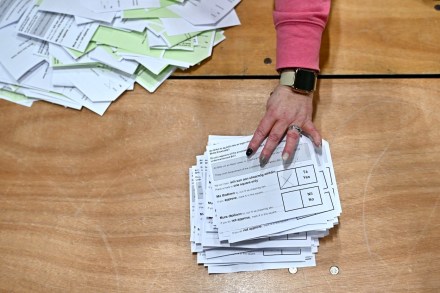
It’s not been a particularly good weekend for the political establishment in Ireland. Two constitutional changes have been rejected by the electorate, despite being backed by all the mainstream parties – Fianna Fail, Fine Gael, Labour, Greens, Sinn Fein – plus the usual pundits and something called the National Women’s Council (a quango which is meant to represent women but somehow doesn’t). The state broadcaster, RTE, which finds itself in a similar position to the BBC after the Brexit vote, is curiously subdued about the outcome.

Why won’t Tesco bank let me change my address?

‘Thanks for calling Tesco bank,’ said the voice, before rather lavishly promising to get me to a member of the team who was going to help me. This wasn’t quite how it turned out, although I would say, up until the moment I asked to change my address I was a very satisfied customer. If any of these questions did not suit me, I would be allowed to object, he said, as though reading me my rights This credit card has a very reasonable interest rate, and a nice big limit. However, it has decided that I do not have the security clearance to change my address because I have never logged into its website. I haven’t felt the urge to. I pay by direct debit and receive a letter each month which is perfectly adequate.

How to do St. Patrick’s Day like an Irish American

From our US edition

For a country like Ireland, as devoted to its faith as to a good party, the fact that St. Patrick’s Day falls during Lent poses a problem. The saint himself is said to have broken his fast during Lent, eating meat instead of fish, for which he was so apologetic that an angel came to give him comfort. Put your meat into a dish of water, the angel said, and it will turn to fish. This Patrick did and was very pleased to see that the angel was right. The meat had turned to fish, and he could partake of it without guilt. The Irish call this miracle “St. Patrick’s Fish,” and feel no qualms about eating a pork roast to celebrate the day. You can also keep a holy day and drink to excess, if you’re drinking for the right reasons. St.

St. Patrick's

Ireland is falling out of love with Sinn Fein

Is the Sinn Fein star starting to wane? Support for the party has hit its lowest level for four years according to a poll for the influential Business Post newspaper. While Sinn Fein still remains the most popular party in the Republic, it has dropped seven points since October 2023. Sinn Fein can only be all things to all people for so long A reason for the loss of support has been its prevarication around the question of immigration; riots gripped Dublin in late November after an attack by an Algerian man on three children in the heart of the city. Since then, the so-called ‘land of a thousand welcomes’ has grappled with arson attacks on asylum seeker hotels and seen the government reduce welfare benefits and accommodation for Ukrainian refugees.

Have I cursed myself by drinking holy water?

The mountain spring that feeds our house froze during the first ground frost, and we had no water. The builder boyfriend filled a bucket from the fountain in the garden so we could flush the loo. This really is living in faded grandeur. I spent the evening worrying about how we had cursed ourselves by drinking and bathing in holy water We are waiting on various tradesmen to turn up and do things to the plumbing in our run-down Georgian pile. We know we might have to drop a bore hole. But until then the water coming out of our taps is from a ‘holy well’. The stream pools into a grotto on the lane, a shrine with rocks around it that occasionally attracts a pilgrim who comes with a bottle and fills it from the waters.

Is it really un-Christian to listen to social media gossip?

‘Let’s get out of here,’ I whispered, almost in tears, as the priest finished his horrible homily. Standing at the altar in front of a stained-glass window showing Jesus with his arms outstretched, this priest was telling us all off for what had happened in Dublin, three hours’ drive away. I suppose we expected a bit of a lecture, going by the speeches about Palestine that we had been subjected to in previous weeks. We did so want to fit in by going to Mass, which had been noted by our Irish neighbours as a good thing. The priest told us how un-Christian we were being for listening to social media gossip But this was too much. We couldn’t be doing with an extended political manifesto extolling the virtues of Leo Varadkar and open borders on a Sunday morning.

I’m taking on the Hilton through its breakfast buffet

‘Have you ever eaten breakfast at the Hilton before?’ shouted the woman on the door of the restaurant, as a guest attempted to gain entry. She told me I could help myself to coffee and I said I would, because I had As he mumbled something, she shouted: ‘And how are you this morning?’ He mumbled something else, and looked scared. I was already sitting down, having dodged the Cerberus of the breakfast bar because, when I entered, she had been marching around the diners shouting, ‘Anything else? More coffee? No?’ and I managed to help myself to what I wanted from the buffet and choose a table. This did not go down well. When she worked out that I had breached her barriers, she marched up and shouted: ‘Room number!

What happened in Dublin?

11 min listen

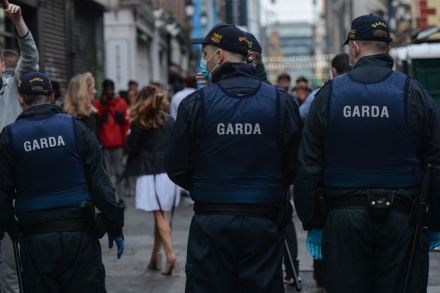
There were riots in Dublin last night. Looters smashed shops, and burnt police cars in a night of unrest in the capital of Ireland. What provoked the angry crowd, and should the police have done a better job at stopping them? Max Jeffery speaks to Katy Balls and Pat Leahy, political editor of the Irish Times.

My battle to get hold of the good stuff

In the pitch dark, we stormed from the house to the pick-up truck and screeched out of our farmyard with me shouting: ‘Come on! This is our only chance! If we don’t get there now we’re done for!’ ‘They won’t sell to us because we’re English. It’s like those stories you hear about idiots who move to Wales’ It was nearly 10 p.m. and I had just scored something on the phone so elusive on this remote hillside that I was physically itching from the desperation of trying to get it. The dealer concerned had answered his phone after I had rung him repeatedly, on the hour every hour, like a stalker. When it came to it, I burst into tears. ‘I’m desperate,’ I sobbed. ‘Please help me.

No laughing matter: accusations of transphobia wrecked Graham Linehan’s life

Graham Linehan is an unlikely political campaigner, but in 2018 the sit-com writer embarked on a second career in what is possibly the most contentious and vitriolic arena of our time. According to Linehan, he was fighting for women and children, but his advocacy has cost him dear. Accused by his opponents of transphobia, he has found himself out of work and out of his marriage. Jobs began falling away, and a tour to Australia to teach comedy was cancelled In Tough Crowd, he tells the story of how he ‘made and lost a career in comedy’. It’s a tough read – a man who once made so many people laugh saw his career come to a ‘screeching halt’. Love him or loathe him, he is undeniably forthright and unapologetic.

I have moved into a house in Ireland I viewed once, then bought

With families chatting in the seats around me, a young girl knitting across the aisle, I gripped the arm rests. I’m not a good sailor, so as I stared out at a flat calm sea, I went through a version of the same ritual I do when I’m on a plane: I figured that if I never took my eyes off what was beneath me and ahead of me, that would make it safe. I texted the builder boyfriend, a keen yachtsman, to say I did not understand how anyone could go on a cruise. All that sea for miles. What was there to look at? I drove in a dream alongside my own land, looking to the right of me thinking: ‘All this!’ To my utter astonishment, a circle appeared in the water just beneath my window and a head popped out. Somehow, I was seeing a dolphin by accident.

The nuance of Kenya

On Remembrance Sunday in Nairobi nearly a decade ago, an ancient Kenyan veteran told Sam Mattock, a British ex-cavalry officer, that he had lost his second world war service medals. Could Sam help replace them? In a culmination of Sam’s personal efforts, King Charles III, on his visit to Kenya with Queen Camilla next week, will present medals to four veterans who fought for the empire in North Africa, Madagascar and Burma. The youngest of them, Kefa Chagira and Ezekiel Anyange, are 99. John Kavai is 101 and the eldest, Samweli Mburia, is 117 and served as a corporal in Burma. One hundred thousand African troops fought the Japanese in Burma’s jungle, in a theatre that became known as the Forgotten War.

Why did this brilliant Irish artist fall off the radar? 

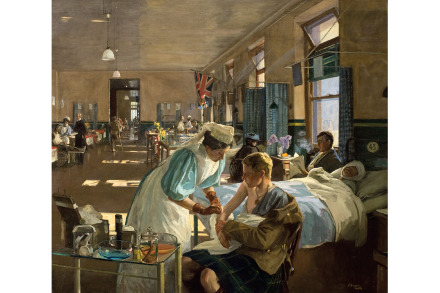
Sir John Lavery has always had a place in Irish affections. His depiction of his wife, Hazel, as the mythical figure of Cathleen ni Houlihan, which appeared on the old ten shilling and subsequently on the watermark of the Irish pound notes, meant, as the joke went, that every Irishman kept her close to his heart. He was indeed Irish – born in Belfast – but was at home in Scotland, and was the best known of the spirited group of painters called the Glasgow Boys. Yet he lived most of his life in London, was friends with Winston Churchill (they took a painting trip together) and also with Michael Collins, the Irish Nationalist, with whom Hazel was, ahem, close. If ever there were a man who embodied the interconnectedness of Britain and Ireland, it was Lavery.

The miracle of The Miracle Club is that it does, I promise, end

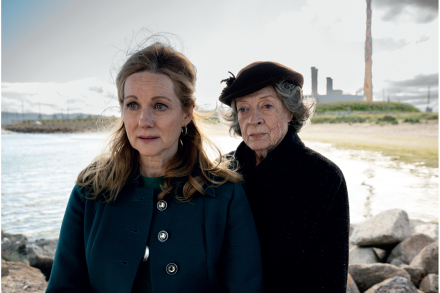
The Miracle Club, which is about a group of Irish women who travel to Lourdes, has a magnificent cast – Maggie Smith, Kathy Bates, Laura Linney – and it inspired me to pray. ‘Dear God,’ I found myself praying mid-way through, ‘let this be over soon.’ The film’s stars make it just about watchable but it’s still a disappointingly trite and shopworn affair. It’s as if three thoroughbreds have been entered in the local donkey derby. It inspired me to pray. ‘Dear God,’ I found myself praying, ‘let this be over soon.’ It is written by Jimmy Smallhorne, Timothy Prager and Joshua D. Maurer, and directed by Thaddeus O’Sullivan.

Seamus Heaney’s letters confirm that he really was as nice as he seemed

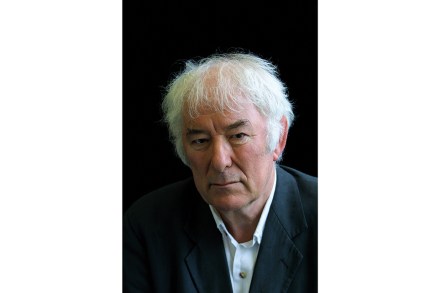
Seamus Heaney wrote letters everywhere – waiting for his car to be repaired at a country garage, sitting over a glass or more of Paddy late at night, and above all in aeroplanes, ‘pacing the pages against the pilot as he takes us in to Heathrow or Shannon’, as he wrote to a friend in 1995. So many eloquent missives were dashed off at high altitude that his editor suggests he might have had notepaper printed with the heading ‘EI 117’, the Aer Lingus flight between Dublin and Washington DC. This airborne activity is significant because it indicates two characteristics illuminated by Christopher Reid’s riveting collection: the pressures of life lived at an exceptional pitch of fame, and Heaney’s powerful need to keep faith with friends and fellow poets.

Small but perfect: So Late in the Day by Claire Keegan reviewed

In an email from Claire Keegan’s Fiction Clinic, I learned that she’d be delivering three seminars in Wexford on ‘How Fiction Works’, while down the road, at the Write by the Sea Festival, Faber would be launching her new hardback. I was excited. I’m a Keegan fan. I even considered going to Wexford. Keegan’s method is to take a big issue and then put a small, homely example under the microscope So I was a little miffed when the hardback turned out to be a large-print 47-page story. Faber has been publishing short stories in small pleasing paperbacks, modestly priced (£3.50) for years. It did Keegan’s The Forester’s Daughter in this way. Usually the stories are not new but reprints from larger collections. Well, maybe new equals hardback equals £8.99. Phooey!

A potent seam of violence: The Wren, the Wren, by Anne Enright, reviewed

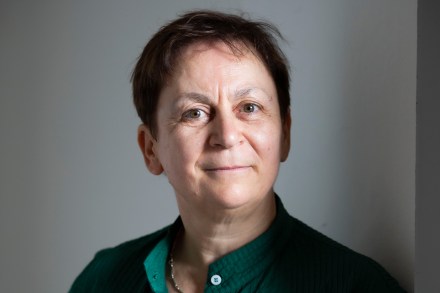
The Irish novelist Anne Enright is now in her sixties. Her deceptively modest new novel, The Wren, The Wren, opens with a long section narrated by Nell, a woman in her early twenties living in contemporary Dublin. Nell scrapes by, ‘writing content non-stop’: travel pieces about places she’s never been to, stories for a wealthy ‘actress/eco-influencer’. Adrift and vulnerable, she falls into an on-off relationship with a man called Felim, who is emotionally cruel and photographs her naked without her permission. With this extended portrait of a much younger woman, Enright quietly establishes her excellence.

Gripping tale of Ireland’s most polite bank robber: I’m Not Here To Hurt You reviewed

There should really be a special word for it: that vicarious fragility you feel when hearing of a minor decision with catastrophically heavy consequences, as if a falling acorn had tipped a boulder. In the case of John O’Hegarty, the subject of the engrossing podcast I’m Not Here To Hurt You, the catalyst for disaster was a quick short cut the wrong way down a one-way Dublin street while working as a bicycle courier. It would ultimately lead him – an academic with a master’s degree in psychology – into heroin and crack cocaine addiction, followed by a stint as a bank robber and eight years in prison.