Ireland

A cursed place: Small Things Like These, by Claire Keegan, reviewed

Claire Keegan’s tiny, cataclysmic novel takes us into the heart of small-town Ireland a few decades ago, creating a world that feels in certain respects dead and buried but whose legacy the country is still processing. This is Ireland before the boom and bust of the Celtic Tiger; before the insidious, everyday power of the Catholic church began to be eroded by the exposure of multiple abuse scandals; before its population voted overwhelmingly in favour of marriage equality and access to abortion. Yet in other respects the life it describes is familiar, and the Wexford town of New Ross, dominated by the River Barrow and governed by the rhythms of work and family, is representative of life as it is still lived outside the country’s major population centres.

How Shane MacGowan became Ireland’s prodigal son

I once stood on a Dublin street with Shane MacGowan and watched little old ladies who can’t ever have been Pogues fans blessing him as they passed by: ‘God love you, Shane!’ On his 60th birthday, in 2017, Michael D. Higgins, the President, presented him with a lifetime achievement award, while Nick Cave, Bono, Johnny Depp, Sinead O’Connor and Gerry Adams applauded. He is, if not Ireland’s national treasure, then certainly its prodigal son. Yet he was not even born in Ireland. He likes to make out that he grew up as a barefoot urchin on his grandparents’ farm, The Commons, in Tipperary, but in fact he was raised in Tunbridge Wells, in a big, detached house. His parents, Maurice and Therese, were Irish, but they moved to England before he was born.

Could the rise of Sinn Fein lead to a united Ireland?

The possibility of a political wing of a terrorist organisation becoming a party of government in an EU member state would normally be headline news. But that's precisely what's happening in Ireland.  Sinn Fein is currently enjoying a consistent lead at the top of the polls in the Republic; a recent example from the Irish edition of the Sunday Times shows it had surged by six points to 37 per cent, some distance ahead of Fine Gael and Fianna Fail, currently coalition partners. Public approval of the Sinn Fein leader Mary Lou McDonald — the middle-class Dubliner who described the IRA campaign as 'justified' and mused that there was 'every chance' she would have joined in if she had the chance — is at 50 per cent.

David Frost’s protocol diplomacy

As a general rule in post-Brexit politics, when David Frost makes a public intervention on the Northern Ireland protocol, it tends to dampen rather than soothe UK-EU relations. Frost, charged with improving the protocol, is a divisive figure in Brussels who is seen to catch flies with vinegar rather than honey. His speech was expected to be an escalation in the current war of words between the two sides. In the end, the talk itself was slightly less confrontational than expected. Frost effectively declared the Northern Ireland protocol dead and called on the EU to work with the UK Frost effectively declared the Northern Ireland protocol dead and called on the EU to work with the UK to come up with a new protocol to prevent a hard border on the island of Ireland.

When will the DUP realise the truth about the Tory Brexit strategy?

Are the Tories serious about getting rid of the troublesome Northern Ireland Protocol? The latest extension to the so-called grace period – the third in recent months – means that plans for post-Brexit checks on some goods entering Northern Ireland have been suspended again. But this isn't the good news you might think it is for unionists in Northern Ireland. In the short term, of course, it avoids a repeat of 'sausage wars' and megaphone diplomacy around the Protocol's Article 16 (which allows Britain or the EU to take unilateral action in certain circumstances). This can only be good news. Yet for nervous unionists there is a disturbing lack of security about what might happen when this grace period does eventually come to an end.

The cult of Sally Rooney

From our US edition

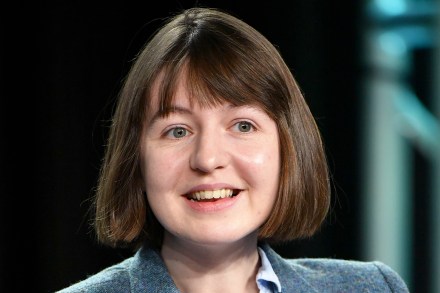
Sally Rooney is preparing to publish her new book, Beautiful World, Where Are You. But reports are emerging of near-hysterical behavior more suited to a (pre-cancellation) J.K. Rowling Harry Potter novel than an elegantly written work of literary fiction. Pre-publication proof copies of the novel have sold on eBay for hundreds of dollars, despite the US publisher Farrar, Straus and Giroux having explicitly asked recipients of the advanced reading copies not to resell them, and even a promotional canvas tote bag is realizing nearly $100. Meanwhile, when the book is published in the US and UK on September 7, 50 British retailers will be opening their doors early on the day, so eager purchasers can get their Rooney fix shortly after daybreak.

sally rooney

Margaret Thatcher vs everyone else: the making of the 1985 Anglo-Irish Agreement

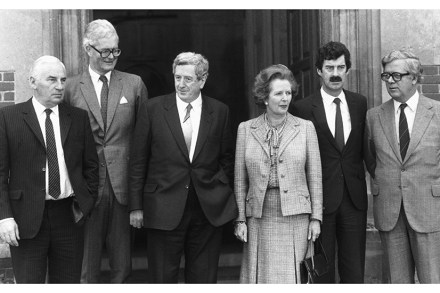
Diplomatic negotiations are rarely fully described by their participants in books, for two reasons. They are usually secret until much later, and their intricacies can be boring. Politicians often include brief accounts in their memoirs, but these seldom reveal much about the process as a whole because, as I discovered by interviewing scores of them for my biography of Margaret Thatcher, they cannot avoid focussing almost exclusivelyon what they did and said (or think they did and said). This book, however, overcomes the secrecy rule, because it is published nearly 40 years after the events described; and it overcomes the boredom problem because of the literary skill and intellectual grasp of its author. It is clear, precise, readable, sometimes drily funny.

Has Boris Johnson forgotten what he once said about IRA terrorists?

Boris Johnson's approach to dealing with historical prosecutions in Northern Ireland has achieved that unique political feat in the Province: uniting both sides in revulsion at what is being proposed. Northern Ireland minister Brandon Lewis is expected to announce a statute of limitations ending prosecutions in cases which pre-date the 1998 Belfast Agreement. Reports suggest that this will apply not only to members of the security forces but also republican and loyalist paramilitaries. This was always a likely end point in Northern Ireland’s 'process', indicative of the British political class’ reflex instinct to wish the Province and its troubles away.

Troubles’ veterans on both sides deserve immunity from prosecution

The recent decision by Boris Johnson's government to put a five-year time-bar, save in exceptional circumstances, on the prosecution of British troops for crimes committed during overseas operations, came as a welcome relief to soldiers. Those who served their country abroad now know they are effectively safe from stale prosecutions in the distant future; veterans who have long since moved on can now live in peace.  But note the word 'overseas'. Why not everywhere? The answer is easy: the Irish elephant in the room. The government feared that any attempt to time-limit prosecutions over events during the Northern Ireland Troubles would stir a hornets’ nest. It chose instead to leave those who had served in Northern Ireland exposed for ever.

Can Jeffrey Donaldson halt the DUP’s civil war?

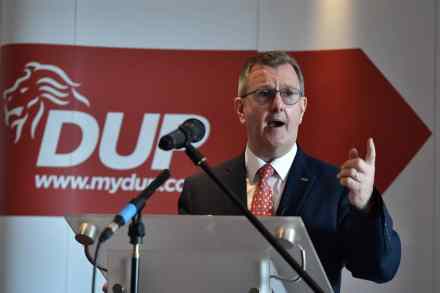
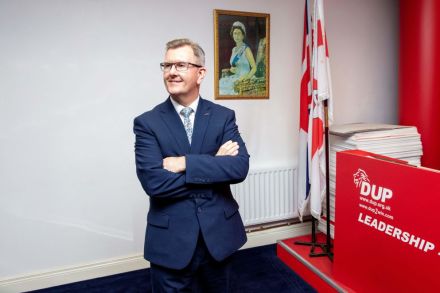
Sir Jeffrey Donaldson, the Lagan Valley MP, has triumphed in the one-horse race to replace Edwin Poots as leader of the DUP, getting the top job at the second time of asking. Nobody else came forward to instigate a leadership election, meaning that his appointment will be rubber stamped when the party's electoral college meets this Saturday. Respected at Westminster, Donaldson seems a more plausible fit for high office than the gauche Poots, though both men are remarkably similar; Donaldson, like Poots, is a committed Christian and is a prominent Orangeman. History is never far away from the politics of Northern Ireland. Donaldson’s win coincides with the centenary of the opening of the Northern Ireland parliament.

Edwin Poots’s departure is a sign of the chaos engulfing the DUP

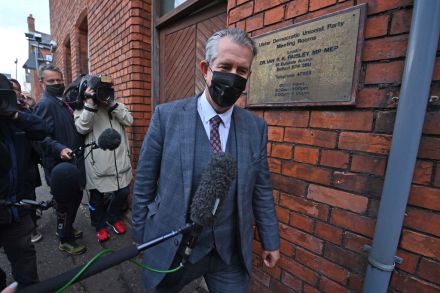
Only 20 days after winning the party leadership by one vote, Edwin Poots has resigned as DUP leader. The immediate trigger for his departure is him nominating a First Minister today in spite of the opposition of a majority of both DUP MLAs and MPs. (They were unhappy about the late night Irish Language Act compromise). But him being forced out can only really be understood in the context of bad blood created by his brutal ouster of Arlene Foster and his decision to sack all her ministers bar one, himself, in a reshuffle last week. Poots’s departure is a sign of the chaos engulfing the DUP. It is being squeezed on two sides.

Joe Biden doesn’t understand Northern Ireland

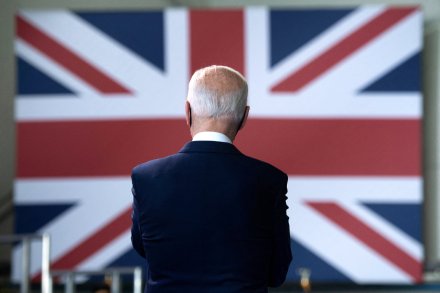
Even a pessimist could be forgiven for being surprised by Joe ‘I’m Irish’ Biden’s ham-fisted intervention in the ongoing row over the Northern Ireland protocol. If Boris Johnson’s remark that the phrase ‘special relationship’ didn’t ring true before, they certainly must after the President opened his visit by quoting Y.B. Yeats on the Easter Rising… while visiting a Royal Air Force base. It will also be a wearisomely familiar routine for Ulster unionists, who have been scorning American pressure to abandon Britain since at least the days of Woodrow Wilson. How will the government respond? There remain many on the right bewitched by yesterday’s Atlanticism.

How long will Edwin Poots’s DUP reign last?

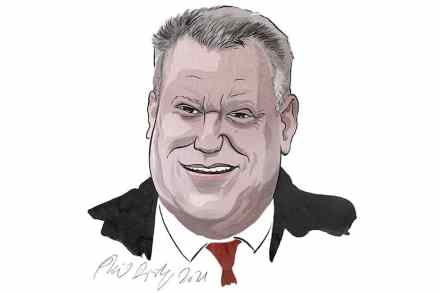
New DUP leader Edwin Poots has wasted little time consigning the Arlene Foster era to history. Poots' shake-up of his Stormont ministerial team has resulted in Foster’s loyalists being shown the door, in favour of what the Traditional Unionist Voice leader Jim Allister drily termed 'Poots’ posts'. Poots' appointment of Paul Givan, his fellow Lagan Valley MLA, as first minister of Northern Ireland, is perhaps his most controversial, though not unexpected, move. Givan, who like Poots is a creationist, is one of the more verbose figures in the DUP hinterland.

Is Ireland cosying up to China?

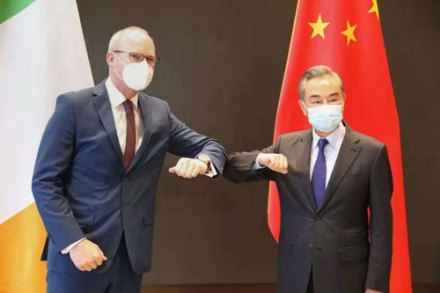
In 2019, the then-deputy prime minister of Ireland Simon Coveney spoke at the UN Human Rights Council, where he underlined Ireland’s commitment to defending human rights – which he said was strengthened by his country’s membership of the EU. As he told the summit, freedom and justice are: woven through our foreign policy, through our bilateral engagement and through our determined and committed membership of the European Union. The speech came in the midst of the Brexit negotiations, where Ireland were keen to be portrayed as noble victims of the Brexit vote, pitted against an isolationist, knuckle-dragging UK. How times change.

Independence would be karmic vengeance for Sturgeon

I have a mean streak. Perhaps my cruellest urge is to give people what they claim to want. When political parvenues disparage capitalism and the unfairness of meritocracy while talking up an ‘equitable’ socialist utopia, I want to stick them personally in a society where work pays the same as sloth, the well-off flee and the left behind expect everything to be free — just so long as the rest of us don’t have to submit to this inert destitution, too. When eco fanatics demand zero carbon emissions by 2025, I yearn for their own Amazon orders to arrive months later by donkey cart. I’d grant their wish: dead phone batteries on windless days and nights that are cold and dark.

Biden’s tax plan spells bad news for Ireland

Biden’s America, of course, is all about re-engaging with the world after four years of isolationism. But if you are the Irish finance minister, perhaps the new administration isn’t looking quite so cuddly at the moment.  Biden’s first big achievement in international cooperation looks like being a global minimum corporate tax rate. It seems that G7 nations are about to announce they have agreed on such a tax, set at 15 per cent. It will mean corporations paying a minimum of 15 per cent tax on their profits regardless of where they are based in the world, where they do business and where they pretend to do business.

Letters: The unfairness of ‘free care for all’

Taking care Sir: I agree completely with Leo McKinstry that care for parents should be paid out of their estate (‘Home economics’, 15 May). The costs of care are what people effectively work for, not for the passing on of wealth paid for by the taxpayer. My mother lived until she was 100, and was in care for almost 14 years. Although she had a property and shares, we funded her care until her cash/share balance was £15,000. After this time she was means-tested and between her pension and the rent from her flat, we were able to pay for some of the care, with the rest paid for by the local council. On her death the property was sold and the effective loan from the local authority was paid out of the proceeds of the sale.

The two halves of Ireland can’t be forced together

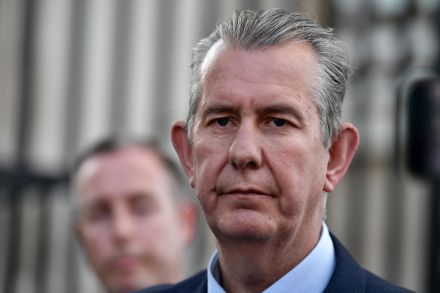
Last week, Edwin Poots was elected leader of the DUP. You will have read all about him. I have. You may not previously have known much about him. I didn’t. We should hesitate, I think, to respond to his elevation with a broad-brush sneering dismissal, or in personal terms. We know, of course, about Mr Poots’s creationist beliefs and most of us reject them, and I don’t like his views on homosexuality or abortion; but Poots has proved able to work pragmatically with republican fellow politicians. In an important way, though, this isn’t about Poots, but what he represents: a unionist shift towards back-to-basics fundamentalism.

Keem Bay, Ireland: the best beach in the world

From our US edition

It’s a nail-biting cliff-edge ride down switchback, stomach-churning, hairpin bends. When you finally reach sea level, the Atlantic wind may be so strong and the rain so sharp that you can barely stand on the crescent of sandy shore. The distant islands of Clew Bay — 365 of them to match the days in the year — are nothing more than blistery shapes in the sea mist and wave spray. Yet this nerve-wracking mountainous route is a journey worth making. Despite — or maybe because of — being far from the madding crowd on Achill Island, off the west coast of Ireland, Mayo’s Keem Bay has been voted one of the top 12 beaches in the world, beating contenders in Fiji, Hawaii and Bermuda.

Keem

A funny time to be Irish: The Rules of Revelation, by Lisa McInerney, reviewed

Lisa McInerney likes the rule of three. Three novels set in Cork structured around sex, drugs and rock’n’roll and, within that, ‘smoke, coke and yokes [ecstasy], St Paddy’s modern trinity’. The Rules of Revelation follows her debut, The Glorious Heresies (winner of the 2016 Women’s Prize; in its focus on the relationship between teenagers Ryan and Karine, it represents the sex component) and its sequel, The Blood Miracles (drugs, 2017). It reprises Glorious Heresies’ movement between multiple characters, Ryan Cusack (centre of Blood Miracles) seen through them. Ryan has returned to Cork, where bad blood waits for him, barely congealed and threatening, darkly, to ooze out at any moment.