Andrew McQuillan

Andrew McQuillan writes about politics and unionism across the UK. He is Scottish and has lived and studied in Belfast for several years.

Bloody Sunday and the battle for Northern Ireland’s past

From our UK edition

Soldier F, a former paratrooper accused of shooting dead two unarmed protestors on Bloody Sunday in 1972, has been found not guilty of their murder and attempting to kill five others. At court in Belfast, the Judge Patrick Lynch KC said the evidence before him ‘fails to reach the high standard of proof required in a criminal case’. The Bloody Sunday case points to a broader trend in Northern Ireland, of how the courts are being used almost as a proxy to rehash the battles of the past 1972 was the most violent year of the so-called Troubles, with just under 500 killed. However, the events of that January day in Londonderry stood out and continue to do so in the public understanding of Northern Ireland’s past and the impact that past has on its present.

The hypocrisy of those attacking Moygashel’s migrant bonfire

From our UK edition

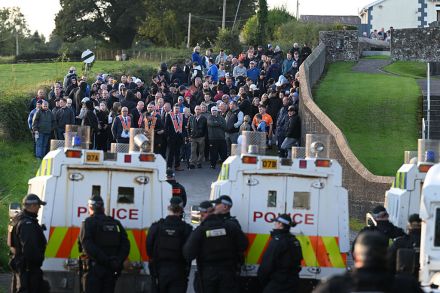
The marching season – when a section of Northern Ireland’s unionist community take to the streets to commemorate the triumph of William of Orange against James II – has always been a useful barometer of the Ulster loyalist mood.  Is the bonfire in bad taste? Yes. But should the people who erected it have to endure insufferable opprobrium from those who justify Kneecap telling their audience to ‘kill your MP’? Certainly not From the 1960s, when Ulster Unionist MPs were barracked for their leadership’s dalliances with ecumenism, all the way to the 1980s and 90s when the right to march in certain areas came to the fore, Orange gatherings have given a sense of what the rank and file feel about Northern Ireland.

The triumph of Sinn Fein

From our UK edition

Sinn Fein has consolidated its position as the biggest political party in Northern Ireland. It retained its seven seats and, as a result of DUP reversals, is now Northern Ireland’s largest party at Westminster. Sinn Fein were very close to winning the East Londonderry seat from the DUP – which went to various recounts – but the DUP held on with a majority of 179. So the result could have been even better for them.  Northern Ireland now has an alphabet soup of parties representing it Already the largest party at the Stormont Assembly and on Northern Ireland’s councils, it is quite the hat-trick for Sinn Fein and its leader Michelle O’Neill.

Are Sinn Fein heading for an election triumph?

From our UK edition

Bankrupt councils, the imminent collapse of Thames Water, prison overcrowding and a row with unions over public sector pay are some of the unwelcome prospects facing Keir Starmer if he wins the election. Sue Gray, the Labour leader's chief of staff, has compiled a so-called 'shit list' of such things which could derail any potential Labour government in the early days of its tenure in Downing Street. There's another problem to add to the list: the prospect of Sinn Fein triumphing in Northern Ireland and becoming the Province’s largest party at Westminster. Northern Ireland will be the main source of constitutional angst A shambolic DUP campaign could easily end up handing Sinn Fein victory.

What happened to the Glasgow I love?

From our UK edition

The perception of Glasgow still held by outsiders – that it’s all tenement blocks and stabbings, that the only food on offer is gussied up cholesterol and that its football divide is less about sport and more a continuation of the thirty years’ war – has always inspired resistance from those who know the city. A bumpy journey on Glasgow’s pot-holed roads is a bone rattling indictment of the decline of the public realm As someone from Glasgow who has since left, I’ve always felt duty bound to put up a bravura defence of my city when it’s brought into disrepute.

Will the ‘Tik Tok Taoiseach’ undo the damage done by Leo Varadkar?

From our UK edition

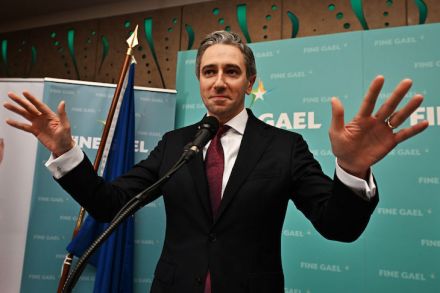
Simon Harris, the anointed successor to the outgoing Irish Taoiseach Leo Varadkar, has quite the in-tray. Harris, who was the only candidate in Fine Gael's party leadership race, will become Ireland’s youngest prime minister on 9 April when the Irish parliament, the Dáil, resumes after its Easter break. One of the most pressing tasks he faces is trying to rebuild a semi-decent relationship with the unionists of Northern Ireland, such is the noxious legacy of his predecessor.  Harris is identikit to Varadkar in many ways Speaking in Athlone last weekend, where the 37-year-old described his new role as the 'absolute honour' of his life, Harris claimed that UK-Irish relations were in a much better position compared with a year previously. Really?

Varadkar’s true achievement was screwing over the Brits

From our UK edition

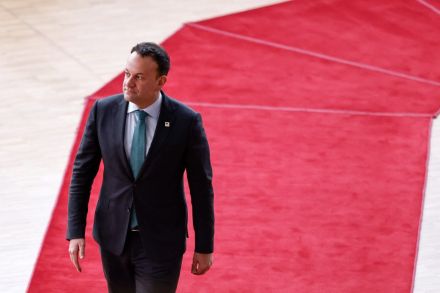
The departure of Leo Varadkar as Taoiseach yesterday should really be marked by Irish nationalists with elaborate memorials and tributes in Dublin, on a par with those for the founders of the Irish state. This smooth-talking politician achieved more in one dinner than so-called freedom fighters did over 20 years  Despite the ignominious manner of his departure, having been conclusively told where to go by a chunk of the Irish population in a recent referendum designed to change fundamental elements of the constitution, Varadkar achieved something which most Irish leaders desire deep down: he managed to stiff the Brits.

The DUP can’t blame Reform for dividing unionists

From our UK edition

While Michelle O’Neill and Emma Pengelly, the First and Deputy First Minister of Northern Ireland, were in Washington last week for their annual St Patrick’s Day pat on the head from the Biden administration, a more subversive gathering was taking place in Kells, a small village in Country Antrim.  Traditional Unionist Voice, the party fronted by Jim Allister, was holding its annual conference. For most observers this would fail to register, but the announcement that the TUV has entered into a pact with Reform UK – including running agreed candidates at the general election in Northern Ireland – brought it wider attention.

Sinn Fein’s rise to power is nothing to celebrate

From our UK edition

The resumption of devolution in Northern Ireland – scheduled for tomorrow after the Democratic Unionist Party (DUP) reached a deal with the UK Government earlier this week – marks a big moment: for the first time in the history of Northern Ireland, there will be a nationalist First Minister. Sinn Fein, a party still viewed by the security services as being in lockstep with the IRA, became the largest party at the 2022 Assembly Election. As a result, their leader in Northern Ireland, Michelle O’Neill, is entitled to be nominated as the Province’s First Minister. Irish nationalists and republicans are now masters of a state designed for their exclusion.

Ireland is falling out of love with Sinn Fein

From our UK edition

Is the Sinn Fein star starting to wane? Support for the party has hit its lowest level for four years according to a poll for the influential Business Post newspaper. While Sinn Fein still remains the most popular party in the Republic, it has dropped seven points since October 2023. Sinn Fein can only be all things to all people for so long A reason for the loss of support has been its prevarication around the question of immigration; riots gripped Dublin in late November after an attack by an Algerian man on three children in the heart of the city. Since then, the so-called ‘land of a thousand welcomes’ has grappled with arson attacks on asylum seeker hotels and seen the government reduce welfare benefits and accommodation for Ukrainian refugees.

Agreeing to power-sharing now could ruin the DUP

From our UK edition

Once upon a time, a young unionist politician marched out of a talks process. Recalling the incident later, he said: 'I asked myself the question, could I walk out of here and go down to my constituency, the people of Lisburn, look them in the eye and say this is a good deal. I could not do that in all conscience.' That politician was Sir Jeffrey Donaldson speaking about Good Friday 1998, unable to support his then Ulster Unionist party leader David Trimble as he prepared to sign the Belfast Agreement. Donaldson then devoted his energies to championing the irascible anti-Agreement wing of unionism, monstering Trimble and chipping away at the Ulster Unionists before he defected in 2003 to the DUP.

South Africa has no right to lecture Israel

From our UK edition

As South Africa presented its case accusing Israel of genocide to the International Court of Justice, the presence of former Labour leader Jeremy Corbyn in and around the Hague court gave a flavour of the calibre of those willing this case on. It was predictable that the South African government’s championing of this cause would ignite the ardour of the left. Quoting Nelson Mandela, the Labour MP Zarah Sultana took to X (formerly Twitter) to say with certainty that South Africa’s case against Israel was 'devastating'.

Families of IRA terrorists shouldn’t get compensation

From our UK edition

In the period between Christmas and New Year archives in both Belfast and Dublin are opened and documents are declassified. This regularly reveals some of the creative thinking which has been expended on the Northern Ireland problem over the years.  Suggestions have included staging an Old Firm duel between Rangers and Celtic in Belfast prior to the 1998 Good Friday Agreement and have the Glasgow teams play in the opposing side’s kits.  Relocating millions of Hong Kong citizens to the province ahead of its transfer to China was an example of blue sky thinking mooted in the Thatcher era. Such was the quagmire of Ulster, politicians and their advisors would regularly grasp for the surreal.

The tension simmering beneath the Dublin riots

From our UK edition

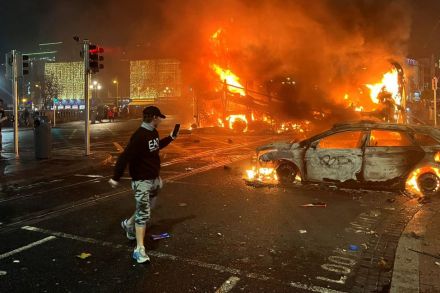
The situation in Dublin yesterday – in which five people were injured in a knife attack in the heart of the city, resulting in a riot and violent clashes with the police – was to the untrained eye reminiscent of Belfast from days gone by. Speculation about the nationality of the attacker fuelled the scenes of violence which took place last night and that has led to condemnatory tutting. After all, Ireland’s national myth is tied into tales of immigration and welcoming. A riot over immigration in its capital city contradicts the stories Ireland tells the world about itself. The instinct, almost reflex reaction of the establishment, was to deploy the term ‘far right’.

Suella Braverman has a point about Northern Ireland

From our UK edition

Suella Braverman’s description of pro-Palestinian protests as being 'disturbingly reminiscent of Ulster' has given the Province’s political class yet another reason – not that they need one – to chunter on at length.  The professionally po-faced, from SDLP leader Colum Eastwood to Stephen Farry of the Alliance Party, dutifully trod the path to X/ Twitter, or whichever broadcasting studio would take them, to intone about how off piste the Home Secretary had gone. They said Braverman's remarks showed how ignorant about the reality on the ground in Northern Ireland she was.  For all the claims the Home Secretary doesn’t know what she’s talking about when it comes to Northern Ireland, she may well have a point.

Sinn Fein’s troubling ‘solidarity’ with Palestinians

From our UK edition

Black Mountain, which looms above West Belfast, acts as a blank canvas for Irish republicans to plaster their thoughts across. Over the years, banners covering a range of subjects, from Irish unity to Brexit, have been draped across it. In recent days, a Palestinian flag was placed there by a group styling itself Gael Force Art, claiming it was in 'solidarity with the Palestinian people who launched their biggest operation in fifty years against the rogue state of Israel'. Gerry Adams shared a picture of the flag on Twitter/ X. 'The Mountain Speaks! Free Palestine,' he wrote. Irish republicanism has always been a reliable well-spring of support for their Palestinian equivalents.

Northern Ireland’s police service is weak and inept

From our UK edition

The data breach at the Police Service of Northern Ireland, which has seen the personal details of all serving officers and just under 2,500 civilian staff accidentally released as part of a response to a Freedom of Information request, is the sort of grotesque, IT foul-up normally reserved for the realms of satire like The Thick of It.  There is a slim chance that any officers in the Province will be laughing. The attempted murder of DCI John Caldwell in front of his young son in Fermanagh earlier this year underlined acutely that dissident republicans hellbent on killing police officers ‘haven’t gone away you know’, to quote Gerry Adams.

The Orange order risks damaging the cause for Irish unionism

From our UK edition

Another year and another July has come round where viewers in the UK have been treated to the sight of some of their compatriots in Northern Ireland marking William of Orange’s triumph over his father-in-law James II, the Catholic Stuart King, on the 'green grassy slopes of the Boyne' – as the Orange song goes – in 1690.  Mention Ulster unionism and, to the casual mainland observer, it will conjure up images of stern bowler hatted men in orange collarettes and sashes, the skirl of pipes and flute bands, parading disputes and monumental bonfires of pallets and tyres on loyalist housing estates.

Is Sinn Fein really on the march?

From our UK edition

In the visceral two horse race which is Northern Irish politics, it is the green horse which is out in front after last Thursday’s local council elections.  Sinn Fein, as at Stormont, is now the largest party across Northern Ireland’s local authorities. A lot has changed since the 1980s, when, during the IRA’s campaign of murder and mutilation across the Province, unionists would walk out of council meetings rather than sit with Sinn Fein councillors.  The stain of terrorism which will forever be part of Sinn Fein does not seem to be a deterrent to the nationalist electorate in Northern Ireland.

Is Chris Heaton-Harris the worst Northern Ireland secretary yet?

From our UK edition

Amidst the veneration of the Belfast Agreement taking place at Queen’s University this week, there has been a less than subtle message: that the DUP should get back to work and re-join the devolved executive at Stormont. One of the many banging that particular drum – and unlikely to feature in any Orange parade this July – is Chris Heaton-Harris, the Northern Ireland Secretary. Heaton-Harris's speech to those gathered in Belfast yesterday was a browbeating performance par excellence which has raised unionist hackles rather than assuaged them. But while his speech grabbed the headlines for this reason, it also contained an extraordinary appraisal of the history of Northern Ireland and bizarre phraseology for a supposed unionist to use.