Iran

The Iran war has exacerbated the failure of European energy policies

From our US edition

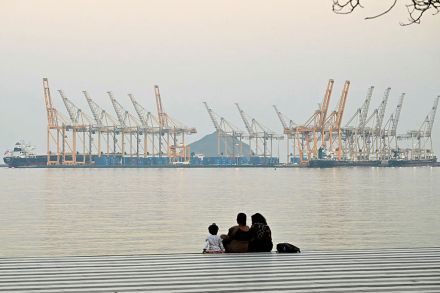
The history of the global trading system is a story of narrow and vulnerable waterways: the Suez and Panama Canals, the St. Lawrence Seaway, the Straits of Dover and the Skagerrak, which defends the entrance to the Baltic. But none has the power to seize up the global economy as much as the Strait of Hormuz. Barely 30 miles wide at the narrowest point and bounded on one side by the state of Iran, this passage is used for a quarter of the world’s oil supplies and a fifth of its liquified natural gas (LNG).

energy
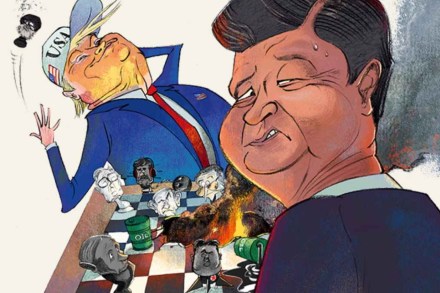
Iran: is Trump's ultimate target in this war China?

Iran: is Trump’s ultimate target in this war China?

30 min listen

As the crisis in the Middle East has escalated, Donald Trump's posturing has led many to question his strategy – and if he even has one. Geoffrey Cain, former foreign correspondent, expert on authoritarian regimes – and the author of this week's cover piece in the Spectator, joins Freddy Gray to explain why Trump's ultimate target in the war is China. From the Belt and Road development initiative to more tacit bilateral support, President Xi has been playing a game of chess, to try to check America's power. With Nicolas Maduro arrested and Ayatollah Khamenei assassinated, President Trump is showing his willingness to project American power, at whatever cost – so far. Cain raises questions for those who assume we're moving to a multipolar world.

Trump isn’t the greatest threat to the Special Relationship

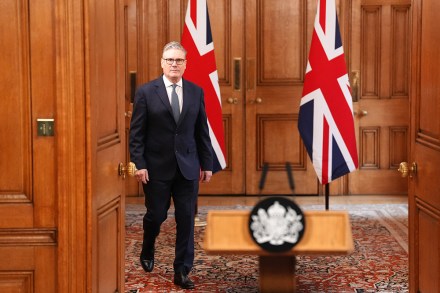
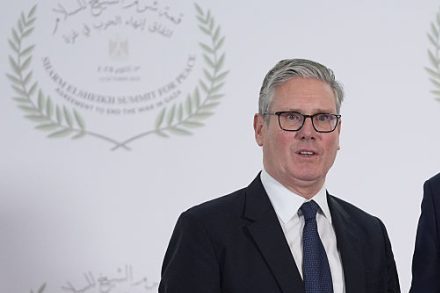
Britain’s refusal to fully back the United States over strikes on Iran has triggered an unusually public transatlantic row. It has also revived an old question about the future of the so-called "Special Relationship." When Donald Trump returned to the White House last year, many in Westminster doubted Keir Starmer could build a workable relationship with him. The two men could hardly be more different in temperament or politics, and predictions of an early rupture were widespread. For a time, however, Starmer appeared to defy those expectations. Britain weathered Trump’s latest tariff wars better than most countries, and the Prime Minister seemed to have found a cautious way of managing Washington’s unpredictability.

special relationship

Israel wants to destroy Hezbollah once and for all

From our US edition

At around 2:30 a.m. on March 2, Israel bombed Beirut’s mostly Shia southern suburbs in response to a Hezbollah rocket attack on northern Israel. The road heading into Beirut from South Lebanon and the city’s southern suburbs was jammed with cars filled with Lebanese fleeing further reprisals. Some 52 civilians were killed and 154 injured, a hefty butcher’s bill even in this part of the world. Most Lebanese are happy Hezbollah has been defanged, even if they wish it wasn’t thanks to Israel Hezbollah’s actions were a demonstration of their ongoing support for Iran, but goading Israel was a cataclysmic miscalculation.

Is it wise for Spain to goad Donald Trump?

Spain’s refusal to allow the United States to use its military bases at Morón de la Frontera (Seville) and Rota (Cádiz) for its war on Iran, arguing that the US-Israeli attacks are "unilateral military actions outside the United Nations charter" has brought the simmering conflict between Pedro Sanchez, Spain’s socialist Prime Minister and President Trump to a head.   Sanchez’s carefully calculated strategy has been to position himself as one of Trump’s leading opponents on the world stage On Wednesday Sanchez followed up by delivering a stunning rebuke to Trump. Speaking for ten minutes on national television, he said that his government's position could be summed up in four words: "No a la guerra" (No to war).

neoconservative

America’s last war in the Middle East

From our US edition

Win or lose, Donald Trump has begun the last war the United States is ever likely to fight in the Middle East. That might sound wildly optimistic, but what it really means is that war with Iran has been decades in the making. If the mission succeeds, it will mark the end of an era. And if it fails, this war will have exhausted what’s left of America’s willingness to remake the region by force. It’s not just that Iran puts the case for regime change to the ultimate test. America’s relationship with Israel is also on trial.

China is next – Trump’s Iran strategy explained with Maurice Glasman

Iran: Why Trump’s ultimate target in this war is China – with Maurice Glasman

50 min listen

As the conflict in the Middle East escalates, what is Trump’s game plan? The Spectator’s cover piece this week, by Geoffrey Cain, argues that Trump’s ultimate target in this war is China; every dictator gone, weakens the Chinese regime. As Freddy Gray explains further on the podcast, Trump’s worldview is shaped by the events he grew up with – including then President Nixon’s visit to China in the 1970s. As well as making sense of Trump’s plan, the Spectator team take us through the dramatic events of the past week, including how Starmer appears to have alienated Britain’s allies over Iran. Plus – Lord Glasman makes the case for Reza Pahlavi, the Crown Prince of Iran, declaring he is 'devoted to the restoration of the Shah’.

Does Trump really have ‘whatever it takes’ to win in Iran?

With Operation Epic Fury in its sixth day, it is hard to tell how long the current United States military campaign against Iran will last. It may not be swift; yesterday, the Senate rejected a resolution to halt further action. Meanwhile, President Trump has been alarmingly indifferent to the question: Whatever the time is, it’s OK, whatever it takes. Right from the beginning we projected four to five weeks, but we have the capability to go far longer than that. We’ll do it. Secretary of Defense Pete Hegseth struck a different note with reporters: "This is not Iraq, this is not endless." Yet he has refused to rule out deploying ground forces to Iran and later said, "We have only just begun to fight.

iran

Why Iran marks the end of neoconservatism

45 min listen

Spectator World columnist – and Heritage Foundation fellow – Daniel McCarthy joins Freddy Gray to explain how Trump's war with Iran could mark the end of an era, that of neoconservatism. For Daniel, there is no contradiction between Trump's 'America First' policy and its overseas interventions: Trump is pursuing a version of hegemony that will reduce the need for future interventions. If all goes to plan, this could mark an ideological watershed that stretches back to the first Gulf War in the early 1990s – but it's a big 'if'. What if the conflict spirals out of control? To what extent was this driven by Trump, or by Netanyahu? And what are the dynamics at play between the leadership figures in Maga? Produced by Patrick Gibbons.

Why Iran marks the end of neoconservatism

Iran: has Starmer alienated Britain’s allies?

21 min listen

As the conflict in the Middle East escalates, the British government continues to face questions about its response. Was the UK too slow to act, and if so – why? Tim Shipman reveals in the Spectator today that Keir Starmer was initially minded to approve American use of British bases but was persuaded not to by other figures, including Ed Miliband. How much damage has this done with the Americans and also wider European allies? Defence Secretary John Healey has landed in Cyprus today on a damage-limitation mission – or in a show of strength, depending on your viewpoint. Has Starmer been weakened by these events? Plus – Home Secretary Shabana Mahmood has revealed further asylum reforms. Will the reforms neutralise the issue of immigration for voters?

Iran: has Starmer alienated Britain's allies?

Trump’s ultimate target in this war is China

The United States and Israel killed Ayatollah Khamenei, and Xi Jinping’s decade-long project to build an alternative to the American-led order died with him. For years, Beijing quietly assembled a network of dictatorships and client states designed to blunt American power. Iran supplied China with cheap oil and kept Washington bogged down in the Middle East. Russia waged war on Ukraine with Chinese materiel support, a gamble that was supposed to cement a powerful anti-western axis but has instead bled Moscow into dependence on Beijing. Regional proxies from Lebanon to Gaza added just enough chaos to stop Washington focusing on China. The Chinese Communist party (CCP) propped up Nicolas Maduro’s Venezuela, too, as it funneled narcotics and other ills into America.

Portrait of the week: Iran attacked, Iran attacks and Starmer fumbles

Home Britain was not involved in the attack on Iran, Sir Keir Starmer, the Prime Minister, said, but a day later he gave America permission to use British bases (including Diego Garcia) ‘to prevent Iran firing missiles across the region’. He told the Commons, ‘This country does not believe in regime change from the skies,’ and ‘the only way forward is a negotiated outcome’. ‘This is not Winston Churchill that we’re dealing with,’ said President Donald Trump of America. A drone hit RAF Akrotiri in Cyprus; the destroyer HMS Dragon was dispatched there. At least 300,000 British citizens were said to be in the Gulf.

‘Whose side are you on?’: How Keir Starmer alienated Britain’s allies over Iran

The American-Israeli attacks on Iran were publicly called Epic Fury, but behind the scenes it is Britain’s handling of the war which provoked that reaction – not just from Donald Trump but from the UK’s allies in the Gulf. A Labour peer was in Washington when the first missiles slammed into Tehran on Friday evening and Keir Starmer refused to voice support. A member of the Trump administration told the peer: ‘Britain used to not contribute that much, but you were a good ally. Now you’re contributing nothing and you’re not even a good ally.’ A version of events has quickly become established: a Prime Minister with a near-religious belief in international law hid behind the advice of his Attorney General, Richard Hermer, that the attacks were illegal.

The greater game: Trump’s ultimate target in this war is China

The United States and Israel killed Ayatollah Khamenei, and Xi Jinping’s decade-long project to build an alternative to the American-led order died with him. The view in Beijing has been that the West is declining. Xi built his foreign policy on that premise For years, Beijing quietly assembled a network of dictatorships and client states designed to blunt American power. Iran supplied China with cheap oil and kept Washington bogged down in the Middle East. Russia waged war on Ukraine with Chinese materiel support, a gamble that was supposed to cement a powerful anti-western axis but has instead bled Moscow into dependence on Beijing. Regional proxies from Lebanon to Gaza added just enough chaos to stop Washington focusing on China.

Operation Epic Fury is already tearing the MAGA movement apart

When President George W. Bush invaded Mesopotamia in 2003, everybody laughed at Comical Ali, the bespectacled Iraqi information minister who kept insisting that the American ‘rats’ were doomed as Saddam Hussein’s regime collapsed around him. The world moved on. Iran is not Iraq, as President Donald Trump’s supporters are so fond of saying, and Bush-era ‘forever wars’ are no more. Plus, these days the comedy communications come from the American Commander-in-Chief. At the weekend, as missiles rained across the Middle East, Trump’s cabinet officials mostly avoided attention-grabbing interviews. The boss, however, embarked on his own heroic PR campaign.

I love Dubai. Get over it

I am in Dubai where we are doing our best to keep calm and carry on. Granted, the sudden instruction to ‘seek immediate shelter’ in the early hours of Sunday morning was unnerving, but with the exception of excitable ‘influencers’, few people are cowering in their basements. On Saturday evening, I’d hotfooted it to the Palm Jumeirah. When my kids told me the Fairmont hotel had been hit, I didn’t believe them. The idea that the mad mullahs would start lashing out in this direction seemed completely absurd. Though the Emiratis take a far dimmer view of Islamic extremism than our own craven British government, they are careful not to upset ‘brotherly’ neighbours. The UAE has prospered precisely because of this strategic restraint. Surely some mistake?

Tracey Emin should remake her bed

Sir Keir Starmer’s position on the US bombing of Iran is inglorious, but one should suspend disapproval to understand how he must have been thinking politically. His party had just lost the Gorton and Denton by-election to the Greens (backed by a strong Muslim vote). His leadership had never seemed weaker. So he calculated that he could not unequivocally back the actions of Israel and Donald Trump. He will have had the Iraq war in mind, particularly the role of the attorney general. Over Iraq, the then attorney general, Lord Goldsmith, was criticised for seeming to change his legal advice to Tony Blair in order to legitimise British participation in the invasion. Sir Keir’s Attorney General, Lord Hermer, is much more central to the administration than an AG ever should be.

Will Turkey intervene in Iran?

From our US edition

With the exception so far of a single missile intercepted over Turkish airspace and a strike on an Azeri-controlled territory near the Iranian border, Tehran has so far declined to mess with the Turks, and for good reasons. Turkey is a member of NATO and attacking it would trigger Article 5 mutual defense measures. And it is NATO’s leading member, the United States, which is attacking Iran in the first place. A more serious restraining factor is Turkey’s own large and highly effective army – and its proven willingness to use it against weakened neighbors. Over recent decades Ankara hasn’t hesitated to send troops and launch bombing raids into both Syria and Iraq, occupying border regions when it decides that Turkey’s internal security is threatened.