Iran

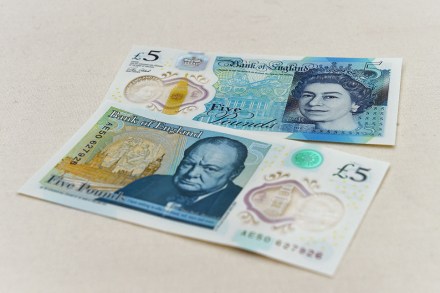
The only living being on our banknotes should be the monarch

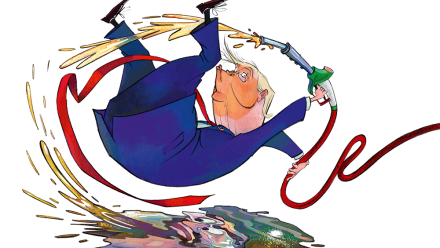
This Middle East conflict ought to be much easier than the oil embargo which followed the Yom Kippur war of 1973. The Arabs came quite close to winning, whereas Iran has no chance. The embargo, imposed on all countries, including Britain, which had supported Israel in the war, was backed by almost all Arab states, few of which were fanatically Islamist, and by the Soviet Union. It lasted for six months. America depended on Saudi Arabia alone for 25 per cent of its oil (only a bit over 5 per cent of imports today). The price rose by 400 per cent. The economic disruption was massive. In 2026, by contrast, almost all Middle Eastern states detest Iran and want their oil to flow without let or hindrance. There is plenty of money and power in the world to reopen the Strait of Hormuz.
How we wage war in space

From our US edition

Operation Epic Fury marks a turning point in the art of war. The key to 20th-century battles was air power. In the past, space and cyber activities have traditionally played supporting roles as so-called force multipliers. But this is no longer the case. In this conflict they have become mainstream, carving out new fronts for the wars of the future. The use of space is no longer something that is just nice to have, because everything from comms to intel to navigation uses space and cyber assets. Along with the National Reconnaissance Office, which manages US spy satellites, the US Space Force uses a global sensor network of ground-based telescopes and radar on every continent except Antarctica.

Dinner in Tehran, anyone?

From our US edition

Who wants to join me for dinner in Tehran or Havana? I suspect that both will be open for business very soon. I suppose we could even go to Caracas. As I write, the American flag has been raised at the American Embassy there for the first time in seven years. Amazing, isn’t it? And in Cuba? In mid-March, protesters were setting fire to the office of the Communist party in the town of Morón in the Ciego de Ávila province. Elsewhere across the island, protesters were in the street shouting, “Down with communism!” The nervous Cuban government released dozens of political prisoners. Since Donald Trump cut off its supply of Venezuelan oil, much of the country has been without electricity. This saddened Greta Thunberg.

Decapitating Iran’s leadership might not topple the mullahs

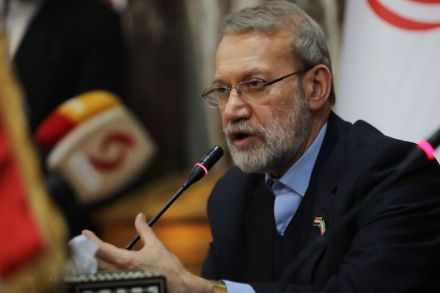
Iran’s most powerful leaders are being picked off one by one by Israeli and American military strikes. The latest scalp claimed by Israel is Ali Larjani, Iran’s security chief, and widely believed to be the most powerful figure in the present Iranian leadership. The reported killing comes just days after Larjani went on a public walkabout in Tehran, all defiance and bombast as he greeted members of the public during the Quds Day rally last Friday in the capital. Larjani also spoke to state media during the march, claiming that the Americans and Israelis were “running out of steam”. Well, not quite in his case, it turns out. Few will mourn the demise of Larjani.

larjani
Europe

Iran and the crisis in the European mind

The politics of the Iranian war feature an observable gap between interest and action for nearly all parties. The Americans possessed overwhelming casus belli versus Iran for nearly half a century, and did not act upon it until three weeks past. The Iranians possessed none against America for just as long, but exerted themselves with religious fanaticism to bring this war upon themselves. The Arab autocracies of the Persian-Gulf region find themselves under direct attack from the Iranians, but do not respond in kind. The Chinese observe a core strategic proxy and key commodities supplier taken off the chessboard – for the second time in under 90 days – and refrain from direct engagement.

Why is America always at war?

From our US edition

Sizable minorities on both the left and the right want America to intervene in fewer foreign conflicts and to exercise more restraint in foreign policy. In the 2006 midterm elections, antiwar voters contributed to the Republicans’ loss of both houses of Congress. They also helped defeat Hillary Clinton in the 2008 Democratic presidential primary contest and the Republican nominee, John McCain, at that year’s general election. While McCain styled himself a “maverick,” the label could be more accurately bestowed upon the anti-interventionist Republican Ron Paul, who shocked the GOP establishment by showing that an unstinting critic of the Iraq War could mount an insurgency within the party of George W. Bush.

Should NATO help America defend the Strait of Hormuz?

As soon as Operation Epic Fury, America’s latest campaign against the Islamic Republic of Iran, got underway on the last day of February, political, military and economic minds around the world should have turned their attention to the Strait of Hormuz. The waterway provided the only shipping route from the Persian Gulf to the Gulf of Oman and the open seas beyond. That has long made the strait the dagger Iran holds at the throat of the world. At its narrowest, it is less than 25 miles across, and Iran controls the northern shore; to the south is the Musandam Peninsula, shared by the United Arab Emirates and an exclave of Oman.

NATO STRAIT

Iran’s first gayatollah?

From our US edition

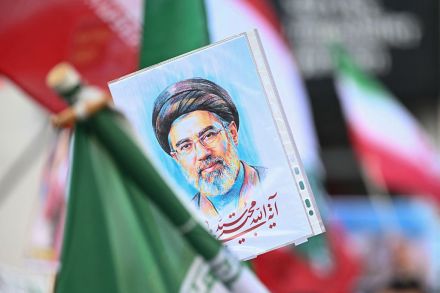
Something queer’s afoot in the Islamic Republic. As Mojtaba Khamenei was announced as Iran’s new Supreme Leader last week, reports emerged that his own father, the late ayatollah Ali Khamenei, didn’t want him to take power and even went as far as making this explicit in his will, according to the New York Post. Now, the Post reveals that his father’s qualms were over Mojtaba’s alleged sexual attraction to men.  When President Trump was briefed that Mojtaba may be gay, he “couldn’t contain his surprise and laughed aloud” while others in the room joined in his reaction, sources close to the intelligence community and the White House told the Post.

How Iran could end the AI boom

From our US edition

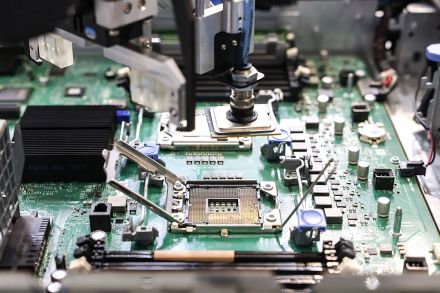
While Americans anxiously watch the price of gasoline tick higher as the war in the Middle East squeezes the global oil supply, the conflict has highlighted another energy vulnerability that could prove just as costly: Taiwan’s dependency on foreign natural gas. At first blush, energy issues an ocean away seem peripheral to American interests. They are anything but. Though the effect on the American economy won’t be immediate, energy insecurity in Taiwan is a looming disaster. Qatar, the source of 30 percent of Taiwan’s natural gas, has been effectively bottled up The reason is that AI – in fact, virtually all modern computing – is highly reliant upon the steady production of semiconductors in the world’s only true hub, Taiwan.

Semiconductors

What Signalgate tells us about Iran

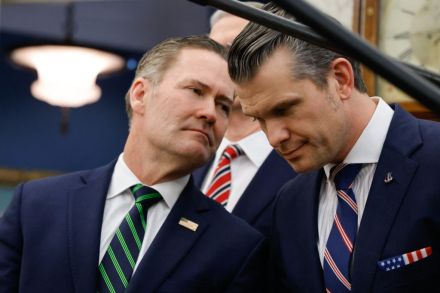
Remember Signalgate? It was quite the story, and worth revisiting now in light of Operation Epic Fury, the ongoing crisis in the Strait of Hormuz and its dire implications for the global economy.  In March last year, Donald Trump’s then National Security Advisor, Mike Waltz, somehow added Jeffrey Goldberg, the editor-in-chief of the Atlantic, to a Signal messaging group for senior government officials to discuss top secret military action against the Houthis in Yemen. The group included the Vice President J.D. Vance, Secretary of State Marco Rubio, Defense Secretary Pete Hegseth, Director of National Intelligence Tulsi Gabbard, White House Chief of Staff Susie Wiles and deputy chief of staff Stephen Miller, among others.

hegseth signalgate walt

How the Islamic Republic tried – and failed – to destroy Iranian culture

The Islamic Republic in Iran is not only at war with the United States and Israel. For years, the country's government has been waging war on Iranian culture. Music, poetry, storytelling, dogs, dancing, singing, art, dice and card games, romance, tolerance and the honoring of women are central to Persian culture and its ancient history. Yet under the Islamic Republic, these cherished expressions are banned or stigmatized, especially when pursued by women. The departure of Iran’s enlightened and educated from the country they love is one of the most poignant brain drains in history In the dark, dystopian times immediately following the Islamic Revolution in 1979, couples holding hands or a man so much as looking at a woman could lead to arrest, or worse.

The right’s Israel fracture

From our US edition

As the joint American-Israeli military campaign in Iran continues, President Trump’s coalition is starting to exhibit some cracks. The war in Iran has emerged as a proxy battle over a broader, long-simmering conflict within the right about Israel. And the fight over Israel is, in some important ways, a proxy battle about Jews in general. Big picture, what we’re seeing now is that the traditional divisions on the right between paleoconservatives and neoconservatives, between hawks and doves, are being reshaped into a battle over Israel specifically. It’s a very difficult subject; this issue has become highly emotional and personal for those on both sides, and even in my world, it’s set friends against one another. How far do the emerging divisions go, and how should we respond?

The Iran war has exposed the world’s maritime chokepoint

The war with Iran is exposing a vulnerability at the heart of the global gas market: the extraordinary concentration of liquefied natural gas supply in the Persian Gulf. Qatar alone accounts for roughly a fifth of global LNG exports, almost all of it passing through the narrow Strait of Hormuz. The conflict has illustrated how easily a single maritime chokepoint could interrupt a significant share of the world’s gas trade. Even if the war ends soon, the vulnerability it has exposed will not disappear President Donald Trump has suggested the conflict may soon end, describing the campaign as largely achieved and possibly over "very soon." The Gulf monarchies also appear eager for a quick resolution, even as they continue to face missile and drone attacks.

‘We don’t know what’s going on or why we’re doing this’: how Trump’s Iran gamble backfired

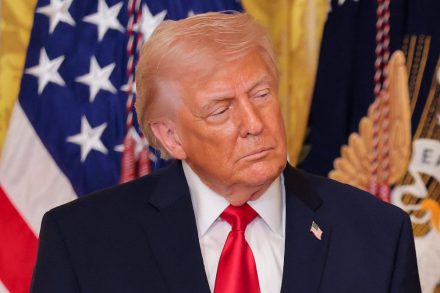
"Donald Trump is a complicated person with simple ideas," said Kellyanne Conway, the former White House senior counselor. "Way too many politicians are the exact opposite." It’s a good way of understanding the 45th and 47th President and his extraordinary success. His turbulent personality causes mayhem, yet his political aims have remained constant, straightforward and popular. Decades ago, as a New York tycoon with a keen eye on international affairs, he identified three priorities for America: tackle the nation’s trade imbalances, force NATO allies to spend more on defense, and destroy terrorists. When it comes to realizing those simple ideas, however, his more complex attributes emerge.

Australia finally did right by Iran’s brave women’s soccer players

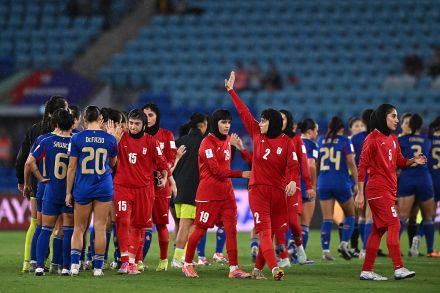
In 1989, as tanks rolled into central Beijing to crush the pro-democracy protest in Tiananmen Square, Australia’s then prime minister, Bob Hawke, spontaneously offered asylum to all Chinese citizens who happened to be in Australia. Thousands took up his offer and made lasting contributions to the country that gave them shelter. Last Tuesday, the women showed personal courage by taking a silent but very public stand against a regime that stops at nothing to punish open disloyalty On Tuesday, Hawke’s successor, Anthony Albanese, granted five women of Iran’s national soccer team asylum, and offered it to all those in the team’s party.

australia iran

Will books soon become extinct?

I am glad that Radio 4 is producing a series called How Reading Made Us, presented by the subtle, super-literate Times columnist James Marriott. I must declare an interest. Roughly 98 per cent of my earnings over 45 years have depended on the fact that plenty of people like reading. Now we are thinking harder, however, about the fact that form affects substance. The idea of an encyclopaedia, for example, as developed (from classical roots) in the 18th century, was that all needful knowledge on a particular subject could be assembled and consulted in a book or series of books. With AI, there is little need for this form. The form of a book, which often seemed so compendious, can now seem cumbersome. Fiction, too, is affected by form.

Revealed: Keir Starmer’s new plan to get closer to the EU

A Labour MP, reflecting on the problems the Prime Minister faces over the war in Iran, observed this week: ‘Keir got it right, but things keep going wrong.’ His point was that Starmer kept Britain out of the Israeli-American air strikes, a position popular both with the parliamentary Labour party and the electorate, yet the impact of that conflict has laid bare three serious problems at the heart of the British state. First, there has been a fracturing of relations between Starmer and Britain’s defence chief, Air Chief Marshal Sir Richard Knighton. Second is the vulnerability of the economy to energy price shocks. Third is Ed Miliband’s net-zero crusade, which has put further pressure on the cost of living, Starmer’s biggest domestic problem.

Portrait of the week: HMS Dragon sets sail, Mandelson records released and Trump declares victory

Home John Healey, the Defence Secretary, visited Cyprus after criticism of Britain’s response to drone attacks on the RAF base there. The Cyprus High Commissioner said: ‘The people are disappointed, the people are scared, the people could expect more.’ The destroyer HMS Dragon sailed for Cyprus from Portsmouth on 10 March. Rachel Reeves, the Chancellor of the Exchequer, told the Commons that inflation was likely to rise; the Office for Budget Responsibility estimated an extra percentage point increase on prices by the end of the year. The Prince of Wales aircraft carrier would not head for the Middle East. President Trump of America said: ‘That’s OK, Prime Minister Starmer… We don’t need people that join Wars after we’ve already won!

Why is the ‘gay press’ so cowardly on Iran?

Sometimes the obvious is so obvious that people forget to state it. So let me observe one small footnote among recent obvious things. Earlier this month, Donald Trump killed the Ayatollah Ali Khamenei and most of the senior leadership of the Islamic Revolutionary government in Iran. There are many things to be said against the Ayatollah and his friends. Since 1979 they have repressed the population of Iran and hurtled one of the great civilisations backwards by a millennium. From the start of the revolution they have murdered their domestic opponents by the thousands. They have shot students in the head when they came out on to the streets in protest. They have massacred, raped and tortured prisoners. They have exported terror around the world.