Saffron Swire

The theater of the Galápagos Islands

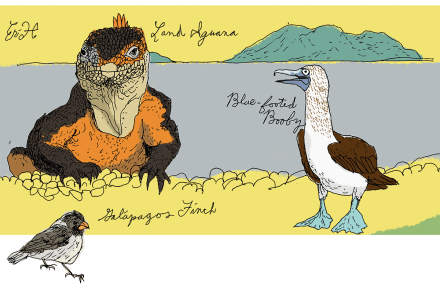
It was stiflingly hot in the middle of the Pacific Ocean. I was exploring the eastern Galápagos Islands, living cheek-by-jowl on a former casino ship with a cast of characters plucked straight from a murder mystery novel: a former British supermodel, an Ecuadorian presidential candidate, the ex-drummer of a band who once supported the Who and an influencer couple who looked like they had stumbled off the set of Triangle of Sadness. The stars of the show – and boy did they know it –were the sea lions While the trip had all the ingredients to cook up an irresistible whodunit, I was not just there to inspect the wildlife on board but to observe the wildlife off it.

Sleepless in Shangri-La

“You are suffering from what we call an ‘Alice in Wonderland’ effect,” Dr. Sankar informed me as I climbed out of a rabbit hole. I was late for a very important date to discuss my sleep (or lack thereof). “When you fall asleep,” he continued, “your thoughts race, and you think: What should I be doing? What do I need to do? Where am I? Where am I going?” I had fallen head-first into another wonderland: Ananda in the Himalayas. Located in the foothills of the Himalayas in northern India, Ananda – which translates to “happiness” in Sanskrit – is a world-renowned holistic retreat that towers above the bustling city of Rishikesh and the sacred Ganges River.

David Bowie’s plastic soul: Young Americans at fifty

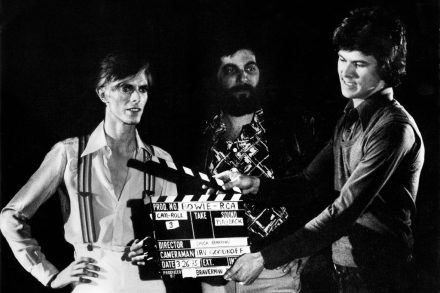
When the Puerto Rican guitarist Carlos Alomar first met David Bowie, he didn’t think a man could turn a whiter shade of pale. The singer looked emaciated; his complexion teetered on translucency, and weighing only 95 pounds, the only signs of life were a pulse and a mop of orange hair. It was the mid-Seventies, and Bowie was touring America deep in the throes of addiction — the “darkest years” of his life — surviving on a paltry diet of red peppers, cigarettes, milk and cocaine. Yet somehow, through the haze of these drug-fueled years, Bowie underwent a chameleonic reinvention of self and sound — and finally broke America. Bowie had cast a sheen of suspicion over America as an aspiring artist, even admitting to hating it initially.

david bowie

Why Alice Neel remains a vital presence

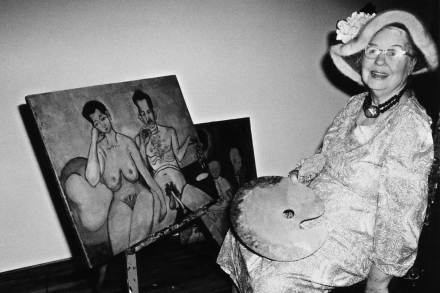
There is no portrait by Alice Neel quite as radical as her own. The artist was one of the first octogenarian women to exhibit a nude of herself with 1980’s “Self-Portrait.” In the painting, Neel grasps her paintbrush and sits exposed at the edge of a blue-and-white striped armchair. There’s no doubt about it; this is a woman of conviction who demands, “Look at me, in all my senescent glory: my silver hair, wrinkled face, sagging breasts, this is a life lived and here are its marks.” It’s only in the last decade or so that Neel has risen from relative obscurity to be acknowledged as one of the twentieth century’s greatest portraitists.

Neel

How music can be weaponized

A noise booms from a downtown district of Kyiv. It’s not the screech of a piercing siren or a building collapsing into rubble but the pumping beat of electronica. Throughout the deafening clamor of the Russia-Ukraine war, Gasoline Radio has kept broadcasting, mixing contemporary electronic music with traditional folk to fortify Ukrainian national identity. Whether pumped out by electronica DJs, violinists playing for families in shelters or singers performing in the shelled-out carcasses of cities, all is far from quiet on the cultural front of Ukraine. Wherever there is oppression, there is resistance, and music has long been a weapon for these war-weary civilians.

Rebel

The life of David Sylvester

It’s 1960, and the clock has struck seven in the morning on Manhattan Island. A car weaves through the clamorous city as the morning sun settles. In the front seat are the Canadian-American painter Philip Guston and the British art critic David Sylvester; the pair have just enjoyed a sobering Chinese meal after a long night of drinking with Willem de Kooning and Franz Kline, which called for the digestif of a drive. It has been an epochal night for Sylvester; he just doesn’t know it yet. In 1996, Sylvester, who would have turned 100 this year, wrote his essay “Curriculum Vitae” later reproduced in his acclaimed About Modern Art: Critical Essays 1948-2000.

Sylvester