Homosexuality

The problem with ‘queer art’

In 1911 Duncan Grant’s ‘Bathing’ went on display as part of a design scheme for the dining room of the Borough Polytechnic in Southwark. This large painting depicts a group of strongly muscled male bathers diving, swimming and hauling themselves into a boat. Only one of them is wearing a bathing slip, and while this kind of spectacle might have been familiar to anyone educated at a public school at this period, the art critic of the Times complained that it could well have ‘a degenerative influence on the children of the working class’. The picture now hangs in Tate Britain, and is used on the gallery’s website to direct people to an account of ‘Queer Life and Art’.

Vigilante justice: Pure Men, by Mohamed Mbougar Sarr, reviewed

Like the Booker, the Prix Goncourt’s laureates now tend to veer between diamonds and duds. One of the strongest recent novels to take France’s premier book award was, in 2021, The Most Secret Memory of Men by Mohamed Mbougar Sarr, from Senegal. Almost a West African Possession, it sent its narrator on a quest for a cult writer named T.C. Elimane – inspired by the Malian novelist Yambo Ouologuem – who had vanished after claims of plagiarism shredded his reputation. A combination of mystery, satire and cultural inquiry, it spotlit the fate of African authors who are lionised and then forsaken by the Parisian literary elite. The Goncourt coup has prompted English-language publishers to revisit Sarr’s backlist.

Wham! How George Michael shot to stardom straight from school

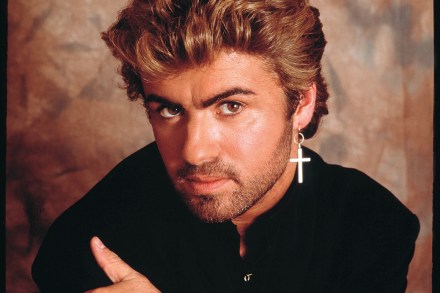
It turns out that the writer Sathnam Sanghera, ‘The Boy with the Topknot’, has been a besotted George Michael fan since the age of eight, when he started listening to his older sisters’ Wham! records. This was an unusual thing to be as a Sikh growing up in Wolverhampton and it got him teased at school. But he stuck with it. So when a friend suggested that he write something fun to compensate for the years of heavy historical research he’d put into his excellent book Empireland, he decided to set off on a sort of pilgrimage in search of his dead hero. First stop was Mondial Cars, a showroom in Northwood, north London, which used to be the Bel Air restaurant, where the teenage Michael worked as a DJ.

A family affair: Love Lane, by Patrick Gale, reviewed

The title of Patrick Gale’s latest lyrical novel alludes both to its central theme of the hidden, winding paths of love and also to the street by Wakefield prison where two characters, Mike and Pip, live. They are fictional renderings of the author’s grandparents – the names and address are real. In Love Lane, just as he did in his 2015 novel A Place Called Winter, Gale draws on his own history to frame a question about a family secret and then uses fiction to create a rendering of a possible truth. He develops the story of Harry Cane, who, in the earlier novel, we discovered was a gay man, blackmailed out of a privileged life in England and banished to the Canadian Prairies at the start of the 20th century.

Love and loneliness in the Outer Hebrides: John of John, by Douglas Stuart, reviewed

For his third novel, Douglas Stuart moves north from the Glasgow tenements of Shuggie Bain and Young Mungo to the island of Harris in the Outer Hebrides. John-Callum, known as Cal, returns to his family croft after spending four years at a mainland textile college, following a call from his father, John, to tell him that his grandmother is dying. John is the precentor of his local church, a congregation of Free Presbyterians, who adhere to an extreme biblical morality. The 26 remaining members attend four services each Sabbath and believe that fathers have authority over children and husbands over wives, since women ‘rarely know what is best for themselves’. Stuart treats this faith, which will be inimical to the majority of his readers, with great respect.

A portrait of the fin de siècle in all its morbid decadence

Everyone I have met who has read Belchamber, Howard Sturgis’s novel of 1904, would endorse Edith Wharton’s judgment that this was a book which was ‘very nearly in the first rank’. I can still vividly remember the week – half a lifetime ago – when my wife and I discovered the little blue World’s Classics edition in a secondhand bookshop and were lost to the world for days. It is Henry James with the gloves off – in some ways quite unbearably vivid. Country house adultery and the sexual mores of London society during the 1890s are upsettingly, even crudely, laid bare. ‘Sainty’ the English aristocrat, an aesthete whose favourite pastime is knitting, fails to satisfy his coarse-grained wife, who provides him with a baby even though the marriage is, of course, unconsummated.

James Baldwin – dogged by painful uncertainties throughout life

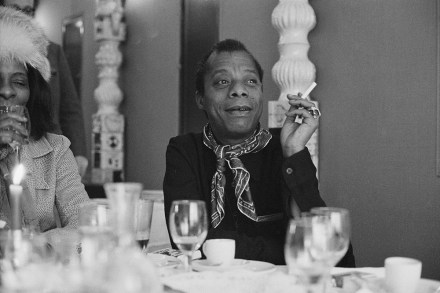
James Baldwin, like many American novelists before him, F. Scott Fitzgerald and John Dos Passos included, spent his formative years flitting restlessly between New York and Europe – New York being a source of fascination but also of creative burnout. He completed his first novel, Go Tell It On the Mountain (1953), not in Harlem, where he grew up and set the book, but in a Swiss chalet owned by the family of his then boyfriend, Lucien Happersberger. As he lived and worked in Loèche-les-Bains, Baldwin reasoned that the village children who shouted ‘neger’ at him did not mean to be unkind. They were simply curious and could never have known ‘the echoes this sound raises in me’.

Frederic Prokosch – the man who seemed to know everyone

One day Frederic Prokosch wrote a novel. He was 27 years old, living with his parents in New Haven, Connecticut, and desperate to be published. Leafing through an old atlas, he had visions of Lebanon and Syria, of the apricot trees of Damascus, the pilgrims travelling from Transcaucasia, and the Orontes River flowing among the rocks. His visions grew more vivid and the voices clearer: ‘I leaned forward in my chair and started to write as though mesmerised.’ The resultant book, The Asiatics, was an immediate success, praised by the likes of Thomas Mann, Albert Camus and André Gide. Others, however, were less sure. How could one write about Asia without ever having been there? Prokosch, it seemed, had quite the imagination.

Robbie Williams and the allure of homoerotic pop

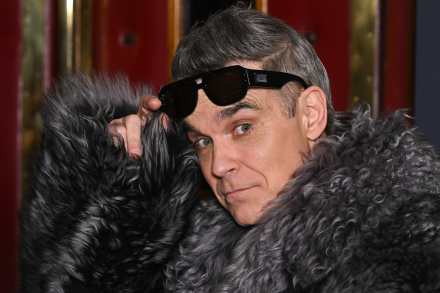
When I heard that Robbie Williams had written a song called ‘Morrissey', I didn’t know whether to be delighted or irate. It’s no secret that I idolise Moz, and the idea of a somewhat seedy showman attempting glory by association made my hackles rise somewhat.  But on the other hand, Williams has co-written several songs which have caused my toes to tap over the years and has a history of acting gay when it suits him. (Indeed, Take That’s appeal might be crudely summed up as four lads who looked like rent boys and their concerned social worker, Gary Barlow.) Then there was the ‘Shame’ video of 2010 by Robbie and Gary, in which the two principals start by exchanging copious meaningful glances in a shopping mall.

A flying visit: Palaver, by Bryan Washington, reviewed

I’ve never been to Tokyo, but sometimes I wonder: why bother with the plane ticket? The imagined Tokyo is more real than the actual city. For westerners, it is a place whose USP is its unreality: its irreducible strangeness, its intense Japaneseness. It’s a city where lonely souls go to bump against other lonely souls and everything is lost in translation. To spoil this fantasy with too much daylight would be to miss the point. On the surface, Bryan Washington’s Palaver isn’t in a hurry to push against these clichés. It follows an estranged mother and son who meet again in Japan many years after he has left the humidity and homophobia of Texas.

A prolonged love affair: The Two Roberts, by Damian Barr, reviewed

For a time, Robert Colquhoun and Robert MacBryde were at the heart of the in-crowd. Stories of Francis Bacon, Lucian Freud and their wartime circle often make reference to the two young painters from Scotland. Feted in the 1940s for their modernist styles – Colquhoun typically portraying figures, MacBryde preferring still life scenes – they later lapsed into painful, drink-sodden obscurity. Damian Barr’s novel, The Two Roberts, is a tender and evocative act of resurrection. It portrays the men’s lives from the time of their first meeting as students at Glasgow School of Art to the moment in the mid-1950s when, penniless and out of fashion, they retreated to an ancient cottage in Suffolk.

Glamour and intrigue: The Silver Book, by Olivia Laing, reviewed

Olivia Laing has had a productive couple of years. The Silver Book arrives hot on the heels of The Garden Against Time, a memoir-cum-environmentalist treatise published in 2024. It is a novel of stunning imaginative power that was apparently written in just three months. Set in 1975, during the making of two great works of Italian cinema, Federico Fellini’s Casanova and Pier Paolo Pasolini’s Salò, it is suffused with the glamour and intrigue of these filmmakers’ worlds. It offers a fictional retelling of the events that led up to Pasolini’s murder – a crime that remains unsolved – on 2 November.

Hard-won gay rights will be easily lost

In the Palace of Westminster a fortnight ago, I spoke at a reception celebrating the 50th anniversary of the Tory gay rights movement now called LGBT+ Conservatives. And last weekend I read a book to be published on 9 October. It turns out that its author and I are saying the same thing. Professor Ronan McCrea has chosen the title The End of the Gay Rights Revolution: How Hubris and Overreach Threaten Gay Freedom. My speech bore no such title, but here’s more or less what I said. I began by recalling, for a young audience, the dismal beginnings of what was to prove a cultural revolution. ‘I will never forget the sniggers and winces at our then name: the Conservative Group for Homosexual Equality.

The enigma of C.P. Cavafy

C.P. Cavafy, who had a very high opinion of his own work, would no doubt be gratified to learn that he is now one of the most admired poets of the 20th century. This is all the more remarkable because during his lifetime (1863-1933) he did not allow a single volume of his poetry to be published, preferring to circulate privately printed sheets and pamphlets among his admirers. He was also disinclined to co-operate with those who wanted to translate the poems from their original Greek into other languages; but in English alone there have now been more than 30 different volumes of his complete or selected poems.

The scourge of the sensitivity reader

‘Something strange is happening in the world of children’s and YA [young adult] literature,’ writes Adam Szetela, and his horrifyingly compelling book certainly bears that out. It offers a sobering report from the front lines of how identity politics and online pile-ons against anyone who sins against the latest pieties actually play out in the world of American publishing. Such is the atmosphere that many of the interviewees, who include presidents of the Big Five companies, senior agents, directors of public library districts and award-winning writers, are almost paranoid about preserving their anonymity. At the heart of That Book is Dangerous!

The Spectator letter that marked a turning point in gay history

On 3 June 1960, a letter appeared in The Spectator which began: Sir, We are homosexuals and we are writing because we feel strongly that insufficient is being done to enlighten public opinion on a topic which has for too long been shunned. The letter was prompted by the government’s failure to act upon the recommendation of the 1957 Wolfenden Report that homosexual acts between consenting adults in private should no longer be a criminal offence. This had led to the founding of the Homosexual Law Reform Society (HLRS) in 1958, and it was for this organisation that the letter’s three signatories worked as volunteers.

Is there ever a good time to discuss the care of the elderly?

Not far into The Life, Old Age, and Death of a Working-Class Woman, Didier Eribon quotes from this balladesque 1980 track by the French singer-songwriter Jean Ferrat: We have to be reasonable You can’t go on living like this Alone if you fell sick We would be so worried You’ll see, you’ll be happy there We’ll sort through your affairs Find the photos you love It’s strange that a whole life Can be held in one hand With the other residents You’ll find lots to talk about There’s a TV in your room A pretty garden downstairs With roses that bloom In December as in June You’ll see, you’ll be happy there ‘You’ll see, you’ll be happy there’ presents us with an adult gently addressing a parent about the latterâ.

The weirdness of the pre-Beatles pop world

Quizzed about pop by the teen music magazine Smash Hits in 1987, the year of her third consecutive electoral victory, Margaret Thatcher singled out ‘Telstar’, a chart-topper from a quarter of a century earlier, for special praise. She pronounced it ‘a lovely song… I absolutely loved that. The Tornados, yes.’ As a whizzily futuristic sounding instrumental ode to a transatlantic communications satellite, and only the second British recording to top the American Billboard charts, its charm for Thatcher was perhaps as much political as musical. That it was the work of an independent producer might also have appealed to her love of freewheeling, self-reliant private enterprise.

The queer traditions of King’s College, Cambridge

Interviewed on television for his 80th birthday in 1959, E.M. Forster said that one of the reasons he was so fond of King’s College, Cambridge, where he had lived as a Fellow since 1946, was ‘a very precious tradition, that the old people and the young can meet here very easily and without self-consciousness’. In this svelte and sprightly book, Simon Goldhill (himself a Fellow of King’s) traces this tradition over some 140 years, and describes the part it played in the creation of a remarkable, ever evolving community of gay men. He begins his story in 1885 when J.K. Stephen, the future tutor to Queen Victoria’s grandson Prince Albert Victor, became a Fellow of the college.

Red-letter days for Gilbert & George

James Birch is a somewhat mysterious art dealer and curator, whose first great triumph was mounting a Francis Bacon exhibition in Moscow in 1988. He wrote a gripping book about that adventure, Bacon in Moscow, and has now written an even more gripping follow-up, about taking Gilbert and George to Moscow, Beijing and Shanghai. Mounting the Moscow exhibition meant getting drunk every night, but Birch carried it off with aplomb Birch was born ‘circa 1956’, according to Wikipedia, and grew up in Primrose Hill, London. Both his parents were artists and also communists, which he claims was not unusual in the 1960s (though I’d say it was, quite).