History

Searching for a saviour

The central themes of Russian history have remained constant for over a millennium.  Russia’s vast spaces and lack of any natural borders have always made her inhabitants terrified of invasion. And to protect the country against invaders, and to preserve its unity, Russia’s rulers seem always to have felt it necessary to assert their authority with great brutality. All this is at least hinted at in the very first introduction to Russian history. The Primary Chronicle, compiled in Kiev around 1113, tells us that there was no law among [the Slavs], but tribe rose against tribe…  Accordingly they …  said to the people of Rus [who were probably Scandinavians]: ‘Our

Special providence …

When Ed Smith became a full-time professional cricketer for Kent in 1999 the county side was preparing for the new millennium by shedding anything that smacked of old-fashioned amateurism. Professionalism was to be a state of mind. Players were henceforth required to sign up to a new code of conduct. This Core Covenant consisted mainly of a succession of abstract nouns, though it also proclaimed its faith in the transformative power of setting targets by requiring a ‘pledge’ from all players that they would take at least 50 extra catches during every practice session. What was more, it took personal responsibility to a higher level by abolishing bad luck as

A gruesome sort

Everybody knows that the heart pumps blood around the body, and that a man called William Harvey somehow discovered this fact. Before Harvey, people thought that blood moved around the body in a sluggish fashion. But then Harvey — who was born 14 years after Shakespeare — noticed that, actually, blood shoots out of the heart with great force, travels through the arteries, and then makes its way back to the heart through the veins. To find this out, in an age before X-rays, sonograms or heart monitors, you would, if you think about it, have had to be a pretty gruesome sort of person. As soon as I started

Bookends: Terribly Tudor

History publishers like a gimmick, so I assumed Suzannah Lipscomb’s A Visitor’s Companion to Tudor England (Ebury, £12.99) must be a cheeky rip-off of Ian Mortimer’s Time Traveller’s Guide series. Not so. In fact this is a rich, meticulously plotted field guide to the surviving architectural treasures of Tudor England: the houses, fortresses, palaces and battlefields that were trodden by our most famous royal dynasty, from Westminster Abbey and Windsor Castle to Kett’s Oak and Burghley House (pictured).But it is more than just historical I-Spy. Lipscomb is an eloquent tour-guide, and each of her 50 destinations allows her deftly to unfold a different chapter of Tudor history. The course she

Who are the losers now?

Keith Lowe’s horrifying book is a survey of the physical and moral breakdown of Europe in the closing months of the second world war and its immediate aftermath. It is a complex story and he tells it, on the whole, very well. Though the first world war took the lives of more uniformed young men, in the useless slaughter of the Flanders trenches, many more people, chiefly civilians, died in 1939-45. Soviet casualties were the greatest: 23 million killed, of whom two million came from Belarus and seven million from Ukraine. Next came the Poles, with losses of 6,028,000, the largest percentage of the population in any country. The Germans

Architectural bonsai

In the summer of 1961 I was in my second year at Magdalen College, Oxford with rooms in the 18th-century New Buildings. One of my neighbours there was a quiet man called Jonathan Green-Armytage. Sitting out on the steps of the building’s colonnade, in the sun, we became friends. He was already a distinguished photographer. He showed me photographs he had taken of Edith Sitwell, with her medieval face and gnarled, beringed fingers. They were at least as good as Cecil Beaton’s portraits of the old poet. One day, Jonathan said to me: ‘I think you’d enjoy to meet my god-mother, Vivien Greene; and I think she’d like to meet

Bookends: A matter of opinion

In an age when the merely mildly curious believe they can get all they really need to know from Wikipedia for free, A. N. Wilson’s fellow literary professionals must take heart from his expectation that there is still possibl to charge for a work of such succinctness that it is essentially an extended Wikipedia entry enlivened by some opinions. Wilson’s Hitler: A Short Biography (Harper Press, £14.99)certainly trumps Wiki for stylistic brio and brims with the author’s customary zip and zing. Inevitably few of the insights are especially original, but they are punchily delivered, particularly regarding Hitler’s early bone idleness and his modish, rather than outlandish, belief that science had

Lest we forget | 17 March 2012

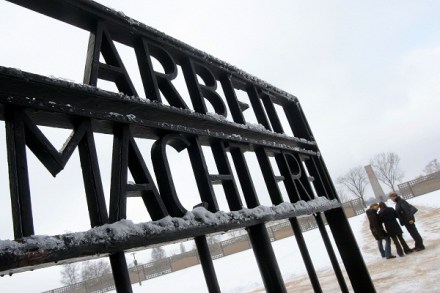
It was not possible, as Primo Levi memorably wrote, to convey the full horror of the Nazi extermination camps because no one had survived to describe death in the gas chambers. There were no ‘sommersi’ (drowned) left alive to speak for the men, women and children driven in naked to die.  Apart from Levi himself, one of the very few people to have got close is Claude Lanzmann, whose nine-and-a-half-hour film on the deaths camps, Shoah, transformed the way successive postwar generations have come to remember and perceive the Nazi killings. In his autobiography, The Patagonian Hare, Lanzmann provides much interesting material on the 13 years spent filming and editing,

‘Viva la muerte!’

The Spanish Holocaust is a book that will give readers nightmares: it gave me two in a single night. Even people who think they have read enough about the Spanish Civil War to feel inured to its horrors will still be appalled by the intensity of the cruelty and repression here revealed. ‘Of the folly and wickedness of the military rising’, wrote Gerald Brenan in The Spanish Labyrinth, ‘there can today be no two opinions.’ Nor today, more than 60 years after he wrote those words, can there be two opinions about the sadistic and merciless repression planned and perpetrated by General Franco and his conspirators.  Reading Paul Preston’s narrative

Patriot or traitor?

The mighty convulsion that was the French Revolution has stirred the blood of historians from Thomas Carlyle to Simon Schama and consideration of it still inflames opinions. At its centre stood Maximilien Robespierre — 5’ 3”, stern, unaffacted in manner or dress, Spartan in his domestic habits — deified by his followers as the ‘Incorruptible’ and vilified by his opponents as a traitor to the ideals of 1789, bent on dictatorship. Peter McPhee spares us speculation (Robespierre left no memoirs or diaries) on his subject’s ‘inner life’. Relying chiefly on Robespierre’s voluminous speeches and articles for the press, he calmly follows his progress, from crisis to crisis, in an austere

Charming, cold-eyed cosmopolitan

At last a diary as penetrating on Berlin as the Goncourt brothers’ on Paris has been translated into English. The author, Count Harry Kessler, resembled a character from Sybille Bedford’s masterpiece, A Legacy. Born in Paris in 1868, he was educated in England, France and Germany. His father was a Hamburg banker; his mother was an Irish-Scottish beauty called Alice Blosse Lynch, admired by the Emperor Wilhelm I. At once German and European, Kessler rotated, as freely as some do today, between London, Paris and Berlin. After a year in the army, and a voyage round the world, Kessler devoted himself to the arts. Exhibitions and parties, and  long descriptions

His dark materials

Like the dyslexic Faustus who sold his soul to Santa, the life of John Dee was a black comedy of errors. His vain and vulgar efforts to harness the occult for material ends often rendered him ridiculous. But there is a darker tale in Dee’s work for the Tudor state: a story of dodgy dossiers, fear-mongering and greed. During the Tudor period no clear distinction was made between science and magic. John Dee’s study at Cambridge of arithmetic, geometry and astronomy enabled him to become a navigational consultant, who worked with England’s greatest explorers. But it also helped him measure the rays of celestial virtue that emanated from the stars

Anglo-Saxon divide

Philip Oltermann has set himself an almost impossibly ambitious task. In 1996, when he was 15 years old, he moved from Hamburg to London, so he has close experience of both England and Germany. In due course it occurred to him, as a man of wide cultural sympathies, that he ought to be in a position to write an interesting book about Anglo-German relations. But how to structure such a work? Oltermann is too polite to say so, but a great part of the problem is that modern English readers are abysmally ignorant of Germany. This used not to be the case: before 1914, to be educated was to be

Spiritual superhero

When totting up the positives from the British Raj, people often put the railways first, followed by the Indian Civil Service or the Indian Army. The Empire was won by the sword and held by the sword. It was racially exclusive, its taxes were often predatory, and its punishments savage. But at least it left an institutional legacy that helped to make independent India a startling success against all the odds, after the bloody wound of Partition and despite the excruciating poverty of the second most populous nation on earth. But what the British bequeathed to India was not only a usable future but a usable past. This may sound

The making of the modern metropolis

Why in 1737 did Dr Johnson choose to leave his home in Lichfield in the Midlands and travel to London to make a fresh start as a writer, asks Jerry White in his encyclopaedic portrait of the 18th-century capital. It’s a good question. London was dangerous, it was dirty, you could die of ague in a matter of hours, be robbed, crushed to death by the mob, thrown into jail for unpaid debts, and, no matter whether you were rich, poor or of the middling sort, suffer the scourge of bed bugs through every waking hour. To live comfortably (without domestic cares) you needed to earn enough money to employ

If only …

In the early summer of 1910, a naval officer, bound for the Antarctic, paid a visit to the office of Thomas Marlowe, the editor of the Daily Mail. He had come in search of some badly needed funds for his expedition, but just as he was leaving he paused to ask Marlowe when he thought war with Germany would break out. ‘I can only tell you,’ came the reply, ‘that there is a well-informed belief that Germany will be ready to strike in the summer of 1914 and it is thought that she may do so.’ The officer mulled this over, doing his calculations. ‘The summer of 1914 will suit

Loves, hates and unfulfilled desires

Montaigne, who more or less invented the discursive essay, had a method which was highly unmethodical: ‘All arguments are alike fertile to me. I take them upon any trifle . . . Let me begin with that likes me best, for all matters are linked one to another.’ Geoff Dyer could say very much the same thing, and it follows that Zona, though nominally a book about Tarkovsky’s maddening 1979 masterpiece Stalker, goes off in any number of directions. There are other ways of describing a circle than setting out to draw all its tangents, but that is Dyer’s preference. If the style of approach hasn’t changed, then the cultural

Real and imagined danger

What was the Cold War? For Professor John Lewis Gaddes, it was a conflict between two incompatible systems, democracy and communism, each with a different vision of liberty and human purpose. The result was a potential third world war, in which we risked being crushed by dictators or destroyed by nuclear weapons. And the US saved us. ‘The world,’ he writes, ‘I am quite sure, is a better place for the conflict having been fought in the way that it was and won by the side that won it. For all its dangers, atrocities, costs, distraction and moral compromises, the Cold War was a necessary contest.’ Andrew Alexander disagrees. And

Storm in a wastepaper basket

‘It’s the revenge of Dreyfus,’ came the cry from the dock. The speaker was the veteran right-wing ideologue, Charles Maurras, found guilty of treason in 1945 for his support of the collaborationist Vichy regime. It wasn’t of course that, and yet there is a sense in which Maurras spoke the truth. The Dreyfus case had divided France half a century before Maurras was put on trial in Lyon. The division between what Piers Paul Read, in this masterly and eminently balanced account of the Affair, calls ‘the France of St Louis and the France of Voltaire’ had never been closed. The end of the Third Republic and its replacement by

JFK: The Nastiest President of the Twentieth Century?

Who was the most reprehensible US President in the twentieth century? That’s a tough question, though not one related to policy, political preferences or job performances. I mean instead: who was the nastiest piece of work to occupy the White House at any point during the last century. There are, I think, five contenders: Teddy Roosevelt, Woodrow Wilson, John F Kennedy, Lyndon Baines Johnson and Richard Nixon. Mimi Alford’s new memoir, relating how she had an affair with JFK while working in a junior role at “Camelot” offers more form proving that the drug-wracked, priapic Kennedy is a leading contender in this grim contest. Among the gruesome stories she tells: