History

The week in books – a 19th century career woman, the courtesan of the camellias, Vasily Grossman and why France is turning into the USA

The forecast is bad. Football is back. Gloom strikes. Cure the malaise by reading the book reviews in this week’s Spectator. Here’s a selection: Richard Davenport-Hines introduces the celebrated American novelist and businesswoman Willa Cather to a British audience: ‘Cather was a pioneering career woman who in the late 1890s supported herself as a magazine editor and then as newseditor at the Pittsburgh Leader — an unprecedented post for a woman. She was later a successful managing director ofMcClure’s Magazine. With her gumption and vitality, she was a stalwart among women facing the ‘rough-and-tumble’ of competitive work. It is regrettable that her book Office Wives — a collection of stories about women in business —
The Coronation Chair and the Stone of Scone, by Warwick Rodwell - review

The Coronation Chair currently stands all spruced up, following last year’s conservation, under a crimson canopy, by the west entrance to Westminster Abbey. The sovereign has used this throne during the actual ceremony almost continuously since the coronation of Henry IV (1399). The oldest dated piece of English furniture (1297-1300) made by a known artist (Walter of Durham) to survive has been given the comprehensive study it deserves by Warwick Rodwell, with supplementary chapters on its most recent conservation by Marie Louise Sauerberg and its current display by Ptolemy Dean. Not only does the book cover the design, construction and decoration of the chair, but also the subsequent adaptations and

Anne Boleyn’s last secret

With his wife, Anne Boleyn, in the Tower, Henry VIII considered every detail of her coming death, poring over plans for the scaffold. As he did so he made a unique decision. Anne, alone among all victims of the Tudors, was to be beheaded with a sword and not the traditional axe. The question that has, until now, remained unanswered is — why? Historians have suggested that Henry chose the sword because Anne had spent time in France, where the nobility were executed this way, or because it offered a more dignified end. But Henry did not care about Anne’s feelings. Anne was told she was to be beheaded on

Winston Churchill was a very human leader, says Churchill and Empire author Lawrence James

More books have been written about Winston Churchill than perhaps any other figure in British history. Do we really need another volume added to the existing library? In Churchill and Empire, the historian Lawrence James makes a strong case for justifying another book for Churchillian bibliophiles. The narrative begins by looking back at Churchill’s career as a young army officer in the late nineteenth century, where he served in conflicts in India, South Africa and Sudan. It ends with Churchill’s slightly deluded view of Britain’s place in global politics as the Second World War is ending: when the British Empire is disintegrating and America is the most dominant superpower on

The week in books – Tudors, thinkers, dreamers and boozers

The book reviews in this week’s issue of the Spectator is worth the cover price. Here is a selection of quotes from some of them. The historian Anne Somerset enjoys Leanda de Lisle’s ‘different perspective’ on the Tudor dynasty. She reminds us that these self-invented parvenus had ‘vile and barbarous’ origins. ‘When Henry VII’s surviving son inherited the throne as Henry VIII, he continued his father’s policy of judicially murdering anyone close enough to the throne to imperil the claims of his immediate family. Yet the dynasty’s future remained precarious, for Henry’s six marriages produced only a single male heir. Having disinherited his daughters Mary and Elizabeth, Henry only reinstated

Tudor, by Leanda de Lisle - review

As parvenus, the Tudors were unsurpassed. In the early 15th century no one would have predicted that within a couple of generations these minor Welsh land-owners would mount the English throne and rule the kingdom for more than 100 years. Notwithstanding their ‘vile and barbarous’ origins, their name would become synonymous with historical glamour and the ruthless exercise of regal power. The family started their precipitous ascent when young Owen Tudor was taken to England by his father and secured himself a position as a chamber servant to Henry V’s widow, Catherine de Valois. Having opportunely tripped and fallen into her lap while dancing, he secretly married her and had

Sorry – the Vikings really were that bad

Sometimes the really obvious take on history turns out to be the right one. For generations, we all assumed that the atrocities perpetrated by the Germans in Belgium at the outset of the first world war and enthusiastically reported in the British press were Allied propaganda. Yet recent research suggests that quite a lot of it was true. Well, the same goes for the Vikings. For almost half a century, the academic line on Vikings has been that our old idea of them as raping, pillaging bastards who’d sack a monastery as soon as look at it was a childishly transparent bit of propaganda, perpetuated by Christian monks who were

The Life and Death of the Spanish Republic, by Henry Buckley - review

With Spain’s economic crisis in the forefront of global news, it would be fascinating to see what a reporter of Henry Buckley’s stature would have made of its current predicament. He was the Daily Telegraph’s man in Madrid from 1929, who for a decade furiously filed dispatches from all corners of the country as its young democracy sparked, and eventually burst into civil war — finding time to swap stories with Hemingway over whiskies in between. His eyewitness account of this conflict was never to see the light of day in book form after the London warehouse storing the copies awaiting distribution was bombed in 1940. But a handful did

Island, by J. Edward Chamberlin - review

‘Tom Island’ — that was the name I was given once by a girl I met on an island in the Tyrrhenian Sea. Of course, she broke my heart in due course. Turned out to be a lesbian, or so she claimed. But I liked the nickname, and as I think about it now, my life seems to be defined by islands of one sort or another (even putting aside England, which isn’t one). I live, at least part of the time, on the Greek island of Corfu. (It’s de rigueur, these days, for writers to ‘divide their time’ rather than be so dull as to live in just one

Spectator event: An evening with Simon Schama on the history of the Jews

There was a row earlier today when a leading figure in the EDL linked (inadvertently, he says) to a website of anti-Semitic sympathies. It is dispiriting that, more often than not, Judaism and Jewish people only receive mainstream media coverage when there is a public spat about anti-Semitism, for there is so much more to their history than persecution. As it happens, Simon Schama will be telling this, for want of a better phrase, “alternative history” in a BBC TV series this autumn. But readers of the Spectator don’t have to wait for the telly or the DVD because Schama will be giving us an exclusive talk at Cadogan Hall

Gibraltar – 200 years of history in the Spectator

The most dramatic part of Lothar-Günther Buchheim’s unmatched submarine novel, Das Boot, takes place beneath the Straits of Gibraltar, when Buchheim’s U-boat is ordered from the Atlantic to the Mediterranean. ‘How can we get through?’ Asks one of the luckless crew, certain that Gibraltar’s massive defences will be the death of them. At least 9 U-boats were destroyed making that perilous run during the Second World War. The story of Gibraltar is not merely a tale of garrisons and gunships. The Spectator’s unique archive provides some insight into the life of the colony over the last 200 years, especially at times when the Rock became embroiled in Spanish intrigue or when it was threatened by

Magic, by Ricky Jay - review

People, they say, want different things from a book over the summer than they do the rest of the year. If, by chance, you are looking for a book that will both give you a hernia and teach you how to make a bridge disappear, this could be just the thing for you. The motorbike messenger who delivered my copy of Magic had to come in for a glass of water and complained that the effort of carrying it had made his legs bowed. It is, quite simply, the largest book I have ever tried to read — the literary equivalent of the Great Bed of Ware. So what’s inside

Glorious Misadventures, by Owen Mathews - review

So: Russia’s imperial possessions on the Pacific North West of America. Remember those? No. Me neither. Something vague about the Russians flogging a bit of Alaska to the United States in the middle of the 19th century perhaps. But until I’d read this book I didn’t know that at one point Continental Russian America, not counting the Aleutian Islands, stretched 1,400 miles from its Eastern Tip (today called Cape Prince of Wales, by little Diomede Island in the Bering Strait) to its southwestern boundary near Sitka. If laid on top of the Continental United States, the territory — which closely corresponds to the modern state of Alaska — would stretch

A secret sperm donor service in post-first world war London

These days there are sophisticated and scientific solutions to the dismal problem of unwanted childlessness — there are IVF, Viagra and well-established egg and sperm donor services. We think of these as recent advantages and give thanks for the modern age. But what only very few people are aware of is that long before sperm donation was practically or ethically possible, in the early 20th century, a secret sperm donation service existed for those women most in need. Helena Wright was a renowned doctor, bestselling author, campaigner and educator who overcame the establishment to pioneer contraceptive medicine in England and throughout the world. Kind, intelligent, funny and attractive, Helena had

The Ghosts of Happy Valley, by Juliet Barnes - review

Rift Valley, Kenya The other day when I told the headmaster of a top British public school that I came from Kenya, he quipped, ‘Ah, still living in Happy Valley?’ We will never shake it off, this idea of a Happy Valley in the equatorial highlands where aristocrats supposedly indulged in orgies and drugs — what Cyril Connolly dubbed the three As: Altitude, Alcohol and Adultery. It culminated in Joss Erroll’s 1941 murder. ‘Perhaps Africa was to blame,’ Connolly wrote. ‘It insinuates violence.’ It is 30 years ago that James Fox, inspired by Connolly, resurrected these tawdry events in his book White Mischief. It has never been out of print

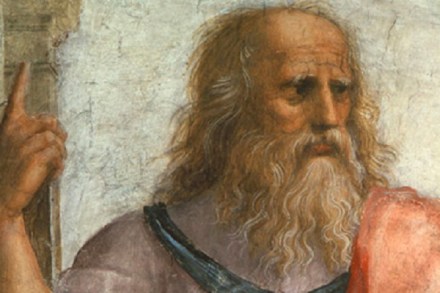
Plato - slave-owning aristocrat or homosexual mystic?

For over two millennia, the writings of Plato had been at the very core of a Western education. Yet  by the dawn of the 21st century, Plato appeared marginalized to the benign pedantry of Classics departments — engagement with his ideas having been spurned by many philosophers and educators over the preceding decades. To many his call to search for truth — and to live according to it — is no longer seen as applicable to our relativistic age. Neel Burton’s Plato: Letters to My Son attempts to rescue Plato from irrelevance and guide another generation of readers and leaders along the path of self-knowledge. To understand the thrill of Burton’s timely intervention,

Some brilliant book reviews

As ever, the Spectator carries some splendid and erudite book reviews this week. There are contributions from stellar writers and thinkers such as Margaret MacMillan, Susan Hill, Alexander Chancellor and John Sutherland. Here is a selection. Margaret MacMillan is captivated by Edwardian Opulence: British Art at the Dawn of the Twentieth Century, a ‘lovely lush book’ edited by Angus Trumble. But, even as she peruses the glorious pictures and accompanying essays, her mind cannot escape the horrors of what the painters had overlooked and what was to come: ‘The Edwardian nostalgia, well-illustrated here, for an older world was rather like the passion for organic farming and the slow food movement

Niccolo Machiavelli, by Corrado Vivanti; The Garments of Court and Palace, by Philip Bobbitt

One more anniversary, one more cache of commemorative books. This time we are celebrating the half-millennium since Niccolò Machiavelli produced his notorious work, The Prince. He wrote it after a significant career blip in 1512, when the Florentine Republic fell and the Medici regained power. Machiavelli was not merely sacked from his job — secretary to the Republic — but also accused of conspiracy, imprisoned and horribly tortured. In 1513, he was released into exile, and went to live on his family farm, south of Florence. There he walked, consorted with ‘vulgarity’ (the locals) and read classical writers, including Livy, Tacitus, Sallust, Plutarch, Suetonius and Procopius. By December 1513, Machiavelli

Edwardian Opulence, edited by Angus Trumble - review

She sits there on the cover exuding sex and wealth and a certain knowingness. Mrs Lionel Phillips, who came from a modest background in South Africa, had the good sense to marry one of the ‘Rand Lords’ who made their piles in the new gold and diamond fields. She and her husband bought their way into society in Britain, accumulating houses and furniture and having themselves painted, as in this wonderful portrait, by the fashionable Giovanni Boldini. That of Mr Phillips is more subdued, even sombre.   The face, said the Athenaeum, ‘is amazing in its unscrupulous vulgarity’. Well, one might think, the anonymous critic could have taken a look around

The Annals of Unsolved Crime, by Edward Jay Epstein - review

Edward Jay Epstein is an American investigative journalist, now in his late seventies, who has spent at least half a century trying to find answers to the troubling theories and nagging questions that always swirl around notorious crimes. The more famous the crime, the harder it is to get at the truth, especially if the crime has political consequences. For example, John Wilkes Booth, who murdered Abraham Lincoln in 1865, was quickly proven to have been part of a conspiracy involving leaders of the defeated Confederate states; but when a reunited country was later seeking reconciliation, it was found expedient to suppress this fact and portray him instead as a