History

Kim Philby got away with it because he was posh

From our UK edition

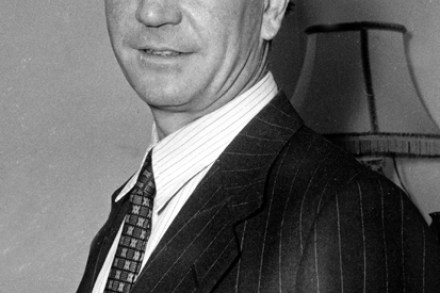
The story of Kim Philby is, of course, like so many English stories, really one of social class. He was one of the most scandalous traitors in history, and from within the security services sent specific information to the Soviets during the early years of the Cold War that resulted directly in the deaths of thousands of men and women. Among them were the Albanian guerrillas, hoping to liberate their country, who found Soviet-sponsored troops waiting at their landing places to shoot them. A list of non-communist opposers to the Nazis in Germany was passed on to the Russians who, advancing into Germany in the last years of the war, summarily executed 5,000 named people.

When a survivor of Auschwitz asks for your story, what do you say?

From our UK edition

My aim as a hospital visitor is to cheer, befriend, have a chat, do something to disrupt the bleak monotony of the modern hospital day. Some patients talk amiably while others are grumpy, demented patients kept on wards for months and who won’t shut up. Many conversations lead nowhere. Some days the pillow talk is dull, so I paid attention when someone in the chaplaincy mentioned a lady who’d been in Auschwitz and still had the camp tattoo. I’d heard of Polish girls working in London cafés after the war showing numbers etched on their arms, but I’d never met anyone who had one. I taught English in Poland for a year and made friends with a student who came from the village of Oswiecim, which the Germans renamed Auschwitz.

The Spectator: on 150 years of punishing Russia

From our UK edition

Russia’s military intervention in Ukraine has left western diplomats scrabbling for sanctions that won’t backfire on to the rest of Europe and America. The foreign secretary William Hague said Russia must 'face consequences and costs'. When a policy paper was photographed that said the UK should not support trade sanctions or close London’s financial centre to Russians, Mr Hague said it did not reflect government policy. But punishing Russia is sure to be an expensive business. Just before the Crimean War, when Russia invaded Turkish Moldovia and Wallachia in 1853, a Spectator editorial took a hard line; Russia should be punished on principle.

Niall Ferguson’s diary: Brazil is overtaking us – but it no longer feels like that

From our UK edition

 São Paolo It was back in 2001 that my good friend Jim O’Neill of Goldman Sachs coined the acronym ‘Bric’, short for Brazil, Russia, India, China. These were the emerging markets that were going to surpass the developed economies. And so they have. Well, nearly. I, too, am partial to a good acronym and it has always seemed to me very unfortunate that there isn’t a matching one for the four biggest established economies. According to the International Monetary Fund, these are currently the United States, Japan, Germany and the United Kingdom (based on last year’s GDP figures). I therefore propose ‘Juugs’. The rise of the Brics and the fall of the Juugs has a good ring to it.

The Spectator – on 400 years of unease between Ukraine and Russia

From our UK edition

Ukraine declared independence from the USSR in 1991, but Moscow has made sure it’s remained heavily involved in Kiev’s affairs ever since. That has been relatively simple. Soon before independence, Anne Applebaum described how Russia’s ruthless annexation of its neighbour had left Ukraine without much identity of its own. 'It took 350 years of Czarist domination, several decades of Stalinist purges, two collectivisation-induced mass famines, two world wars, and the refusal to teach Ukrainian children how to speak Ukrainian, along with the systematic elimination of anyone who might be thought a leader, an intellectual, a capitalist, or even a wealthy peasant. But they did it.

A secret from my African childhood has become a deeper mystery

From our UK edition

About 55 years ago, when I was about ten, my younger brother Roger and I discovered a slave pit in Africa. Actually it probably wasn’t a slave pit and we probably didn’t discover it, but ‘Arab’ ‘slave pits’ were what Southern Rhodesian schools offered as an explanation for the circular, room-sized, stone-lined pits sunk about five feet below ground but open to the sky. And if Roger’s and mine were not the first modern eyes to behold this antiquity, then we were able at least to persuade ourselves of the claim, as there was no path trodden into the small patch of dark, dense primary forest in whose midst we found the pit; and nobody else seemed to know about it. This felt like a discovery.

When Scotland goes, will England return?

From our UK edition

Who, my husband asked, expects every man will do his duty? He was responding to the interesting and important question that Charles Moore raised last week about the name of the country if Scotland leaves. My husband, naturally, is all for calling it England. Even the Oxford English Dictionary defines England as ‘The inhabitants of England (sometimes also Britain) regarded collectively.’ The Welsh would certainly be aggrieved, and the Northern Irish up in arms. But we can’t include everyone in the national name. Even now, some of the Cornish are cutting up rough.

How the first world war inspired the EU

From our UK edition

Among the millions of words which will be expended over the next four years on the first world war, very few will be devoted to explaining one of its greatest legacies of all, the effects of which continue to dominate our politics to this day. One of the best-kept secrets of the European Union is that the core idea which gave rise to it owed its genesis not to the second world war, as is generally supposed, but to the Great War a quarter of a century earlier. It was around that time that the man who can be described as ‘the Father of Europe’ was first inspired to the detailed vision which only after 1945 was he finally in a position to launch on its way.

French baiting from the PM?

From our UK edition

The French media might prostrate themselves before their own leaders; but they are a little more adventurous with ours. Le Figaro reports that the original plan for today’s Anglo-French Summit at RAF Brize Norton, followed by a pub lunch, was to have been a far grander affair. Hollande was to be invited to Cameron’s constituency and then on to nearby Blenheim Palace. But French officials reportedly pointed out that the Duke of Marlborough's home was so named in honour of his ancestor's crushing defeat of the Franco-Bavarian army at Blenheim in 1704. The French suffered 30,000 casualties and the battle was a turning point in the War of the Spanish Succession. Mr S would like to think that the PM was acutely aware of this history when making his arrangements.

What Englishmen learnt from Europe

From our UK edition

The pattern of foreign travel by wealthy young Englishmen that became known as the Grand Tour began in the Renaissance and matured in the 17th century. In its origins it was a training for statesmanship. The state’s takeover of the church, which had done so much of the state’s official business, enlarged the employment opportunities of the nobility and gentry. So did the expansion of the government’s administrative resources and ambitions. But with the opportunities came challenges. Monarchs needed their advisers and officials and diplomats to be skilled and knowledgeable. So noblemen and gentlemen urged their sons to look beyond the accustomed pleasures of the hunting field and get down to educational business.

Spectator letters: Aid, Arabs and how to spot a gentleman

From our UK edition

The battle over aid Sir: Why Nations Fail, the book rightly lauded in The Spectator (‘Why aid fails’, 25 January), is one of the inspirations for many of the changes this government has made in international development policy. Those changes can best be described as driving value for money through the system, tackling conflict and instability, and building prosperity. Bringing together defence, diplomacy and development — not least through the mechanism of the National Security Council — has made a significant difference to the success of British development policy. Buried in the article is the sentence: ‘We do not argue for its [the aid budget’s] reduction.

The two people who brought us The Grapes of Wrath

From our UK edition

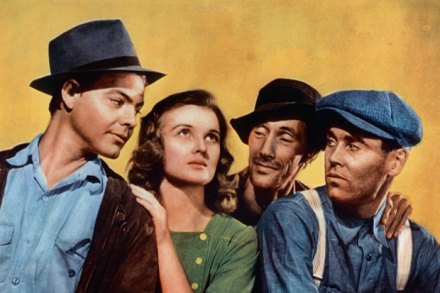
John Steinbeck (1902–1968), an ardent propagandist for the exploited underdogs of the Great Depression, had barely enough money for subsistence during the years he spent preparing and writing The Grapes of Wrath, the protest novel regarded as his masterpiece. It made him a Nobel laureate and a very rich man. The Nobel committee praised his ‘realistic and imaginative writing, combining . . . sympathetic humour and keen social perception’. Seventy-four years after first publication, the book still sells more than 100,000 copies a year. In his Nobel acceptance speech in 1962, Steinbeck said that ‘a writer who does not passionately believe in the perfectibility of man has no dedication nor any membership in literature’.

America’s war on sleep

From our UK edition

 Fredericksburg, Virginia Ask an American to name the author of the line ‘Sleep, that knits up the ravelled sleeve of care’, and he will promptly reply ‘Shakespeare’. It’s pure guesswork but we always credit the Bard with anything that sounds like a literary quotation, so he inadvertently gets it right. But if you recite the rest of the passage and ask what it means you will draw a blank. The American mind will not spark until it hears ‘Macbeth hath murdered sleep’, which sets off a cascading display of audience-identification fireworks, and visions of a new American production in which Macbeth is renamed Big Thane and cast as the hero of the play. Americans are so afraid of sleep that we see nothing wrong in murdering it.

Is there a way to live without economic growth? 

From our UK edition

During Japan’s lost decade in the 1990s I found myself handing out rice balls to Tokyo’s homeless on the banks of the Sumida river. The former salary men — it was always men — slept in cardboard boxes the size of coffins. I peered into one. Its owner had neatly arranged his last few possessions. Crockery, two wash rags and a blanket were all emblazoned with the designer logos I associated with Japan’s boom years when I had lived in Tokyo. They had washed up like artefacts from another age in this unlikely setting. They signalled more than anything else to me that Japan’s economic miracle was well and truly in the past. Financial Times Asia editor David Pilling lived in Japan for seven years.

The Spectator book review that brought down Macmillan’s government

From our UK edition

[audioplayer src="http://traffic.libsyn.com/spectator/TheViewFrom22_16_January_2014_v4.mp3" title="Vernon Bogdanor discuss Iain Macleod's 'What Happened' article" startat=1460] Listen [/audioplayer]Fifty years ago this week, a cover story in The Spectator helped to bring down a Conservative government. It was called ‘The Tory Leadership’ and was written by the editor, Iain Macleod, who had been a senior minister in Harold Macmillan’s government. Purporting to be the review of a book by Randolph Churchill on how Lord Home had ‘emerged’ in October 1963 as Macmillan’s successor, it claimed that Macmillan had fixed the succession so as to scupper the chances of the natural candidate, R.A. Butler, who had been deputy prime minister in all but name.

Harry Shearer on bringing out Richard Nixon’s feminine side

From our UK edition

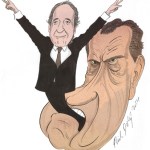
Hollywood tends to treat Richard Nixon as an oafish B-movie villain, so it is ambitious and original of Harry Shearer to try to convince a British audience of the very feminine side of the 37th American president. As a veteran comedy actor and the ‘voice’ of several of the Simpsons cartoon characters — including Mr Burns, Smithers, and Ned Flanders — Shearer has the vocal range to get almost anyone right if he puts his mind to it. But voice work was not the main challenge in the forthcoming Sky Arts drama. Shearer is more intrigued by the physical aspects of the central role in Nixon’s the One, which he insists is not an impersonation, but a characterisation.

William Astor: My father, his swimming pool and the Profumo scandal

From our UK edition

[audioplayer src="http://traffic.libsyn.com/spectator/TheViewFrom22_9_January_2014_v4.mp3" title="Richard Davenport-Hines discusses the Profumo affair's enduring appeal"] Listen [/audioplayer]Christine Keeler and Jack Profumo might never have met in the swimming pool at Cliveden if it had not been for a filly called Ambiguity. As children, growing up at Cliveden, we all swam in the Thames. In the summer, the river was cold, dark and full of sludge, but my grandmother Nancy Astor, a devout Christian Scientist, thought it good for us. Then Ambiguity, my father’s filly, won the Oaks and with the prize money a heated swimming pool was built — and the rest, as they say, is history.

How we lost the seasons

From our UK edition

So, what are you doing with your Christmas decorations? Still up? Did the tree get put out on 2 January? Maybe you’re holding out until the Twelfth Day, on the basis that it’s bad luck to have the decorations up after that? Or are you going out on a limb and keeping your holly, bay and ivy up until 2 February, Candlemas? This last is in fact the correct answer for traditionalists; prior to Victorian times, people kept the Christmas season going, along with the greenery, right up until Candlemas. Mind you, given that Christmas trees only caught on with Prince Albert, pre-Victorians didn’t have the problem of pine needles dripping all over the carpet.

Economists – the scourge of mankind

From our UK edition

Are there any disciplines on earth as hyped-up and overrated as economics? Every subject depends to some extent on others; you can’t, for example, understand history without a bit of geography or human biology, and you can’t master either of those without a bit of chemistry, for different reasons. The same goes for all disciplines – except, for some reason, economics, where the opinion of the experts seems to count for a great deal in discussions where their field is only one aspect. The great example of this was the euro, which was promoted by the great and the good of the dismal science as a brilliant idea because, of course, reducing barriers between markets will make us wealthier.

To see how good Journey’s End is, just look at who it’s offended

From our UK edition

‘You have no idea,’ wrote the publisher Ralph Hodder-Williams in 1929 to one of his authors, what terrible offence Journey’s End has given — and terrible pain too, which is a great deal more important. I think you will agree that the chronic alcoholic was extraordinarily rare. He was referring to R.C. Sherriff’s controversial tragedy of the trenches, which was then, 11 years after the war, enjoying an unexpected box-office success in the West End, where it played for nearly 600 performances. Its success came as a surprise, not only because Sherriff (1896–1975) was an unknown writer, and exclusively male war plays were not particularly popular, but also because audiences were expected to sympathise with an unusual war hero.