Farming

Heavy-going

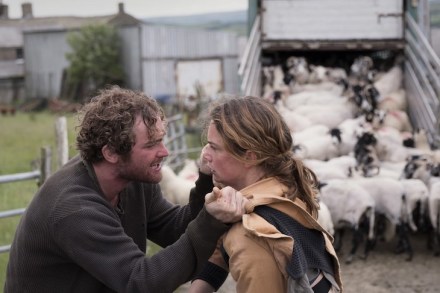
Dark River is the much-anticipated third feature from British writer/director Clio Barnard and it is one of those bleak, rural- England dramas featuring cement-coloured skies, wind, rain, mud, rusted old farm machinery and dead animals — do people who move out from the city know what they are letting themselves in for? — as well as the aftermath of childhood sexual abuse. (Should we pull them aside and have a word?) Apologies for sounding glib about such a heavy subject but this is, ultimately, so heavy-handed about that heavy subject it left me cold. I should point out, however, that other critics are available, and some are saying it is ‘powerful’ and ‘affecting’. So you pays your money and takes your pick.

Letters | 8 February 2018

Stop knocking May Sir: I find this knocking of Theresa May increasingly depressing (‘Theresa’s choice’, 3 February). She has a terrible job which she was dropped into when David Cameron resigned. She was a Remainer, yet she is expected to steer the UK through the Brexit process of leaving the EU with no experience, as it has never happened before. She needs all the support she can get, so please give it to her. No one wants her job right now anyway. Lindy Wiltshire Alton, Hants My NHS experience Sir: I am very glad to hear that Mr Hawkes has had better experiences in NHS hospitals than I did (Letters, 3 February). Perhaps in leafy Bucks there are private hospitals which compete with their NHS counterparts, unlike in this part of the world.

Wild life | 8 February 2018

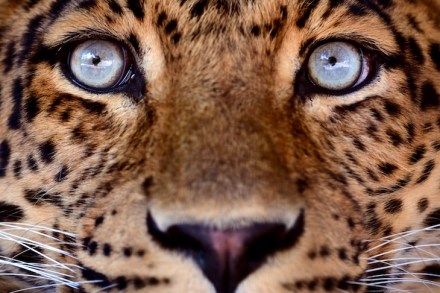
Laikipia I woke with the breath of a leopard a few feet from me as I lay in my bed. Before he came there were the sounds of Laikipia’s darkness: nightjars, insects, a wandering hyena. Then it all went abruptly silent and I heard him exhale, just on the other side of the bedroom door. I got out of bed and listened to him snuff the air. A hiss came from the back of his throat, then a deep-throated cough. Our three dogs sat up in their baskets, ears up, hackles raised, silent and staring. At dusk I had put them — Jock, the labrador, Sassy the collie, and our mongrel bitch Potato — in the bedroom to sleep close to me because the leopard had been after them for a string of nights. A leopard loves nothing more than a dog to kill.

It’s grim up north

Andrew Michael Hurley’s The Loney was one of the surprise stand-outs of last year, and a worthy winner of the Costa First Book Award. His new novel, Devil’s Day, is equally good, even though its similarities slightly muffle the surprises. Like his debut, it is a work of gooseflesh eeriness. The Loney artfully described the north-west coast of England; Devil’s Day as proficiently conjures the fells of an area hazily between Lancashire and Yorkshire. The Loney featured a damaged family on a religious retreat encountering old paganisms; Devil’s Day has our protagonist, John Pentecost, returning to the family farm for the funeral of his grand-father, the Gaffer, which coincides with a ritual for placating the devil before the flock is brought in for the winter.

Wild life | 2 November 2017

Laikipia   Flying home across Laikipia’s ranchlands with Martin after a farmers’ meeting, I see the plateau dotted with cattle and elephants. Stretching away towards the north, it is all green after good rains. I think to myself that farming is hard enough without having to deal with toxic politics: will there be a drought, and what about the ticks, or foot-and-mouth disease; will your cattle get rustled, or flocks of quelea and hordes of zebra devour your crops? After months of politics in Kenya, the news comes in that Uhuru Kenyatta has been declared our president again. This comes as a great relief because most people in Kenya are exhausted by politics after months of crisis. We just want to get back to work. Everybody is broke.

Animals make us human

There was a time when biologists so scorned the attribution of human qualities to other animals that anthropomorphism was seen as the ultimate scientific sin and suitable only for children’s stories. Not anymore. Today the inner lives of other creatures are widely accepted as a major research frontier, and here are three books that reflect these preoccupations. One of them even defines it as an entirely new discipline: anthrozoology. Peter Wohlleben may be no scientist, but he is a professional German forester and the author of the enormously successful The Hidden Life of Trees. In this new book he sets out to overturn the stock assumption that other creatures are mere automata driven by instinct, drawing particularly on studies that use MRI digital imaging of the human brain.

Wild life | 5 October 2017

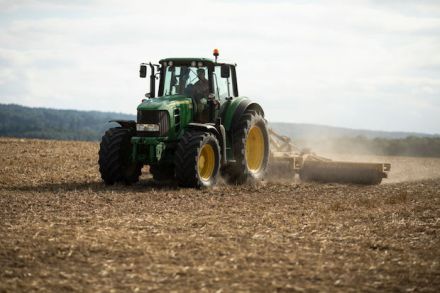
Laikipia Ripping up the black cotton soil on the farm’s high savannah I get a sense of what it must have been like to be a sodbuster on the Great Plains of America 150 years ago. Riding my big yellow tractor I find it thrilling to plunge through virgin land that has been innocent since time began, but it also makes me feel intensely sad that it had to come to this. Through the clouds of dust and diesel fumes I can see a giraffe pouting at me from above a stand of acacia trees that will soon be torn out. Herds of zebra, oryx and eland are retreating as the lines of freshly turned tilth advance across tawny grasslands stretching northwards all the way to Ethiopia. I am destroying wildness in order to survive. We never built a safari camp for tourists.

Would you really want to be a farmer in 2017?

What does being ‘a farmer’ mean to you? For those that have experienced it, the job – or lifestyle, really – the answer might be early mornings, long days, and little pay. Others imagine farming to be more like living the good life. Perhaps that's the reason why a recent report, commissioned by the Prince’s Countryside Trust, revealed that twenty five per cent of adults questioned quite like the sound of giving up their day job and taking up farming instead. The economics of the profession might make them think again, however. The most startling fact from the report is the gap between the general public’s estimates of a farmer’s income, and the reality.

Letters | 3 August 2017

No reason for subsidies Sir: For believers in free enterprise like me, it was hugely disappointing to read that Sir James Dyson, probably its most impressive UK exponent, has become a champion for taxpayer-funded subsidies for the farming industry (‘I like making things’, 29 July). He argues that they are necessary due to the cost of regulations and because other countries have them. In any global market that UK companies operate in, such excuses for subsidies exist. As Dyson has the biggest farm operation in the UK, his leading the call for the continuation of subsidies to match EU levels should probably not be surprising, but it is still not very inspiring. The value of farmland is now two and a half times what it was ten years ago.

How can we put an end to all these dog attacks on sheep?

This spring I wrote in the magazine about how sheep attacks were on the rise, as wayward dogs were becoming an increasing problem for farmers. Sadly, since I wrote the piece in March, the problem hasn’t got any better. Pictures of sheep that have been either mauled or killed by family pets still appear constantly on my social media feeds, and over the summer numerous dogs have had to be shot by farmers to stop them attacking their livestock. Things have got so bad in some places that in Wiltshire, for example, the National Trust has been forced to ban dogs from some of the areas it looks after close to Stonehenge.

‘I like making things’

Sir James Dyson would make a good therapist for anxious Brexiteers. Everything about him is comfortingly precise — his manner and way of speaking, his owlish round glasses and blow-dried white hair. He exudes a Zen-like calm. What he has to say is reassuring, too. He is as sunnily optimistic about leaving the EU as he was before the referendum last year. ‘I am very confident,’ he says, ‘in our ability to negotiate trade deals outside Europe — with Japan, Australia, China, America and so on — because it’s very easy. It’s just us negotiating with them. It’s very, very straightforward and you don’t have to satisfy 27 other people.’ The implication is that a deal with the EU will be harder.

Michael Gove, ‘Green Brexit’, and what it all means for Britain’s farmers

Michael Gove’s speech this morning on his plan for a ‘Green Brexit’ is one of the first signs of what he is up to in his new role as Defra secretary. It was always a given that he would stir things up, but it remained to be seen whether his Brexit plan would be judged as a good thing or a bad thing by British famers and rural communities. So what did this morning’s speech deliver? Well, when it comes to farming, the answer is far more questions than it did answers. Of course, this was a speech to various environmental groups at the World Wildlife Fund’s headquarters, so it’s unsurprising that Gove used the opportunity to give a speech that would please his audience. He did touch on farming, though.

Diary – 6 July 2017

A trip to the supermarché at the beginning of our French month yielded many of the necessary things one also buys at home, but even washing powder acquires romance when sporting a French label, and the fresh fish, meat, veg and wine sections are far bigger than ours, with mountains of lettuce and seven different varieties of tomato. The Carrefour bookshelves also yielded Tintin books which are, like Asterix, best read in French. I bought Tintin et L’Ile Noir, Tintin et La Crabe au Pinces D’or, and my favourite, Tintin et Les Bijoux de Castefiore. The French is simple, the drawings are masterpieces, subtle, witty, full of style and character.

Wild life | 29 June 2017

Laikipia, Kenya   During our evening walk on the farm, Claire kept looking around nervously instead of engaging in conversation. At one point the dogs ran ahead, probably thinking that they were after the scent of a rabbit. Seconds later, they tore back past us, leaving a trail of dust, and heading after them came a bull elephant moving at quite a pace, trunk up, ears flapping. Claire took off after the dogs and I followed, briskly but grumpily. I had been irritated by Claire’s anxiety in the bush, excited by the story of an incident that had happened a few days before, when an elephant had charged and completely flattened a man on the plains nearby. It was probably the same elephant and, I grudgingly had to admit, she was right.

Wild life | 1 June 2017

The guests at my brother-in-law Rick’s 70th birthday lunch party were distinguished, silver-haired, well heeled. Long before Rick rescued the Rothschild’s giraffe from extinction, and did so many other things for wildlife conservation in Africa, I remember him and his friends in the 1970s. The chap sitting opposite me at table, now big in IT, had once been a hard-core hippie with heavy-lidded eyes like the stoned rabbit in Magic Roundabout. A coffee baron, now discussing ‘aromatic compounds’, once wore a headband, blue-tinted shades and hair down to his bum, and a man who is today a company chairman I picture still in his Afghan fur-trimmed coat, going barefoot.

Farming today

There are bigger entities landing at your local multiplex this week. An ancient indestructible franchise is re-re-(re-)booted in Alien: Covenant. In Jawbone, it’s seconds out for yet another boxing movie. Miss Sloane is that non-staple of the repertoire, a glossy feminist thriller about public relations. Something there for almost everyone. But there’s also a low-budget British film called The Levelling, which has a very Brexit-y theme — the travails of the farming industry — so let’s pull on our wellies and have a gander. The title alludes to the Somerset Levels, in the news in 2014 when rivers rose to drown the nether parts of southern England. ‘Save our village, dredge the river,’ says a forlorn sign in an inert wintry landscape.

Wild life | 4 May 2017

Laikipia, Kenya On my way home to the ranch, I stopped for a beer with my neighbour Martin. It was twilight and large herds of cattle were being brought into the yards around Martin’s house for the night. Pokot militias had been attacking for days, trying to rustle cattle and shooting at anybody in sight. Gunmen had a few days before shot Athaju Eloto, one of Martin’s farm workers. Doctors extracted a bullet from near Eloto’s spine but he later died. The bandits had also killed a police officer on the farm during operations to remove the attackers. In a nearby village full of smallholders, Pokot attackers had murdered a policeman and taken two others hostage; their bodies were later discovered burned and stripped of weapons and uniforms.

British food and drink exporters defy the doom-mongers

Many farmers, asserted the Earl of Sandwich in a Lords debate last July, were now experiencing ‘regrexit’ – having voted to leave the EU they were now realising that the £3.2 billion worth of subsidies they had received from the EU in 2013 were now under threat. Or were they? Whether any farmers really did suffer from pangs of regret last July, they will since have grasped that whatever happens to agricultural subsidies post-Brexit they might actually do rather well – not from collecting handouts but by growing food and selling it. Today, the Food and Drink Federation published its latest statistics on food exports. In common with so many economic figures published since last June they have defied predictions of doom.

What the papers say: The Lords’ Brexit debate is an unwelcome sideshow

Peers can continue their Brexit debate in relative peace today without the watchful glare of the Prime Minister gazing over them. Theresa May’s brief appearance at the start of the Lords’ Article 50 debate yesterday was unprecedented but given how long she stayed you’d be forgiven for thinking it was little more than a publicity stunt. For the Sun, however, the PM’s decision to swap chambers in Parliament did send out an important message. Those ‘unelected members still struggling with the concept of a democratic mandate’ should remember that the PM had ‘most of the public and a vast Commons majority behind her’ as she sat on the steps of the throne.