Europe

Are the Lib Dems pro-EU?

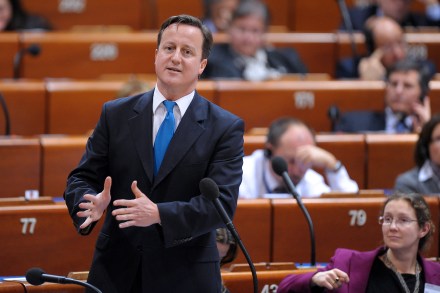
This might seem a very odd question. A pro-EU position is part of the party's internationalist DNA. Listen to any EU-related speech by the likes of Nick Clegg or Paddy Ashdown and heartfelt support for the European project is apparent. The Liberal Democrats have also made a virtue of reining in Tory euroscepticism, for example rejecting a call for repatriation of powers in the Coalition Agreement. The Deputy Prime Minister remains, in private and public, pro-EU. And to many activists and MPs, the party's European stance is what makes it different to the Tories – and is the reason why they are Lib Dems. They see in Tory euroscepticism a boorish Little Englanderness they abhor and find out of synch with the way of the modern world.

Cameron and Merkel: all smiles but no progress

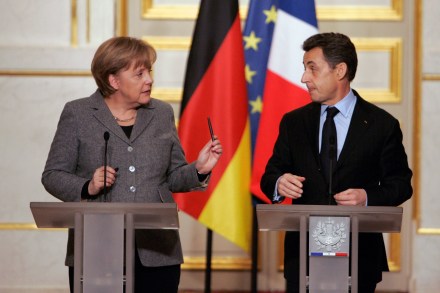
David Cameron and Angela Merkel were clearly keen to show that, whatever the tensions over the role of the European Central Bank, they still get on. I lost count of the number of times in their press conference that they used the word 'good' to characterise their relationship and their discussions. But there did not appear to have been any actual progress on how to deal with the current crisis. Certainly, there was no softening of Germany's opposition to using the ECB as the backstop for the Eurozone. Merkel conceded that she had raised a European-only financial transactions tax with the Prime Minister but that, unsurprisingly, no progress had been made on this front.

What does the ‘carbon floor price’ mean? More emissions and fewer jobs

After the Conservative Party Conference, Fraser described this statement in George Osborne’s speech as the Osborne Doctrine: ‘Let’s at the very least resolve that we’re going to cut our carbon emissions no slower but also no faster than our fellow countries in Europe.’ The Government’s current climate policy clearly fails that test, as I set out for this site at the time, and there is no more egregious violation than the carbon floor price. It is one of those policies that can sound reasonable in theory: the EU Emissions Trading System creates a carbon market. That market produces a carbon price that is supposed to encourage business to invest in cutting emissions by doing things like building nuclear plants.

The debate over Europe’s future

We've got two interventions by high-profile European politicians in the British papers this morning. In the FT, German foreign minister Guido Westerwelle lays out Germany's stance, providing a taste of what David Cameron can expect when he meets Angela Merkel in Berlin today. He begins by underscoring the importance of keeping the eurozone together: 'The eurozone is the economic backbone of the European Union. Its stability directly affects non-euro states and global financial markets. An erosion of the eurozone would jeopardise Europe as a political project, and with it the chance to make our values and interests be heard in the new power set-up of the 21st century.

A Republic, If You Can Keep It

The symbolism of this is pretty dire. These are still times for bitter melancholy in Ireland and many a Dubliner has rarely felt as republican as he does now that the state's sovereignty* is, shall we say, not what once it was. This, a friend says, is just another tale of life "under the occupation": Taoiseach Enda Kenny has rejected reports that details of next month's Budget, including a planned hike in the VAT rate, were shown to German officials yesterday. Mr Kenny met chancellor Angela Merkel in Berlin yesterday after which reports emerged that the Irish Government was planning raise the top rate of VAT by 2 per cent to 23 per cent. According to documents presented to a Bundestag budget committee, the measure would generate an additional €670 million for the Government.

Some context for the ongoing growth debate

Listening to Ed Miliband's speech today, you'd be left with the impression that the UK is suffering a huge decline in government spending this year, and that this is to blame for most of our economic ills. The facts are a little different, as the below chart shows. The European Commission estimates that the UK is likely to have the second largest growth in government spending of any of the EU’s 27 members this year, clocking in at a robust 1.5 per cent increase for the year. Yet this has done nothing to help the UK’s relative growth performance. The UK is forecast to be the fifth slowest growing economy in the EU this year, ahead of only Greece, Portugal, Cyprus and Italy.

In defence of technocrats

Is Mario Monti's administration in Italy democratic? Is Greece's new government? To some, especially in the blogosphere, it is the exact opposite: a technocratic and undemocratic government foisted upon Italy and Greece by (circle as appropriate) Angela Merkel/Nicolas Sarkozy, the Bilderberg Group/EUSSR, etc. But nobody forced Silvio Berlusconi to resign. Nobody sacked him. Under pressure by the markets, he chose to resign. He could have stayed and nobody denied that he had a constitutional right to do so. It would have cost Italy dear, but he could have stayed.

European champions at last

The UK can now claim to be No.1 in Europe… for inflation. Further to Tuesday's figures, the EU has now updated its own spreadsheet. And this is what it shows: We've been hovering around the top for a year or so, but now we've finally touched the summit. Let's see if we start to plummet down again, as the Bank of England predicts.

Renegotiation reality

Governing is about choices. That goes for Europe too. The government says it can get everything it wants – that's politics – but the reality is different. It actually faces a number of trade-offs, the biggest being a choice between staying in an EU that reforms but not as quickly or as dramatically as parts of the Tory party wants; or to pull out entirely from the EU.  In his speech at the Lord Mayor's Banquet, the Prime Minister argued that he could both change Britain's relationship with the EU but remain inside the 27-member bloc. But I can find no serious EU expert or mandarin who believes this is actually possible. The most the PM can probably get is an opt-out from judicial cooperation.

Cameron shows his eurosceptic side

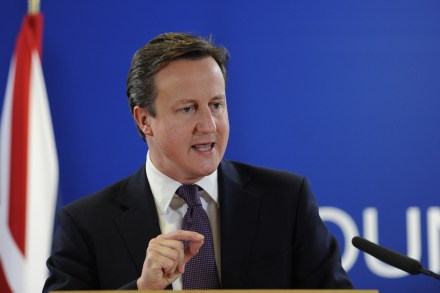
David Cameron's speech at the Lord Mayor's Banquet last night was a significant moment — the clearest articulation yet of his European Policy. In the crucial paragraph, he declared: 'we sceptics have a vital point. We should look sceptically at grand plans and utopian visions. We’ve a right to ask what the European Union should and shouldn’t do and change it accordingly. As I said, change brings opportunities. An opportunity to begin to refashion the EU so it better serves this nation’s interests and the interests of its other 26 nations too. An opportunity, in Britain’s case, for powers to ebb back instead of flow away and for the European Union to focus on what really matters.

Can Italy rebound?

I'm in Italy watching the bonfire of Silvio Berlusconi's vanities first hand. From the ashes, most Italians hope a stronger nation will emerge. And for this reason, faith in former EU Commissioner Mario Monti, who gave his first statement to the nation last night, seems high. Italy is not a nation on its knees, and despite the travails and troubles of the last decade, there is a sense of hope here. People want Italy to succeed and seem willing, for now, to pull together. They also have a foundation upon which to build: brands, low private debt, and a solid banking system. Crucially, President Giorgo Napolitano has also indicated that a Monti administration will have at least until April 2012, and possibly longer, to introduce reforms.

Alexander drags Labour closer towards the Tories on Europe

You know, having read through Douglas Alexander's Guardian article a couple of times now, and listened to his appearance on the Today programme earlier, I'm still not sure how Labour's new stance towards Europe is particularly different from the official Tory one. The shadow foreign secretary tries to suggest that Dave and George's position is reckless — ‘they seem worryingly complacent about the prospect of a two-speed Europe’ — but he goes on to echo much of it himself. And so, he suggests, ‘We should engage now with the fact that Germany is seeking treaty change and seize this opportunity to safeguard the rights of non-euro members.

Barroso’s warning

José Manuel Barroso’s article in The Observer today is a plea for relevance. When you cut through the usual EU jargon, what you find is the Commission President—predictably—declaring his opposition to German talk of an inter-governmental treaty among the 17 Eurozone members. He’s also warning the smaller Eurozone states that without the Commission’s protection their interests will be trampled on by the Germans and the French. This is what he means when he writes that  “all member states need to support and trust the common supranational European institutions that were created after the second world war.

The spectre of populism

Across Europe, the bien pensant are worried. They fear that the Eurocrisis could lead to the rise of populism — whatever that means — and even extremism. The spectre of the 1930s stalks a lot of discussions, as the FT's Gideon Rachman found out at a lunch with a hedge fund manager who thought the break-up of the Euro would lead to “the next Great Depression and a resurgence of Nazism”. But is there real cause for fear or is this a matter of people projecting a particular history onto the future? Economic dislocation has in the past led to populism but not uniformly, or at least not in numbers that have made a historical difference. It was not the case in the United States in the 1930s or, more recently, during Japan's ‘Lost Decade’.

Berlusconi: latest victim of Europe’s reverse Arab Spring

Berlusconi has finally resigned – and so continues what seems to be the Arab Spring in reverse (a Gnirps Bara). In the Arab world, people rose up against undemocratic juntas and democracy ruled. In Europe, undemocratic juntas are springing up in Frankfurt opera houses and toppling democracy. All Sarkozy had to do was help the rebels who wanted to remove the targeted leader. The cover story of this week’s magazine has a piece by yours truly about the Frankfurt Group of eight people who are calling the shots. Only two members are directly elected: Sarko and Merkel (well, three if you count the Prime Minister of Luxembourg, which we shouldn't as it a population smaller than Leeds). The rest are the heads of the ECB, IMF etc.

Who speaks for the euro?

That's a more relevant question that you might think. Despite European leaders talking for ages about the nonsensical notion of the EU 'speaking with one voice' after the Lisbon Treaty, the situation is much more confused today ever. No fewer than six people purport to speak officially for the Euro, while people actually tend to listen to two different leaders altogether. There is ECB chief Mario Draghi, but also Jose Manuel Barrosso, the Commission President; his colleague Oli Rehn, the Commissioner for Monetary Affairs; Jean-Claude Juncker, the head of the Eurogroup; Klaus Regling, head of the EFSF; and finally Herman Van Rompuy.

How European sovereign debt became the new sub-prime

The New York Times has a great piece today on how banks became so exposed to the sovereign debt of European countries with a history of defaulting. Here’s the nub of the argument: “How European sovereign debt became the new subprime is a story with many culprits, including governments that borrowed beyond their means, regulators who permitted banks to treat the bonds as risk-free and investors who for too long did not make much of a distinction between the bonds of troubled economies like Greece and Italy and those issued by the rock-solid Germany. Banks had further incentive to overlook the perils of individual euro zone countries because of the fees they earned for underwriting sovereign debt sold to other investors.

Britain: a European pariah?

The British government has worked hard to counteract any perception that it is being marginalised in Europe. Before the election, the Tory party went around to different capitals to assuage any fears that may have existed. The message: despite the Conservative departure from the EPP, and their anti-Lisbon Treaty remonstrations, they would not be a problem. They would be businesslike. Once in power, David Cameron unleashed his charm, showcased his polyglot Deputy Prime Minister and sent William Hague out to make everyone feel that they had a partner not a pariah in London. Further, the energetic and amiable David Lidington replaced the combative Mark Francois as Europe Minister.

The new German Question

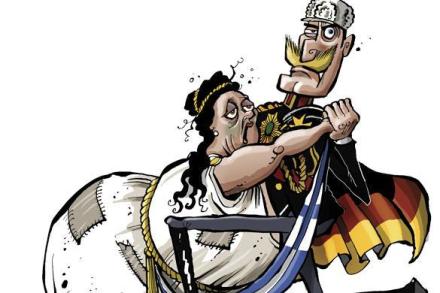
The Eurocrisis has put Germany in a twofold position that it abhors. First, it has forced Germany into a much closer relationship with France than is comfortable. For German policymakers, the great thing about the post-enlargement EU, of 27 countries, was that they and France could not rule supreme — they needed to bring other states on board. Germany prefers it this way, as it dilutes France's dirigiste instincts. But recent events have reshaped Europe's decision-making system, recreating the pre-1973 model in which Paris and Berlin reigned. The second thing Berlin abhors is to dictate things to others. The catastrophes of the 20th Century forced Germany to remake itself. It is a million miles away from the helmet-wearing caricature.