Mark Bathgate

The corona stimulus shows we’ve learned the lessons of the crash

From our UK edition

The Bank of England hasn’t wasted time getting in front of the coronavirus, and its actions this morning show how far things have moved from the days of Mervyn King. Perhaps more interesting than the interest rate cut is the Bank’s moves to quickly free up the best part of £200bn of lending capacity for UK businesses, particularly small firms who are entirely reliant on banks for funding. The idea is to create a firebreak, to make sure economic malaise doesn’t lead to businesses failing through lack of working cash flow. Fewer restaurants and hotel customers, a fall in those travelling, and more people working from home will all put pressure on businesses who need day-to-day income to cover their costs.

Some context for the ongoing growth debate

From our UK edition

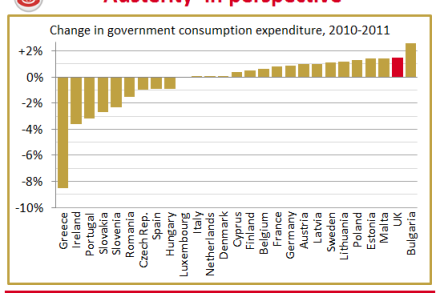
Listening to Ed Miliband's speech today, you'd be left with the impression that the UK is suffering a huge decline in government spending this year, and that this is to blame for most of our economic ills. The facts are a little different, as the below chart shows. The European Commission estimates that the UK is likely to have the second largest growth in government spending of any of the EU’s 27 members this year, clocking in at a robust 1.5 per cent increase for the year. Yet this has done nothing to help the UK’s relative growth performance. The UK is forecast to be the fifth slowest growing economy in the EU this year, ahead of only Greece, Portugal, Cyprus and Italy.

The gathering storm

From our UK edition

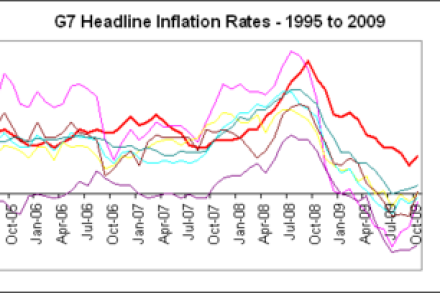
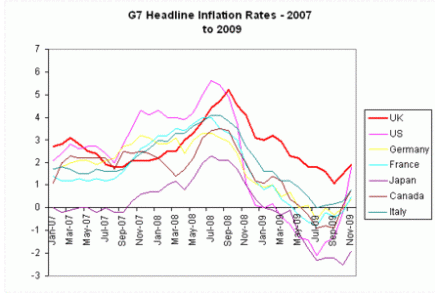
The UK inflation rate again “surprised” to the upside today, registering at 1.5%. As the above chart shows, the UK now has by some margin the highest inflation rate in G7. Were it not for the temporary VAT cut – which takes about 1% off the current CPI rate – the rate would be moving quickly above the Bank of England’s target of 2%. It would seem that the deflation threat, used as justification for the Bank of England deciding to finance the Government’s deficit this year through printing money, has not transpired. A severe recession and rise in unemployment has hit the economy, but this seems to be one where wages stagnate but the prices of what we consume continue to rise.

Bring on the serious economic debate

From our UK edition

Why does Britain fall for financial spin so often? The question goes well beyond the great confidence trick of Gordon Brown's ten years in the Treasury. I'm just back from three weeks in Australia. What’s always struck me in the years I’ve gone there is how different the newspapers/news shows/political debates are. They are well informed about macro-economics, and there is much less of the spin/personality culture of the mainstream media in the UK. Canada is exactly the same. Last week, the Canadian budget was published – a very clear and credible path to getting budget back to balance within three years.

Turbo-charged fiscal crises

From our UK edition

The crisis in Greece shows just how quickly a fiscal crisis can blow up. Just two-and-a-half weeks ago, Greece was able to raise several billions in financing, with demand for almost 25 billion of their debt in an auction. The very next day, their bond market collapsed and the rout began. Just ten days later, they were turning up in Brussels with a begging bowl, and inviting the European Commission and IMF to Athens to start making their tax and spending decisions. There can be nothing worse for a government than having your economic policy dictated by the markets, and then other governments, as access to finance disapears. All you can do is rush out announcement after announcement, promising tax hikes and spending cuts, and pray that the market pressure eases up.

The economy has gone precisely nowhere in 5 years, but at considerable cost

From our UK edition

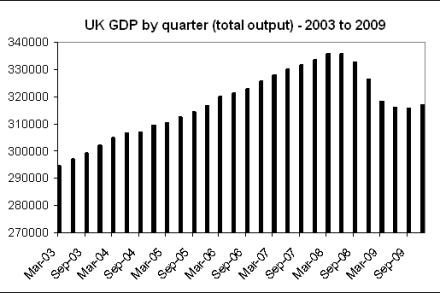
The longest recession suffered by any major country in this cycle seems thankfully to be drawing to an end, even if only by the narrowest of margins.  Such has been the severity of the downturn though, that, as the above chart shows, GDP has fallen back to the levels of mid-2005. The economy is basically the same size as at the time of the last election. This means for probably the first time in modern British history, living standards have failed to rise for almost the entire duration of a Parliament.   Sadly, the cost of the economy going nowhere has not been as lacking as the growth or living standard increases. The national debt has virtually doubled since the last general election, rising from £440 billion to £870 billion now.

Why Osborne is getting it right on banking

From our UK edition

Oh dear. After Massachussetts, it seems like the usual sneering about "populist" politicians, and about voters who aren't happy with the bankers, is back.  So here are a few facts of life for those knocking people who think the banking sector could still do with a lot of fixing: 1) The financial performance of the financial services industry over the past decade, in aggregate, has been shocking. Someone who had invested in the US or UK stock market would have seen their investment in real terms (net of inflation) fall by over a third. Shareholders have been brutalized for the best part of a generation now.

Three steps to cleaning up our toxic banks

From our UK edition

Fraser outlined the problem with the British banks in his earlier post, but I’d like to suggest a three-step solution.   1. To deal with the problem, you have to admit to the problem. This is the First Step for Alcoholics Anonymous 12 step plan but holds true for politics. Say it out loud: the banking system is still broken. It needs fixed, and the process won’t be pretty. There will always be a political temptation to turn a blind eye, as there was in Japan during its ‘lost decade’. 2. Use an objective and credible third party to analyse the ability of banks to withstand losses, and to go through their balance sheet with a fine tooth comb.

Brown’s next worry: the Gilt markets

From our UK edition

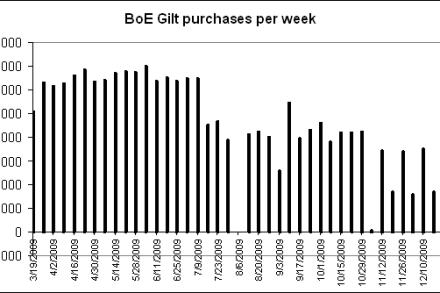
With inflation continuing to "surprise" on the upside, how long can the Bank of England keep justifying printing money? Now we learn that the Bank of England had printed £193.5 billion to finance government spending by the end of last week. So we are only four weeks to the next MPC meeting – but there is only £6.5 billion of new money left for them to pump out before they hit their £200 billion limit. Then we enter the scary territory I outlined in an earlier post.  And Brown is still left needing around £15 billion of Gilt sales a month to finance his fiscal debauchery. The Gilt market was fine while Brown's appointee's to the MPC were willing to keep the printing presses rolling to the tune of £1 billion a day through the summer.

What happens when quantitative easing stops?

From our UK edition

Where the Gilt market goes in coming months is going to be very important for the UK economy and politics. There is little history of countries being able to sustain deficits of the UK's magnitude, for very long, without serious market problems. At the moment, we're getting by thanks the sticking plaster approach of quantitative easing. The Bank of England has purchased £186bn of gilts so far this year, almost perfectly matching the £179bn the Debt Management Office has needed to sell so far. As long as the Bank is willing to support the market with a fast-rolling printing press, government funding at attractive rates is assured.

Inflation nation<br />

From our UK edition

The inflation surge is now upon us. The CPI rate again “surprised” to the upside – Britain is the only major economy in the world to have inflation doing this. But given that the Bank of England’s printing presses have been working overtime to fund a fiscally irresponsible government then little wonder things are different here. To understand just how unusual the UK situation is, consider the below graph: despite suffering the longest recession in G20, we have one of highest rates of inflation in the developed world. The next few months will see this push higher, potentially reaching 4 percent in March and busting the 2 percent target.

The markets’ verdict on the PBR

From our UK edition

The press didn’t like Darling’s budget – and neither do the markets. What Darling didn’t say yesterday is that the Treasury is looking to borrow £243 billion from the City by the end of the financial year – this info was slipped out by the debt management office (link here). Brother, can you spare a quarter of a trillion quid? The markets are not sure they can. Gilts are being hammered today - biggest single day sell off for some time - 13bps so far this morning on 10yr gilts. They now stand at 63bps above German bunds, the widest since the crisis started. On another measure, Credit Default Swaps, the UK is being hit hard again. It now costs $85,000 to insure $10 million of UK debt against default – against just $24,000 for German debt.

How much more will Darling have to borrow?

From our UK edition

The figure of £178 billion in the Budget – for 2009/10 – is by no means the full story. For that we have to turn to the Debt Management Office, which is in charge of flogging the IOU notes. It just now confirmed that it will need £223.3 billion by the end of this financial year - £5 billion more than expected. And a staggering amount, which I suspect the government simply could not raise if it did not have the Bank of England printing presses working overtime. Why the gulf between the two? Because of the bank crisis. This financial year a further £42 billion has needed to by pumped into the banks in various forms – not just Lloyds and RBS, but the smaller bank failures like Northern Rock and Dunfermline Building Society.

Saving the world | 5 December 2009

From our UK edition

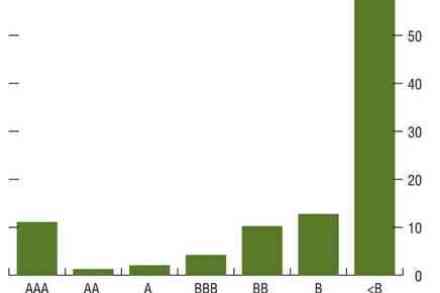
The further revelations about the astonishing costs of the bank bailouts so far indicate just how much taxpayers’ money is now being used to plug the holes in the banking system.  A key cause of the bank crisis is explained by the above IMF graph, charting the decline of some of the trillions of AAA structured credit assets created during the boom.  AAA means “extremely strong capacity to meet financial commitments”, but now over 80% of the US AAA Collateralised Debt Obligations (CDOs) created between 2005 and 2007 are rated BB or lower, somewhere between junk bonds and default (and in some cases almost entirely worthless). In terms of getting things totally wrong this is hard to beat.

Risky business | 3 December 2009

From our UK edition

With the largest transfer of liabilities in British history – the insurance of the risk of loss on £240 billion of toxic RBS assets by taxpayers – proceeding, there is worryingly little information being given about either what these assets may be or what risks there are to the taxpayer. Rather than the parliamentary enquiry and detailed disclosure Swiss parliamentarians demanded when UBS needed similar assistance, a small press release noting such exotics as “structured credit assets “ has been issued. The spin continues to be that there is nothing to worry about and all this money will come back fine. Bank of England data shows that UK bank exposure to the US increased increased by over half a trillion dollars between 2004 and 2007 to 1.2 trillion.

Labour’s free for all

From our UK edition

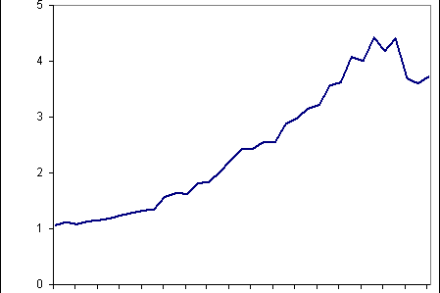
The potentially huge exposure of UK banks in Dubai, depreciating some UK bank share prices again this morning, is a reminder of just how much UK bank lending grew in recent years. The above chart shows the growth in external claims of the UK owned banks around the world over the past decade. The sums lent almost quadrupled to nearly $4 trillion in 8 years.  Anyone interested in discovering which bubbles the UK banks (and now taxpayers) have funded can find the data on the Bank of England website - $1.2 trillion in the United States, $125 billion in Spain, $183 billion in Ireland, $50 billion to the UAE/Dubai. Bank profits soared, and the “New North Sea Oil” of booming bonus pools was taxed to fund ever growing government spending.

Saving the world | 25 November 2009

From our UK edition

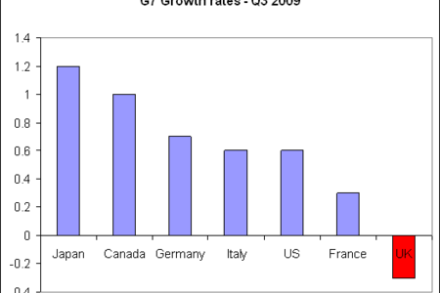
Today’s revised GDP data confirms that the UK remained alone of the world’s major economies in recession in the third quarter of this year*. The fact that the UK remains mired in recession long after most economies have recovered makes clear how uniquely badly positioned the UK economy was to handle a downturn.  While some investment banks continue to argue that this performance reflects the inability of the Office of National Statistics to calculate the data correctly, there is good reason to believe that this huge underperformance is grounded in reality. Economic history teaches that bank crises are amongst the worst things that can ever hit an economy. The collapse in credit availability and soaring bank margins have posed very substantial risks to economic growth.

Fatal inexperience

From our UK edition

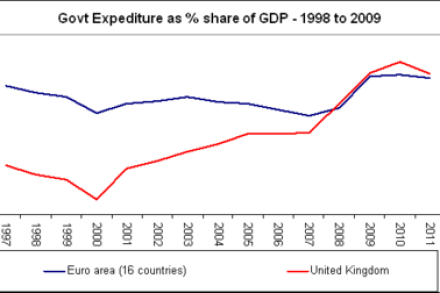
The Government debt mountain grew by a further £11.4billion in October. The UK now has one of the most expensive governments in the European Union – now materially above the Eurozone average and within touching distance of France and Sweden in spending above 50% of GDP.  Blaming large Government per se for economic problems is overly simplistic – larger Government spending countries like Sweden and Finland have managed to build export market shares and provided stock market returns over the past couple of decades that put the UK to shame. Spain now has thousands of miles of high speed railways and over 50% of their energy needs come from renewables.

The perfect storm

From our UK edition

The UK debt crisis has three constituent parts – household, government and banking. The fact that households, government and banks all went on a debt binge at the same time makes the risks for the UK economy so unusual.  The European Commission is now estimating that total UK Government debt will rise above £1.3trillion by the end of 2011, representing a more than trebling in the total debt load since 1997. If interest rates normalise to the 5% or so seen during recoveries in previous cycles, this will see the interest service bill alone rise to around £65billion a year – more than double the total defence budget.

Two elementary mistakes

From our UK edition

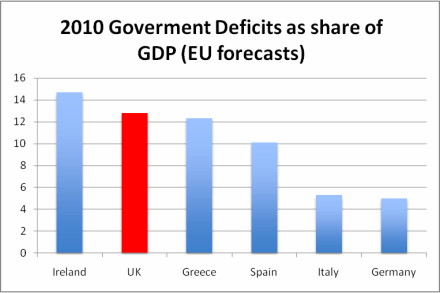
The warnings from around the world about the scale of the UK’s government debt crisis keep flowing in. Following last week’s warnings from the IMF and European Commission about the scale of the UK debt crisis, credit rating agency Fitch has described the UK as the AAA country most vulnerable to a downgrade. The table at the bottom of the page shows the European Commission’s forecasts for Government deficits as a share of GDP for next year. The UK beats IMF bailout case, Latvia, to head the league table with a deficit level almost double the EU average. The Commission estimates that the UK’s total debt will have almost doubled from 43% of GDP in 2007 to over 82% in just 3 years, moving the UK quickly towards the top of the EU debt league table.