Matthew Sinclair

Ed Miliband is deliberately misleading ‘you and me’ on the non-dom rules

From our UK edition

When he announced Labour Party proposals for changes to the non-dom rules, Ed Miliband tried very hard to be as misleading as possible without lying. He seems to have failed. He said that non-doms 'aren’t required to pay taxes like you and me'. They are. Non-doms are required to pay the same UK taxes as the rest of us on their UK income and foreign income remitted to the UK. Most of us don’t have any non-UK income, let alone non-UK income which we do not wish to remit to the UK (regardless of the tax treatment, it would mean we couldn’t spend it here) and therefore we do not pay tax on unremitted non-UK income either. Clarity on the current rules is really important for what could be a question worth billions to the UK exchequer: will this measure raise revenue?

I’m part of the ‘jilted generation’ – so why do I think things are better than ever?

From our UK edition

Having been born in 1983, I am a part of Ed Howker’s ‘jilted generation’.  I think it is quite reasonable for him to argue that governments of all parties have made choices which do not reflect our interests, or those of future generations. They have increased public spending, which will reduce medium term growth and diminish our future earnings; they have borrowed eye-watering amounts of money which we will have to pay back; they have taken far too long to undertake vital reforms like putting in place a reasonable schedule of increases in the pension age. More young people think that the moon landings were faked than think that the Government will be able to provide the same level of benefits available today when they retire.

How corporation tax cuts are helping wages

From our UK edition

Yesterday's autumn statement included the results of the Treasury's study of the dynamic impacts of the cuts to Corporation Tax, which George Osborne is down from 28 per cent to 20 per cent. This study used the new HMRC Computable General Equilibrium model - as Fraser reported on Wednesday - and the results are impressive. The cuts will increase investment by 2.5-4.5% (£3.6-£6.2 billion in today’s prices). They will increase GDP by 0.6-0.8% (equivalent to £9.6-£12.2 billion). Given the share that we can expect to go to labour, that equates to an increase in wages of £405-£515 a household. As a result of higher profits, wages and consumption, we can expect the cost of the policy to fall by 45-60 per cent in the long run.

Ed Miliband’s energy announcement may be nonsense, but it could become popular

From our UK edition

First politicians banned cheap energy. They are creating an affordability crisis by insisting on the rapid deployment of expensive technologies like offshore wind and by imposing endless green taxes. It is simply illegal to generate electricity at an affordable price with a modern, efficient coal and gas power plant, without bearing all of those other costs. Ed Miliband was one of the people who imposed those high costs on consumers, as the Secretary of State for Energy and Climate Change in the last government. Now his plan is to fix the situation by banning expensive energy too. The Government already decides which technologies are good – wind, solar, carbon capture and storage – and which are bad – coal and gas.

Stamp Duty is stomping all over Middle England

From our UK edition

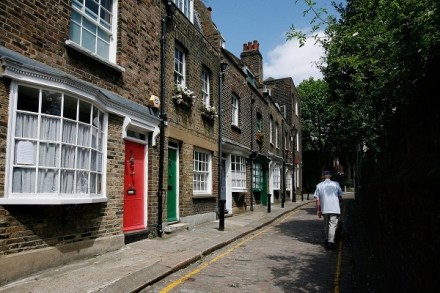
65 per cent of the people buying a home in London in 2012-13 paid the 3 per cent rate of Stamp Duty or more. You can pay that rate on a one or two bedroom flat in the capital now. But it would be a mistake to think that Stamp Duty is only an issue in London and its leafier suburbs. Just 200,000 of the 500,000 transactions subject to Stamp Duty in 2012-13 were in London and the South East. Family homes around the country are subject to punitive rates. Imagine you bought a house in the West Midlands for £300,000 at the start of 2007. Not a mansion but just a normal family home in a nice neighbourhood like the one picture below. You will have paid £9,000 in Stamp Duty on top of the price of the house. That is probably the largest cheque you will ever write to the tax man.

How the government’s energy policies will benefit a rich sheikh at the expense of the poor

From our UK edition

Today Ed Davey launched the London Array, an enormous offshore wind farm, and the Prime Minister posed for pictures with a sheikh whose sovereign wealth fund put up part of the money to finance it. But HH Sheikh Abduhall Bin Zayed is not backing this project out of the goodness of his heart. The Emiratis aim to make a return out of the lavish subsidies on offer. Just last week, the Government announced that from next year offshore wind will get a guaranteed price – under the new 'contracts for difference' in the Energy Bill – of £155 /MWh. Electricity currently sells on the wholesale market for about £50 /MWh. Offshore wind therefore gets three times the price of conventional energy.

Energy special: The green jobs myth

From our UK edition

Tim Yeo MP called his proposal for yet another draconian target to decarbonise Britain’s power sector the ‘green jobs amendment’. It was defeated last week by 290 votes to 267. One sweeping new regulation was apparently enough for the day as the Commons settled for casually renationalising the energy sector by passing the government’s bill. The amendment’s defeat is a setback for environmentalists, who had campaigned for it aggressively, but not for Britain’s two and a half million unemployed. ‘Green jobs’ are an utter farce. More expensive sources of energy will destroy more employment than they create. That is not to say that no one has a green job.

Why no conservative should support a mansion tax

From our UK edition

The Government is expected to raise around £550 billion in tax revenue this financial year. The Centre for Policy Studies estimates that a mansion tax (of £20,000 on properties of £2 million), would raise at most £1 billion, less than 0.2 per cent of revenue. The tax is, however, likely to weaken the market and reduce prices – reducing receipts from other taxes; so even the CPS’s static analysis is probably optimistic. This proposed tax would be a huge burden on those forced to pay. The rate is not 1 per cent of the property’s value. The standard lifetime of a lease on a new build is 125 years, over which time the government will have confiscated 125 per cent of the value of a £2 million property.

Why do-gooding ‘sin taxes’ always stink of politics

From our UK edition

Nutella may have been created by Italians, but it is the French who really love it. The hazelnut spread is a fantastically popular accompaniment for everything from bread for breakfast to crêpes for a delicious dessert. Yet the French Senate, in its infinite wisdom, decided that Nutella should be taxed. The proposal was voted through the Senate, before being stopped by a very unlikely coalition of Communists and conservatives. The plan to impose a ‘sin tax’ on Nutella in France was obviously ludicrous; but it was also full of politics. Sin taxes and green taxes may look like an efficient intervention on an economist’s blackboard; but they never live up to the wide-eyed optimism of enthusiastic technocrats. They always end in an ugly political stitch-up.

Why George Osborne had to kill the mansion tax

From our UK edition

This morning the Mail on Sunday reported that George Osborne has promised there will be no mansion tax, no wealth tax and the council tax freeze will be extended. Homeowners are safe for now, but why has Osborne made that call? It might be something to do with a past Conservative Party Conference back in 2007 when the party was in a similarly dire situation. The then Shadow Chancellor pledged to cut inheritance tax by increasing the threshold, put Gordon Brown off calling an early election and ended the honeymoon it is now hard to believe he ever enjoyed. Britain already has the highest property taxes of any developed economy and council tax is desperately unpopular. You could argue that a new, more progressive, property tax would win people over.

The problem with George Osborne’s debt target

From our UK edition

Q: Why will George Osborne miss his debt target? A: The Government is spending a lot more money than it is taking in taxes. Q: Why is the Government spending a lot more than it is taking in taxes? A: Jonathan Jones answered this one yesterday. In short: disappointing growth means that debt needs to be lower to meet a Debt/GDP target, increases spending on benefits and reduces both direct and indirect tax receipts. Beyond that, things get a lot more complicated and controversial. I won’t get into the debate over supply-side reform versus Keynesian economic stimulus now. That debate has been covered at length elsewhere, particularly in the final report of the 2020 Tax Commission. Maybe the problem isn’t just the attempts to meet the targets.

Promoting tax transparency at the petrol pumps

From our UK edition

Too many taxes are buried in prices. From Value Added Tax to the cost of extravagant subsidies for renewable energy, all people see is the shop charging them a higher price. That is convenient for politicians trying to hike our taxes, but it distorts democratic decisions over the level of taxes and spending, and which taxes to increase and decrease. That is why we have seen steady increases in Employers’ National Insurance. It is why climate regulations are structured so a huge part of the cost is buried in the electricity market. And it is telling that the taxes people resent most are the lump sums they have to write a cheque for each year.

The Treasury sides with the consumer over climate policy

From our UK edition

Tim Yeo is now posing as a friend of the consumer. Launching the latest report from the Energy and Climate Change Committee this morning, he attacked the Treasury for ‘refusing to back new contracts to deliver investment in nuclear, wind, wave and carbon capture and storage’. The report argues that could ‘impose unnecessary costs on consumers’. The basic logic of his claim is this: investments are more expensive when they are riskier. Investors expect to be compensated for the risks being taken with their money. If the Government offers guarantees that reduce the amount of risk energy companies run by investing in expensive sources of energy like offshore wind, then those firms can invest at a lower cost.

End the #endfossilfuelsubsidies subsidy

From our UK edition

The European Union has been handing out grants to environmentalist groups since 1997. New research by the Taxpayers’ Alliance today shows just how much the different groups have received. The European Environmental Bureau, an umbrella group for a number of the others who are funded directly, has received nearly €11 million. More familiar names funded under the LIFE+ programme include Friends of the Earth Europe, which has received over €7m million, and the European Policy Office of the World Wildlife Fund, which has received nearly €8 million. The European Union isn’t the only government to hand taxpayers’ money over to the environmentalists. But they are particularly shameless.

What fossil fuel subsidies?

From our UK edition

The environmental movement hasn’t responded well to the setbacks it has suffered seen since the failure of the Copenhagen climate conference.  The #endfossilfuelsubsidies campaign — trending worldwide on Twitter this morning — is the latest example of their descent. To be clear, fossil fuel subsidies are not a good idea; that is why governments like ours don’t offer them. Fossil fuels are huge cash cows for every western government.  When someone fills up their car with petrol, around sixty per cent of the pump price goes to the Exchequer. When an oil company drills in the North Sea and extracts a barrel the amount that the Treasury gets varies but it is invariably a substantial share of the price, and the sector was raided again at Budget 2011.

Stop funding Argentina

From our UK edition

One of the justifications for Britain’s large, and rapidly growing, international development budget is that it promotes our national interests. Politicians are wary of appealing to a public sceptical of the benefits of aid purely on the basis that it will help where it is spent. The idea is that by supporting poorer countries we increase their stability, and thereby create a safer world for British people as well. But the evidence that foreign aid promotes political stability is weak. Harvard economist Nathan Nunn and Yale economist Nancy Qian found in a Working Paper published this January that ‘an increase in U.S. food aid increases the incidence, onset and duration of civil conflicts in recipient countries.

The deeper problem behind Europe’s rising carbon emissions

From our UK edition

The Government takes a lot of stick for blaming the weather when there are queues at airports or lacklustre growth figures. Now the European Union is blaming a ‘colder winter’, as well as ‘economic recovery in many countries’, for emissions in 2010 being 111 million tonnes of CO2-equivalent higher – about 2.4 per cent –than they were in 2009. They are insistent that ‘the increase could have been even higher without the fast expansion of renewable energy. ’ Looking at the record of emissions in the European Union and the United States though, it is clear there is a deeper problem.

We need a crack down on tax avoidance

From our UK edition

After the Budget there was a lot of anger over the pasty tax and the granny tax. Another big rise — in tobacco taxes — didn't make as many headlines, because it wasn't much of a surprise. But for someone smoking a pack a day it almost wiped out the entire value of the rise in the Personal Allowance. Given that most smokers earn relatively low incomes, it was probably the most regressive measure in the Budget. The idea is that smokers are supposed to be grateful for this impetus to give up. Many will keep smoking though, and this will just be yet another strain on their household budgets. Some will respond by buying more from the illicit market.

Why property tax rises aren’t the answer

From our UK edition

When Tim Montgomerie first started calling for new wealth taxes I was horrified. Sweden has only just abolished its wealth tax after seeing hundreds of billions of kroner leave the country in capital flight over a number of years. Other countries have found wealth taxes are associated with narrow bases, high costs of collection and often very unfair treatment for different classes of assets. We should not replicate that here. As his proposals have been refined though, it isn’t that bad. More bands would be a relatively reasonable way of making the Council Tax system more progressive.

A green-light for HS2 — but the coalition’s political instincts should tell it to stop

From our UK edition

Earlier today, the Government announced that it is still planning to go ahead with a new high-speed rail line that will reach Birmingham by 2026, and then be connected to Manchester and Leeds. And it's doing so in the face of widespread scepticism among the public and business leaders. When we at the TPA commissioned YouGov to test public support for different cuts in public spending, 48 per cent of the public supported cutting the project against just 34 per cent opposed. While organisations like the CBI back high-speed rail, the Institute of Directors (IoD) actually asked their members and found that 38 per cent thought HS2 would represent poor value for money, against 30 per cent who thought it would represent good value.