Environment

Saints and sinners | 18 July 2019

I’m beginning to feel like Donald Sutherland in Invasion of the Body Snatchers: almost the last person on Earth who hasn’t been assimilated by the evil, shapeshifting, floral pod creatures from outer space. Losing my comrade Christopher Booker the other day didn’t help. Nor did turning to the once robustly sceptical Sun newspaper this morning to find a spread on how to cut your carbon footprint and recycle. The final ‘reeeee!’ moment (fans of the movie will get the reference) will no doubt come when I next bump into Matt Ridley and he tells me: ‘We really must heed the wise things the Prince of Wales and Greta Thunberg are telling us about climate change!

Re-wilders forget that humans are ‘nature’ too

‘Life pours back in.’ A score of us, listening to Charlie Burrell at the Knepp estate ten days ago, will always remember his words: so palpably true. We could see just what he meant as he took us through his work ‘re-wilding’ the estate in West Sussex where he and his wife, Isabella Tree, live at Knepp Castle. The family have owned and farmed these 3,500 acres for more than two centuries. Sir Charles, 10th Baronet, and Isabella are giving their all to this brave project, for which they have become pioneers, leaders, opinion--formers and evangelists. And the religion is spreading. Everyone in the world of environmentalism talks about re-wilding now.

Letters | 20 June 2019

Eco opportunity Sir: As a North Sea oil engineer now working on the UK’s ‘green’ energy transition, I believe Ross Clark (‘Greener than thou’, 15 June) raised many valid points but missed out on the major opportunities for the UK economy. Irrespective of what we believe to be the extent of climate change, other key factors are changing rapidly. Who will want to drive their own petrol car when they can summon an autonomous vehicle at the click of an app? And with the global population rising, the total energy demand continues to soar. In the UK, leaps in technology have led to major investment and seen energy generation costs tumble in the past decade.

Greener than thou

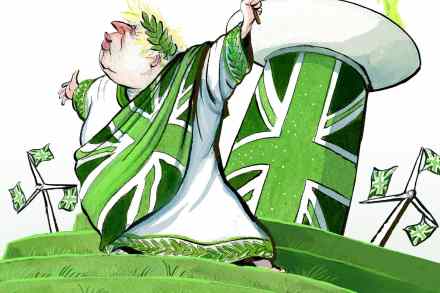
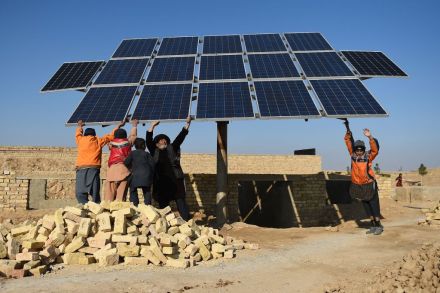
Even before the government this week announced a legally binding target to cut greenhouse gas emissions to net zero by 2050, the Tory leadership contenders were competing fiercely to establish their green credentials. Andrea Leadsom has vowed to declare a ‘climate emergency’. Rory Stewart has upgraded it to a ‘climate cataclysm’ and wants to double the amount of foreign aid spent on climate change. Sajid Javid says he would treat fighting climate change like fighting terrorism. Even Boris Johnson, who once called wind turbines a ‘hideous Venusian invasion’, has leapt on the 100 per cent carbon-free bandwagon, marvelling earlier this week about wind farms and solar panels.

Our flexible friend

Plastics — even venerable, historically eloquent plastics — hardly draw the eye. As this show’s insightful accompanying publication (a snip at £3) would have it, ‘Plastics have no intrinsic form or texture, thus they are not materials that can be true to themselves.’ They exist within inverted commas. They can be shell-like, horn-like, stony, metallic — they do not really exist on their own behalf. Mind you, the first vitrine in Raw Materials: Plastics at the Nunnery Gallery in east London contains an object of rare beauty: a small, mottled, crazed, discoloured sphere that looks for all the world like the planet Venus, reduced to handy scale. It’s a billiard ball, made of the first plastic: cellulose nitrate.

Clearing the air

We are, of course, in the midst of an air pollution crisis which, like every other threat to our health these days, is ‘worse than smoking’. According to the Royal College of Physicians, everyone in Britain is effectively smoking at least one cigarette a day, rising to many more in the most polluted cities. What’s more, as Bloomberg once put it, London has a ‘Dirty Secret: Pollution Worse than Beijing’s’. And London’s air pollution has ‘been at illegal levels since 2010’, according to the New York Times.

The trouble with Greta Thunberg

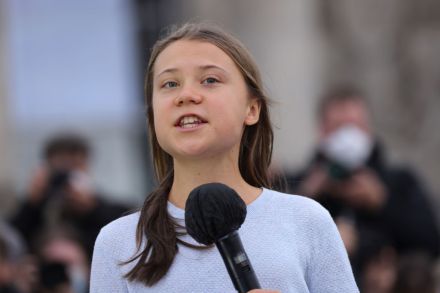
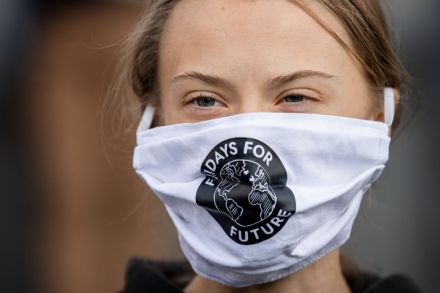
In popular mythology Greta Thunberg is a one-girl revolution who has inspired millions of young people into action by being able to see what adults refuse to see. But her promotion as global statesman is really a well-crafted piece of PR. Those on the Left who seek to use climate alarmism to further their war on global capitalism know full well that the likes of Robin Boardman-Pattison – the Bristol University graduate with a private education and fondness for foreign holidays, who stormed out of the Sky News studio when Adam Boulton accused him of being middle class – is a liability to their cause. But allow Thunberg to speak for them by proxy and, well, who will dare criticise a 16-year-old girl with Asperger's?

Gove is right to keep the lynx out of Northumberland

Over the few years, a battle has been quietly simmering between farming communities and a conservation organisation who want to reintroduce the Eurasian lynx to the UK. The cats have been extinct in the UK for well over a thousand years, and while farmers worry that the big cats will threaten their sheep, Lynx UK – the trust behind the plans – argue that the animals would help the economy, and cause little damage to livestock. But now Defra secretary Michael Gove has rejected a request to release six lynx into Kielder Forest, in Northumberland. The reasoning given for their decision included a lack of support from locals and major landowners, adding that the ‘socio-economic benefits of the trial were unclear’.

Should we listen to David Attenborough’s climate change warning?

‘Civilisation faces collapse, Attenborough warns UN.’ That was the Times headline on Tuesday about the great broadcaster’s speech at the latest climate change conference in Poland. In theory, Sir David is always worth hearing. Nevertheless, his solemn warning was made less effective by the decision to print it at the bottom of page 17. I cannot help feeling that this adverse news judgment was entirely correct.

Will no one ever take on the Green Blob?

Gosh it hurts when your little corner of paradise is destroyed by a few idiots’ ignorance and greed. This is what has just happened to one of Britain’s best-kept secrets, the magically beautiful and remarkably untouristed stretch of the Wye Valley round and about Builth Wells. Every summer we used to take a holiday let there, jumping into our favourite swim-hole in the Wye, playing Cocky-Olly in the bracken, exploring Llewellyn’s Cave, watching the last of the sun bathe the uplands from the shade of the boules terrain outside the house where we’d enjoy our well-earned fags and evening gin and tonic. But I don’t think I could bear go back there. The sight of what they’re doing to it is just too painful.

Extinction Rebellion is a wannabe Marxist revolution in disguise

Anyone trying to get about London over the past few days may have come across the activities of a group called Extinction Rebellion, which blocked Westminster and several other bridges on Saturday, blocked Lambeth Bridge today and plans to repeat the exercise later this week. Its tactics are simple – it gathers raggle-headed eco warriors, together with some terribly nice middle class students, buses them up to London and then disgorges them to sit in the middle of the road, where they then get arrested for blocking the traffic. But no matter the illegal tactics. The world is in the middle of ecological crisis, and so, of course, the normal rules of political protest do not apply.

The threat to the environment that the green lobby tries to ignore

It’s not like the green blob to keep quiet when there’s a threat to the environment in the offing. Even the smallest hint of a problem is usually enough to work a tree-hugger into a frenzy. So it’s worth taking a look at their decision to keep shtum over the recent appearance of what may be one of the greatest threats to the natural world we have seen. Over the last few weeks, scientists and campaigners alike have been turning their attention to the question of how land can be used to tackle global warming. Their interest was prompted by the appearance of the Intergovernmental Panel on Climate Change’s (IPCC) special report on how the increase in global temperatures might be kept below 1.5°C.

Is ethical investment only for millennials and hipsters?

In the 'bad old days' – namely before the late 20th century – it was traditionally the case that the less ethical and the less green a business or sector, the better. There was, and still is, a whole cacophony of 'sin stocks, from tobacco to oil and gas to defence and junk food. The reason for an enthusiasm for all things sinful was, and probably still is, because such businesses tended to have the most secure profits profile. After all, people will always smoke, go to war and binge eat. However, from a moral standpoint investors would be scraping the bottom of the barrel in terms of a clear conscience by going for such an approach.

Rubbish on TV

Not the most beguiling of titles, I admit, but The Secret Life of Landfill: A Rubbish History (BBC4, Thursday) was a genuine eye-opener. The programme began with Dr George McGavin proudly announcing that ‘What we’re about to do has never been attempted on television before’: a claim that it’s usually best to treat with some scepticism, but that here seemed hard to deny. Certainly, I can’t remember another TV documentary in which the presenters spent 90 minutes digging through (non-metaphorical) rubbish. At first, the mood was one of rather determined excitement.

Remote windfarms are bad news for birds

Last week, the government announced that it was going to allow onshore windfarms to once again gain access to the vast pots of money set aside for renewable energy. However, there was one very important restriction: only windfarms on remote islands would be eligible. In practice, we are therefore talking about the Inner and Outer Hebrides and the Northern Isles of Orkney and Shetland. Having come to office on the back of a campaign pledge to stop the spread of onshore windfarms, this represented something of a U-turn, but the reaction has been comparatively muted. This is slightly surprising, because in ecological terms, the islands of Scotland are pretty much about as sensitive as it’s possible to get.

Brexit gives us a chance to save our natural world

For people who love the natural world, each new season brings new excitements. We are a nation of nature lovers. We feed the birds in our gardens and we revere David Attenborough. Which makes it surprising that – until now – governments have not cottoned on to how much of a vote-winner concerted action to restore and protect nature can be. Year in year out the abundance of life around us diminishes. Most adults can remember car windscreens splattered with dead insects after even the shortest of summer journeys. No longer. Insect populations are crashing almost everywhere, and with them everything else.

The green lobby’s energy obsession is harming the world’s poorest

Access to an abundance of clean water has been pivotal for the public health miracle that has taken place in rich countries. The western world's water supply infrastructures enables people to get the water they need to stay healthy, and has undoubtedly played a big role in life expectancy shooting up in the last century. But in the developing world, adequate water supply has completely fallen off the agenda. Instead, environmental health for poorer countries has come to mean only provision of some clean drinking water and latrines. But the copious supplies of clean water that allow hygienic conditions – and therefore public health – to be maintained are no longer seen as a priority for the world's poorest. The reason?

In praise of Michael Gove and his reusable cup

I’m drinking coffee as a write this. That’s not unusual. I drink a lot of coffee, much of it bought from the Pret a Manger that is almost dangerously close to my office in Westminster. (I judge my days by how many meals I eat from that Pret: often two and sometimes three. My life is awesome.) What is unusual is that the coffee isn’t in a paper cup. It’s in a mug, an ordinary ceramic mug, which I put in my pocket and took to Pret. I handed it over to be filled up and instead of paying the 99p Pret normally asks for a filter coffee (tip for fans of what a dear colleague used to call 'ghetto latte': ask for hot milk) I was charged 49p. Then I walked back to my office with my mug. Why am I bothering you with the mundane details of think-tank life?

Wind turbines are neither clean nor green and they provide zero global energy

We’re closing 2017 by republishing our twelve most-read articles of the year. Here’s No. 2: Matt Ridley on why wind turbines are not the answer to our energy needs: The Global Wind Energy Council recently released its latest report, excitedly boasting that ‘the proliferation of wind energy into the global power market continues at a furious pace, after it was revealed that more than 54 gigawatts of clean renewable wind power was installed across the global market last year’. You may have got the impression from announcements like that, and from the obligatory pictures of wind turbines in any BBC story or airport advert about energy, that wind power is making a big contribution to world energy today. You would be wrong.

Wild lynx are either dangerous or docile – but we need to decide

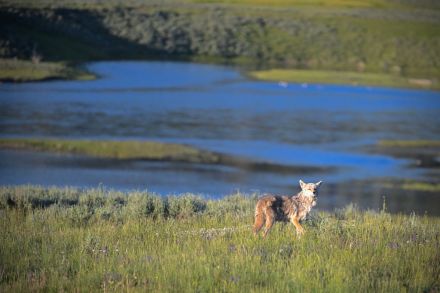
It’s interesting that everyone is making such a fuss about this ‘dangerous wild lynx’ that has escaped from a Welsh animal park. Various reports have described it as ‘fearsome’ warning that it ‘could eat pets’ and be ‘aggressive if cornered’. The park itself ­­– Borth Wild Animal Kingdom in Ceredigion – says that: ‘There have never been any recorded attacks of a lynx on a human, but they are a wild animal… and will attack if cornered or trapped. If you spot her, please don't approach her.’ Animals escape from zoos and wildlife parks all the time. Another lynx, ‘Flaviu’, escaped last summer in similar circumstances from a park in Dartmoor.