Environment

Cop out: Boris’s battle to save the climate summit

As so often, the Queen put it best. While opening the Welsh parliament a couple of weeks ago, she was caught on microphone discussing the COP26 summit and its frustrations. ‘Still don’t know who is coming,’ she told the Duchess of Cornwall. ‘It’s really irritating when they talk, but don’t do.’ In just a few words, she perfectly summed up the challenges facing Boris Johnson in Glasgow. The PM wants to get countries to commit to net-zero carbon emissions by 2050. But how to get a deal, if the main players aren’t at the table? Xi Jinping hasn’t left China since the Covid outbreak and will stay put now. Vladimir Putin is weeks away from opening a new pipeline supplying gas to Germany and continues to be quite the energy power broker.

What’s more expensive – petrol or fizzy drinks?

Filming fatalities The actor Alec Baldwin accidentally shot a cinematographer on set when mistakenly given a gun loaded with real bullets. Others who have died on set: — Martha Mansfield was resting in her car during the filming of a romance set in the US civil war in 1923 when someone flung a match which set her dress alight. — John Jordan fell out of a plane while filming Catch-22 in 1969. — Vic Morrow was decapitated by a low-flying helicopter while filming Twilight Zone: the Movie in 1982. — Jon-Erik Hexum shot himself while fooling around with a gun on the set of the CBS series Cover Up in 1984. — Roy Kinnear succumbed to injuries after he fell from a horse during the filming of The Return of the Three Musketeers in 1988.

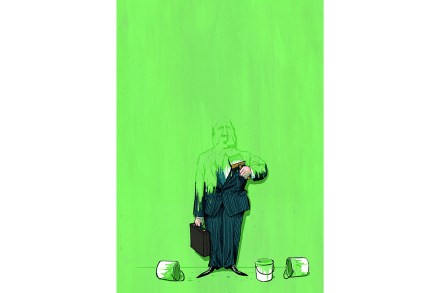
What’s really behind the net-zero zealotry of big businesses?

Boris Johnson’s biggest challenge at COP26 doesn’t lie in avoiding a finger-wagging from Greta Thunberg, who won’t be going. Neither will it be in preventing the party being spoiled by Insulate Britain holding up the limousines of the great and good. Nor will Johnson have to struggle too hard to persuade his fellow world leaders to sign some kind of declaration strong enough to be spun as a triumph but anodyne enough to allow China, Russia and others to ignore it. No, the PM’s biggest challenge lies in fending off the demands of big businesses, who have latched themselves to the cause of net zero with great gusto, aware of its value to their brands.

The cold hard truth about heat pumps

When I went to Poland not long before Covid, I found a country more bitterly divided by a culture war even than we are. So I would not rule out EU leaders being right that the current government there has intruded on the independence of the judiciary for its own political ends. This is the background to recent Brussels fury that the Polish Constitutional Tribunal (supreme court) asserted the primacy of Polish law over that of the EU earlier this month. The problem never arises in the EU, of course, because there the European Court of Justice has never had an independent judiciary to be tampered with. It has aways been the purpose of the ECJ to make sure that its judges use European law to advance the European Union, which democracy tends not to. In that sense, all its judges are political.

Letters: How to feed the world

Doom and gloom Sir: The depressing article by Tom Woodman (‘You must be kidding’, 16 October) confirms my growing fears about the damage being wrought by the promoters of apocalyptic climate change, which has become a dangerous cult with alarming echoes of millenarian doom which has stretched through many previous centuries. While sensible care for the environment is a good thing, the descriptions of a frightening future of the imminent end of the world through drought, flood and fire now imbues every aspect of education and politics. Constantly bombarding young people with the news that the end of the world is nigh has led many of them into completely unnecessary visions of death and disaster.

The government’s net zero strategy doesn’t add up

The commitment to reach ‘net zero’ emissions by 2050 is the most expensive government proposal in modern history. Yet it was rushed through parliament with minimal debate or scrutiny, thanks to a last-minute pledge by Theresa May in 2019, weeks before she left office. She had no credible plan, just a lofty ambition without costings. It has taken the government two-and-a-half years to come up with a proposal — and it is not convincing. The Net Zero Strategy document published this week opens with the Prime Minister’s trademark optimism. ‘We can build back greener, without so much as a hair shirt in sight,’ he writes.

Join: The Spectator’s online COP26 summit

The two-week COP26 climate change summit starts this weekend, with 100,000 expected on a protest march in Glasgow. And tomorrow, we at The Spectator will hold our own (virtual) summit looking at what lies ahead — and asking if history is about to be made, and how much of this is likely to be political theatre. The morning will open at 9.30am with a keynote speech from Dieter Helm, professor of energy policy at New College, Oxford: I'll be in discussion with him afterwards. His book, Net Zero, is perhaps the best primer you'll read on the topic: he supports the objective but is sceptical about the "jaw-jaw" of climate summits as a means of pushing through meaningful change. Then Kate Andrews will discuss the elephant in the room: nuclear power.

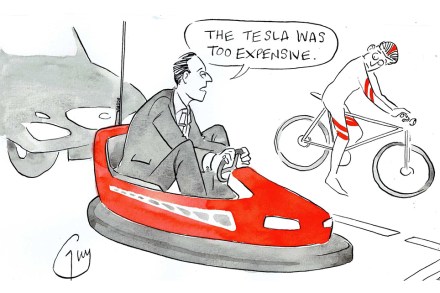
No, Zac Goldsmith, Teslas are not the solution to the fuel crisis

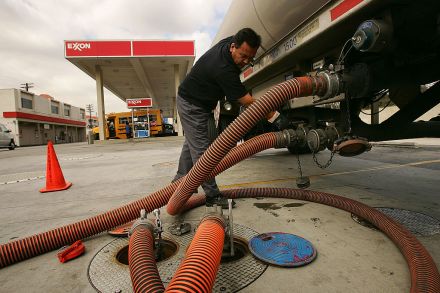
I am not generally given to conspiracy theories, but I have to say there was a point last week where I started asking myself whether there are people in government saying to each other 'these queues at petrol stations – they are exactly what we need if we are going to persuade people to buy electric cars and phase out petrol and diesel by 2030'. It seems I wasn’t wrong. Except, that is, Zac Goldsmith, a foreign office minister, isn’t saying it quietly. He said in an interview with the Independent of the petrol crisis: “It's a pretty good lesson on the need to unhook ourselves from dependence on fossil fuels. You're not seeing the same problems with people who have electric vehicles.

The gas crisis shows how important net zero is

This gas crisis has hit Britain because we rely too much on gas. That’s not a reason to abandon net zero. It’s a reason to do it. Gas prices are soaring, energy companies are failing. A few people are blaming government environmental policies for that. Their apparent hope is that Boris Johnson proves wobbly on green causes and backs away from net zero. I think they’re wrong, both about the policy and about the politics. Start with the policy. The net zero decarbonisation of the UK economy isn’t the cause of the gas price crisis. It’s the solution.

How the Tories have fuelled Britain’s energy crisis

Britain is caught in an energy crisis of the government’s own making. It is true that gas prices have spiked all over the world — but Britain is suffering more than most. Energy suppliers are going out of business, thanks to the government’s price cap. Even fertiliser companies are going bust, with serious knock-on effects for the food industry: the British Meat Processors Association says shortages could hit within a fortnight. The trigger for this crisis has been the sudden surge in demand for gas as the global economy recovers from the Covid lockdowns. Gas prices have doubled in the United States, for example. In Britain, however, prices are five times higher. Why? Because America exploited fracking technology and capitalised on its huge inland gas reserves.

The truth about Extinction Rebellion’s ‘climate warfare’

What have environmentalists got against commuters? Not for the first time a group of bedraggled climate nuts have taken their argument for ‘radical’ action on global warming not to Downing Street or to Parliament Square, but to ordinary people just trying to go about their business. Junctions have been blocked along the M25 near Kings Langley, Heathrow, Swanley, Godstone and Lakeside. This is the work of Insulate Britain, a single-issue Extinction Rebellion offshoot demanding action on home insulation. So far 42 have been arrested. The protesters tweeted that they were ‘disrupting the M25’ to ‘demand the government insulate Britain’.

Is the world we value falling apart?

From time to time, people get worried and ask one another: ‘Is the world falling apart?’ I imagine this is a universal phenomenon, but my experience of it is largely confined to the West (here meant more as a cultural than a geographical expression). It happened in the 1930s, when the broadly correct answer to the question was ‘Yes’, and in the 1970s, of which more later. It happened more recently, after 11 September 2001 and during the financial crash of 2008/09. Some asked the question after Brexit. I have heard it asked again by many highly disparate people in the few days since the American-led Nato scuttle from Afghanistan. What is the answer? My own first encounter with these gloomy discussions was in the 1970s.

Revealed: the BBC guide for covering climate change

Climate change is once again dominating the news agenda. A report from the Intergovernmental Panel on Climate Change warned that even if emissions are cut rapidly, the effects of global warming will be felt across the world. The report – which Boris Johnson has declared sobering reading – leads the news today, with the BBC dedicating seven stories on its homepage today to climate change. So just as well then that BBC staffers were recently treated to an internal audience research briefing telling them how best to convey messages about climate change to different audiences.

Boris Johnson’s dangerous eco-obsession

It is a notable feather in Nigel Farage’s cap that his new evening show on GB News has already become essential viewing for Tory high-ups. Last week brought a series of reports by well-connected commentators suggesting that Boris Johnson was worried about Farage highlighting the government’s chaotic failure to stem the cross-Channel flow of migrant boats. The issue has suddenly shot up the list of issues mentioned by Tory voters, with new polling from Redfield & Wilton Strategies now identifying immigration as their top concern. This week the former Ukip leader has touched another nerve with some Tory MPs by wondering aloud whether their party’s green obsession is reaching a pitch that is going to put off many of its core voters.

The fraudulent business of recycling

I am a litter picker. No, not one of those high-minded volunteers who have proliferated of late with litter-picking sticks and black bags, but a professional: I am paid to empty the bins and collect the debris left by the public in a small park in Middle England. And I’m angry, not with the great British public who leave the stuff but with the real litter louts who are the root cause of the problem. As summer approaches and people who have been stuck indoors crowd into the beauty spots and on to the beaches, litter becomes a hot topic and it is important to be clear where the blame lies. When I became a bin man, I thought I was contributing to a cleaner, healthier planet.

Greta Thunberg doesn’t like you

Dorian Lynskey recently wrote a piece celebrating Bob Dylan’s 80th birthday entitled 'Bob Dylan doesn’t like you'. The article highlighted the disdain Dylan has for fans, critics, journalists, and even the Nobel Prize Committee. Feted as the voice of a generation, and often acting like it, he still has nothing but scorn for those who acclaim him as such. Another 'voice of a generation', some three generations removed, Greta Thunberg has been acclaimed by many politicians for her climate activism. But there is little sign that Thunberg has anything but scorn for them in return. It would be fair to say to most world leaders 'Greta Thunberg doesn’t like you'.

The strange truth about Japan’s climate change target

Japan has just raised its target for reducing carbon emissions from 26 per cent to 46 per cent (by 2030 from 2013 levels). But how was this figure arrived at, environment minister Shinjiro Koizumi was asked? Through a careful analysis of the threat and a realistic assessment of what could be achieved, taking all relevant factors into consideration? Well, er no, according to Koizumi, the number 46 just appeared to him in ‘silhouette’ in a sort of vision. Shinjiro Koizumi, son of former prime minister Junichiro Koizumi, made the comments in an interview with the TV station TBS last weekend. The interviewer, despite her face mask, was clearly stunned by the revelation that the country’s emission target did not appear to have any scientific basis.

Letters: The veiled elitism of social mobility

Levelling up Sir: In making the case for social mobility, Lee Cain unwittingly endorses the classism he hopes to fight (‘Left behind’, 24 April). As the historian Christopher Lasch has argued, the canard of social mobility merely replaces ‘an aristocracy of wealth with an aristocracy of talent’. Far from being egalitarian, the concept is inherently elitist: it implies moving up, out or away from a class, town or profession condemned as undesirable. And by paying lip service to ‘meritocracy’ it becomes a self-serving justification for elites’ power and privilege — if they had the ‘ability and ambition’ to rise to the top, it must only be indolent dullards who are left behind.

Letters: The true cost of the green dream

Zero possibility Sir: Katy Balls is right to conclude that the government is ‘not being upfront’ on the bill for net zero and who will pay (‘The green games’, 17 April). As the Covid pandemic has revealed, expectations need managing, and without an urgent agreement on a consistent set of policy guidelines which embrace fairness, energy security and affordability, the whole net-zero project could backfire. Whichever way you approach the problem, the costs of transitioning to net zero by 2050 are massive, with estimates ranging from £50 billion p.a. (Climate Change Committee) to £100 billion p.a. (National Grid), and the burden falling most heavily on those who cannot afford it.

The green games: the Prime Minister’s big plan to rebrand Britain

It is not unusual for governments to focus on a big event after a period of crisis. In 1951, the Festival of Britain was meant to rejuvenate the country after years of post-war austerity and rationing. The 2012 London Olympics, presided over by Mayor Boris Johnson, supposedly announced the UK’s recovery from recession with a £27 million opening ceremony. But games are intended to be boosterish. A 12-day summit on the environment is not an obvious crowd pleaser. Yet this government is determined to turn COP26, the United Nations Climate Change Conference scheduled to be held in Glasgow in the first two weeks of November, into a great event to put Britain on the map.