Energy

Learn to stop worrying and love data centers

From our US edition

In popular mythology, America is the land that innovates while Europe regulates. America gets on with things while Europe prevaricates by allowing Luddites, environmentalists and all kinds of naysayers to call the tune. There is some truth in that, which is why the growth in the US economy has outstripped that of Europe this century. It’s also why America has a near monopoly in the tech sphere that now shapes our age. Now, however, America, like Europe, finds itself consumed by a popular war against data centers. Given that these centers are the beating heart of the modern economy, just as the coal mines were the lifeblood of the industrial revolution, this presents a very big problem.

How to be a truly patriotic millionaire

Patriotic Millionaires UK, led by the former City trader Gary Stevenson and endorsed by Gary Lineker, has ‘100-plus’ members but claims to speak for ‘the majority of UK millionaires’ – doubtful, given that 150,000 homeowners in the south-east of England notionally fall into the seven-digit category. Under the slogan ‘Tax us, we’re proud to pay and here to stay’, the two Garys have offered Andy Burnham a ten-point plan to raise ‘over £50 billion in a single year’.

Energy investor that bailed on Britain IPOs for $230 million

From our US edition

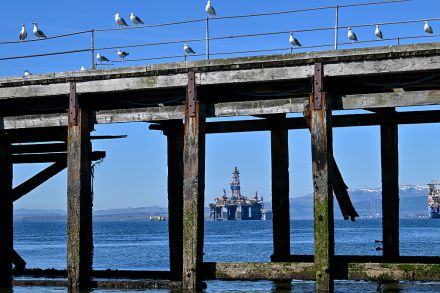
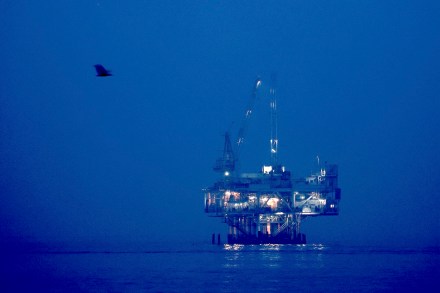
Britain is losing out as a result of its changeable energy policy. That’s the main takeaway from Samos Energy’s recent closing of a $230 million initial public offering. On July 13, Samos Energy Acquisition Corporation announced the conclusion of its IPO of 23 million units, sold at $10 each to raise a total of $230 million. This number included an extra 3 million units that were bought due to high demand. The IPO comes after the company shifted its attention from the UK to Africa and South America, when co-founder Jacques Tohme called out the problems on the North Sea that influenced his decision. “The UK Treasury has become very unstable and lacks engagement with the industry,” Tohme said in 2023.

north sea samos

Is the US heading for another oil shock?

From our US edition

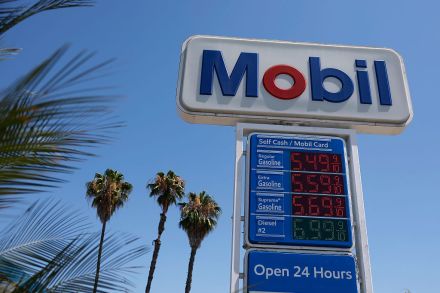
It won’t be anything on the scale of 1973, when President Nixon imposed year round daylight saving time to reduce electricity consumption as well as a 50mph highway speed limit. Nor are we likely to see the thermostat restrictions, or the standby plans for rationing, that were introduced by President Carter in 1979.  The "oil shocks" of the 1970s were not just from a different era, they were of a different magnitude as well.  Trump may well step in with some form of oil export controls Yet that does not mean that the American economy is immune to another crisis, nor that we won’t see a dramatic response from the White House - because, in reality, the US could easily run out of oil later this year.

Oil prices

If you think your bills are bad now, just wait

Forgive the doom-mongering, but the US, and especially the UK, may be dangerously on course for a sovereign debt crisis. Yet debt and deficits play a surprisingly minimal role in our countries’ politics. Overspending on borrowed money hardly featured in either nation’s elections of 2024. A Labour MP hoping for Andy Burnham to challenge Keir Starmer for her party’s leadership recently told Times Radio that investors would see the UK as “the best place to be” if only the government pursued “progressive policies that do speak to our communities.” She added darkly, “The markets will have to get into line” – which was like brandishing a saber at the heavens and threatening that the weather “will have to get into line”... or else!

debt bills

Letters: Reform and the Conservatives need each other

Greco-Roman wrestling Sir: Rod Liddle suggests that some, perhaps many, middle-class voters on the right or centre right are deterred from supporting Reform because of their perception of the party as an unsavoury embarrassment (‘Can Reform smash its class ceiling?’, 23 May). Harold Macmillan in the second world war appreciated that the Americans – ‘great, big, vulgar, bustling people, more vigorous than we are’ – represented the equivalent of the Romans taking over from the declining, but perhaps more cerebral Greeks – the British. But he also argued: ‘We must run Allied Forces HQ [in Algiers] as the Greek slaves ran the operations of the Emperor Claudius.

The US is back in charge of the oil industry

From our US edition

The United States is getting sucked into a conflict in the Middle East, central banks are desperately trying to keep inflation under control and the world is facing an energy shock that may cripple the global economy. There are lots of ways the world looks very similar to the early 1970s. And yet, it is now clear that there is also one significant difference between now and then. Whereas half a century ago, the oil cartel OPEC was rising in power, with Tuesday’s shock decision by the United Arab Emirates to quit the group, it is clear that it is falling apart. In reality, the US is taking back control of the fossil fuel industry – and that is of huge geopolitical significance.

oil

We’re stuck at the worst possible oil price

From our US edition

A ceasefire has been agreed with Iran. The Straits of Hormuz will reopen. And the oil market will get back to normal very quickly. By Wednesday morning, it looked as if the energy crisis was over. Finance ministers will be breathing a sigh of relief as the crisis abates. But hold on. In reality, the truce is fragile, and huge amounts of supply have been taken out of the market. So long as that remains true, the price of oil, and with it the global economy, will remain stuck. The average price of $90 to $100 a barrel is not what anyone really thinks a barrel of oil is worth The price of oil has been on a wild ride ever since the United States and Israel started the attack on Iran a month ago.

oil

Why is Britain so exposed to rising energy prices?

The IMF has warned Britain is particularly vulnerable to another spike in energy prices, and is more exposed than many of its European neighbours. Why is that the case? And does the government have any real plan to shield households and businesses from the fallout? With the Tories and Reform calling for the government to drill baby drill, why is the government avoiding a pretty obvious solution? James Heale speaks to Tim Shipman and Michael Simmons.

Why is Britain so exposed to rising energy prices?

Tim Shipman, Ben Clerkin, Maxwell Marlow & Hermione Eyre

24 min listen

On this week’s Spectator Out Loud: looking back to 1973, Tim Shipman wonders how bad the energy crisis could get; Ben Clerkin interviews Steve Hilton, the former Cameron aide running to be California’s next governor; Maxwell Marlow explains how to solve the student debt crisis; and finally, ‘disorientatingly enjoyable’ is the verdict of Hermione Eyre as she reviews David Hockney at the Serpentine. Produced and presented by Patrick Gibbons.

Tim Shipman, Ben Clerkin, Maxwell Marlow & Hermione Eyre

‘We’re into 1973 territory now’: How bad could the energy price crisis get?

The energy price surge caused by war in the Middle East has sent shockwaves through Westminster. It has pushed up inflation and the cost of borrowing, causing panic in the cabinet and the recognition that government intervention could be needed on a vast scale to support the cost of living. The Prime Minister told a private audience: ‘The assumption that the growth of the developed countries can proceed steadily on the basis of cheap energy has been shattered almost overnight.’ He further observed: ‘The problem is not simply one of inflation. It is the whole structure of the economy.’ In the Treasury there is something approaching a siege mentality. The Chancellor has ‘to spend [her] time firefighting’.

Britain’s Miliband supremacy

Labour MPs who want Wes Streeting to be their leader have, apparently, one great fear. If their man triggers a contest, they are terrified it will lead to Ed Miliband entering the race to stop the Health Secretary – and coming out on top. A Miliband premiership would, they worry, be the death of Labour. I’ve got news for them: we are already governed by Ed Miliband. This is now his administration. And they, and the rest of us, had better get used to it. Keir Starmer is no longer really in charge of this government – if he ever really was. He is Prime Minister in name only. His foreign policy, at this time of war, is Ed Miliband’s. His economic policy, Ed Miliband’s. His Chancellor, his political positioning, his very quest for meaning. All. Ed. Miliband.

miliband

The Iran war has exposed the world’s maritime chokepoint

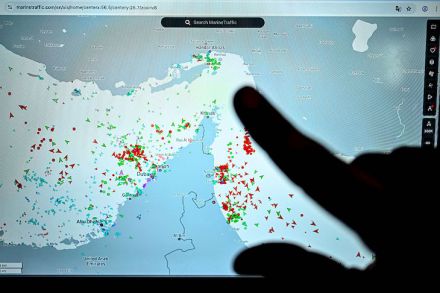
The war with Iran is exposing a vulnerability at the heart of the global gas market: the extraordinary concentration of liquefied natural gas supply in the Persian Gulf. Qatar alone accounts for roughly a fifth of global LNG exports, almost all of it passing through the narrow Strait of Hormuz. The conflict has illustrated how easily a single maritime chokepoint could interrupt a significant share of the world’s gas trade. Even if the war ends soon, the vulnerability it has exposed will not disappear President Donald Trump has suggested the conflict may soon end, describing the campaign as largely achieved and possibly over "very soon." The Gulf monarchies also appear eager for a quick resolution, even as they continue to face missile and drone attacks.

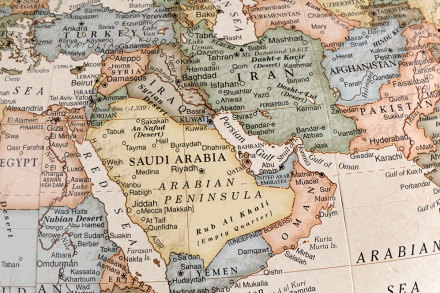
Where exactly is the Middle East?

Less near Where exactly is the Middle East?  – The term was first popularised in an article by Alfred Thayer Mahan, a US academic on naval strategy, published in the National Review in 1902, proposing that western powers would need outposts like Gibraltar to serve their interests in the region, which he defined as the countries bordering the Persian Gulf. This distinguished it from the Near East, a now largely defunct term for the countries surrounding the eastern Mediterranean, including Turkey and the Balkans. Over the first half of the 20th century, the Middle East gradually consumed the Near East.

The Iran war has exacerbated the failure of European energy policies

From our US edition

The history of the global trading system is a story of narrow and vulnerable waterways: the Suez and Panama Canals, the St. Lawrence Seaway, the Straits of Dover and the Skagerrak, which defends the entrance to the Baltic. But none has the power to seize up the global economy as much as the Strait of Hormuz. Barely 30 miles wide at the narrowest point and bounded on one side by the state of Iran, this passage is used for a quarter of the world’s oil supplies and a fifth of its liquified natural gas (LNG).

energy

Ed Miliband must go

Economic forecasting was created, J.K. Galbraith said, to make astrology look respectable. It is not difficult to imagine what the great Keynesian economist would have thought of Rachel Reeves’s Spring Statement this week. It was pure -crystal balls. The statement was redundant on delivery – redundancy being one of the few areas of growth in our economy, as the bleak unemployment figures amply attest. The developing conflict in the Middle East, which has unleashed precipitous oil and gas price rises, has rendered the Chancellor’s promises of future growth more unlikely than ever.

The glaring flaw in Keir Starmer’s AI plan

Like Harold Wilson and his ill-defined ‘white heat of technology’, Keir Starmer has latched on to artificial intelligence as the saviour which is finally going to jolt Britain’s sluggish economy into growth. He once even suggested it would help fill potholes. A year ago he launched his AI Opportunities Action Plan, which is supposed to give the industry a huge boost through the designation of ‘AI Growth Zones’. But there is a big hole in Starmer’s plans. How are we going to power an industry that has become as voracious in its energy needs as the steel, shipbuilding and other heavy industries which it might one day replace? The high energy consumption of AI might not seem obvious to anyone playing around with ChatGPT. It all seems so clean and modern.

‘Pray your boilers don’t fail’: the Church of England is in the grip of eco-zealots

It came to pass in 2020 that a decree went out from the General Synod that all the Church of England must be carbon net-zero by 2030. And this ruling was first made when Justin Welby was Archbishop of Canterbury. And all went to have a good hard look at their church heating systems, every one into his own vestry cupboard… How easy it is to issue a decree from on high; and how hard it is for the people on the ground to have to deal with its consequences.

Inside the Democrats’ AI skepticism

From our US edition

Bernie Sanders has been rolling out political hot takes for more than half a century, and in recent years his familiar socialist prescriptions have found a new focus: artificial intelligence. In 2023 he argued that workers who use it should be entitled to a four-day week. In October of last year he called on corporations who employ AI to be hit with a “robot tax”. And, just last month, he made his punchiest proposal yet: a complete moratorium on all AI data centers. In a characteristically plaintive video address, the Vermont Senator argued that halting data center construction would "give democracy a chance to catch up," preventing the benefits of AI from being monopolized by "the wealthiest people on Earth.

AI

Donald Trump’s end-of-year victory lap

From our US edition

As a mighty US armada bobs in the Caribbean off the shores of Venezuela, President Trump just addressed the nation from the Diplomatic Reception Room at the White House. With characteristic delicacy and understatement, he outlined the accomplishments of the first 11 months of his second term in office, lightly criticized his predecessor and cautiously opined about what the future held in store for the United States of America in the coming semiquincentennial year.  Well, some viewers may wish to dispute my emphases and assessments of tone. But let’s just say that the President’s short speech was vintage Trump. It was hyperbolic, yes, over the top, indubitably, but in essence 100 percent true.

trump 2025 achievements