Maurizio Geri

Dr. Maurizio Geri is a former Nato analyst. He is a lieutenant reservist in the Italian Navy, and a Marie Skłodowska-Curie Global Fellow and postdoctoral researcher at George Mason University in the United States

The Iran war has exposed the world’s maritime chokepoint

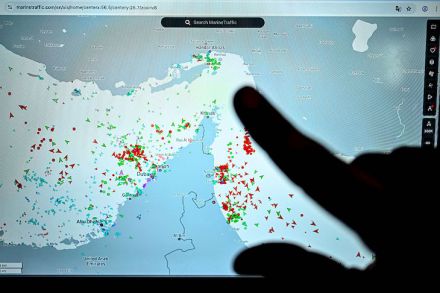
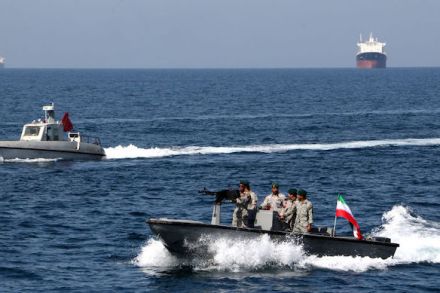
The war with Iran is exposing a vulnerability at the heart of the global gas market: the extraordinary concentration of liquefied natural gas supply in the Persian Gulf. Qatar alone accounts for roughly a fifth of global LNG exports, almost all of it passing through the narrow Strait of Hormuz. The conflict has illustrated how easily a single maritime chokepoint could interrupt a significant share of the world’s gas trade. Even if the war ends soon, the vulnerability it has exposed will not disappear US president Donald Trump has suggested the conflict may soon end, describing the campaign as largely achieved and possibly over “very soon.” The Gulf monarchies also appear eager for a quick resolution, even as they continue to face missile and drone attacks.
Is Iran about to choke the West’s energy supply?

From our UK edition

Nato has learned nothing from Russia’s energy blackmail – and Iran is about to prove it. With precision warheads and hypersonic payloads tearing Israeli and Iranian skies, you might think we’re witnessing the next frontier in modern warfare. But it’s an old game, played with old rules. And once again, Tehran reaches for its well-worn lever of power: energy blackmail. Already, markets are twitching. Crude has jumped over 10 per cent Senior Iranian officials, including Revolutionary Guard commander Esmail Kowsari, have warned that, if Israeli attacks continue, Tehran will not only exit the non-proliferation treaty (thus tearing up its last fig-leaf of nuclear restraint), but will also close the Strait of Hormuz. That’s no idle bluster.