Energy

How damaging could the Ukraine corruption scandal be for Zelensky?

From our US edition

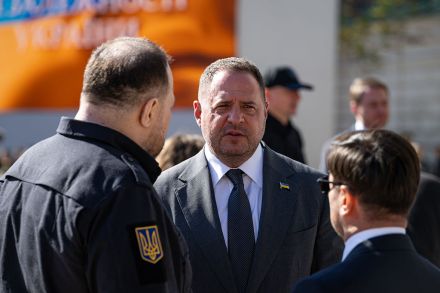
Andriy Yermak, the cryptic aide who shadowed Volodymyr Zelensky through every phase of the war, resigned Friday after anti-corruption investigators searched his office and house. Yermak was the center of Zelensky’s wartime team – and the consequences of his resignation could be far reaching.  In an evening address, Zelensky thanked Yermak for representing Ukraine’s negotiating position in recent tense talks with the United States, “as it should be” and stressed that it had “always been patriotic,” while urging Ukrainians to ignore rumors around the resignation. He said he would begin consultations on a new chief of staff immediately. With more talks looming, he underlined that, in wartime, every institution must stay focused on defending the state.

yermak corruption

The battle for Ukraine’s electric grid

From our US edition

On Sunday, Ukrainian drones attacked the Shatura Power Station located about 75 miles east of Moscow. The 1,500-megawatt gas-fired facility provides heat and power to the residents of Shatura, a town of about 33,000. The drone attack caused three transformers at the plant to catch fire, and a local official said, “All efforts are being taken to promptly restore heat supply,” to the town. According to Reuters, the drone strike was “one of Kyiv’s biggest attacks to date on a power station deep inside Russia.” Sunday’s attack on the power plant in Shatura came two weeks after Ukrainian drones and missiles hit power infrastructure in the Russian cities of Belgorod, Voronezh and Taganrog.

electric

Britain’s expensive energy problem – with Claire Coutinho

16 min listen

Britain has an energy problem – while we produce some of the cleanest in the world, it's also the most expensive, and that's the case for almost every avenue of energy. On the day the Spectator hosts its Energy Summit in Westminster, a report commissioned by the Prime Minister has found that the UK is the most expensive place to produce nuclear energy. This is important for so many avenues of government – from future proofing for climate change, to reducing the burden households are facing through the cost-of-living crisis. Claire Coutinho, shadow secretary of state for energy, and political editor Tim Shipman join economics editor Michael Simmons to talk about tackling Britain's energy crisis and how energy policy could feed into Labour's budget in two days time.

Are we finally about to crack fusion energy?

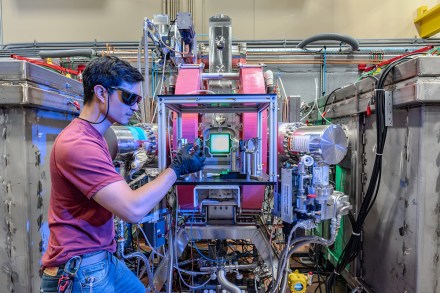
Imagine dropping a pea-sized capsule through a spherical chamber and hitting it with a colossal bolt of laser energy as it falls. If the capsule contains a mixture of deuterium and tritium, two heavy versions (isotopes) of hydrogen, then the atoms may fuse, turning into helium and emitting fast neutrons as they do so. Those neutrons and their accompanying radiation can heat molten salts around the walls of the chamber and that heat can be used to power industrial processes – or to boil water and generate electricity through a steam turbine. That’s the dream of a firm called Xcimer, one of the more ingenious fusion energy startups, based in Colorado.

America needs an ‘all-of-the-above’ approach to energy

From our US edition

While the House of Representatives has understandably been quiet during the government shutdown, not everyone has been idle. While most members of Congress were home in their districts, Representative Troy Balderson, an Ohio Republican, quietly introduced a short, potentially consequential piece of energy legislation called “The Affordable, Reliable, Clean Energy Security Act.” “We the People” will celebrate our nation’s 250th birthday next Independence Day. And truth be told, we are crossing this milestone birthday showing our age. We are politically bipolar. We are in debt. Our infrastructure is crumbling and our schools are a mess. We are in need of several new leases on life.

energy

Why energy is the new political battleground

12 min listen

With three weeks until the Budget, the main political parties have been setting out their economic thinking. Each faces the same bind: anaemic growth, fiscal constraints and uncomfortable exposure to the bond markets. The upshot is that there is less ‘clear blue water’ on the economy between Labour, the Conservatives and Reform. This has left a space for energy to emerge as the policy area in which to differentiate the parties in this new era of five-party politics. The Westminster energy consensus is over – Net Zero is not as popular as it once was – and the parties are setting out their stalls. Could energy win the next election? Oscar Edmondson speaks to James Heale and Michael Simmons.

Letters: French universities still offer a proper education

Unhappy Union Sir: John Power is correct about George Abaraonye, the president-elect of the Oxford Union (‘Violent opposition’, 20 September). Abaraonye appears to advocate that most extreme form of censorship: the bullet. As such, he poses an existential threat to the Oxford Union, which for 250 years has been a beacon of free speech for the world. Invited speakers are dropping out. Donors to the much-needed building repairs appeal are snapping shut their chequebooks. Freshmen with a belief in free speech and open debate will not join. If Abaraonye cared about the institution, he would resign. Evidently, he cares not one jot. He seems to want its destruction. For this reason, he must be removed as soon as possible.

Letters: The shale gas illusion

The shale illusion Sir: Your leading article rightly makes the case for extracting as much of our North Sea resources as we can (‘All at sea’, 6 September). However the enthusiasm for developing shale gas is misplaced. As energy minister, I commissioned work to establish how much of the onshore gas in-place could be recovered. The truth is just a small proportion – maybe 10 per cent. An energy policy based on shale would put our energy security at risk. Economically, at a time when global gas prices are expected to fall, UK shale would simply not be competitive and projects would fail. It is no accident that none of the large energy companies thought it was worth seriously exploring shale.

Trump, Putin, and the hidden power of the Bering Strait

From our US edition

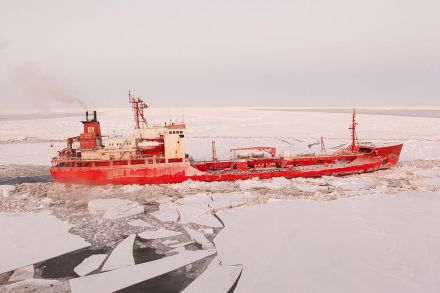
Ahead of the Trump-Putin summit in Alaska to discuss Ukraine, President Trump said there would be “some land swapping.” He waxed lyrical about “prime real estate.” The summit’s location is a good example of land swaps and prime real estate and is in a region of growing geopolitical importance.   In 1867 Russia "swapped" Alaska for $7.2 million in a deal mocked as Seward’s Folly after Secretary of State William H. Seward who negotiated the exchange. It turned out to be a snip. Commercially viable oil was discovered three decades later and has brought in more than $180 billion in revenue since Alaska became a state in 1959.

Trump Putin Alaska Bering Strait

The boundless enthusiasm of Asa Briggs

It’s doubtful whether Asa Briggs ever had an idle moment in his life. Bestselling historian, pioneer of the new universities of the 1960s, chronicler of the BBC, champion of adult education, academic globetrotter and much more besides, he possessed phenomenal energy. He was a miracle of the kind of boundless enthusiasm that his Victorian hero Samuel Smiles had extolled in his book Self-Help. Short and tubby, with large glasses, Briggs effortlessly outpaced academic colleagues who tended to be left panting behind him. A joke did the rounds that if a word were to be coined for a unit of intellectual energy it should be an ‘Asa’. He was dubbed ‘the last great Victorian improver’ and ‘the Lord Macaulay of the Welfare State’.

What hope is there for today’s unlucky graduates?

I’m fresh out of advice for those now leaving university and wondering how on earth they’re going to make a living and live their dreams. This week’s bad news (from the job search website Adzuna) was that graduate and other entry-level vacancies have fallen almost a third since the launch of the AI chatbot. Should this unlucky post-Covid cohort stay on at ‘uni’ for another degree? Or does that mean racking up student debt without enhancing employability? I used to urge everyone to go abroad in their twenties before family responsibilities overtake. But where to now? Hong Kong and mainland China are out; it’s the wrong time to go to America or the Middle East; they’ll need work permits for the EU.

The hidden costs of Angela Rayner’s Employment Rights Bill

One peril of a sudden adverse turn of global events is that it provides cover for bad domestic government. If confidence is knocked by fear of war, if inflation blips because the Strait of Hormuz is blocked, if demand for defence spending sends budgets awry, voters may easily be persuaded that Middle East conflict, rather than Labour policy, has put the UK economy flat on its back. But that’s no excuse for proceeding with bad legislation as the world darkens – and one such item is Angela Rayner’s Employment Rights Bill, currently under House of Lords scrutiny, which in brief summary confers fearsome powers on trade unions and creates a ‘Fair Work Agency’ to interfere in business in all sorts of other ways.

The Sizewell delusion

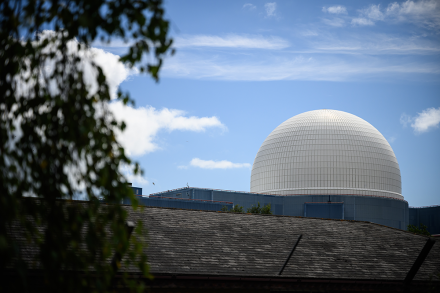
The Chancellor’s promise of £14 billion for the Sizewell C nuclear power station in Suffolk is hardly news. The project has been talked about for 15 years while the existing UK nuclear estate has gradually been shut down and the only other new station, Hinkley Point in Somerset, has stumbled to a decade-long delay and £28 billion of budget overruns. Quite some optimism – verging on Milibandian delusion – is required to embrace the idea that Sizewell will come quicker and cheaper because it will replicate Hinkley Point while avoiding its mistakes. And since Chinese money has been ruled out, it’s still a mystery as to who else will pay for the project beside HMG and the French utility company EDF.

How many countries have banned the burqa?

Behind the veil How many countries have banned the burqa? At least 24 have placed some restrictions around the wearing of full-face coverings in public, although in most cases it applies only in public buildings. Interestingly, they encompass liberal democracies and dictatorships, Muslim-dominated and non Muslim-dominated countries. They are: Algeria, Austria, Azerbaijan, Belgium, Bulgaria, Canada, Chad, China, Denmark, France (general ban in public), Gabon, Kosovo, Kyrgyzstan, Latvia, Luxembourg, Netherlands, Norway, Sri Lanka, Switzerland, Tajikistan, Tunisia, Turkmenistan, Turkey and Uzbekistan. In Afghanistan, the wearing of a burqa or niqab (which has a slit for the eyes) is compulsory for women. Degrees of separation Is it still worth going to university?

How to bring down Britain’s power grid

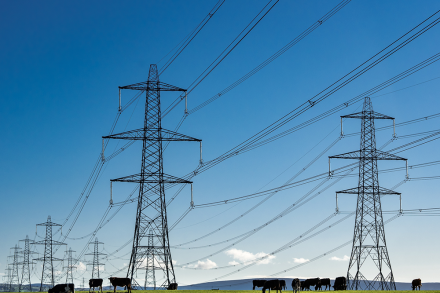
At the end of last month, a fire at an electrical substation in Maida Vale caused chaos in west London. Homes lost power. Transport services ground to a halt. It came in the same week as outages across Spain and Portugal and just a few weeks after a fire at another substation caused Heathrow airport to shut down. We also know that the British government is drawing up contingency plans for Russian attacks on energy infrastructure. All of this raises an important question: how resilient would the British state be in the face of a determined effort to cripple its power grid? The blunt answer is: not very. David Betz, at King’s College London, has long warned that Britain’s national infrastructure is dangerously vulnerable to simple tools such as hammers and hacksaws.

If the numbers add up, Shell should bid for BP

A hangar full of analysts and investment bankers must have spent the long weekend formulating advice for Shell chief executive Wael Sawan for and against a takeover of BP. On the plus side, Shell’s strong share performance, reflecting its undiluted focus on oil and gas and boosting its market value to £150 billion, makes a bid look almost bite-sized – BP’s value having shrunk to £56 billion over the past two years as investors decried the commitment to renewables that its board has belatedly reversed. And the addition of BP’s assets in North America and the Gulf of Mexico would turn Shell into a carbon-fuel giant to challenge the likes of Exxon and Chevron in the US.

The Boden Belt: the Lib Dems are the new party of the posh

The English social season has begun, kicking off with Gold Cup day. But this year, there is a new common denominator in the seats of southern England where the middle classes congregate: Liberal Democrat MPs. From the Cheltenham Festival in March right the way through to Goodwood in September, it is Ed Davey’s party which represents the constituencies where Britain’s bourgeoisie are most comfortable. Whether it is the Boat Race in April (Richmond) or the Derby in June (Epsom and Ewell), or even Wimbledon and Henley in July, everywhere Pimm’s is served, a Lib Dem is the local MP. They dominate the Boden Belt. And even Tories despair that the Lib Dems are the real ‘party of the posh’. At this week’s spring conference, the party was in an optimistic mood.

The Miatta Fahnbulleh Edition

37 min listen

Miatta Fahnbulleh was elected as the Labour MP for Peckham at the 2024 general election.  Born in Liberia, her family fled west Africa as the region descended into civil war, eventually settling in north London when she was just 7 years old. Trained as an economist, having studied at Oxford and the LSE, she went on to work in the civil service and at various think-tanks. After serving as the CEO for the New Economics Foundation, she became a senior economic adviser for Labour working with Ed Miliband during his time as leader of the Labour Party. Ed is now her boss again – at the department for energy.

VP Vance touts border security, energy and humor at CPAC

From our US edition

Vice President J.D. Vance took to the Conservative Political Action Committee stage moments ago for a sit-down interview with Mercedes Schlapp.   In his signature earnest-yet-easy style, Vance reiterated his boss’s main, shared goals one month into the new administration: secure the southern border and grow the economy by unleashing American energy. While casting plenty of blame on the Biden administration throughout his talk, Vance touted the Trump administration’s early accomplishments; border crossings are already down 90 percent, he said, and “we’re just getting started.” In response to a question about fixing the economy, Vance said the key is, “Drill, baby, drill.

jd vance

Brace for an outbreak of Trumpist investor activism

If the new Trump era has a theme, it’s one of quixotic disruption with random consequences. In that spirit, stand by for more interventions from activist shareholders seeking to electrify sluggish businesses while making fast bucks on the way through. The first episode over here was the attack by the New York investor Boaz Weinstein on seven London-listed investment trusts, in which he acquired stakes and forced shareholder votes to replace board members, with the aim of taking the trusts’ assets under the management of his own firm, Saba Capital. ‘Go home! You’re selfish and wasteful,’ shouted one headline after Weinstein was emphatically defeated in all seven polls.