In popular mythology, America is the land that innovates while Europe regulates. America gets on with things while Europe prevaricates by allowing Luddites, environmentalists and all kinds of naysayers to call the tune.
There is some truth in that, which is why the growth in the US economy has outstripped that of Europe this century. It’s also why America has a near monopoly in the tech sphere that now shapes our age.
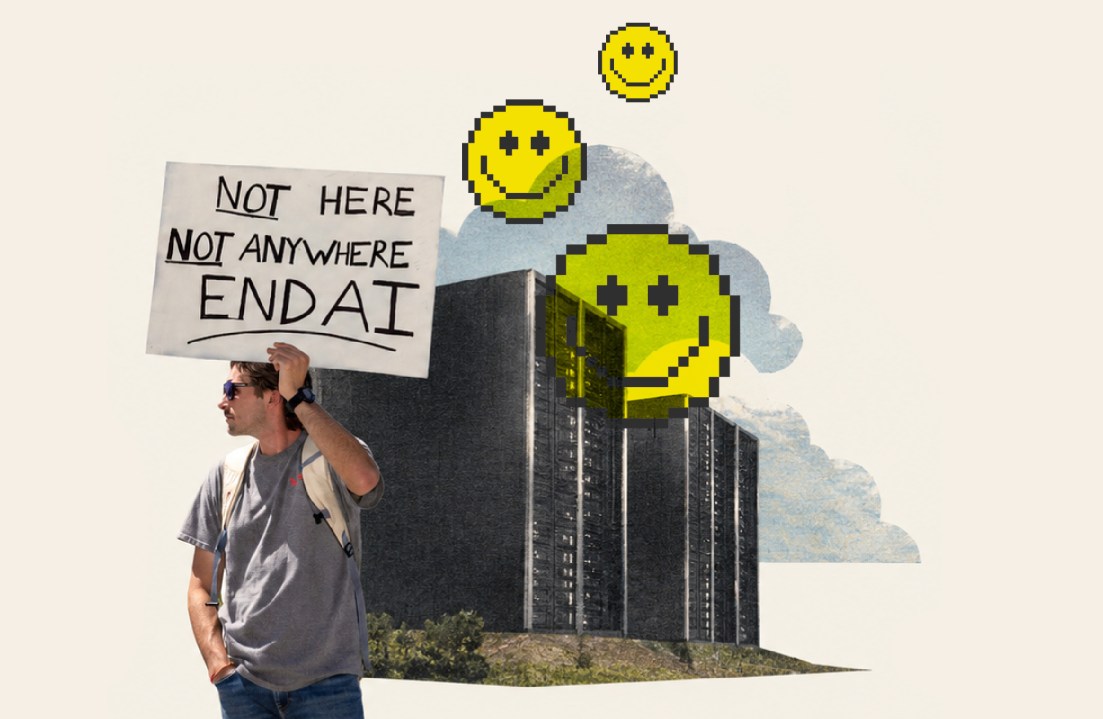
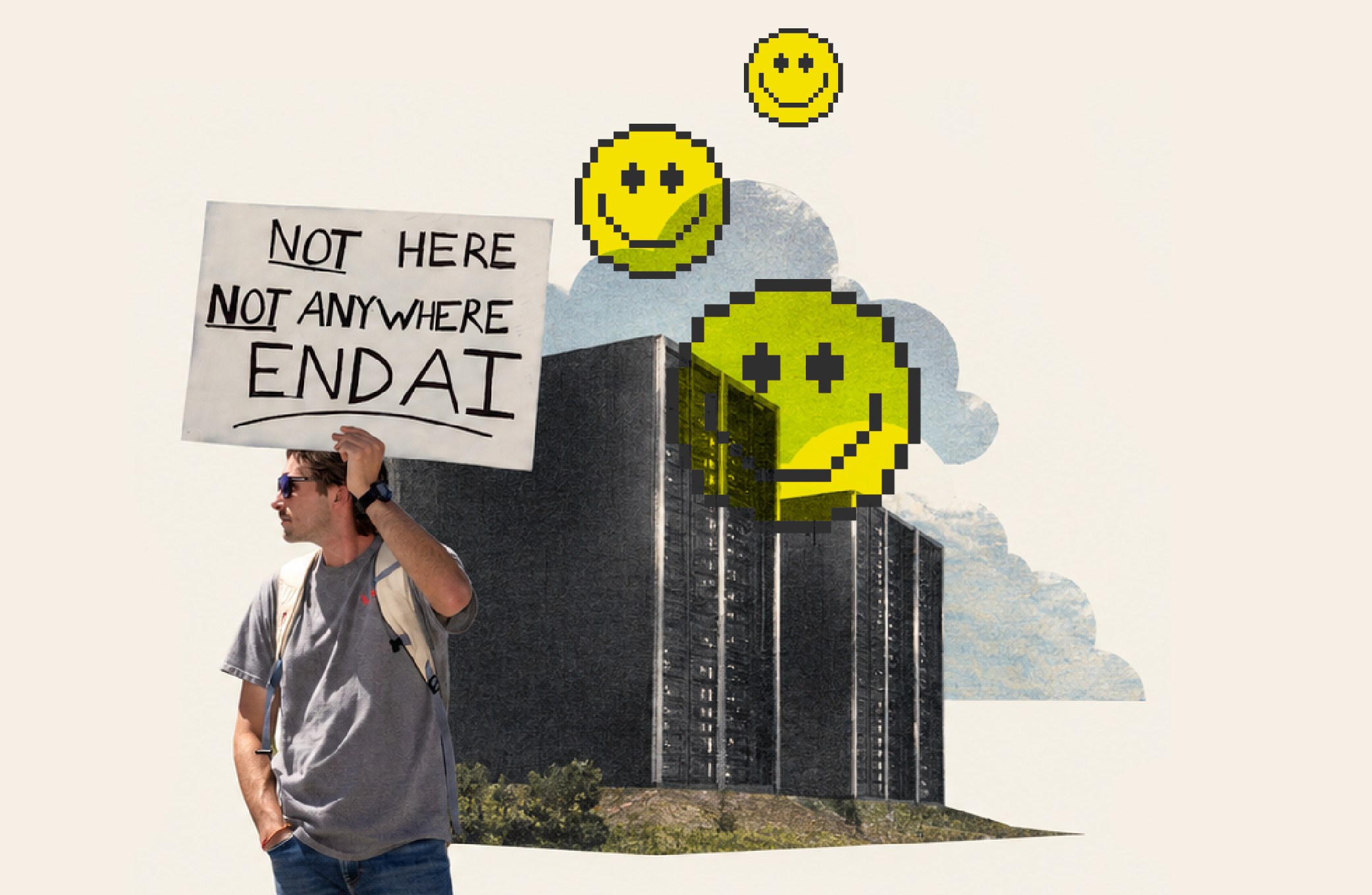
Now, however, America, like Europe, finds itself consumed by a popular war against data centers. Given that these centers are the beating heart of the modern economy, just as the coal mines were the lifeblood of the industrial revolution, this presents a very big problem.
Unless it can be resolved, an eager China may very well seize the advantage and get ahead in a technological revolution that, until now, has been led by America.

Over the past few months, there has been an explosion of protests about data centers as well as legislative moves against them. As Robert Bryce reported in our last issue, the first seven months of this year saw 274 cases in which the construction of data centers across the US was either banned or subject to severe restrictions. Until this year, developers had few problems building them wherever they wanted. Now, we see increasing hostility from local residents and politicians.
New York State has passed a one-year moratorium against new construction. In Maine, legislators tried to block the building of large centers altogether, until their bill was thrown out by Governor Janet Mills. Even Loudoun County, Virginia – which is known as the world’s data-center capital – is looking at new restrictions.
There are a number of reasons for the resistance. Data centers bring noise and urbanization without, crucially, creating much in the way of employment. But above all they are voracious consumers of power and water. While it might be tempting to think the current industrial revolution is much cleaner than the original one, with its boilers and smokestacks, the energy consumption of data centers is extraordinary, and is growing rapidly.
Every time AI bots are upgraded, their need for power leaps to a new level. According to McKinsey, 5 percent of last year’s US electricity consumption came from data centers. Google is said to use as much energy as a city of 250,000 people.
Moreover, the rush of data centers comes just as Americans are seeing their fuel bills rise. Data centers are not the only cause, of course – there is also the small matter of the Iran war and the closure of the Strait of Hormuz, through which around 20 percent of the world’s crude oil supplies used to pass.
At the same time, it should not come as a surprise that people make a connection between their soaring bills and the construction work down the road: the installation of data centers is competing with domestic demand and pushes up prices for everyone.
Vice President J.D. Vance has addressed the issue. If developers want to build data centers, he says, they are going to have to address the issue of local power supplies. The federal government, he claims, will make it easier for them to combine construction of data centers with the construction of power plants.
Some have suggested that the centers provide a prime opportunity for renewables. Wind and solar plants might suit the image of a fast-growing 21st century, but sadly those who are in the business of operating data centers are generally less keen. They need access to reliable power 24 hours a day, 365 days a year. Without a leap in battery technology to allow large quantities of energy to be stored at far lower costs, local gas plants are more realistic. But that does leave the issue of water consumption which, in some locations, may prove a bigger problem.
If America is to continue to be the world leader in AI, it is vital people learn to live with data centers
The obvious places to put data centers are in the desert, where they will annoy the fewest people. But desert areas have an acute shortage of water and present the biggest risk of the machines overheating.
It may turn out that these are transitory issues. Over time, it is quite possible that the trend in energy consumption by AI models will be reversed. It is perhaps a good thing that there is some pressure on Big Tech over energy consumption now, because it will incentivize developers to look for ways of improving the efficiency of their technology as well as its performance. This is one aspect in which China may be outpacing America, with DeepSeek claiming that its large language model can operate at one tenth of the energy consumption of its US competition. And if AI starts to consume less power, then water, used for cooling, will become less of an issue.
Even so, if America is to continue to be the world leader in AI, it is vital Americans learn to live with data centers. Democracies do not have the advantage that Chinese industry has in being able to foist its plants on the population, regardless of the level of civic opposition.
To win public affection, the data-center industry is going to have to accept that it can’t simply plug its plants into the existing grid; it is, as the Trump administration insists, going to have to become a significant supplier of power, too. That will not guarantee the US eternal success in the tech sector. But it would move an important obstacle out of the way.






Comments