Education

When failure actually counts as success

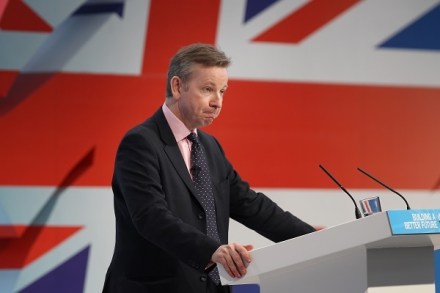
Michael Gove's latest prognosis for schools was delivered at a lunch in Westminster yesterday, but it's important enough to repeat the morning after. The Independent has a full report here, but the key quotation is this: ’Education is like trying to run up a down escalator. There are some uncomfortable decisions that will have to be taken. There will be years when, because we are going to make exams tougher, the number of people passing will fall. There are headteachers who have been peddling the wrong sort of approach to teaching for too long, who are going to lose their jobs.’ Just read that bit again: ‘the number of people passing will fall’. It's a deeply encouraging admission by Gove, and one that he ought to repeat frequently.

The Tories desert Cable in the Commons

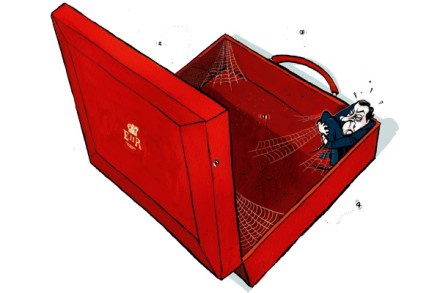
When a Secretary of State is in trouble, it is traditional that his governmental colleagues rally to his side. But as Vince Cable defended overruling the Business Select Committee’s objections to Les Ebdon, there was but one Tory Cabinet minister on the front bench. This despite Cable having rung round private offices in search of support, as Patrick Wintour reports. In total there were three Tories on the front bench for most of the statement, Cable’s junior minister Mark Prisk, the whip Mark Francois and the Leader of the House Sir George Young in his normal seat. The absence of Tory ministers combined with 13 hostile questions from Tory backbenchers shows just how uncomfortable the Tories are with this appointment. By contrast, the Lib Dems are delighted.

The depressing appointment of Les Ebdon

Today brings confirmation that No.10 has not stood in the way of Vince Cable appointing Les Ebdon as the new director of fair access. Ebdon’s appointment is depressing for several reasons. First, Cable has ridden roughshod over the objections of the BIS select committee to his choice. So much for all of the coalition’s talk about respecting parliament — this is executive arrogance at its worst. Second, Ebdon represents the mindset that has done so much damage to British education in the past 50 years. It is worrying that he does not seem to appreciate that the biggest ‘root cause’ of poorer pupils not getting into top universities is the quality of state schooling in deprived areas.

At least it won’t go to penalties…

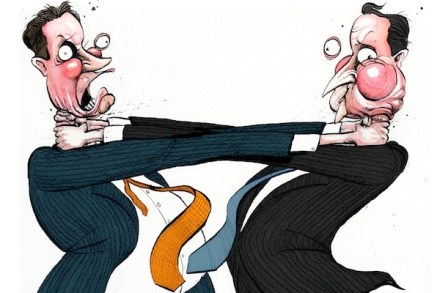
Who's winning in the latest match between Vince Cable and the Conservatives? The Business Secretary did take an early lead, with the news that No.10 had grudgingly yielded to his demand to appoint Professor Les Ebdon to the role of ‘university admissions tsar’ — a man who has hardly been kind about the coalition's universities policy in the past, and whose appointment had been blocked by the business select committee. But, according to the Telegraph this morning, the Tory leadership appear to have scored a goal of their own: Cable's proposal for imposing penalties on graduates who pay off their student loans early is to be dropped. We can, and should, cheer the wheezing demise of that policy.

The Waugh Scale of Schools: Some Aren’t Even Schools

As is customary, one prefaces this post with the observation that there are very many fine state schools and many others, a good number of which are also grand, that do tireless work in demanding circumstances. Nevertheless... According to government data released today, in England last year there were: 137 schools where no pupils were entered for geography GCSE 57 schools where no pupils were entered for history GCSE 30 schools where no pupils were entered for a modern language GCSE 219 schools where no pupils were entered for French GCSE 1,067 schools where no pupils were entered for Spanish GCSE 516 schools where no pupils were entered for any of the individual science GCSEs For context: there are 3,100 secondary schools in England.

Cameron is right to focus on quality apprenticeships

If there are ‘no votes in skills’, as the old dictum goes, there seem to be some in apprenticeships. Hence David Cameron's call this morning for apprenticeships to become a ‘gold standard’ qualification ranking alongside degrees from the best universities. His goal is to rectify Britain's shockingly poor performance on mid-level skills compared to world leaders such as Germany. So how hard would it be for us to catch the Germans? The numbers speak for themselves. Of every 1,000 employed people in England 11 are apprentices; compared to 40 in Germany. Here, fewer than one in ten employers are training an apprentice; in Germany it’s roughly a third.

Public opinion is split on Gove’s reforms

It seems most of the public agrees with the need to improve our schools. A YouGov poll out this morning shows that 53 per cent think education standards have deteriorated over the past 10 years, while only 12 per cent think they've got better. 48 per cent think exams are too easy; just 28 per cent say they’re ‘about right’ and a mere 3 per cent think they're too hard. And when it comes to discipline, the consensus of inadequacy is especially strong: 83 per cent say schools are ‘not strict enough’, while 0 per cent say they’re ‘too strict’. You don’t see 0 per cent in response to questions like this very often.

Mike Russell and the Mythical Anti-Scottish Conspiracy

Mike Russell is a genial chap who, most of the time, is not much of a fool. Most of the time is not all the time, however, and this week he has, inadvertently, illuminated some of the reasons why the SNP struggles with what the Americans call "high-information*" voters. Mr Russell, the Scottish government's education minister, became the latest senior SNP figure to accuse his opponents of being "anti-Scottish". This is an increasingly tedious line of attack and one suggesting both a certain defensiveness and a bleak lack of imagination. There is also a Boy Who Cried Wolf problem: kneejerk suggestions that policy differences are motivated by anti-Caledonian spite or treachery diminish the salience of the real thing.

The strange survival of Labour England

Any CoffeeHousers with a taste for schadenfreude should read David Miliband’s article in the New Statesman. We have to move beyond big government, he declares. We need a growth strategy. I’m not sure if any Labour leader has ever argued otherwise: maybe, as Miliband implies, it has found one now. But, as I ask in my Daily Telegraph column today, what’s worse: a party that’s stuck in 1983, or a modernising movement that’s aiming for 1987? But talk to any Tory, and it’s hard to find any who think the 2015 election is in the bag. Four factors should prevent us from writing off Labour’s chances: 1) David Cameron is brilliant, but just not (yet) at winning elections.

Education is not rocket science

The other day John Rentoul, that noted Blairite scallywag, suggested David Cameron could improve his lot by binning Andrew Lansley and replacing him at the Department of Health with Michael Gove. I dare say this is true. It would, nevertheless, be a depressing, avoidable error. Mr Gove's education revolution - built upon Blairite foundations - may be the shining star in an otherwise cloudy coalition firmament. This will not, alas, bring much electoral benefit but some things are more important than winning votes. Education policy is one of those things. Mr Lansley is floundering and the government's confused and confusing approach to the NHS will cost it votes for it is a sad truth that the Department of Health is, politically speaking, more important than the Department of Education.

The tuition fee effect, revealed

The coalition’s tuition fee rise will put young people from poor backgrounds off applying to university — or so we were told by Labour and the National Union of Students. But now we can actually put that claim to the test. UCAS today revealed how many of that first year group to be affected by the rise have applied to university. So what does those number tell us? Looking at the headlines resulting from the release, you’d be forgiven for thinking that Team Miliband have been vindicated. ‘University applications plunge 9% after tuition fees are trebled,’ proclaims the Daily Mail. ‘Thousands give up on university because of tuition fees,’ says the Telegraph. And the BBC: ‘UK university applications down as fees rise’.

Transparency marches on

It has been quite a few days for transparency in Westminster. First, Ben Gummer's ten minute rule bill for tax transparency — which would see every taxpayer in the country receive a statement detailing what they owe and what the money's being spent on — earned itself a second reading in the House. And now, today, the Department for Education releases its new ‘performance tables’ for secondary schools. You can sift through them here, and I'd recommend you spend at least a couple of minutes doing just that.

Academies work, now let them expand

ARK Schools, one of the leading City Academy providers, has just released another amazing set of results with GCSE passes 11 percentage points higher last year than were achieved in 2010. This is staggering progress, given that these schools are serving the same neighbourhoods with the same demographics as the council-run schools which they replaced. It is also a reminder that the City Academy programme, started by Tony Blair and Andrew Adonis and expanded by Michael Gove, can claim to be the most rapidly-vindicated social experiments in recent history. The results of ARK’s schools speak best for themselves: ARK’s formula clearly works, and I’d like to see it applied to many more schools rapidly.

Gove: It’ll take ten years to turn around the education system

Speaking on the new Sunday Politics Show, Michael Gove said that it would take a decade for his reforms to change education in this country. Pressed by Andrew Neil on whether he would be able to reverse England’s fall in the PISA rankings, Gove remarked that it would take ten years before we can see whether his reforms have worked in reversing England’s educational decline in comparison to other OECD economies. Interestingly, Gove suggested that one of the measures of the success of his reforms was whether private schools started entering the state sector. He also defended his decision to force some schools to become academies.

Gove takes on bad teachers

Michael Gove’s giving a robust defence of his plans to make it quicker and easier for schools to sack bad teachers. ‘You wouldn’t tolerate an underperforming surgeon in an operating theatre, or an underperforming midwife at your child’s birth,’ he says in the Mail. ‘Why is it that we tolerate underperforming teachers in the classroom?’ And he was similarly forceful in an interview on the Today programme, the full transcript of which we’ve got here. Gove is emphatic about how important this is. ‘The evidence is quite clear,’ he says. ‘If you’re with a bad teacher, you can go back a year; if you’re with a good teacher you can leap ahead a year.

Transcript: Gove on sacking teachers

This morning, the Education Secretary went on the Today programme to explain his plans to make it easier to sack teachers. Here’s the full transcript: James Naughtie: From the start of the next school year in England, head teachers will find it easier to remove teachers that are considered to be under-performers.  The Education Secretary, Michael Gove, thinks the process is too cumbersome so it is being streamlined. The National Union of Teachers, as we heard earlier, says it could become a bullies’ charter.  Well Mr Gove is with us. Good morning. Michael Gove: Good morning. JN: Bullies? MG: I don’t believe so.

The anti-academies club

‘Anyone here from the Spectator?’ Last night a packed meeting at Downhills Primary in Haringey began with this ominous query from the chairman, Clive Boutle, who leads a local campaign against academies. Seated at the side of the hall I kept quiet. ‘No one?’ said Boutle, ‘Great, we’re safe.’ The meeting had attracted about 800 protesters and activists who oppose Michael Gove’s decision to force Downhills – a failing multi-ethnic school – to become an academy. ‘Michael Gove really hates us,’ continued Boutle, his manner urbane rather than menacing. ‘The government doesn’t like Haringey. There hasn’t been a Tory here since Noah was in short trousers. So we’re no risk.

Why the battle over Downhills Primary School matters

Downhills Primary School in Haringey is fast becoming a political battleground. Before Christmas, David Lammy, the local MP, a bunch of union leaders, left-wing opponents of education reform and Labour councilors wrote to The Guardian complaining about Michael Gove’s plans to convert primary school with poor academic records into academies. In the New Year, Michael Gove responded with a speech in which he attacked those opposing to dealing with these sub-standards schools. He accused them of being subscribers to the “bigoted backward bankrupt ideology of a left wing establishment that perpetuates division and denies opportunity.” (Pete blogged about the significance of the speech at the time.

It’s poverty, not race, that ought to concern us more

My Daily Telegraph column today is about how poverty is a greater problem in Britain than racism, which I describe as an ‘almost-vanquished evil’. This has drawn some criticism, not least from those asking (understandably) what a white guy like me can know about racism. Not much, but plenty of academics have done a hell of a lot of work into racism in Britain (including two brilliant, young academics, Matt Goodwin and Robert Ford). And their studies present a far brighter picture than we're used to. The abject failure of the BNP is not just down to Nick Griffin being a plumb — it’s because he tried to hawk a racist message to the most tolerant country on earth. CoffeeHousers may be interested on why I think this is so. Here are five points: 1.

Gove versus the ‘enemies of promise’

Michael Gove has never been timid in confronting the education bureaucracy, but his attack on them today is particularly — and noteworthily — unforgiving. Referring to those truculent local authorities that are blocking his schools reforms, he will say in a speech that starts in about ten minutes: ‘The same ideologues who are happy with failure — the enemies of promise — also say you can't get the same results in the inner cities as the leafy suburbs, so it's wrong to stigmatise these schools. Let's be clear what these people mean. Let's hold their prejudices up to the light. What are they saying? “If you're poor, if you're Turkish, if you're Somali, then we don't expect you to succeed.