Education

Lights, camera, education

Earlier this year I went as a reporter to cover Julie Walters’ return to her hometown of Smethwick, where she was talking to schoolchildren as part of the FILMCLUB charity’s Close Encounters programme. The town where Oswald Mosley was MP, and where Malcolm X once came to challenge racist election campaigning, remains a place struggling with deprivation and poverty. However what I saw in that room, organised by teachers and pupils in their spare time, was the power of a simple idea: to use film to improve aspiration and educational achievement. Walters shared experiences of her difficult grammar school days, her career change (from nursing) and most importantly the idea

Why the state should take charge of examinations

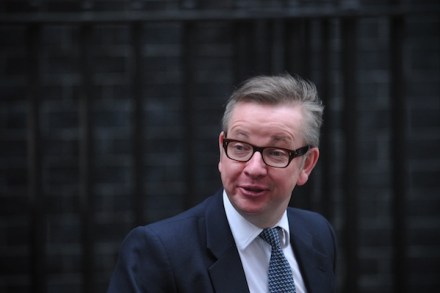
Michael Gove has said that ‘nothing is off the table’ when it comes to dealing with the revelations in today’s Telegraph that a chief examiner of the Welsh examination board, WJEC, steered teachers attending his board’s fee-paying advice session so flagrantly in the direction of what was likely to feature in the next examination, it amounted, as the man said, to ‘cheating’. The irony of the thing is that those teachers who did not pay £230 a session for his assistance are likely to do much better by their pupils: the obliging examiner was telling the teachers about the cycle of examination questions — in other words, which bit of

Sifting through the rubble from the riots

Not many folk are aware of it, but there is an official riots inquiry and it has delivered its interim report today. Its conclusions are pretty clichéd and not really worth studying; David Lammy’s book is infinitely more instructive and readable. But it does produce a few figures about the rioters — or, I should say, those arrested mainly because they didn’t think to cover their face. I looked at this for my Telegraph column last week. Here’s my summary of today’s report:   1. Broken Britain. Some 46 per cent of those arrested live in the lowest ‘decile’. These guys are not working class, but welfare class. Abandoned by

Talkin’ ’bout long-term stagnation

Politics is often a messy squiggle, but this morning’s Resolution Foundation event did much to reduce it to a binary choice. Do we follow the US into a decades-long stagnancy around low-to-middle-income earners? Or do we not? James Plunkett explained the basic dilemma on Coffee House earlier, but more was said by a group of panellists which included Jared Bernstein, Martin Wolf, Steve Machin and Lane Kenworthy. Here, for the saddest CoffeeHousers, are eight points that I’ve distilled from my notes. This is more reportage than opinion, but I thought you might care to applaud or eviscerate some of the arguments that were put forward: 1) The UK triumphant. Or

Cameron’s growing attachment to schools reform

A change of pace, that’s what David Cameron offers in an article on schools reform for the Daily Telegraph this morning. A change of pace not just from the furious momentum of the eurozone crisis, but also in his government’s education policy. From now on, he suggests, reform will go quicker and further. Instead of just focussing on those schools that are failing outright, the coalition will extend its ire to those schools that ‘drift along tolerating second best’. Rather than just singling out inner city schools, Cameron will also cast his disapproval at ‘teachers in shire counties… satisfied with half of children getting five good GCSEs’. And rightly so,

We need better schools, not more spending

More money, better services? You might have thought that Gordon Brown had already tested that theory to destruction, but here it is again in the coverage of today’s Institute for Fiscal Studies report on education and schools spending. The IFS highlights that education is facing the biggest cuts over a four year period since the 1950s. And the coalition’s opponents are gleefully seizing on this as a problem in and of itself. But it isn’t, really. As CoffeeHousers will know, education funding increased massively during the past decade. The IFS admit this themselves: “Over the decade between 1999–2000 and 2009–10, it grew by 5.1% per year in real terms, the

Gove: the Tories are the party of state schooling

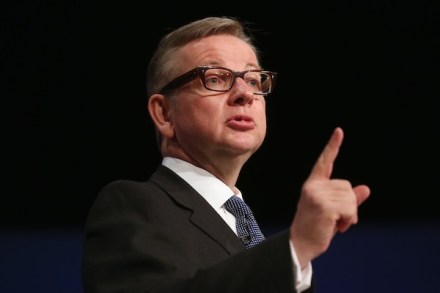
Apologies for my recent, extended absence, CoffeeHousers — Vietnam and my immune system just didn’t get on. But I’m back now, and firmly embedded in Manchester, where Michael Gove has just given his address to the Tory conference. Although, I must say, “address” doesn’t really cover it. This was more a political variety show, short on new policy (because Gove’s existing policy is going quite well enough, thank you very much), and big on spectacle and optimism. It started off with a video conversation between Gove and David Cameron, who was in a local school that is on the verge of becoming an academy. There was nothing surprising in what

What Clegg failed to mention

Nick Clegg’s speech will be remembered for its visceral attack on Labour. But it was remarkable for other reasons, notably for what he neglected to say. Clegg said next to nothing about his government’s flagship education and welfare reforms. Only the increase in the pupil premium budget received a mention, as did the new ambition to send “at risk” children to a two week summer camp. This oversight was odd, especially for a leader who talks so much about social mobility. As Coffee House has illustrated on numerous occasions, the academies programme (which was supported by the Liberal Democrats in opposition and throughout the coalition’s opening negotiations) is dramatically improving

Who Benefits from School Choice? The Poor.

Responding to research that finds school-voucher lottery winners from poorly-performing school districts in North Carolina do much better than the beleaguered kids who don’t get a winning ticket, Matt Yglesias makes the vital point: Note that this is consistent with charter skeptics’ favorite research finding that, on average, public charter schools are about the same as traditional public schools. Many schools and school districts are above average. If kids with low-quality neighborhood schools are able to attend charter schools that are about as good on average as average public schools, then those kids are going to see huge benefits. By the same token, you wouldn’t expect there to be a

Annals of Self-Awareness: Cristina Odone Edition

I don’t think “squeezed middle” means what the lovely Mrs Odone thinks it means: For the past decade, our parental angst, which had my husband tossing and turning at night and me frantic about freelance work (I remember dashing out of hospital within three days of an emergency caesarian to write an article), could be summed up in two little words: school fees. For most of us “squeezed” middle-class parents, our little treasure’s education will set us back £30,000 a year (the average* private school bill). For many of us this means not only giving up on luxuries such as exotic holidays and theatre outings, but also remortgaging our home,

A revealing episode

The row about which email account special advisers use for which emails is, I suspect, of very little interest to anyone outside SW1. But today’s FT story certainly has set the cat amongst the Whitehall pigeons. At the risk of trying the patience of everyone who doesn’t work within a mile of the Palace of Westminster, I think there is something here worth noting about our political culture. Christopher Cook’s story in the FT this morning is about an email that Dominic Cummings, one of Michael Gove’s special advisers, sent urging various political people not to use his Department of Education email. In this case, the email was perfectly proper. Ministers

Teather pledges to double the pupil premium

Assorted acolytes from the teaching unions are padding around the Lib Dem conference, fomenting discontent around activists who are opposed to the coalition’s adoption of academies and free schools. Officials from NASUWT and the NUT have pricked the airwaves with tales of concern and frustration. Education minister Sarah Teather addressed the conference earlier this morning and she was unrepentant. She eviscerated Labour’s record on education and, by extension, the system that has been dominated by the teaching unions. She also pledged to double the pupil premium next year to £1.25 billion, which will allow schools to increase their expenditure on tuition, parental support, after school clubs and so forth. The

Adam Curtis Is At It Again

  The great story-teller’s latest piece is a rum business indeed. Apparently: The guiding idea at the heart of today’s political system is freedom of choice. The belief that if you apply the ideals of the free market to all sorts of areas in society, people will be liberated from the dead hand of government. The wants and desires of individuals then become the primary motor of society. But this has led to a very peculiar paradox. In politics today we have no choice at all. Quite simply There Is No Alternative. That was fine when the system was working well. But since 2008 there has been a rolling economic

Miliband: We can’t spend our way to a new economy

David Cameron and IDS have been promoting the Work Programme this afternoon and they reiterated that jobseekers must learn English to claim benefits if their language difficulties are hampering their job applications. It’s another indication of the government’s radical approach to welfare reform. Aside from that, the main event in Westminster today was Ed Miliband’s speech to the TUC. Miliband was widely heckled by the Brothers, especially when he told them: “Let me just tell you about my experience of academies as I’ve got two academies in my own constituency. They have made a big difference to educational standards in my constituency and that is my local experience of that.” The Tories

Cameron’s well-schooled argument

When Michael Howard offered David Cameron the pick of the jobs in the shadow Cabinet after the 2005 election, Cameron chose education. Howard was disappointed that Cameron hadn’t opted to shadow Gordon Brown but Cameron argued that education was the most important portfolio. A sense of that commitment was on display today in his speech on education, delivered at one of the new free schools that have opened this term. His defence of the coalition’s plans to make it easier to sack bad teachers summed up its refreshing radicalism. He simply said, “If it’s a choice between making sure our children get the highest quality teaching or some teachers changing

Willetts plays snakes and ladders

Social mobility has become something of a hot topic for the coalition. February’s Social Mobility White Paper made it the government’s number one social policy goal. Yet arguments over tuition fees have rather drowned out much of what they have to say on the topic, particularly when it comes to education and skills. So it was interesting to hear Higher Education Minister David Willetts restate the government’s case with a speech at the Resolution Foundation yesterday. Willetts, who has been called the poster boy of the think tank community, was as thoughtful as ever – and he didn’t mince his words. In a dig at much of the research on

The reformist case for Clegg

One ally of the deputy Prime Minister suggested to me yesterday that the press was missing the most significant aspect of Clegg’s speech on education: Clegg acknowledging that free schools would now be a permanent part of the educational landscape. This ally argued that this was a big deal given that a year ago Lib Dem conference had voted to boycott these schools. The Lib Dem leader is considerably more liberal than his party. This means that he sometimes needs, so the argument goes, to sweeten the reformist pill with some Lib Dem rhetoric. Hence the emphasis on free schools being fair schools in yesterday’s speech. But this internal Lib

The breakdown of Clegg’s Cabinet alliances

There used to be a time when some of the most important relationships in the government were between Tory reformers and Nick Clegg. The Lib Dem leader, to his credit, tilted the scales in favour of radicalism in both education and welfare. But those reformist alliances are now pretty much over. Indeed, Ken Clarke – with his plans to put rehabilitation first in the justice system – is the only Tory Cabinet minister who remains in a strategic alliance with the Deputy Prime Minister. Iain Duncan-Smith’s relations with the Lib Dems have soured over the issue of family policy. On the education front, the Clegg-Gove axis is clearly at an

School’s back, and a fight breaks out in the Westminster playground

Nick Clegg’s speech today on education has certainly garnered him some headlines. But it has also ruffled feathers in Whitehall. A senior Department for Education source told me earlier: “Clegg doesn’t understand that the 2010 Act means that Academies are the default mode for new schools, whether Local Authorities like them or not. His speech doesn’t change Free School policy or Academy policy generally. It was stupid of Richard Reeves to turn what should have been rare good news for the Government into a splits story, and it won’t help reverse public perceptions of Clegg as dishonest.” The striking thing about the Deputy Prime Minister’s speech today is the emphasis

Clegg vs Clegg

As the Lib Dem conference approaches, we can expect some briefing from their spin doctors claiming to have “wrecked” all manner of Tory policies. It’s a petty and ugly phase of the coalition. Last year: nuptial bliss. This year: one partner throwing china at the other. The next phase is divorce, which is why I’m surprised to see the Lib Dems accelerating the process by today’s divisive briefings. Especially on something as self-defeating as school reform. We are told that “Nick Clegg defeats bid by Michael Gove to let free schools make profits”. This is nonsense. As I write in this week’s Spectator, Gove is not pushing for profit-seeking schools,