Education

The Swedish case for school profits

Should state schools be able to make a profit? We asked this of you on our Coffee House poll this week. 71 per cent of you said yes, and with good reason. Profit-seeking companies expand when demand is strong: that’s what you want good schools to do. But successful schools not seeking profit have no incentive to expand: it’s an easier life just to let the waiting list grow and jack up the fees. This month, 24 new ‘free schools’ will open – eventually able to educate 10,000 pupils. But to keep pace with the boom in primary school pupils, we’d need an extra 400 primaries alone. Will the ‘free

Whitehall leaks

The Department of Education is remarkably unbothered by yesterday’s Guardian splash about free schools. Why? Because they have known for months that the emails on which it was based had gone missing. Indeed, the only thing that surprised them about the story was that it did not appear three months ago in the Financial Times. Email security in Whitehall is notoriously bad. Ministers and special advisers often don’t realise that civil servants have access to their email accounts. This access provides ample opportunity for those hostile to the government’s political agenda to leak out stories. (Most ministers in both this and the last government use secret squirrel email addresses to

Beating Labour’s education legacy

If it is GCSE results day, there must be a row about government education policy. True to form, the NASUWT — a union whose role often appears to be to make the NUT look moderate by comparison — has come out with a comically hyperbolic statement accusing the coalition of a ‘betrayal of young people’ because of its decision to reform the educational maintenance allowance. What the NASUWT statement ignores is that the real betrayal of young people has been pushing them into doing courses and qualifications that condemn them to a life of low-skilled labour at best. Last year, only 16 per cent of pupils achieved a C or

The schools revolution in action

Harris Academies, one of the best-known new chains of state secondaries, have today posted an  extraordinary set of results. It’s worth studying because it shows how a change of management can transform education for pupils in deprived areas. Pour in money if you like, but the way a school is run is the key determinant. This is the idea behind City Academies, perhaps Labour’s single best (and most rapidly-vindicated) policy. The notion is rejected by teaching unions, who loathe the idea that some teachers are better than others. Bad schools are kept bad by the idea that their performance is due to deeply-ingrained social problems, etc. Harris has produced a table showing

Blair on the riots

Tony Blair has dropped in to write an article on the social context to the recent riots. It’s insightful, especially as a testament of his failings in government. At the close of his premiership, he says, he’d realised that the acute social problems in Britain’s inner cities were “specific” and could not be solved with “conventional policy”. So much for ‘education, education, education’, Blair’s favoured solution was a mixture of early intervention on a family by family basis to militate against the “profoundly dysfunctional” upbringings these young people endure and a draconian response to antisocial behaviour. Alas, he was forced from office for before implementing the plan. The present government

Creating British Jobs for Non-British Workers?

Will Straw takes issues with Fraser’s post on the matter of just how many “new” jobs have been filled by foreign-born workers. As Straw says, foreign-born is one metric, British-national another. If you measure these things by the latter yardstick then, apparently, 69% of new jobs in the last year have been filled by non-UK nationals. This is interesting and that is, evidently, a hefty percentage. (It would be interesting to see a regional breakdown of these figures too.) The better and more important question is why businesses appear to favour employing foreigners. Because this is the better, more important question it’s the one that’s best left unasked. I don’t

Miss Lightwood suggests…

The press’s tendency to feature female students receiving their A-Level results rather than their male counterparts is coming in for a fair bit of ribbing today. The Guardian diary yesterday revealed quite how far some schools are prepared to go to get their pupils on the front page: “And yet eyebrows were raised at Diary HQ on receipt of an email from Badminton School, inviting Fleet Street to feature a selection of pupils on results morning who “speak extremely well and take a good picture”. “I have a fabulous case study of a girl … who sadly lost her mother … and is now an active charity campaigner,” reads the

The annual A-levels helter-skelter

The Gap Year has been declared dead. It’s A-levels day today, and the annual scramble for university places has been intensified ahead of next year’s tuition fees rise. According to this morning’s Times (£), the last count had 669,956 pupils sprinting after 470,000 vacancies. An estimated 50,000 students with adequate grades will not enter higher education this year as many universities have raised entry requirements to manage increased demand. This means that competition during clearance will be even more stiff than usual, particularly as universities will offer many fewer clearing places according to various surveys. Needless to say, UCAS’ website appears to have collapsed under the weight of this unparalleled

Why we need a post-riot inquiry

Today we learnt that David Cameron is looking at the experience of Los Angeles’ recovery from the 1992 riots. The first lesson he should learn is the value of an inquiry, as Ed Miliband suggests. Californian policymakers held an inquiry, and it taught them plenty about the nature of modern poverty, urban unrest — and how to tackle it. Part of the reason that poverty in Britain is so ingrained is because so few politicians look at it in any detail, and even mentioning the word ‘underclass’ solicits squeals of disapproval. We remain aloof. As I argued in the magazine last month, we like harmless sketches about British poverty (Rab

Time for action

The facts of life are Conservative, as the old phrase has it. The events of the past few days have shown the urgent need for Tory social policies. The case for reforms to the police, welfare and education has been amply demonstrated.  Some in the government appear to get this. But there is also an odd hesitancy about getting on the front foot. As Tim Montgomerie said yesterday, why wasn’t a minister put up for Question Time last night? They could have used the programme to push Cameron’s reform agenda. Equally, why isn’t Cameron setting up an inquiry that will expose how the police have effectively abandoned parts of our

The scale of IDS’ task

This afternoon’s parliamentary debate touched on the sociological issues that may have inspired the recent looting. Naturally, there are plenty of competing views on the subject, but I bring your attention to Harriet Sergeant’s, which she has expressed in the latest issue of the Spectator. Sergeant has conducted extensive investigations into the teenage gangs in London, acquainting herself with gang members and their way of life. Her observations are intriguing, albeit terrifying. An extended version of her magazine article is available online and I urge you to read it. But here is a short extract: ‘The young men I interviewed had very obviously failed to make the transition to manhood and

Gove versus Harman

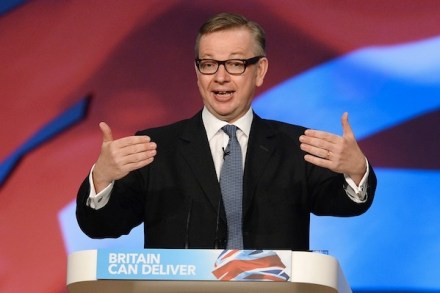
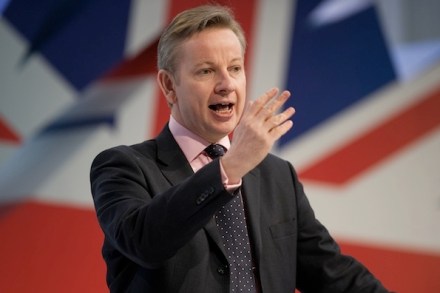
The Guardian’s Nick Watt already has a detailed and insightful post on last night’s Newsnight bout between Michael Gove and Harriet Harman. Here’s the video, so CoffeeHousers can watch it for themselves:

Cameron gets forceful

So far as words matter, David Cameron has just delivered one of the most forceful statements of his political career. It contained all the anger of his address yesterday, but went much further in its diagnosis. “There are pockets of our society that are not only broken, but frankly sick,” he said, adding that, “the one word I would use to sum it up is irresponsibility.” His most memorable line was that, “It is as much a moral problem as it is a political problem.” This was the campaigning Cameron that we have glimpsed only briefly, most notably during his conference speech in 2009. Tim Montgomerie is saying that Cameron

The East-West Divide

Perhaps it is time for Glasgow to become a Charter City: More than a third of people in Glasgow North East have no school qualifications. A table published by the University and College Union (UCU) showed 35.3% of those of working age left school without passing a single examination. The result gives the area the lowest rating in the UK. Every Edinburgh constituency was placed in the top third for educational achievement. Every constituency in Glasgow was below the British average. No matter how many allowances you make for Glasgow’s peculiar circumstances – post-industrialisation, redrawn city boundaries that exclude middle-class suburbs and so on – this is depressing stuff. If

Fiona Millar to the Commons…

Richard Kay’s column in the Mail contains the news, as expected, that Fiona Millar (AKA Mrs Alistair Campbell) is a shoo-in to replace Glenda Jackson as Labour’s candidate for the Hampstead and Kilburn constituency. The seat is very marginal: Jackson scraped in by just 42 votes last time round. But, if Millar were to win the nomination and subsequent election, she’s being tipped for immediate promotion. Kay reports that a ‘senior party figure’ told him that Millar would become Education Secretary ‘within a year’, assuming Labour was in government. Millar founded the Local Schools Network as a bulwark to protect comprehensive education and she is an impassioned and determined critic of

A victory for common sense

For years, teachers have been increasingly reluctant to restrain unruly pupils — for fear of being slapped with a lawsuit. But now, it seems, the government is trying to ease those concerns. Its guidance today may not change any laws, but it does encourage schools to change their approach. Among the directions is that “schools should not have a ‘no touch’ policy”: teachers can use reasonable force to restrain pupils, remove disruptive children from the classroom or prevent them from leaving the classroom when they shouldn’t. However, the guidance does stress that there are limits on the use of force, making it clear that “it is always unlawful to use

Schooling the judges

The judges are judging the judges, or at least judging by the cover of this morning’s Times (£) they are. “Radical reform of the selection of judges,” some leading figures tell the paper, “is needed to break the stranglehold of white Oxbridge males at the top of the judiciary.” The story continues inside the paper, with a tranche of statistics on just how white, Oxbridge and male the judiciary actually is (i.e. very). It all reminded me of a table we put together for Coffee House some months ago, and which I thought I’d excavate this morning. Here it is, with judges sitting firmly at the bottom: Of course, some

An American view of tuition fees

When I visited the US recently, I got talking to some American teenagers about university. They (like me) had just left school and were trying to decide where to go next. I explained that in the UK, the Government’s plan to raise tuition fees to £9,000 a year had led to riots. Their jaws dropped. They couldn’t understand what the fuss was about. In the US, fees can reach $40 000 a year for the private Ivy League colleges. The reaction in the UK seemed ridiculous to them. They felt we should be grateful that we didn’t have to pay $40,000. [Although, to be fair, some state universities only charge

It’s not just pensions, say teachers

As any CoffeeHouser knows, the Spectator enthusiastically supports Michael Gove’s education reforms. But it’s always important to listen to opposing views – so we stepped outside our offices in Westminster to talk to some of the striking teachers. Some of their points, it must be said, were a little peculiar. “It was wonderful under Balls, a golden age,” said one “we’d like to get back to that.” But others were more realistic in their concerns. For example, they criticised Michael Gove’s inconsistency: the official government policy is that modular exams will remain, but he appeared on television this weekend saying that he intended to remove modular exams by 2012. This

Our politicians need to look beyond Europe

In Britain, public sector strikes always bring with them the whiff of national decline. They are a reminder of a time when the country was becoming less and less competitive and the civil service regarded its job as the management of decline, a mindset only broken by the Thatcher government.   But today Britain faces a choice almost as acute as the one it faced in the late 1970s. Is this country content with declining slightly less quickly than the continent of Europe as a whole, or does it want to equip itself for a new world in which economic power is moving east?   It is in this context