Education

Clegg goes mobile

Just as David Cameron is trying to move on from a tough few weeks by returning to themes that worked for him earlier in his leadership, Nick Clegg is also focusing on familiar territory. He’s given a speech this morning on the pupil premium — which he made a key component of his Lib Dem leadership bid back in 2007. And today’s speech marks the start of a two-week push on a key Clegg concern: social mobility. It’s not as if Clegg’s been silent on the topic recently, but this is the first time it’s been at the top of his agenda since he launched the government’s social mobility strategy

Another voice: How ministers are gaming the net migration target

International students are currently the largest single category of immigrants who count in the net migration figures, which cover all those intending to stay more than a year. In the most recent figures (the year to June 2011) there were 242,000 such students — making up 40 per cent of so-called ‘long term’ immigration. However, as a new report by IPPR sets out, international students are not really ‘long term’ immigrants at all. They are far more likely to return home after a few years than the other main immigration categories of work and family: the evidence suggests only around 15 per cent stay permanently. Clearly, it would be wrong

Gove takes on private school dominance and trade union opposition

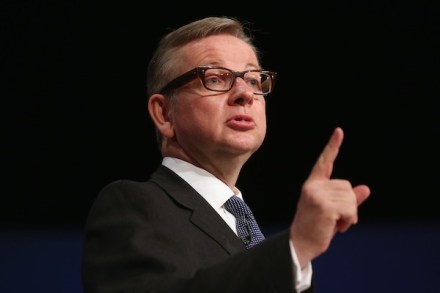
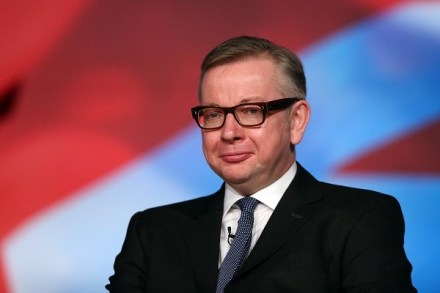
The Education Secretary gave a very pugnacious speech this morning on the need to improve the country’s state schools. ‘It is remarkable,’ Michael Gove said at independent school Brighton College, ‘how many of the positions of wealth, influence, celebrity and power in our society are held by individuals who were privately educated’. He cited the various professions — politics, law, medicine — where private schools are ‘handsomely represented’. That’s certainly not a new observation. Gove could have, if he’d wanted to, cited the Sutton Trust’s statistics (below) showing the proportion of judges, Lords and CEOs who come from independent schools. Instead, he chose a more novel — and effective — way

Gove gets covering fire

Good teaching matters; that’s something we don’t need to be taught. But how much does it matter? What are its measurable benefits? Today’s education select committee report collects some striking, if pre-existing, research into just those very questions, and it is worth reading for that reason. There is, for example, the IPPR’s suggestion that ‘having an “excellent” teacher compared with a “bad” one can mean an increase of more than one GCSE grade per pupil per subject.’ Or there’s the American study which found that the best teachers can ‘generate about $250,000 or more of additional earnings for their students over their lives in a single classroom of about 28

Ash Green’s academy success story

I was a panellist on Radio Four’s Any Questions last night, in Bedworth outside Coventry. At the reception afterwards, I got talking to the pupils, teachers and even the local vicar of the school where the show was recorded. With so much gloom (and shambles) in Westminster, it was a heartening reminder of what is going right in Britain, aided by David Cameron’s government. I thought I’d share it with CoffeeHousers. Not so long ago, Ash Green School was seeing a pathetic 3 per cent of its pupils achieve what is now called ‘Five Good GCSEs’ (5 GCSEs at A-Cs, including English & Maths). Now it’s 65 per cent. Success has

Gove’s historical conundrum

Is it possible to set schools free while demanding a beefed up teaching of our nation’s history? Both are topics close to the heart of the Education Secretary but eventually, he’s going to have to choose one over the other. Top-down orders on the History curriculum will undermine attempts to give schools and teachers more control over what they do. Tristram Hunt threw this curveball in this weeks magazine, where he states it is a example of the classic Tory struggle between liberalism and conservatism: ‘The self-inflicted challenge comes with delivering this national narrative of Britishness. Because at the crux of Gove’s schools revolution is the dismantling of national provision.

The coming schools crisis

Michael Gove’s school reform is being overwhelmed by the surging demand for school places, I argue in my Telegraph column today. When the Education Secretary first draw up his ‘free school’ programme, he said in a Spectator interview that his aim — while radical — was simple.  ‘In your neighbourhood, there will be a new school going out of its way to persuade you to send your children there. It will market itself on being able to generate better results, and it won’t cost you an extra penny’ Choice is only possible when supply outstrips demand. But the latter is growing faster than anyone envisaged a few years ago. The

Another blow against the something for nothing culture

In the aftermath of the riots, the idea of withholding child benefit from mothers whose kids played truant was floated by Number 10. The aim was to link child benefit payments to getting your child to attend schools. This was meant to be part of a broader effort to end the something for nothing culture. Now, 8 months on from the riots — and after months of coalition wrangling — we have some flesh on the bones of this idea. Charlie Taylor, the government’s impressive adviser on behaviour, has proposed (£) that fines for children being persistently truant should be deducted from child benefit payments. At the moment, head teachers

The teachers’ unions take on Ofsted, Osborne and Gove

I counted five issues which the NUT conference suggested that teachers might strike over. But in a conference full of the usual bluster, the most noteworthy threat was not to cooperate with Ofsted inspections. Ever since the new chief inspector Sir Michael Wilshaw — who was hugely successful as the head of Mossbourne academy — announced that a merely satisfactory grade would no longer be regarded as good enough, the teaching unions have taken agin him. But not cooperating with Oftsed would be unlawful. Anyone who tried to block an inspection would be liable to prosecution and a fine. Another issue exercising the unions is George Osborne’s proposals for regional

The importance of sacking bad teachers

The opposition of the National Union of Teachers to the government’s plans to make it easier to fire bad teachers is entirely predictable. The NUT has long placed the interests of the worst of its members above those of the children being educated in the state system. Given what we know about just how crucial good teaching is to a child’s educational achievement then it is absolutely vital that the coalition does push these changes through. One of the most important parts of these changes is ending the process by which bad teachers are simply shuffled around the system. Academy schools already have the power to vary pay. But, sadly,

Gove calls on universities to improve A-levels

It may be a sleepy day in Westminster, but Michael Gove and his school reforms have lost none of their brilliant urgency. The schools secretary has today written to Ofqual — the body in charge of regulating the exams system — to ask that universities be allowed to involve themselves, much more closely than ever before, in designing and implementing A-levels. In the letter he sums up his plans thus: ‘I want to see new arrangements that allow Awarding Organisations to work with universities to develop qualifications in a way that is unconstrained — as far as possible — by centrally determined criterion.’ And he adds that this process should

Riots report undermines the Tory diagnosis, but spreads itself too thin

After last August’s riots the debate became quickly polarised. Were socio-economic factors like unemployment to blame, or was it all down to the individual choices of the rioters? David Cameron and other Conservative ministers knew which side of this debate they wanted to be on. They had been taken by surprise by the riots, initially failing to realise how serious things were, but when they got back from their holidays they set out a clear and confident line, brushing off most questions about links to the state of the economy or youth attitudes, and condemning the riots as ‘criminality pure and simple’. The soundbite was deliberately simplistic; Conservative ministers’ actual

Money for Maths

If you get the incentives right, the rest should follow. So Liz Truss’ push for a subject premium should be applauded. If sixth form colleges received more money for pupils studying Maths, it is reasonable to assume that they would encourage more of them to do it. At the moment, colleges receive more money for people doing Media Studies than Maths or English on the grounds that the equipment required to teach the subject makes it more expensive. But, frankly, this is perverse. I expect that nearly every employer, including newspapers, would rather that their employees had Maths A-Level than Media Studies. Truss’ other point is that more money for

JET — three letters that spell trouble for the coalition

JEET. That, according to Andrew Grice in the Independent, is the new ‘buzzword’ circling around Libdemville (population: 57 MPs, and a few others). And it stands for the issues that they want to keep mentioning whenever they can: jobs, education, environment and tax. Fair enough. Although it is striking that only one of these issues is unlikely to put them in close combat with the Tories. Both parties of the coalition support free schools and academies, and the Lib Dems are getting their pupil premium too, so education is relatively uncontroversial territory. But as for the others… Jobs. The conflict here focuses on the role of the state. As George

Graduates struggling to get graduate jobs

Today’s ONS release will make pretty grim reading for students and recent graduates. It shows that the unemployment rate among recent graduates — those who graduated in the last six years — stands at 9.1 per cent, higher than the overall unemployment rate of 8.4 per cent. It’s even worse for those who graduated in the last two years — the unemployment rate among them is 18.9 per cent, up from 10 per cent before the recession. But there’s an even more worrying trend among those recent graduates who do find employment. In 2001, three-quarters of them were in ‘higher skill’ jobs — those requiring more than GCSEs. Now, less

Fatal impact theory 

As schools are for education, so universities are for higher education. In a civilised society, children should leave school literate, numerate and with some knowledge of science, history and culture. But society also needs an elite educated to a higher level. Universities are for the preparation of the next generation of doctors, United Nations interpreters, lawyers, structural engineers, archaeologists, nuclear-weapon designers, literary critics, astronomers, economists and so forth. That’s the short answer. The long answer would require a great deal more than is found in Stefan Collini’s brisk and very witty book. It would need to range far and wide both historically and geographically, to tell us about the centrality

Willetts tries to dampen the flames around Ebdon

Siphoning the contents of two brains through one mouth and on to a single page will generally produce eclectic results. And that’s certainly the case with David Willetts’ interview with the Times (£) this morning. The universities minister manages to range across subjects that include Robert Falcon Scott, climate change, the Falklands and universities access. He even reheats one of his old theories about Feminism and social mobility in a way that (coupled with the interview’s headline: ‘Moving on and up is very hard — and feminism is partly to blame’) makes it sound far more provocative than I think it’s meant to be, and much weaker for it. The

Detoxifying profit in education

Profit and education are still two words that should only be put together with caution. The coalition has long-accepted this is a toxic area, as typified by Nick Clegg in September when he proclaimed: ‘Yes to greater diversity; yes to more choice for parents. But no to running schools for a profit; not in our state-funded education sector.’ But as Fraser argued last year, we need profit-making schools to spread the benefits of Michael Gove’s reforms to the most deprived children. To straddle this divide, Policy Exchange has proposed a halfway solution today: social enterprise schools. Similar to a private company, the proposed model has full financial transparency and a duty to reinvest

When failure actually counts as success

Michael Gove’s latest prognosis for schools was delivered at a lunch in Westminster yesterday, but it’s important enough to repeat the morning after. The Independent has a full report here, but the key quotation is this: ’Education is like trying to run up a down escalator. There are some uncomfortable decisions that will have to be taken. There will be years when, because we are going to make exams tougher, the number of people passing will fall. There are headteachers who have been peddling the wrong sort of approach to teaching for too long, who are going to lose their jobs.’ Just read that bit again: ‘the number of people

The Tories desert Cable in the Commons

When a Secretary of State is in trouble, it is traditional that his governmental colleagues rally to his side. But as Vince Cable defended overruling the Business Select Committee’s objections to Les Ebdon, there was but one Tory Cabinet minister on the front bench. This despite Cable having rung round private offices in search of support, as Patrick Wintour reports. In total there were three Tories on the front bench for most of the statement, Cable’s junior minister Mark Prisk, the whip Mark Francois and the Leader of the House Sir George Young in his normal seat. The absence of Tory ministers combined with 13 hostile questions from Tory backbenchers