Education

Is Gavin Williamson doing enough for deprived children?

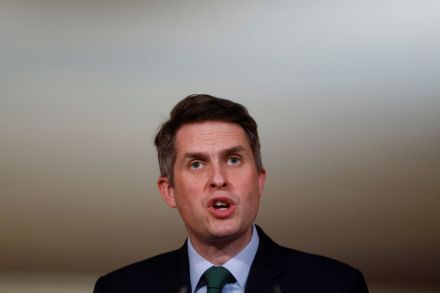
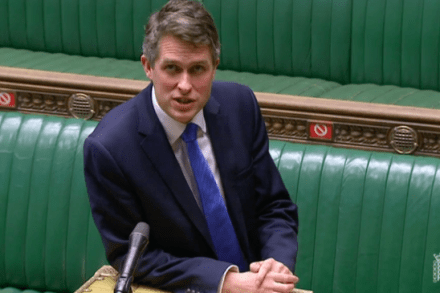
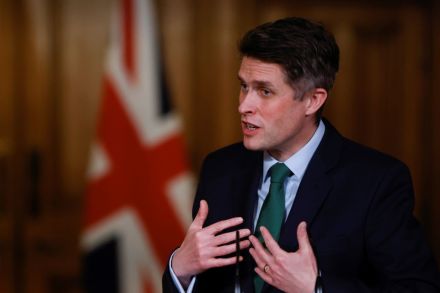
There are just days until all pupils return to English schools, and Conservative MPs are becoming increasingly concerned about what state many of these students will be in when they arrive back in the classroom after the best part of a year trying to learn from home. At today's Education Questions in the House of Commons, a number of backbenchers pressed Education Secretary Gavin Williamson on the work the government is doing to get the most disadvantaged children back up to speed. Both Jack Brereton and Julian Sturdy had tabled questions asking 'what support his department is providing to help children catch up on lost learning during the Covid-19 outbreak'. Williamson's response was to point to the £1.
What Britain could learn from New Zealand about home-schooling

If ever there was a moment to address the issue of home-schooling, it is now. The pandemic has disrupted teaching, school life and examinations in catastrophic ways. Many children will now never get the education they would have had. But every crisis is an opportunity — and this crisis offers the chance to reform education in radical ways for the better. Britain could learn a lot from New Zealand. Since 1922, the Kiwis have run a state-funded national correspondence school, known now in Maori as Te Aho o Te Kura Pounamu (Te Kura for short). In Western Australia, a similar school has existed since 1918 and is known as the School of Isolated and Distance Education. The Correspondence School/Te Kura approach is not a revolutionary concept.

Britain should follow France and Spain’s lead on school closures

This pandemic has not been short of unexpected twists. Perhaps the most surprising of them all has been Britain’s willingness to close its schools. Boris Johnson’s reasoning for his U-turn in January seemed paradoxical at best: despite judging schools ‘safe’, he closed them anyway. Even more incredibly, the bulk of British parents have been supportive of his decision. On this issue, at least, is it time to take our lead from Europe? While Britain has outpaced Europe in its vaccine roll-out, the attitude towards schooling on the continent has been much bolder than our own. Schools have remained open in both France and Spain throughout the winter, despite both countries experiencing a spike in Covid cases.

The SNP’s education ‘stitch-up’

For anyone who assumes the SNP government’s secrecy and obstruction is limited to inquiries into itself and its past leaders, the fate of a major report into Scottish education is an instructive tale. Curriculum for Excellence (CfE), introduced in 2010, was the SNP’s grand idea for better learning in Scottish schools. Its ‘progressive’, ‘child-centred’ philosophy was contentious among teachers but was eagerly bought into by educationalists, educrats and teachers’ unions. Dissenters were generally caricatured as stuffy old reactionaries who wanted children bolted down in rows, facing a blackboard, as an authoritarian dominie catechised them in the rote memorising of formulae, dates and rules.

Covid could force a major schools shake-up

At some point in the next few months, life will return to something approaching normality. When that happens, the UK will have to confront all the problems that Covid has left behind: bruised public finances, long NHS waiting list and the rest. But the problem that Boris Johnson is most worried about, as I write in the Times today, is the effect on children of having been out of school for so long. This pandemic has probably wiped out a decade of progress in narrowing the attainment gap. There would undoubtedly be resistance from the education sector The government is hoping that small group tutoring can help make up much of the lost learning; it looks like the school day will be extended as part of this.

The cost of school closures

How can ministers stop one of the worst legacies of the pandemic being a generation of children left behind after a year out of the classroom? This week, when Boris Johnson confirmed 8 March as the earliest schools will return, he also announced money to help pupils catch up and a long-term plan for education. There's a glimpse of the scale of the task facing the government as it develops a long-term plan in this report from the Education Endowment Foundation, which found not only a significant fall in attainment for primary age pupils as a result of the disruption to the school year, but also a 'large and concerning attainment gap between disadvantaged pupils and non-disadvantaged pupils'.

The true cost of school closures – an interview with the Children’s Commissioner

Teaching unions have spent much of the past year campaigning with the social media hashtag #CloseTheSchools. It’s a reminder of the imbalance in debate over education. Unions represent the adults, MPs represent their constituents, but who in Westminster speaks for children? In 2005 the Blair government sought to answer this question by creating a Children’s Commissioner, who would promote and protect the rights of children in decisions affecting their lives. Anne Longfield, the third to hold the job, is in the final few weeks of her six-year stint. She is spending those weeks campaigning for schools to re-open as soon as possible after the February half-term.

Boris confirms schools will not reopen before March

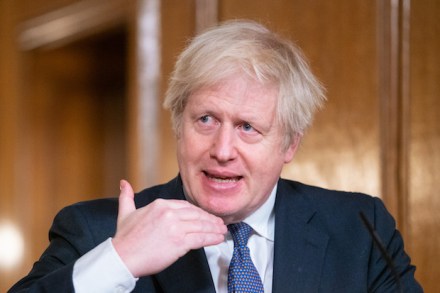
England's national lockdown is set to run on until at least March. Speaking in the Commons chamber this afternoon, Boris Johnson confirmed that the return of pupils to the classroom would be the first thing to be eased – and this would not happen in February as he had previously hoped. Addressing the House, Johnson said 'it will not be possible' to reopen schools in England after the half-term break next month. However, he remained hopeful that so long as the UK's vaccination programme remained on track, the return of pupils to the classroom would be able to begin from Monday 8 March. Given that No. 10 have no plans to relax any restrictions prior to schools reopening, this means the lockdown is here for the foreseeable.

Backbench MPs are doing Labour’s job on school closures

Labour had an urgent question about schools reopening in the Commons this afternoon, but once again it wasn't the Opposition that really increased pressure on the government but Conservative backbenchers. They are getting increasingly agitated by the prospect of classrooms remaining empty for many weeks longer than ministers had originally suggested, and were keen to convey their concerns to schools minister Nick Gibb. Gibb had to field questions about rising mental health problems among young people who've spent the best part of a year trying to learn at home, about parents struggling to work and home-school their children, and about the criteria for reopening.

Remembering the Holocaust after the survivors are gone

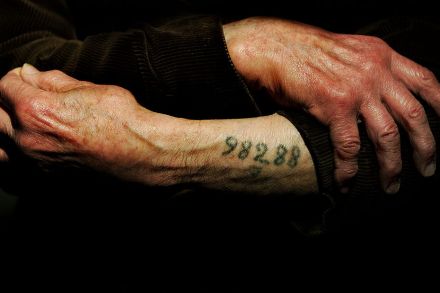
When Ziggy Shipper was 13, the Nazis forced him onto a train in the Lodz Jewish Ghetto bound for Auschwitz-Birkenau. In hideously camped, cold, dehydrated conditions, Ziggy’s journey was made even more uncomfortable by a fully grown man who was crushing him. Only when the train stopped did Ziggy become aware that it was a corpse. His first emotion, however, when the body was thrown off the train, was not one of horror that the man had died, but of relief – of joy, even – that he could breathe again. It was an experience that has haunted Ziggy ever since: incredulity and horror at how his own humanity had been broken down to such an extent.

It’s time to vaccinate teachers – and start planning a great school reopening

At the start of the Covid-19 crisis, Chris Whitty often made the point that a pandemic kills in two ways: directly and indirectly. Locking down society also costs lives — and stymies life chances. Ever since the government moved to embrace lockdown, neither ministers nor the chief medical officer have talked much about the collateral damage it inflicts. This is odd, because it is perfectly defensible to say that lockdown is the least damaging course of action while still acknowledging the harm it causes, particularly for the young. Not since Victorian times have so many children spent so little time in school. As ever, it is the poorest who will be most affected by the lack of education over the past year.

Why is Labour calling on Gavin Williamson to resign?

Why has Labour chosen today to call for Gavin Williamson to resign as Education Secretary? This morning, shadow education secretary Kate Green released a statement saying 'it is time for Gavin Williamson to go', arguing that his 'record throughout this pandemic has been shambolic' and 'he has bounced from one crisis to another without learning from his mistakes or listening to the parents, pupils and hard-working education staff who have been left to deal with the fallout'. It is unlikely that he will stay in the job when Boris Johnson carries out his next reshuffle It's true that Williamson has had probably the worst pandemic out of any minister and that the rows and mistakes don't seem to be going away, either.

Gavin Williamson licks his wounds in the Commons

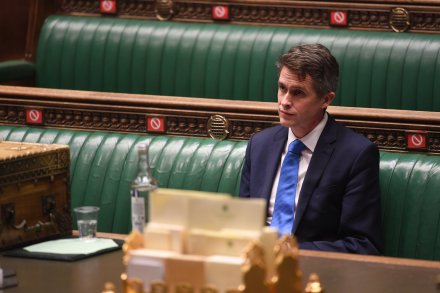
Of all the government ministries grappling with the impact of the pandemic, the Department for Education has probably had the most torrid – and least impressive – time. There is currently no sign that things are improving, either: in the past week, ministers have had to deal with a highly politically-toxic row over the quality of free school meals for children during lockdown. That row formed the backdrop to today's education questions in the Commons, where Gavin Williamson and his colleagues were very visibly licking their wounds. Williamson was accused – as he is every time he appears in the Chamber – of being 'incompetent', with Labour's Kate Green complaining that the food parcels were 'entirely in line with the government's own guidance.

Parents are being gaslighted about home-schooling

Forgive me, I’m not going to go through all the tragedies of the pandemic in this piece, not because I don’t care, but because I've got no time and I’m writing under very harried circumstances: the kids are still up, my deadline's looming, and my wife keeps sending me WhatsApp messages about emailing the headteacher again. Oh boy. Things are very tense for parents. My wife’s been googling when she should be sleeping. I wake up to emails about my schedule or screenshots of government guidance, which is what this article’s about: we read this guidance, which is published for parents, and we listen to what politicians say, and we read the news, but the things we hear and read do not match reality.

Can Gavin Williamson limit the impact of school closures?

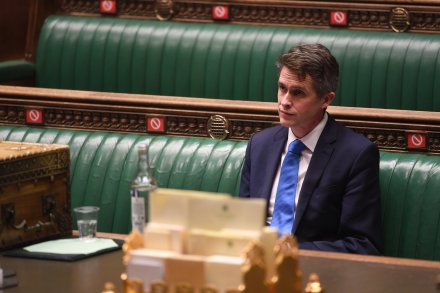
It is much harder being an embattled minister in the socially distanced Commons than in normal times. There is no group of supportive MPs to arrange behind you, no ability to organise sympathetic noises from the backbenches as you give your statement explaining why you've taken a last-minute decision to close all schools when you said you wouldn't and had been threatening councils who were trying to do so just before Christmas with legal action, and why you've spent the past few weeks insisting that exams would go ahead in the summer, only to cancel them this week too. On this charge sheet, Gavin Williamson would have struggled in any Commons setting when he explained why the government had changed its mind at the last minute.

Watch: Gavin Williamson’s schools opening gaffe

Oh dear. Education Secretary Gavin Williamson has not exactly been at the top of his game in recent weeks. Across the country teachers, children and parents have been thrown into turmoil by the government’s haphazard education plans, which have seen schools open up for a single day, and national exams cancelled, despite the Education Secretary’s insistence they would ‘absolutely’ go ahead. Still, Mr S hoped that Williamson would at least be clear in his mind about getting schools back open once again. Unfortunately, the minister seemed to rather struggle with that message when in Parliament today.

Why Ampleforth should not be closed down

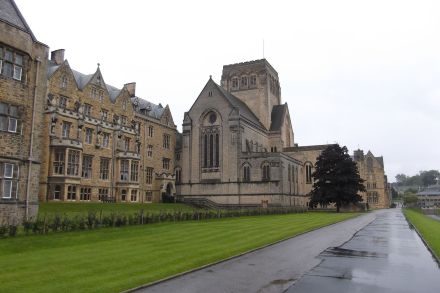
The ‘Problem of Evil’ was one of the more difficult questions asked by the monks at Ampleforth college when I was a pupil there. How, we were asked, does one reconcile the existence of an omnipotent and ever-loving God with the reality of widespread evil in the world we inhabit? What we students hadn’t realised while we were pondering this question was that the monastery had its own way of dealing with the problem of evil. When it came to monks and teachers exploiting the most vulnerable people in their care, the previous course of action at Ampleforth was to quietly ship these child abusers off to a distant parish.

A vaccine won’t heal the scarring of lockdown

Ever since the pandemic struck, a spectre has haunted Boris Johnson: would Britain ever escape from this? His scientific advisers had given him a terrifying vision. Only 7 per cent of the public had caught Covid in the first wave, they said, meaning 93 per cent were still susceptible. So what was to stop his premiership being a never-ending cycle of lockdowns? Now, he has his answer: not one but three vaccines, two with efficacy rates of 95 per cent. This has transformed his outlook. The war against Covid is not over, but victory looks imminent. The Prime Minister has a weakness for wartime metaphors, but this time they are more appropriate than he might find comfortable. For months, his government has had one overriding priority: defeating the viral enemy, no cost spared.

Bring back small high schools

From our US edition

Batavia, New York I’m scribbling this on the porch as I stare at the chain-sawed remains of our massive and ancient (by American standards, which are the only standards I know) front-yard maple tree, which split in a windstorm and crushed my car. I had hoped to be a good custodian and pass along these sylvan sentinels intact to those who come after, but like America...well, I won’t go for a cheap and inexact analogy. Oh, 2020, you most annus horribilis. But I am an inveterate looker-on-the-bright-side, and among the reasons for hope in this darksome time is the potential for new, or renewed, growth on the branches of the learning tree. (If I may borrow a line from the Jackson 5.

schools

Too much learning is a dangerous thing

It is often said that the left does not understand human nature. Yet it is difficult to think of anything as antithetical to Homo sapiens as the notion, popularised by free marketeers during the 1980s, that people would willingly evacuate those parts of Britain where ‘market forces’ had decreed that collieries and steelworks were no longer profitable. People did not ‘get on their bikes’ — in Norman Tebbit’s notorious phrase — once industry was shut down; instead they grew resentful at a world they felt had little respect for their lives or communities. We often refer to these people as ‘left behind’ — or as the journalist and author David Goodhart calls them, ‘Somewheres’.