Education

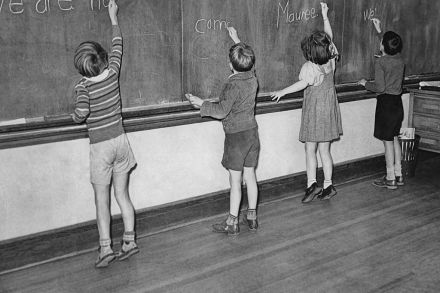
Why is Ofqual trying to dumb down English exams?

If you wanted a good working example of the concept of dumbing down in practice, look no further than Ofqual, the exams regulatory board, the one that covered itself in ignominy when it oversaw the exam algorithm fiasco during lockdown. Its latest idea is to get exam boards for English to replace ‘complex’ language elements, such as idiom, sarcasm and metaphor, with simpler alternatives in some assessments to make the tests more accessible for pupils. The temptation at this point to respond with sarcasm, irony, idiom and metaphor – not at all nice ones either – is almost irresistible, but let’s not go there.

mcauliffe

The McAuliffe clown car crashes

From our US edition

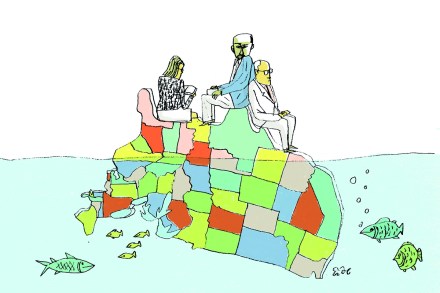
Of all the clowns to come prancing out of the Terry McAuliffe campaign car in recent weeks, it was the Muppets that finally got me. McAuliffe recently ran a get-out-the-vote commercial that featured several Sesame Street-style puppets singing about how much they love the people in their neighborhood. "Except for Larry who doesn't vote," they finish, upon which some poor schlub comes bumbling in and they all stare at him judgmentally. Next up: Snuffleupagus on why he's passionately in favor of rolling back voter ID laws. Or something. The ad technically wasn't cooked up by Team McAuliffe; it appears to have been created in 2018 by the left-leaning PAC Priorities USA. But the fact that they decided to dust it off despite it being so creepy and coercive speaks volumes.

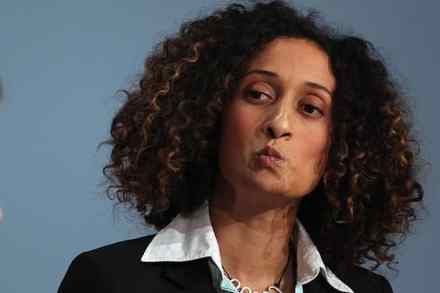
Katharine Birbalsingh is right: children do have original sin

When my son was about six he heard something at school about slavery but was not quite clear what it was all about. So I spelled it out. I told him that a slave was someone that someone else owned and ordered around and probably mistreated. I waited for the proper response of moral horror to show on his innocent features. Instead he said, ‘Cool, I want one!’ I offer this recollection in support of Katharine Birbalsingh’s supposedly controversial opinion that children are not naturally full of the right moral impulses. ‘Britain’s strictest head teacher’ has bolstered her reputation by saying that children are born with ‘original sin’ and must be ‘habituated into choosing good over evil.

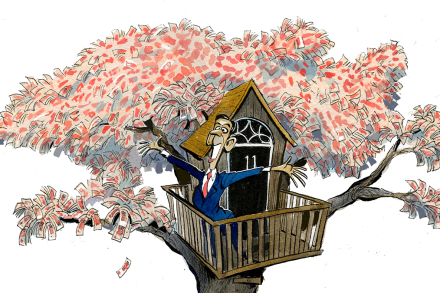
Will education be the big Budget loser?

Which departments will fare the worst from this week's Budget? It won't be the Department for Health and Social Care. Over the past few days, new funding announcements have appeared in the papers meaning the NHS will be handed another £5.9 billion. That's in addition to the £12 billion a year investment it will receive as a result of the health and social care levy. Meanwhile, Whitehall sources suggest that Michael Gove has had some luck in his push for more funds for the levelling up agenda. Where the mood music is less positive is education.

Virtue signalling is really status signalling

A £19,000-a-year London day school was in the news this week because it has started instructing its pupils about ‘white privilege’ and ‘microaggressions’. Apparently, St Dunstan’s in south London, which boasts Chuka Umunna among its alumni, teaches its well-heeled students that the royal family bolsters expectations of ‘inherited white privilege’, asks them to ‘explore’ why Meghan Markle faced ‘additional challenges’ compared with Kate Middleton when she married a prince, and tells them why it’s important for the National Trust to examine the colonial past of its country houses and links to the slave trade. I was surprised this story attracted so much press interest.

America’s campus culture wars come for St Andrews

The University of St Andrews has been keen on American imports for some time. Americans make up 16 per cent of undergraduates, by far a larger proportion than any other British higher education institution. The university, hungry for foreign money (international students pay £25,100 a year, compared to £9,250 a year for English, Welsh and Northern Irish students) sends recruiters to high schools in the States to woo potential students. When I was at St Andrews a decade ago, I knew more Americans than Scots. Mostly, the university’s connections with the US have been good. Yet there is one American import St Andrews could do without: campus culture wars.

Modern English

From our US edition

The English language as written today is often nearly incomprehensible on first reading, and as spoken almost unintelligible and unpleasant to the point where the civilized listener disengages himself in frustration and disgust from the speaker and his speech. The problem in the first instance is the readiness of people who know better to embrace demotic usage in semi-formal literary venues, such as respectable journalism; the second, the bizarre combination of pretension and illiteracy and its results, the jargon and barbarisms ubiquitous in the 21st century.

English

Boris should keep copying Blair

Having written here at least once before that Boris Johnson is the heir to Blair, my first thought on the Prime Minister's tax-to-spend announcement on the NHS and social care is a petty one: I told you so. The striking thing about making the Boris-Blair comparison is how resistant some people are to it. Among Bozza fans on the Leave-voting right, there is often fury at the suggestion that their man, the hero of Brexit, is anything like the Europhile they used to call ‘Bliar’. On the left, there is an almost pathological determination to believe that a Tory PM must, by definition, be a small-state free-marketeer intent on starving and privatising public services. That latter point is why Labour people sometimes struggle to respond to Johnson.

nikole hannah-jones

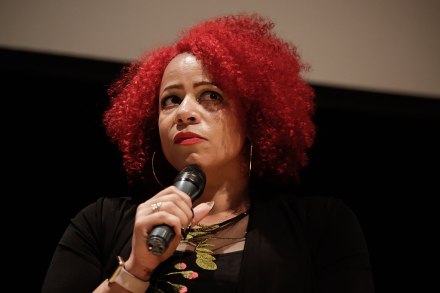
Nikole Hannah-Jones schools a teacher

From our US edition

Jen Tafuto, an elementary school teacher in Manchester, Connecticut, posted a two-minute video on Twitter in which she announced her resignation from her position. She explained, ‘After six years as a teacher in Connecticut, I decided to resign from what I thought would be my forever career because I felt more like a political activist than a teacher in my own classroom.’ Her announcement, originally posted by 1776ActionOrg on August 30, quickly drew a lot of attention in the media. Fox News, RealClearPolitics, USA Today, the Daily Caller, a local Hartford station and a great cloud of bloggers too.

Britain’s problem with illegal Islamic private schools

While some in Britain are understandably anxious about the Taliban’s rapid takeover of Afghanistan and the prospect of the Central Asian country becoming an international jihadist training ground, long-standing domestic problems concerning religious radicalism continue to persist. The issue of unregistered private schools in British Muslim communities is one of them. This has been thrust into the limelight yet again after a headteacher was warned that she faces a prison term after continuing to run an illegal Islamic private school – in defiance of a previous conviction. Nadia Ali, 40, ran the Ambassadors High School in Streatham, South London, for over half a year after being sentenced to community service for operating the unregistered school.

The future of liberal education

From our US edition

What’s liberal about liberal arts education? That question is not easy to answer; for one thing, really to answer it you have to know what the word ‘liberal’ means. Has any word accumulated more conflicting meanings than ‘liberal’? Deciding what ‘education’ means is no simple task, either. In my experience, the more you think about those simple words, the more elusive their meanings. According to James Madison, ‘liberty’ and ‘learning’ belong together. They ‘support’ each other, he says, and their connection supports a free society. In various forms, the nexus between liberty and learning is a very traditional idea, with epistemological and existential as well as political dimensions.

liberal

How to burst the grade inflation bubble

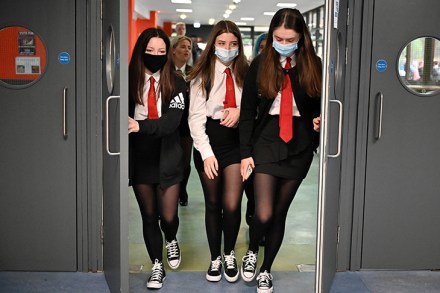
The Tories regard a return to rigorously marked exams as one of their big achievements in education. In 2010, the year they took office, more than a third of A-level entries received an A or A* grade. By 2019, following an overhaul of the curriculum, only a quarter did. Despite the havoc wreaked by Covid on education, the government was determined to carry on this trend. That’s why last year, after exams were scrapped, the Department for Education tried to further control grade inflation by using an algorithm. It worked, in part, by assessing the past results of schools — but a consequence was that exceptional pupils from historically underperforming schools were marked down. This seemed very unfair and the backlash was swift.

Don’t blame teachers for this year’s grade inflation

Today’s A level results are unprecedented, but not unexpected. On Friday, Professor Alan Smithers  of the Centre for Education and Employment Research at the University of Buckingham said, ‘The early signs are that it will be another bumper year for grades.’ He went on to suggest that this might be, ‘justified as compensation for all the disruption suffered’. The impact of Covid-19 on the education of children cannot be dismissed as mere disruption. While adults might now be returning to the office after 18 months working from home, children struggled through two terms of lockdown learning and two more cocooned in bubbles. Grades will be high but they have been earned. Teachers held it all together too.

A level students have been failed again

The world was turned upside down in 2020. Schools closed, shops shut, and planes were grounded as the global health crisis hit the world. The great institutions of our society seemed to crumble under the pressure of the pandemic. This was particularly the case for the UK’s education system, which is still failing students 18 months on. This morning, students will be receiving their A level grades, after a year of learning interrupted by constant lockdowns. I can sympathise with students this year – I experienced first-hand the devastation caused by last year’s A level algorithm fiasco. After the algorithm gave me a B, E and U, I was rejected by both my first and second choice universities.

Read Ray Bradbury before he’s canceled

From our US edition

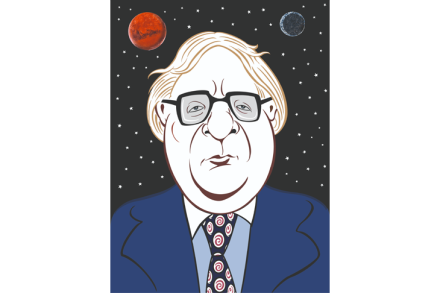
I was 14 or 15 when I first read Ray Bradbury, which is not a bad age to enjoy the man fully. It was the short story ‘Boys! Raise Giant Mushrooms in Your Cellar’, in which a lad called Tom does just that and it doesn’t end terribly well. Superficially, it is a silly story, but what hooked me from the outset was the vague yet pervasive sense of unease running throughout this minor small-town saga, disturbing the comfortable ennui of family life. Nothing spelled out — just a deepening disquiet, the common thread in all of Bradbury’s finest little vignettes. Back then, in the 1950s, the Cold War and the possibility of nuclear annihilation were hovering in the background, just beyond the edge of our eyesight, which perhaps explains the author’s state of mind.

bradbury

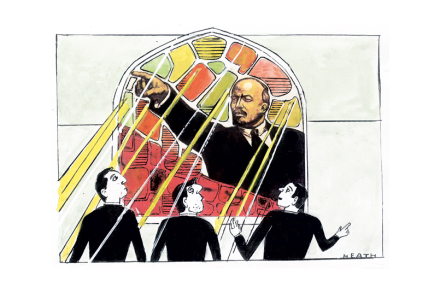
The truth about Nick Gibb, history and ‘dead white men’

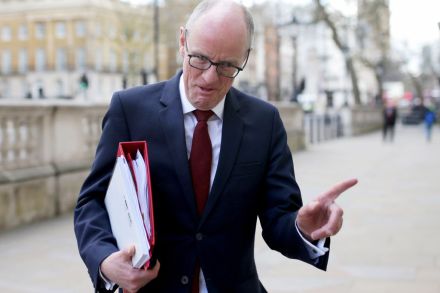
In 1983, Daniel Patrick Moynihan, a great American sociologist and politician, wrote: 'Everyone is entitled to his own opinion, but not his own facts.' Then the internet happened. Anyone who has spent five minutes online, especially on a social media site, is aware that everyone now has their own facts, carefully chosen to support whatever argument or narrative they favour. Any contested issue that’s debated online (i.e. all of them) sees people on different sides of the argument adduce statistics, quotations and any other material helpful to their cause. Take this stuff far enough and you get people prioritising subjective experience above objective fact.

The plot against religious education

Faith is not the declining force that some secularists believe or indeed desire it to be. Even here in the UK, we have our growing and vibrant black-led churches; increasingly present mosques, temples and gurudwaras; and believers arriving from Eastern and Central Europe.  This is why it's important for religious education to continue to have a special place in the curriculum of our schools. Although RE is not a ‘core subject', it remains a compulsory one. Successive Education Acts have stipulated that it should be taught in such a way that reflects the mainly Judaeo-Christian traditions of this country — while also covering the teachings and practices of other religions present here.

It’s time to repair the damage done to the Covid generation’s education

Aswitch of personnel at the Department of Health this week has brought a welcome change in the government’s tone. No longer, it seems, are ministers looking for reasons to delay the final stage of lifting lockdown restrictions. After 16 months of curtailments on liberty, 19 July is inked in as the day when society and the economy will finally throw off the shackles of Covid restrictions. The vaccines mean that the virus has been downgraded to the status of flu and pneumonia: nasty bugs, sometimes fatal, but not enough to warrant locking down society with all the immense collateral damage that entails. Yet as pubs, theatres and concert halls are allowed to fill again, it is important to remember that recovering from the pandemic is about more than just reopening society.

The curious parable of Dartington

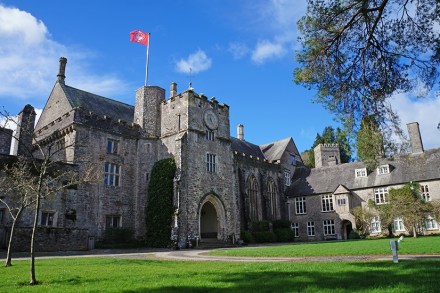
I spent last weekend in south Devon at Dartington, the former estate of Dorothy and Leonard Elmhirst, and now a charitable trust. I know the place quite well because my father was more or less adopted by the Elmhirsts when he was 14 and I spent four years there as a teenager while he was writing Dorothy and Leonard’s biography. He described it as his best book and I was pleased to see it on display behind the reception area at Dartington Hall, a Grade I listed building that is now a hotel, among other things. I’ve always thought the story of Dartington would make a good parable about the folly of left-wing idealism. When the Elmhirsts bought the estate in 1925, Dorothy was one of the richest women in the world, having inherited $15 million at the age of 17.