Drugs

The world’s most beautiful man in a den of iniquity

A photograph from the late 1960s shows a lavishly underdressed Marianne Faithfull sandwiched between Alain Delon, the most beautiful man in the world, and Mick Jagger, the second most beautiful man in the Rolling Stones. The gulf between these two indefatigable tombeurs is not merely sartorial. Delon wears a sharp suit, gun-metal grey, and a black tie. There are the makings of a master/servant dialogue here, for Jagger, far from mondaine, is gauche and scruffy with mismatched socks, no doubt counter-cultural. His picayune mis-demeanour, and his fitting up by bad apples in blue such as Pilcher of the Met, might have been a glitch, but it all turned out cosily parish-pump and, further, a great career move, assisted by William Rees-Mogg’s indignation. No one died in that Sussex cottage.

Wham! How George Michael shot to stardom straight from school

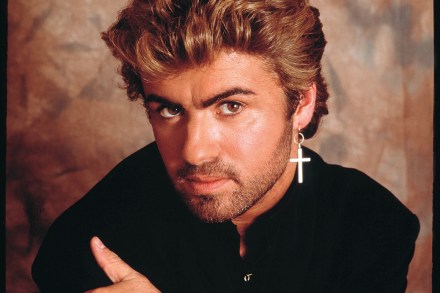
It turns out that the writer Sathnam Sanghera, ‘The Boy with the Topknot’, has been a besotted George Michael fan since the age of eight, when he started listening to his older sisters’ Wham! records. This was an unusual thing to be as a Sikh growing up in Wolverhampton and it got him teased at school. But he stuck with it. So when a friend suggested that he write something fun to compensate for the years of heavy historical research he’d put into his excellent book Empireland, he decided to set off on a sort of pilgrimage in search of his dead hero. First stop was Mondial Cars, a showroom in Northwood, north London, which used to be the Bel Air restaurant, where the teenage Michael worked as a DJ.

Mourning becomes Siri Hustvedt

At 6.58 p.m. on 30 April 2024, Siri Hustvedt’s husband of 43 years, the novelist Paul Auster, died of cancer in the library of their Brooklyn home. He was surrounded by family, including his adored daughter Sophie, who three months earlier had given birth to his first grandson, Miles. Hustvedt and Auster met at a poetry reading in 1981 and married later that year. It was she who proposed to him. Auster, aged 34, was not yet famous and Hustvedt, aged 26, was still a graduate student. By the 1990s, when she too became a novelist, they were New York literary royalty. In the 1970s, Auster had been married to the translator and short story writer Lydia Davis, with whom he had a son called Daniel. If Sophie was a summer’s day, Daniel was darkness.

A deadly imitation game: the fate of the British teenager who posed as a Russian oligarch’s son

This story is little more than a brutal anecdote, which Patrick Radden Keefe has chosen to tell at excessive length. It has the kind of fact-checked gravity that indicates a star American journalist bent on perpetrating an entire book. (‘Built in 1923 and originally known as the Empire Stadium, Wembley was the most iconic sporting ground in Britain.’) But it occurred to me more than once as I read it that it has the hallmarks of a particularly black London comedy by Dickens or Ben Jonson or Joe Orton. A violent knave, his activities previously limited to cheating the police, murdering his equally appalling criminal rivals, doing underhand deals and ripping off the rich, acquires an associate.

How teetotal is Britain?

Royal removals The King has had more success in stripping Andrew Mountbatten-Windsor of his royal titles than George IV had in removing the title of his Queen, Caroline of Brunswick-Wolfenbuttel. George, then Prince of Wales, and Caroline married in 1795 having got engaged before they actually met. On their wedding night, both found each other physically disgusting – although they did manage to conceive a daughter. Caroline went on to have a string of affairs, prompting delicate royal investigations, even though George was hardly a picture of fidelity himself. She later left England and set up with an Italian manservant, Bartolomeo Pergami, but returned to England when George ascended to the throne in 1820. His efforts to dethrone her via a Pains and Penalties Bill failed.

Have we learned anything in the 30 years since Leah Betts died?

In the mid-1990s, ecstasy was a drug of the suburbs. My friends and I, all A-level students and shortly to become beneficiaries of the final years of higher education that didn’t come with tuition fees, did not fit the model of ‘drug users’ that the media, still in thrall to 1980s heroin hyperbole, fixated on. When we took ecstasy, it was in the clipped gardens of semi-detached houses that had been vacated by parents for the weekend. We popped pills in beer gardens, in rickety small-town clubs with swirly carpets and fogged mirrors or, in summer, in the sun-bleached parks of central Chester. We cared not for the risks, judging them to be inconsequentially small compared with necking a bottle of vodka or even driving without a seatbelt.

Britain’s cities are descending into a San Francisco-style nightmare

One morning a few months ago I was walking past St James’s Park station when a dishevelled man with his fists clenched stepped into my path without warning. He stared at me furiously and blocked my path, body almost shaking. For a few tense seconds he stood there before I crossed the road to get away from him. ‘Most rough sleepers are harmless and vulnerable, but a small minority are violent’ When I told friends who work in central London about this incident, I was shocked at how typical my experience was. For people who commute into Westminster, it is becoming commonplace to be spat at, lunged at and screamed at to ‘fuck off’ by individuals who appear to be high on illegal drugs.

The inconvenient truth about cannabis and mental illness

Mash’s older brother was the same age as Anthony Williams when he slaughtered a stranger in a brutal and random attack. He was in the grip of a psychotic disorder caused by cannabis. We do not yet know what drove Williams, a 32-year-old African Caribbean man, to allegedly try to murder ten people during a 14-minute knife rampage on a train. But Mash is in no doubt cannabis often plays a part in attacks like these. ‘In my community smoking weed is normalised,’ he says. ‘We laugh and joke about hearing voices or having a “para” [a paranoid fit].’ He counts on his fingers: ‘Two brothers, two cousins and multiple friends’ who have experienced hallucinations and delusions. He shakes his head sadly. ‘Weed is killing my people.

Stench of failure: Britain’s shameful surrender in the war on drugs

The New York senator Daniel Patrick Moynihan was that rare figure in politics – a progressive who followed the facts. The contrast between his grown-up moral clarity and the adolescent ideological posturing of New York City’s latest Democrat darling, Zohran Mamdani, could not be starker. Moynihan was a welfare reformer who knew that incentivising work, not subsidising idleness, was the route out of poverty. He was a resolute supporter of Israel, the Middle East’s only democracy, backing the victims of two millennia of prejudice against terrorists and tyrants. By way of contrast, Mamdani demonises that state as a proxy for what he considers the wider western sins of colonialism and exploitation. It was on crime, above all, that Moynihan showed courage.

Unhappy band of brothers: the Beach Boys’ story

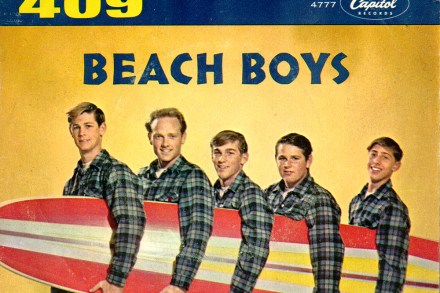
Film noir was the term coined by the French in the late 1940s to describe the genre of Hollywood crime movies which probed the darkness that lay in the shadows cast by all that bright Californian sunlight. The Beach Boys, who broke through in the early 1960s with a repertoire that hymned, in five-part harmonies, the Golden State’s promise of sun, sand and waves, bronzed bodies, beach-party ‘babes’, hot rods and open highways, were – and remain – the quintessential Californian band. But their story, an unhappy family saga featuring the three Wilson brothers (Brian, Carl and Dennis) and cousin Mike Love, is, like that of California’s itself, as dark as it is light. Their presiding musical genius, Brian, died in June.

Letters: the Church of England still has something meaningful to say

Moscow mule Sir: While visiting Russia, James Delingpole learned from the patriarchate’s press officer that under communism the Russian Church wasn’t allowed to exist (‘Letter from Moscow’, 27 September). However, that doesn’t accord with my own experience of being in the USSR during the Brezhnev era. As a student, I visited the 14th-century Zagorsk monastery complex just outside Moscow one Sunday and was spellbound by the heavenly chant of the Orthodox liturgy which lifted my soul. The church was full of babushkas as well as younger believers crossing themselves and kissing the icons. For all his faults and human-rights violations, Brezhnev, unlike Vladimir Putin, had not been indicted by the International Criminal Court for war crimes.

Sebastian Faulks looks back on youth and lost idealism

I must say, calling a book Fires Which Burned Brightly promises much. At best, from the jaded reviewer’s point of view, an autobiography of delusional self-aggrandisement; at worst, a wild mismatch between the, well, incendiary language of the title and the potentially humdrum contents. It might have been dreamed up by a master satirist intending to inflict maximum damage to the reputation of that noted gentleman of letters, Sebastian Faulks. I once invented a novelist named Julian Sensitive, whose only claim to fame was an autobiographical novel called, after T.S. Eliot’s Prufrock, ‘My Trousers Rolled’. That was a crude joke compared with the hilarity inspired byFaulks’s title.

It was drug addiction that killed Elvis, not his greedy manager

Colonel Tom Parker (1909-97) was the man who ripped Elvis Presley off and worked him to death. That’s the received wisdom about the person who managed the King from 1955 until his premature death, aged 42, in 1977. Peter Guralnick’s book, written with full access to Parker’s unpublished, witty, clever letters, now owned by the Elvis Archives, gives a more nuanced, sympathetic picture. The author is no biased sensationalist. His Elvis biography, Last Train to Memphis (1995), is one of the most serious and reliable. So, yes, Parker was a serial liar, not least when it came to his identity. Born Andreas Cornelis van Kuijk in humble circumstances in Holland, he fled, aged 16, to America and was then kicked out. He returned three years later, changing his name to Tom Parker.

Irvine Welsh: Men In Love – Trainspotting Sequel

34 min listen

My guest this week is Irvine Welsh – who, three decades after his era-defining hit Trainspotting, returns with a direct sequel, Men In Love. Irvine tells me what Sick Boy, Renton, Spud and Begbie mean to him, why his new book hopes to encourage a new generation to discover Romantic verse and shagging, and why MDMA deserves more credit for the Good Friday Agreement than Tony Blair.

Adrift in the world: My Sister and Other Lovers, by Esther Freud, reviewed

Some people spend years squirming on a leather chaise longue before they come to understand, as Philip Larkin so pithily observed: ‘They fuck you up, your mum and dad.’ Few go on to make peace with the sagacity delivered in his next line: ‘They may not mean to, but they do.’ In My Sister and Other Lovers, Esther Freud’s sequel to her autobiographical novel Hideous Kinky, sisters Lucy and Bea – who spent their early childhood trailing after their hippy mother through 1960s Morocco – slowly edge towards such catharsis. Before that, however, comes a lot more turbulence, and Freud – whose great-grandfather pioneered the couch method – is acutely attentive to its psychological effects.

Should cannabis be decriminalised?

21 min listen

London Mayor Sir Sadiq Khan has called for possession of small amounts of cannabis to be decriminalised following a report by the London Drugs Commission. The report has made 42 recommendations, which include removing natural cannabis from the Misuse of Drugs Act. Former cabinet minister, now Labour peer, Charlie Falconer and Tory MP Dr Neil Shastri-Hurst join Lucy Dunn to discuss whether now is the time to decriminalise cannabis. For Lord Falconer, who chaired the Commission, the present law doesn’t work and he explains the principles behind the review; Neil, however, believes that the proposals send the wrong message that cannabis is harmless.

My son took drugs – and they were mine

The weekend before last, I came home from walking the dog at about noon to find Caroline asleep in bed. This was surprising for three reasons. She’d been up and about when I left the house. She’s not one for taking naps. And her mother was coming to lunch. ‘Are you all right?’ I asked, prodding her awake. ‘No,’ she said. ‘I felt a headache coming on, took some Nurofen and suddenly started feeling incredibly dizzy. So I decided to lie down for a few minutes and then fell asleep.’ I wasn’t too worried because she does occasionally suffer from dizziness, usually accompanied by a migraine. So I made lunch while her mother went to a chemist and bought Caroline some travel sickness pills that she thought would help.

The sickness at the heart of boxing

There is a lot of death in the latest, and potentially last, book on boxing by the South African journalist Donald McRae. In less than two years he loses his sister, both his parents and his mother-in-law. To cope with the trauma he returns to the sport that has sustained his life and work for 30 years. But when he reimmerses himself in boxing he does not like what he sees. He finds a sport where bouts are controlled by gangsters; where famous boxers dope and lie about it; where fights still have inadequate safety protocols; and where the centre of power has shifted from Las Vegas to Riyadh, lured by Mohammed bin Salman’s money. Each of these trends, McRae believes, knits boxing and death closer together. ‘I want boxing to sweep me away from real life,’ he confesses.

Nazis, killer dogs and weird sex: Empty Wigs, by Jonathan Meades, reviewed

Jonathan Meades is, you might say, a baroque artist in a mannerist age. Whereas today’s younger and more widely feted writers think small – a Brooklyn sublet, a Camden Town love nest, the cracked mirror of the self – Meades goes big. And not just in physical terms (Empty Wigs tips the scales at nearly 3lb), but in scope. Where his contemporaries’ prose can be affectless and somehow skinless (a Paris Review interviewer said of Rachel Cusk, with apparent admiration, that her writing ‘feels contemporary, swift and “clean”’), Meades piles on the style, packing in metaphors, coinages and allusions until the crystals can’t take it, swooping between social classes, doing the police in different voices.

The changing smell of Britain’s streets

The other day, while on my lunchtime walk, I passed a woman on a mobility scooter holding an impressive-looking doobie. Later, on my bus home, a bloke got on having just extinguished a joint, bringing the overpowering stench with him. Some commuters don’t even bother to put them out. All you can do is sit and tut passive-aggressively, hoping they’re only going a few stops. While cannabis use has slowly declined over the past 25 years, it seems that you can’t escape it in public. Perhaps part of the reason is that so few people now smoke at all, even tobacco. It makes weed far more noticeable. The other reason is that the police don’t bother punishing those caught. Most are either let off with a verbal warning or a fine.