Depression

Portrait of an addict: Keshed, by Stu Hennigan, reviewed

In the tradition of literary lowlifes and lushes as conceived by Charles Bukowski or Jean Rhys, Keshed is a story about an alcoholic, with a distinctive 21st-century, northern English working-class setting. Formally inventive, the ‘now’ sections of the novel are not sentences but strings of words, effective and short: ‘Rancid liquid squirting chin soggy torso peristaltic rush rapid.’ One such section opens the book, setting the uncompromising tone. The protagonist, Sean (‘He was pissed when I met him and he hasn’t changed’), a bright, charismatic lad from an unnamed small Yorkshire town, has been to university in Manchester where he drank heavily. He then moved back home, and we meet him working as a plasterer, living to get smashed.

Self-betterment through contemplation of the Seven Deadly Sins

What mistake did Narcissus make when he looked into the water? To fall in love with his own ravishing self, we might think. But to the medieval mind, that wasn’t his problem at all. In John Gower’s 14th-century poem ‘Confessio Amantis’, Narcissus falls in love all right – but with someone else entirely. His fault isn’t that he loves himself; it’s that he doesn’t even recognise himself. Then, as now, as Peter Jones argues in this revelatory exploration of late medieval psychology, the path to self-betterment went through self-knowledge. Like our own, it was ‘a civilisation geared towards understanding the human mind’.

Anxiety is killing parenthood

Britain is on a slow descent to oblivion. Scotland is even closer to the abyss, with a birth rate of just 1.29, well below the UK’s sub-replacement level of 1.65. It turns out the answer to the West Lothian question is that West Lothian will disappear. Doomsday demography should matter, but Whitehall is in no way prepared to deal with it. New research published this week found that mental illness in early adulthood could account for up to 60 per cent of future childlessness. A generation too worried to have children spells disaster for countries that need to support ageing societies. Researchers looking at the populations of Sweden and Finland have drawn a link between dozens of mental health disorders and later childlessness.

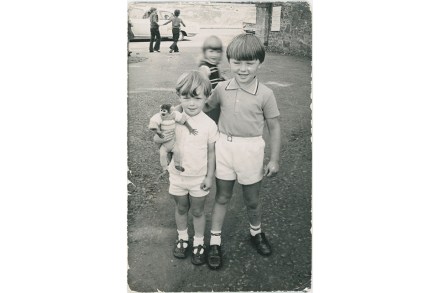
Mark Haddon attempts to exorcise the memory of a loveless childhood

Growing up in the 1960s at 288a Main Road on the outskirts of Northampton, Mark Haddon spent hours alone in the bathroom, the only lockable room in the house, trying to figure out the universe. In this dark, sui-generis memoir he writes: Even now, insoluble conundrums such as ‘Why was I born as me and not someone else?’ and ‘If the universe is expanding, then what is it expanding into?’ come packaged with images of a shampoo bottle in the shape of a fat sailor with a twist-off head. The author of The Curious Incident of the Dog in the Night-time has a scientifically inclined mind in which small physical details, such as that sailor’s twist-off head, get permanently lodged.

The Wall Street Crash never ceases to fascinate

When Winston Churchill dined with the crème de la crème of American finance in New York on 28 October 1929, a facetious toast was made to ‘friends and former millionaires’. Despite a 13 per cent drop in the Dow after another day of market turmoil, the assembled banking titans felt they wouldn’t just survive the maelstrom, they would make more money from it. Churchill, whose finances were perennially chaotic, had caught stock market fever and lost today’s equivalent of almost $1.5 million. On returning to England, he declared the Wall Street crash ‘only a passing episode in the march of a valiant and serviceable people’. In the end, US stocks fell almost 90 per cent between their 1929 peak and 1932.

Highs and lows: The Boys, by Leo Robson, reviewed

The Boys, the entertaining debut novel by the literary critic Leo Robson, is set in Swiss Cottage during the 2012 London Olympics. Johnny Voghel is ‘methodically lying about’, home on leave from an admin job in the West Midlands and grieving both for his mother, who died the previous year, and – by extension – his father, who died when he was a child. A typical day is spent ‘smoking badly rolled cigarettes, watching the ring-fenced patches of grass suffer in the heat, nodding at passers-by, tweezing grey hairs from my nostrils and popping the spots on my chin’, before walking into the centre to gaze at the BT Tower with its Olympics countdown.

The pain of being a Bangle – despite sunshine through the rain

I must say that my feelings about the 1980s American rock band the Bangles were – unusually for me – moderate. I loved some of their hits while being left cold by others. They were pleasant. But after reading this book’s press release, I realised how sorely lacking in appreciation of their impact I’d been: It’s a story of the challenges faced by women attempting to follow their artistic dreams in a media and music industry ecosystem which seemed set up for their failure from the start... It is a long overdue corrective that restores the Bangles to their rightful place in music history as feminist trailblazers... As Debbi Peterson herself notes: ‘It’s about time that our true story was told.

The greatest British pop singer who never made a hit single

This is a magnificent book, regardless of whether the reader knows who it is about. I state this bluntly at the outset because I am keenly aware that many more people are ignorant of Lawrence’s career and achievements in the field of popular music than will be familiar with them; and that I will need to use up a significant number of words attempting to explain a figure who has repeatedly proven inexplicable to the public at large. So here goes... Has the indefatigably eccentric Lawrence led a charmed life or a cursed one? Lawrence Hayward may be the greatest British pop star never to have enjoyed a hit single.

Mother of mysteries: Rosarita, by Anita Desai, reviewed

There are other reasons beyond shortage of time (the acclaimed Indian novelist Anita Desai has just turned 87) to write a novella; the genre is as attractive and prestigious as it is fashionable. The deceptively slender format can briskly encompass whole worlds and histories, or alternatively, like the short story, depend on strict excisions and limitations for its effects. Rosarita does both. A young woman, Bonita, addressed as ‘you’ throughout, is taking time out from her Spanish-language studies and relaxing on a park bench in the historic centre of San Miguel de Allende, Mexico. Education has been her means of escape from the domineering family structure back in India that crushed her mother.

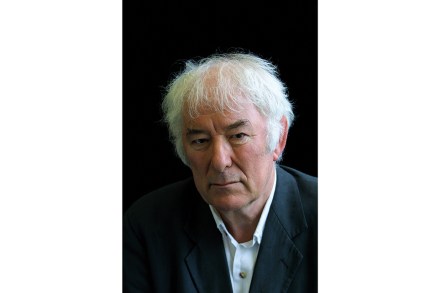
Seamus Heaney’s letters confirm that he really was as nice as he seemed

Seamus Heaney wrote letters everywhere – waiting for his car to be repaired at a country garage, sitting over a glass or more of Paddy late at night, and above all in aeroplanes, ‘pacing the pages against the pilot as he takes us in to Heathrow or Shannon’, as he wrote to a friend in 1995. So many eloquent missives were dashed off at high altitude that his editor suggests he might have had notepaper printed with the heading ‘EI 117’, the Aer Lingus flight between Dublin and Washington DC. This airborne activity is significant because it indicates two characteristics illuminated by Christopher Reid’s riveting collection: the pressures of life lived at an exceptional pitch of fame, and Heaney’s powerful need to keep faith with friends and fellow poets.

Are hallucinogenic drugs losing their stigma?

We are in the midst of a ‘psychedelic renaissance’. Not since the 1950s and early 1960s has there been so much interest in researching the therapeutic potential of psychedelics. The FDA approved a ketamine derivative for medicinal use in 2019, and has given both MDMA and psilocybin (the psycho-active ingredient in magic mushrooms) ‘breakthrough therapy’ status, putting the drugs on a fast track to approval in the US, with the UK likely to follow suit. Professor David Nutt is a neuropsycho-pharmacologist (say that three times fast) and head of the Centre for Psychedelic Research at Imperial College, London. He was the UK’s ‘drug tsar’ before getting sacked in 2009 for claiming that LSD and Ecstasy are less dangerous than cigarettes, alcohol or horseback riding.

Are we any closer to finding a cure for depression?

Some years ago, the Harvard psychiatrist Leon Eisenberg commented that, in the course of his lifetime, his discipline had swung from the brainless psychiatry propounded by psychoanalysts to the mindless psychiatry of those enamoured of biological reductionism and neuroscience.  Camilla Nord, who runs a neuroscience laboratory at Cambridge, is firmly a member of the latter camp. Though in a few places in The Balanced Brain she is driven to concede that social factors seem to play a role in mental health or mental distress, she immediately insists that ‘the process by which social factors are able to cause mental illness is entirely biological’.

Another tragic case involving medical incompetence and cover-up

It was only eight lines into O Brother that I realised I was in the hands of a good writer. John Niven’s landline phone has rung. His partner hands it to him. ‘I take the phone from her as she watches me in the intense, quizzical way we monitor people who are about to receive Very Bad News.’ I can’t recall a writer noticing that before (I presume a few have), but we have noticed it ourselves. And the narrative masterstroke is that now the reader is looking at the page in an intense, quizzical way, for we want to know what the Very Bad News is. The VBN is that Niven’s younger brother Gary is in a coma, following a suicide attempt.

The trials of a Tokyo housewife: Mild Vertigo, by Mieko Kanai, reviewed

Natsumi lives in a modern flat in Tokyo with her husband and two young sons, her life comfortable but circumscribed by the tedium of household chores. Washing dishes in the sink, she finds herself transfixed, gazing at the ‘rope of water’ falling from the tap, twisting like a snake: ‘There was something Sisyphean in the nature of the roster of simple domestic tasks... never an end in sight.’ Things are at once too easy and too much for her; the kitchen is so perfect she hesitates to spoil its pristine condition and ends up buying ready-cooked meals, her life shrunk to what seems stifling captivity.   She memorises the layout of the super-market and makes notes: ‘Fish Day specials: tuna or red snapper or yellow-tail or octopus sashimi.

The company of hens could be the best cure for depression

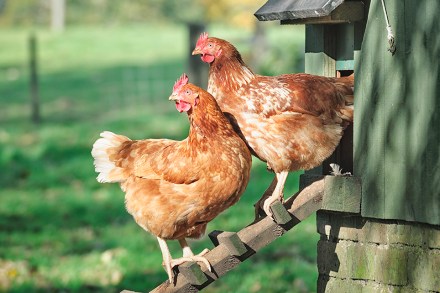
A friend of mine, an inspirational teacher, says that one of the best things parents can do is to allow children to believe that their dreams can come true. Arthur Parkinson met his first chicken as a toddler, growing up in a former mining town, and from that moment he longed for a brood of his own. So his father set to, building a handsome ark-shaped hen house, poring over Ad-Mag to find amusing poultry for sale, driving Arthur around country lanes at weekends in search of rare breeds.

The midlife crisis spread: why are the affluent so depressed?

‘You are here’, as those signs in windswept carparks unhelpfully point out. Yup. No mistaking it, you will tend to think glumly as you look at them. I had the same feeling when I looked at a new report from no less an institution than America’s National Bureau of Economic Research. The report is called The Midlife Crisis. It tells us that in the western world, one’s forties and early fifties are associated with problems with sleep, clinical depression and suicidal thoughts, disabling headaches and dependence on alcohol, alongside a decline in basic measures of life satisfaction. Well, fancy. I don’t know about clinical depression and suicidal thoughts, I should say. Not so melodramatic, me.

How we fell for antidepressants

The French novelist, Michel Houellebecq, with his accustomed acuity about modern culture, titled his last novel but one Serotonin. By then, of course, this famous neurochemical had become the key to a perfect human existence, too little or too much of it resulting in all the little problems that continue to plague mankind. If only we could get the chemical balance in our brains right, all would be well, life would return to its normal bliss! After the commercialisation of Prozac, people started talking about the chemical balance in their brains in much the same way as they talked about the ingredients of a recipe. As Peter D.

A gay journey of self-discovery

Seán Hewitt, born in 1990, realised that he was gay at a very early age. ‘A kind, large woman’ who was babysitting him told him that it was wrong. ‘I was perhaps only six or seven at the time, but she knew. I knew it too. It was as if she had peered into the deep, secret part of my soul and seen what I was hiding.’ Alongside the precocious knowledge came desperate attempts to conceal the truth. Hewitt adopted alien ways of being: ‘I regulated myself; I policed myself.’ As an adolescent, he spread rumours about his exploits with girls. He even watched heterosexual porn on the sitting room television in the hope that his classmates would spot him from the street.

Jonathan Bate weaves a memoir around madness in English literature

There is a trend for books in which academics write personally about their engagement with literature. Examples include Lara Feigel’s Free Woman, in which the author blends a memoir of her marriage break-up with a close reading of Doris Lessing’s fiction, and Sally Bayley’s Girl With Dove, which fuses an account of a traumatic childhood with sketches that focus on Bayley’s early love of books. Addressed to a wider readership, these works combine autobiography with literary criticism. They are carefully crafted, confessional and ask why literature matters.

Christina Patterson overcomes family misfortunes

The journalist and broadcaster Christina Patterson’s memoir begins promisingly. She has a talent for vivid visual description, not least: ‘We are a pink and navy family. Two pink girls, a navy boy and a navy wife.’ Her early family holidays in Sweden, where her mother is from, are full of lingon-berries, hammocks and mini-golf. She recounts the story of her parents’ courtship as students and says of their relationship: ‘Love at first sight. Love for nearly 50 years. Love till death do us part’ — ominously pointing out how easy they have made love and marriage look. Most arresting, however, in this early part of the book, is her depiction of her elder sister Caroline’s nervous breakdown as a teenager.