Crime

The bizarre, normal death of Bianca Devins

Twenty years ago, the death of Bianca Devins would have been a small town horror story. Tragic. Brutal. Stomach-turning. Essentially local. A jealous man stabbed her to death in a fit of outrage before trying, and failing, to kill himself. Something of this kind happens too often for anyone to hear about them all. Bianca Devins's killer did something different, though: he took pictures of the 17-year-old’s dead body and posted them online, to a private forum on the app Discord. He also took pictures of himself after his suicide attempt and uploaded them as well. Little information on the murder is reliable. Rumors spread that Devins's killer was an 'incel' and a 'stalker'. Other rumors spread that he was in fact her boyfriend.

bianca devins

Trump has made America less racist

The election of Donald Trump has, of course, unleashed the latent racist which lurks within millions of Americans. We know this because enlightened opinion keeps telling us so. The New Yorker, for example, ran a piece in November 2016 declaring ‘Hate on rise since Trump’s election’, and quoting a list of incidents collected by the Southern Poverty Law Center – including the experience of a girl in Colorado who was allegedly told by a white man: ‘Now that Trump is president I am going to shoot you and all the blacks I can find’. TIME magazine, too, ran a story in the same month announcing ‘Racist incidents are up since Donald Trump’s election’.

donald trump racist incidents

Dictator in the dock

From our UK edition

In the 1990s film The Usual Suspects, the detective character explains how to spot a murderer. You arrest three men for the same killing and put them in jail. The next morning, whoever’s sleeping is your killer. That’s because the nightmare of being on the run is over. It’s a relief to be caught. ‘You get some rest: let your guard down, you follow?’ I sometimes wonder if it’s the same for leaders arrested for crimes against humanity, a Karadzic or a Milosevic — and whether President Assad of Syria has the same feeling of being hunted. It’s true he has won the civil war and might think his position is secure. Yet there are several ways he might one day end up facing a war crimes prosecution.

A bitter pill

From our UK edition

I have been a defence lawyer for more than 25 years. I have defended clients charged with almost every crime there is. I have argued against convictions for robbery, rape, sexual assault, murder, manslaughter, copyright theft, perverting the course of justice, perjury, serious fraud, international illegal fishing, money laundering, causing death by dangerous driving, grievous bodily harm, blackmail… and the list goes on. Of all the crimes and misdemeanours I have seen, all the improbable tales and shocking lies in the witness box, what sticks with me most about the criminal justice system is the utter simplicity of the one thing that lies behind almost all of it. People want to take drugs and nothing will stop them.

Yet more derangement around rape

From our UK edition

It is more than three years since the town of Tisdale, Saskatchewan, decided to ditch its motto ‘Land of Rape and Honey’. That was how the prairie outpost had been known for 60 years, a consequence of the large amounts of canola produced in the region and the fact that they have lots of bees. But the town authorities now thought the slogan had a certain ominous, menacing air to it, so they replaced it with ‘Tisdale — Opportunity Grows Here’, which is entirely lacking in threat, interest and anything else you care to mention. A year later the supermarket store Aldi was forced to change the name of a paint it was promoting from ‘Rape yellow’ to something else — probably ‘Bright yellow’, I don’t know.

Books Podcast: Venice, the perfect city for crime fiction

From our UK edition

In this week’s books podcast I’m joined by one of the doyennes of crime writing, the brilliant Donna Leon. She talks about her latest Commissario Brunetti novel, Unto Us A Son Is Given, about what Venice gives her as a setting, why she welcomes snobbery towards crime writers, and why she never lets her books be published in Italian.

The privilege of Jussie Smollett

There are many details and facts in the Jussie Smollett saga that we don’t yet know. And because the Cook County State’s Attorney announced today that they are dropping the charges against the actor, there’s a good chance that we never will. But there are some things we do know: Smollett had originally told the police that he was a victim of what clearly sounded like a hate crime. Per his story, two people attacked him, yelled homophobic and racist sentiments, screamed ‘this is MAGA country,’ and even tied a noose around his neck. After weeks of investigation, Chicago police determined that Smollett had in fact hired two acquaintances to stage the attack and was a victim of nothing besides his own misguided agenda.

jussie smollett

Testing teachers’ limits

From our UK edition

Next year the London Interdisciplinary School (LIS) will offer one degree, in design, technology and the humanities, to teach students to solve ‘complex problems’ like (they suggest) knife crime. Really? The key to problem solving is the development of two essential faculties — the imaginative and the critical. Can LIS really teach for those — or just how to pass exams? The philosopher Seneca insisted that the search for what really counted (his example was virtue) ‘cannot be delegated to someone else’. He illustrated it by telling the story of Calvisius Sabinus, who had the brains and bank account of the Roman equivalent of Sir Philip Green.

The true cost of fake hate crimes | 20 February 2019

From our UK edition

Some years ago I was introduced to one notion of how to tackle dishonest and insincere accusations of racism. It was not just that there should be a social cost to making a dishonest claim, but that the cost should equal that borne by somebody who is accurately and correctly identified as a racist. Without such a disincentive there is no reason (other than decency and honesty, which may sometimes be in short supply) for people not to level such accusations insincerely in order to beat away any and all critics. Since Monday night I have been wondering, amid much else, whether some similar aspiration could be encouraged regarding hate crimes. In recent days and weeks there has been much comment on the case of Jussie Smollett.

What is it about young women and serial killers?

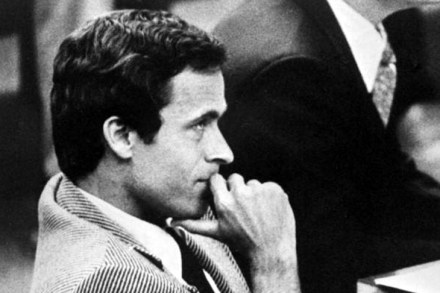
I became aware of a bizarre fixation when the Netflix series Dark Tourist visited Milwaukee, former stalking ground of Jeffrey Dahmer who tortured, murdered, dismembered and even ate at least 17 men and boys. By far the majority of those who pay to join the ghoulish city tours commemorating his life and work were attractive, single women of marriageable age, who seemed somehow to consider him the ultimate dreamy life partner they would just love to have reformed – if only he hadn’t been bludgeoned to death in prison while serving 16 consecutive life terms. Now Netflix has turned its attention to another serial-killing supervillain Ted Bundy.

bundy serial killers

There’s no presumption of innocence for the wrongly imprisoned

From our UK edition

The greatest criminal barrister of all time, Sir Edward Marshall Hall KC, who probably saved more men and women from the gallows than anyone in English history, was famous for his 'scales of justice' speech, in which, as described in Sally Smith's magnificent biography, he would stand for several long minutes with his arms outstretched at shoulder height and say: ‘It may appear that the scales of justice are first weighed on one side in favour of the prisoner and then on the other against the prisoner. As counsel on either side puts the evidence in the scales, I can call to my fancy a great statue of Justice holding the two scales with equally honest hands.

Life after death | 31 January 2019

From our UK edition

I’ve talked to Denise Horvath-Allan more than my own mother this year. Denise’s son Charles went missing while backpacking in Canada. I see his face — never ageing, entombed within his early twenties — every day on Facebook. Denise’s posts are more desperate each time I see them. Charles disappeared in 1989, on the eve of his 21st birthday. Denise and I believe he was murdered not long afterwards. But the case, like so many others, remains unsolved. As a journalist, I’ve been writing about true crime for years. True crime is a non-fiction genre that examines a crime and the people involved. It has never been more popular: just look at the success of Serial and Making a Murderer.

Heavies in a new light

From our UK edition

Let’s hear it for the heavies, the unsung heroes of noir crime fiction on page and screen. The genre would collapse without them. Without the threatened or actual violence they so selflessly provide, the streets would not be mean and a private eye’s career would be only slightly less risky than an estate agent’s. Yet we rarely glimpse the private lives of these men (heavies are almost invariably male), or explore their hinterland of secret traumas and guilty pleasures. Alan Trotter, then, gets bonus points for originality, from his choice of title onwards: this novel is all about the muscle who supply the heavy weaponry of the criminal world.

Rod Liddle is right about black boys and absent dads

From our UK edition

Rod Liddle was branded a 'national disgrace' when he wrote about how black boys are paying the price for growing up in households without their dads. But he's right. The disproportionate number of black boys held in youth offending centres, which I visited during my time as a member of the youth justice board, shocked me. Many of those I encountered had been involved in knife crime. So what was going wrong? I did what many sociologists have failed to do: I asked them. These boys knew I wouldn't stand for any spin about racism or the closure of the local youth club. Without such excuses, nearly all pointed to the absence of their fathers as a key problem in their lives.

Pirates of the Caribbean

From our UK edition

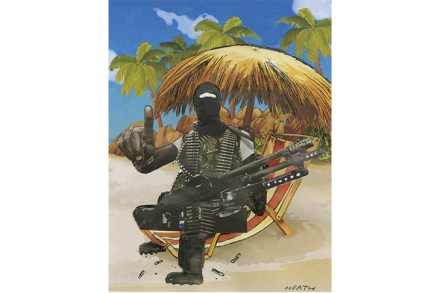
Brian Austin, a fisherman from the small village of Cedros in Trinidad, is struggling to describe the men who robbed him out at sea last year. ‘They had guns, they wore T-shirts and hoods.’ Then he brightens: ‘Have you ever seen Somali pirates? They looked just like that.’ I have indeed seen Somali pirates, as it happens, and rather closer up than I’d have liked. Ten years ago, a bunch of them kidnapped me for six weeks while I was out reporting. That was in Somalia, though, a failed state where anything goes. I never expected to be writing about a plague of pirates here in the Caribbean. The last lot of Caribbean Blackbeards were hunted down by the Royal Navy about 300 years ago, bringing to a close the so-called ‘golden era’ of piracy.

Out of control | 3 January 2019

From our UK edition

You may have noticed the flood of podcasts that’s been pouring out of the BBC since the launch of its BBC Sounds app. This is supposed to give us easier access to the programme archive but actually has been an excuse to show off the podcasts now made by the corporation, from the specially made How to be a Muslim Woman to Turbulence, a clever series of linked short stories by David Szalay, which was commissioned by Radio 4 and released as a podcast at the same time as being broadcast on the network. Podcasts are not bound by time and the demands of a schedule. They can last for ten, 20, 50, 100 minutes, taking as long as the story, the conversation, the facts require.

The lessons politicians don’t want to learn from Glasgow’s knife crime strategy

From our UK edition

London’s knife-crime epidemic is back in the news. Tomorrow the Damilola Taylor Trust is holding a lecture at which the founders of Glasgow’s Violence Reduction Unit will explain what lessons London might learn from their experience. Their distinctive ‘public health’ approach is widely held to have been successful and it is frequently contrasted with a strategy of law enforcement. Champions of the public-health approach can be identified by their predilection for referring to the problem of knife crime as ‘issues around’ knife crime and their enthusiasm for finding ‘reachable and teachable moments’ when dealing with offenders caught with a knife.

Bodies pile up

From our UK edition

A young girl finds the body of her nanny, brutally murdered, and the barely moving form of her mother, a second victim of the attack. The perpetrator of these deeds is the child’s father, who manages to flee the country and has never been seen since. This is the wound at the heart of Flynn Berry’s A Double Life (Weidenfeld, £14.99). Adulthood has given Claire Spenser no respite from her pain. Haunted by the horror she witnessed as a child, she now obsesses over every scrap of information about her father. She investigates his close friends and family, suspecting them of helping him to escape trial. But this isn’t a quest for revenge, more a personal search for justice, and above all, understanding.

On the side of Goliath

From our UK edition

According to which bit of hype you read, there’s a copy of one of Lee Child’s Jack Reacher thrillers sold somewhere in the world every four seconds, or every seven, or every nine. It’s a cute statistic and (as Child wryly notes), there’s an element of Barnum & Bailey hucksterism to it. But suffice to say he sells a lot of books —around about the 100 million mark to date, in 42 languages. Reacher fans tend to binge-read the lot, and nobody (including Child) can remember the titles. The novels tell the story of a former military policeman called Jack Reacher who hitchhikes around the United States with nothing but a folding toothbrush, a bank card and the clothes he stands up in. Reacher doesn’t look for trouble, but it seems to find him.

Dangerous minds

From our UK edition

There was no reason for Edward Drummond to believe this January day was going to be different to any other Whitehall working day. Having completed his civil service chores and visited the bank, he set off back to Downing Street where, as the prime minister’s private secretary, he had an apartment. He was passing a Charing Cross coffee shop when, without any warning, he felt a searing blow to his back and, according to a witness, his jacket burst into flames. The bang drew the attention of a quick-witted police officer, who dashed across the road as a man prepared to shoot at Mr Drummond again. But even with the assistance of passers-by, the officer struggled to disarm the shooter. He violently resisted and discharged a second shot, though this time without causing injury to anyone.