Crime

Jeffrey Epstein really was a streak of slime

From our UK edition

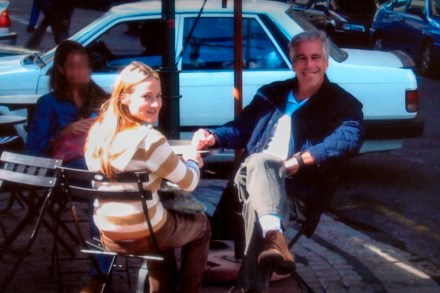
Did Jeffrey Epstein kill himself or was he murdered — and frankly who cares? Actually, having watched the four-part Netflix series — Jeffrey Epstein: Filthy Rich — about his secretive, sordid life, I care very much. Sure, his squalid death in jail, apparently from suicide while awaiting trial for numerous sex crimes, was thoroughly deserved. But justice would have been far better served if this noisome creep had spent the rest of his days rotting in prison, deprived for ever of all sexual activity save the involuntary variety provided in the showers whenever he dropped the soap. I hadn’t expected to respond quite this viscerally to the Epstein tale. Indeed, before I watched the documentary I was inclined to think that perhaps the nefariousness had been overdone.

Abolish the police. Then what?

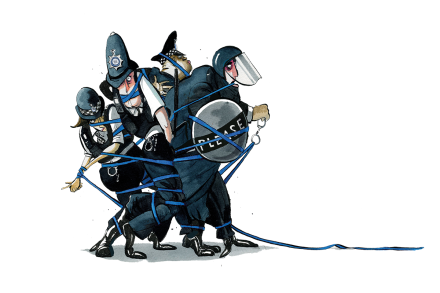
One of the best rules of thumb to emerge from systems theory is Stafford Beer’s famous statement: the purpose of a system is what it does. It doesn’t matter what the designer intended, or what the individual participants think they’re doing; the end result is all that matters. It’s a useful thing to bear in mind when we consider the objectives of the Black Lives Matter protesters, because right now the movement is beginning to look an awful lot like a machine for the abolition of police departments. It is frankly dizzying how rapidly the aims of the movement seem to have shifted from reform to destruction.

abolish police

The roots of riot

That LEGO set or Louis Vuitton bag you’ve always wanted can be yours free if you just wait for the next black suspect to die in police custody. That’s the lesson so far from the riots in Minneapolis, Portland, Atlanta and elsewhere following the death of George Floyd. Arson and luxury looting are not the most obvious ways of fighting racism or police brutality, but at this point riots are a ritual. ‘Antifa’ means bourgeois bolshevism — college-educated mock revolutionaries performing to a predictable script. This is the most sterile rebellion any country has ever seen. Far from terrifying the establishment, it reflects exactly what is taught in schools and preached over the airwaves and in respectable op-eds.

riot

Locked up in lockdown

COIVD-19 has turned us all into prisoners: draconian lockdown orders, solitary confinement, monotonous food, limited fresh air and exercise, irregular phone contact with the outside world. More than half of Americans believe the stress and isolation is harming their mental health. Now imagine living in a real prison during this epidemic.America’s prisons have become COVID hotspots due to overcrowding and poor hygiene. Inmates who were meant to serve months or years for nonviolent offenses now face a potential death sentence. It’s impossible to keep prisoners six feet apart. Prisons are last in line for supplies of soap, hand sanitizer and paper towels. At Rikers Island in New York City, hundreds have tested positive.

prison

The best crime novels to read during lockdown

From our UK edition

For those with work to do and kids to homeschool, the idea that you might have lots more time on your hands amid the coronavirus lockdown probably seems like a bad joke. But for those who have a bit of extra reading time to make the most of, here are five crime fiction series to help pass the lockdown hours: The LA Quartet, James Ellroy James Ellroy L.A. Confidential (Cornerstone) James Ellroy is well deserving of his status as the pre-eminent crime fiction writer of our times, and for those yet to discover the demonic delights of his oeuvre, the original ‘LA Quartet’ is definitely the place to start.

The SNP may have overreached by planning to suspend jury trials

From our UK edition

The Scottish Government may have overreached for the first time in its response to Covid-19. Today MSPs will vote on the Coronavirus (Scotland) Bill, which grants Scottish Ministers emergency powers to tackle the outbreak and suspends or amends the legal status quo in some important areas. Physical attendance in court will no longer be required unless a judge specifically instructs it; instead, appearances will be made ‘by electronic means’. Ministers will be able to permit the release of prison inmates in the event of custodial transmission (lifers and those convicted of sex crimes will not be eligible).

Paris is increasingly lawless – but the middle-classes don’t seem to care

From our UK edition

Ah, Paris, the city of love, the city of light, the city of larceny. Theft, burglary, pickpocketing, assault and homophobic acts are on the up, and even the city's Procureur, the public prosecutor Rémy Heitz, has admitted the stats 'aren't good'. No, they're not. Theft, for example, increased by 15 per cent in 2019, up from 124,875 recorded incidents to 144,552. Pickpockets are also enjoying a boom period with an increase of 35 per cent in 12 months, and there were 7 per cent more burglaries last year than in 2018. True, car theft and gun crime have dropped but physical assaults have risen by 13 per cent, sexual harassment on the transport network has shot up by 30 per cent, and also mounting are crimes characterised as homophobic.

Cyclists have become an easy police target

From our UK edition

Most Britons assume at the outset that any misfortune involving a cyclist is the cyclist’s fault. After all, many a two-wheeled hellion has earned contempt. But put aside the understandable cynicism. This is not one of those stories. A week ago, I was cycling around Buckingham Palace while some low-key royal whatnot was pending but not under way. The vicinity was closed to traffic but not to bikes. As usual, I was heading for Hyde Park Corner via Constitution Hill, because the bike path on the right-hand side in Green Park is insensibly ‘shared use’ — meaning, teeming with pedestrians, and I see no point in our inconveniencing one another. As I passed, an officer shouted ‘Cyclist!’ and then barked something I couldn’t make out.

Cats: The Snuff Movie

This article is in The Spectator’s March 2020 US edition. Subscribe here. In the 1970s, the English humorist Alan Coren set out to create the grabbiest literary cover package in the history of bestsellerdom. He titled his book, a collection of funny essays, Golfing for Cats and hit the trifecta by putting a massive, and otherwise totally irrelevant, swastika on the front. Needless to say, the book sold well. Golf isn’t as big now as it was then, but Coren’s other two ingredients remain staples of popular entertainment.

cats

‘I was a tortured, obviously brilliant child’: James Ellroy interviewed

From our UK edition

James Ellroy is occasionally quoted as saying he’s the greatest American crime novelist ever. The man sometimes called the ‘demon dog of American letters’ has no hesitation in affirming it when he arrives in The Spectator’s London offices to record a podcast. ‘Oh yes, I think that’s been proven,’ he says matter-of-factly. Has he always thought that? ‘When I finished the LA Quartet. I knew there was nobody like me and there wasn’t.’ Ellroy’s new book, This Storm, is the second novel in a projected set of prequels to his LA Quartet (The Black Dahlia, The Big Nowhere, LA Confidential and White Jazz) set between LA and the Baja peninsula in Mexico in the aftermath of Pearl Harbor.

The cops are impotent in lawless New York

From our UK edition

New York   Things are heating up, in both London and Nueva York, as this place should correctly be called. Two flunkeys writing in the New York Times announced that Boris is committing gaffes and could, like Trump, be a dead man walking. This is wishful thinking and the premature celebration confirms that the media can no longer be trusted, certainly not here in the land of the depraved. (The flunkeys sought quotes from obscure British left-wing academics, and loftily present them as ‘the people’. Their detachment from the workaday world is hilarious.) In the meantime, here in the Bagel an alleged drug pusher looking at nearly 100 years behind bars is photographed walking free and saluting Governor Cuomo for his bail-reform law.

How you can tell the gender of a thief

From our UK edition

My attempt at being Columbo was only taking me so far. In solving the mystery of who raided the barn, I was going round in circles. All I knew was that the thieves took a weirdly useless assortment of items, including four wrecked horse rugs, a broken lunge line and a wheelbarrow with a completely flat tyre. They left a brand new sack of horse feed and two battery packs, the only items worth stealing. We always assume thieves are men, but it seemed unlikely that a man or men would wheel away items as light as rugs in wheelbarrows. Also, they didn’t make enough of a mess. The horse feed was placed carefully on the floor. This just didn’t feel like the actions of two rural crooks.

The best crime series to watch on Netflix

From our UK edition

It’s no secret that people are fascinated by crime. Nor is this a new phenomenon: writing in 1946, Orwell noted that murder gave a ‘great amount of pleasure to the public’, and proceeded to identify the common features of the gruesome and grisly crimes that gave the British most satisfaction. Psychologists, meanwhile, say that murder in particular is not only ‘a most fundamental taboo’ but ‘also, perhaps, a most fundamental human impulse’. This seems plausible. We all know those people who, stuck in a queue or sat in an interminable meeting, seem moments away from indulging that impulse. At any rate, lovers of the lurid and the macabre are spoiled for choice in the streaming age.

Bomb attacks are now a normal part of Swedish life

From our UK edition

 Stockholm Until recently no one would have thought of adding a column on bombings to the crime statistics One night last week, explosions took place in three different locations in and around Stockholm. There were no injuries this time, just the usual shattered windows, scattered debris and shocked people woken by the blast. The police bomb squad was already on its way to the first explosion in the district of Vaxholm when it had to turn around and prioritise the detonation at a residential building in the more densely populated city centre. Residents whose doors had been deformed by the shock wave had to be rescued. The third target (seemingly unrelated) was a facility belonging to a Syriac Orthodox church, which had already been bombed twice in the past year.

Is hate crime really on the rise?

From our UK edition

The Guardian ran a story on its website today headlined: ‘Hate crimes doubled in England and Wales in five years.’ Alarming if true, but is it? The story is based on some data released by the Home Office today which, on the face of it, does appear to show the number of hate crimes increasing. The number of hate crimes recorded by the police in England and Wales in 2018-19 was 103,397, up from 94,121 in 2017-18, a rise of ten per cent. But drill down into the report, and the picture becomes more hazy. The word doing most of the work here is ‘recorded’. Yes, the number of recorded hate crimes has increased year-on-year, but how do we know that isn’t due to the police being more likely to record hate crimes?

How many Britons now vape?

From our UK edition

Talking Turkey David Cameron again accused the Leave campaign of ‘lying’ about the prospect of Turkey joining the EU. A reminder of what he himself has said on the subject: — ‘I’m here to make the case for Turkey’s membership. And to fight for it… I will remain your strongest possible advocate for EU membership and for greater influence at the top table of European diplomacy.’ (Speech to Turkish parliament, 2010) — ‘In terms of Turkish membership of the EU, I very much support that. That’s a longstanding position of British foreign policy which I support. We discussed that again in our talks today.

Locking up bankers won’t solve Britain’s crime epidemic

From our UK edition

On Monday, a 16-year-old boy was stabbed to death in Munster Square in Camden. A Witness reported seeing three men 'screaming and laughing' as they chased him with a machete. The poor kid apparently sought refuge in a house, banging on the door and pleading for help, but his pursuers were close behind him. A couple of days before, across town in Leyton, a police officer had been attacked with a machete after trying to stop a van. PC Stuart Outten was slashed across his head and hand but courageously resisted the attack and survived. In Tottenham, a week before, an 89-year-old woman was reportedly raped and murdered in her home. Of course, unless you live in a small community you will always hear about evil and nauseating crimes.

A gang of sheep rustlers is stalking our county

From our UK edition

Though autumn is happily still some way off, we’ve already reached that stage in the shepherd’s calendar when full-grown lambs loud bleat from hilly bourn. In fact they now look bigger than their mothers. The easiest way of differentiating the ewes from the lambs is that the latter still have their fleeces while the former are shorn and look thoroughly careworn and knackered from having to feed their demanding and needy adolescents long after it’s strictly necessary. What’s rather spoiling my nature notes at the moment, though, is the nagging fear that next time I venture out into the fields on my morning walk with the dog, our pastoral idyll will have been reduced to a bloody shambles of discarded entrails and severed heads.

Crime of passion

From our UK edition

No matter how exquisitely English —gobbets of blood amid the fireplace ornaments — murder annihilates meaning. Even when the motive is clear and strong, even when the progression to the fatal blow can be analysed step by step, all that is left amid the eviscerated lives of loved ones is an emptiness around the violence itself. In fiction, this void is filled: Agatha Christie understood very well about hatred, and her stories seethe with it. In 1935, as millions of her readers were devouring Murder on the Orient Express — a novel constructed around a biblical act of molten vengeance — the nation was suddenly mesmerised by a real-life shocker: a weird and savage killing in the genteel south-coast resort of Bournemouth.

Light and dark | 1 August 2019

From our UK edition

Few biographies are quite as impressive as Yukio Mishima’s. One of Japan’s most famous authors, he wrote 80 plays and 25 novels, starred in movies, directed theatre and produced his own film. He was nominated three times for the Nobel Prize in Literature. He founded a right-wing militia to defend the emperor from Marxists and, in 1970, committed ritual suicide, aged 45, after the failure of his coup to overturn the constitution. Life for Sale is one of his lesser-known achievements. Though it’s littered with corpses, it seems almost humdrum when compared with its creator’s CV. Originally written for Japanese Playboy and published in 1968, this is, I think, the first time it has appeared in English. Hanio is young, solvent and single.