Previous magazine Next magazine

Latest issue

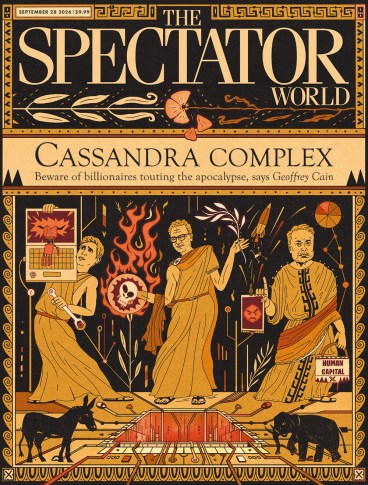
Cassandra complex

Browse past issues

Features

Features

Trump’s second term has put his legacy in grave peril

Two recent stories sum up the state of Donald Trump’s presidency and underscore the growing gap between him and his working-class support base. First, it emerged that Donald Trump Jr. had his wedding paid for by Umar Kremlev, a Russian oligarch who is also a friend of Vladimir Putin. Kremlev is believed to have stumped up a good proportion of the costs, which included hiring a $100,000-a-night island in the Bahamas as well as a $70,000 firework display. While Trump’s son is not a government employee and therefore not subject to the rules on political gifts, alarm bells ought surely to have been ringing.

trump second term
midterm convention

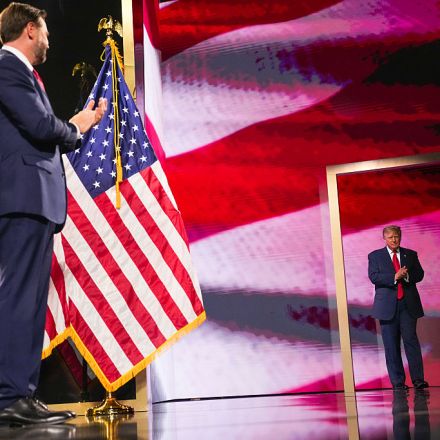
What exactly was the Republican midterm convention?

At the opening night of the first ever “midterm” Republican convention in Dallas, President Trump is roasting the local Democratic candidate for US Senate, who he calls James “Talafreako.”  “He was also somebody that hated eating meat, but he ran a campaign to beat meat. He called it ‘beat meat,’” Trump says, to cackles of laughter from the MAGA faithful. “I don’t know what the hell he meant by that. These people are going to tell me ‘what the hell… he wants to beat meat?’ But it was bad for his image, so he started eating meat, and he recently – it’s getting worse. I’m getting myself in trouble.” The ad lib is the highlight of the President’s almost two-hour-long remarks.

The delights of not running a newspaper

Writing this Diary and the amiable correspondence I have had recently with my old friend Mathias Döpfner as he assumes control of the Telegraph titles remind me of how much more agreeably simple my days are now than when I was Telegraph chairman. Thanks to the internet, my reflections on a number of outlets in different countries ricochet all around the world to an astounding number of people.

Beware of billionaires touting the apocalypse

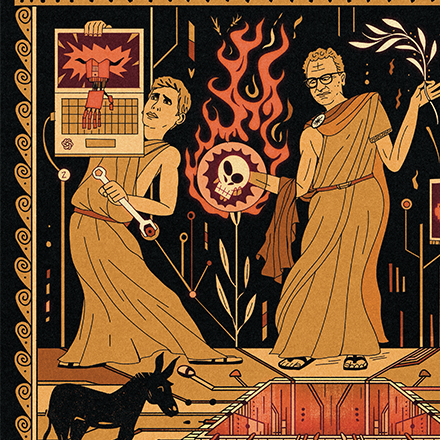
Cassandra was a princess, daughter of King Priam of Troy. Apollo gave her the power to see the future and, when she rejected his advances, arranged that no one would ever believe her. She warned the Trojans about the wooden horse. “All heard, and none believed the prophecy,” Virgil wrote. And so the city burned. The kingdom of artificial intelligence is now producing a stream of its own Cassandras. On September 8, a 27-year-old AI researcher named Jacob Coxon quit Anthropic – and explained why on X. The company and its rival OpenAI, where he had also worked, were “racing straight to self-improving superintelligence and gambling with our lives.” By breakfast, tens of millions of people had seen his post.

The strange death of libertarianism

Socialism is more fashionable today than at any time since the Soviet Union collapsed. It’s back, and its major rival isn’t an ideology of unfettered free markets but right-wing populism. Theodore Roosevelt is a greater inspiration than Ronald Reagan to today’s young Republicans. The man most likely to be the next GOP presidential nominee, J.D. Vance, is more enthusiastic about Huey Long than Milton Friedman. Even the alternative “NeverVance” candidate insiders in Washington prefer – Secretary of State Marco Rubio – has made a point of saying capitalism must be “common-good capitalism.” Libertarians have disappeared, just as the national debt has blown past $40 trillion.

Canada EU

Why would Canada want to hitch itself to the EU?

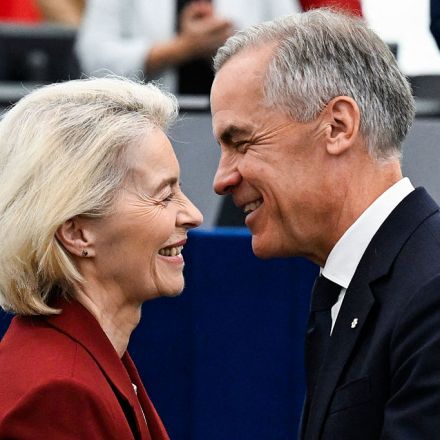
“Canada has what the world wants,” Mark Carney likes to tell people. But what does Canada want? The European Union, apparently. The bloc’s President, Ursula von der Leyen, has announced that Canada would become its first “associate member.” This is happening, she said, because “above all... Europe and Canada believe in democracy.” Really? The EU spent years trying to block Brexit. And in 2015, when Greece voted to reject the conditions on EU loans, Brussels replied with even more stringent conditions. “There can be no democratic choice against the European treaties,” von der Leyen’s predecessor said at the time.

In Iran, America is being sucked deeper into an unwinnable war

Tehran knows it does not need to defeat the United States in a conventional war. It can instead exploit the vulnerabilities of America and its Sunni Gulf allies by opening up new fronts. With shipping in the Strait of Hormuz disrupted, Saudi Arabia has been transporting oil via the Red Sea and keeping global energy markets just about under control. But that alternative Red Sea route is now being threatened and the economic consequences are becoming considerably more serious. Iran’s mullahs are widening their war with the US not only through direct attacks, but through their Shia allies and proxies across the Middle East. Earlier this month, the Iran-backed Houthis seized strategically important territory across Yemen’s Red Sea coast.

Who’s afraid of AI?

It’s not often that we get a ringside seat to the Birth of a Narrative. Usually, those overseeing the parturition are careful to manage the event offstage, away from the prying eyes of skeptics, spoilsports, and counternarrativists. There are walls of silence and moats of obfuscation to accompany the rollout. That helps keep everyone on message. There are media firemen assembled to extinguish the flames and wash away the reputations of questioners. That helps neutralize pests and quash doubts.  But with the sudden onslaught of the “AI will end humanity” narrative, the impresarios orchestrating the debut got sloppy. They knew their own lines. Artificial intelligence was the biggest threat to humanity since, well, since ever.

Zelensky’s strategy is national suicide

For Americans who follow the Russian-Ukrainian war, the past few months must look very strange. In the first half of summer, the story from Kyiv – and the many western media outlets that repeated it – was that Ukraine was winning. Then, not long after the NATO summit in July, Kyiv announced it lacked the interceptors to prevent a winter disaster. The country needed 300 missiles to survive, we were told. Even if these 300 missiles arrive, they are unlikely to protect a country as large as Ukraine from the sheer volume of Russian ballistic attacks and glide-bomb strikes. Now it’s September, and Ukraine says it’s facing a $27 billion shortfall in defense funding. There seems to be a vast difference between the public relations campaign and the reality in Ukraine.

Education technology has stolen students’ attention spans

After the past few weeks, there can’t be many people left still unaware of the rapidly growing power of artificial intelligence. No one knows quite what to do about it or what to expect and when. Parents fear for their children and how they might survive in this new world. But they should rather look to their children’s schools, where right under their noses, AI and educational technology – ed tech – is already damaging students’ futures and stealing their ability to focus, to learn and to think. You only have to look the latest PISA results, released earlier this month, to see that academic performance in America is declining fast.

Tech is turbocharging teenage strivers

I’ve always been struck by Tracy Flick, from the 1999 film Election. Portrayed by a ferociously perky, blonde-bobbed Reese Witherspoon, Flick is the paradigmatic striver – she will stop at nothing to be successful. She is a walking résumé-padding exercise, a living, breathing college application. She has to have the very best grades, the extracurriculars and, as the title suggests, the student-body presidency. She eventually ends up at Georgetown. It was never really clear to me why I loved Flick so much – and not just loved, but really related to her. I was not a striver myself. I was crushed when I didn’t end up at Harvard, a school I had made no effort whatsoever to get in to. I hadn’t so much as submitted an application.

Is AI ruining mathematics?

Terry Tao is the most famous and award-laden mathematician working today. He is known for his groundbreaking work in many areas of mathematics and when he speaks, people listen. A few weeks ago he took to the stage at the International Congress of Mathematics, held every four years, to give his lecture, “Mathematics in the Age of AI.” He voiced concern about what he called an unprecedented threat. “AI has created a crisis in our mathematical values and practices,” he said, and his words resonated because, just days before, Anthropic’s Claude Fable AI program had solved the so-called Jacobian conjecture which has puzzled mathematicians since 1939. It was a devastating achievement, all the more so because the solution fitted into a single tweet.

The autistocracy: the men on the spectrum who rule our world

Ben Delo, the source of one half of Reform’s £72 million mega-donation, wrote in The Spectator last year about being diagnosed with Asperger syndrome as a child. The self-confessed geek, now 42, was socially awkward. He did not fit in and he did not care to. His condition would shape the course of his life, making him very good at math, very rich and hellbent on getting involved in politics. Christopher Harborne, the crypto billionaire who has matched Delo’s donation, we know much less about. Despite being a billionaire many times over, the 63-year-old has the air of a chemistry teacher and an aversion to interviews. Like Delo, who until recently lived in Hong Kong, he also forged his way in the Far East, living in Thailand.

autistocracy
reform

Can Reform reform?

Of all the uses to which Ben Delo and Christopher Harborne might put their money, there are few more innocent than giving it to a political party. Neither want, nor expect, preferment, honors or patronage. Both are idealistic by nature and philanthropic by habit. They have all the personal wealth they need to fund their lifestyles, and harbor hopes only for enriching Britain by their actions. I might not agree with all their ideas for how one might make this country stronger, or indeed how best to spend £72 million to improve our governance. But they have shown themselves a good deal shrewder than me in making money, and they should be entitled, within the law, to spend it as they wish.

Where are my reparations?

The natural coalition of rural people which was forged 25 years ago, before the hunting ban, is forming once more. In Westminster, we recently gathered under the Countryside Alliance banner to hear David Blunkett, David Cameron and others set out the issues. Poor Andy Burnham had inadvertently stoked our feelings by joking feebly about how he hardly ever visits farms and considers DEFRA the least important government department (would it were so!). There are strong current individual issues – the proposed trail-hunting ban being the most egregious and the inheritance taxes for farms the most economically damaging – but the sheer number of government-inspired rural harms is astonishing. The Alliance counts 27 of them.

reparations

Labour must go further and faster in the North Sea

John Healey stood in front of two giant robotic arms this week and promised to “make Great Britain growth Britain again.” The Chancellor also promised, borrowing a catchphrase from his neighbor in No. 10, to deliver “good growth in every postcode.” In the North Sea, 150 miles east off the coast of Aberdeen, lies the first big test of this promise. The 6,000-ton Jackdaw extraction platform is ready to start pumping gas from a field three miles below the surface. Twenty years after the Jackdaw field was first successfully prospected, it will, at the stroke of a ministerial pen, finally be allowed to operate. Industry bosses were told to prepare for a possible government handshaking visit on September 15.

I’ve found the perfect school for Harry and Meghan

As the author of How to Lose Friends and Alienate People, I have to acknowledge that I still have some way to go to match the radioactive negativity Harry and Meghan generate with their every move. The Sussexes’ accumulated expertise in committing increasingly nauseating acts of hypocritical entitlement with every week that passes should qualify them both for a Regius Chair in Blithe Privilege at the University of Self-Regard. The latest episode in their narcissistic odyssey – The Sillyad – has been their agonizing over where to send their children, Prince Archie and Princess Lilibet, to school. Harry and Meghan’s decision to educate them in England is, in its way, admirable.

Bible

The death of biblical literacy

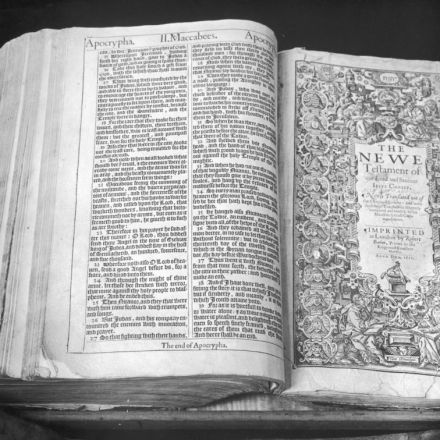
We are often told these days, most recently in James Marriott’s much talked about book The New Dark Ages, that the world has a problem with reading. During such an emergency, then, it could be quite invidious to claim that some manifestations of this problem may be more or less bad than others. But it is difficult not to bemoan especially one crisis that cannot be blamed entirely on bloated screen times: the decline of biblical literacy. I have observed this first-hand when teaching history undergraduates at Oxford. These are the brightest and most hard-working young historians in the world. But it is not an uncommon occurrence to be met with blank stares when I mention the prophet Jeremiah or question them on the Exodus narrative.

The real reason children no longer enjoy reading

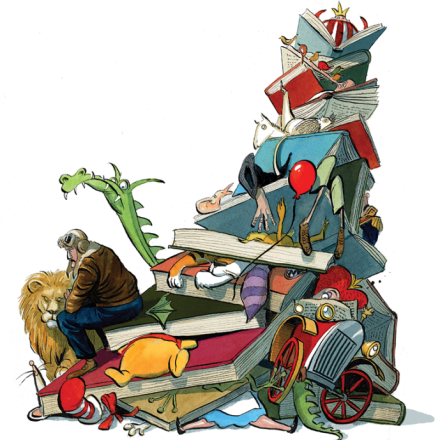
At the tail end of the summer holiday, my son and I had a shouting match in King’s Cross station. For more than three hours on the train south from Durham, he’d been staring at a single question on a comprehension paper. The text began with a description of a road running through the moonlit countryside, and question three asked: “Why does the author compare the road to a gray silk ribbon?” Between Durham and Peterborough, I had repeated that question, with increasingly psychopathic calm. “So darling, why does the author compare the road to a ribbon?” By the time the Arsenal stadium came into sight, I could feel small things inside my brain starting to come loose and on platform 1I lost my cool. “Just give me an answer, anything! Tell me it’s a metaphor, at least.

How I became a Canadian nationalist

This is how I became a Canadian nationalist. I did it on the rebound. I never wanted to, and it is a strange experience to find myself pounding the arm of my chair when Mark Carney, of all people, defies the Almighty Trump. But it is so. Once, like that poor man who speaks the first lines in The Godfather, I believed in America, arsenal of liberty, land of the free, inheritor of Magna Carta and so on. Then, after a couple of years in Moscow, I went to live in Washington, DC. And it was there that I was wooed and eventually seduced by the land of maple syrup. To begin with, it was the discovery that soppy British sentiment about the US was not in practice returned. It wasn’t so much that they didn’t like us as that they had barely heard of us. Legally, Britain didn’t seem to exist.

We need to talk about Lindsay Clancy

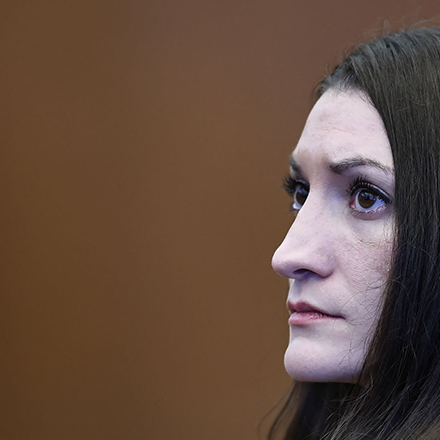
The declaration of a mistrial in the filicide case of Lindsay Clancy coincides, for me uncomfortably, with a new UK reissue of my 2003 breakout novel We Need to Talk About Kevin. The book concerns a mother whose son becomes a high-school mass murderer. She agonizes over whether something has always been wrong with him or something is wrong with him because something is wrong with her. Prior to publication, I’d imagined that the commercial hook would be the frequency with which self-pitying adolescents were taking their misery out on their classmates and teachers, since when I wrote the novel school shootings had yet to be fictionalized. Instead, what hit a cultural nerve was “maternal ambivalence.” The text dares to explore parenthood in de-romanticized terms.

Can Britain learn from Sweden’s immigration crackdown?

There is a decisive shift occurring in European politics. It’s happening across nations – and parties. It lies behind the far-right Alternative für Deutschland’s victory in the Saxony-Anhalt state election last weekend. And it is the underreported factor in Sweden’s recent general election. In almost every part of the continent, the politics of crime, security, migration and citizenship is driving governments to harden their borders and toughen their approach towards integration, especially when it comes to Islamism. On the center-right, the Austrian Chancellor Christian Stocker has outlined that he plans to bring in a ban on what he calls political Islam.