Crime

Is it time to reopen technology’s cold cases?

From our UK edition

One of the staples of crime drama is the ‘cold-case squad’. This allows programme-makers to add period detail to the scenes set in the past, while the present-day scenes can show implausibly attractive forensic scientists hunting for clues in a creepy location such as a long-abandoned children’s home (an activity obviously best performed during the hours of darkness by two people who separate in mid-search for no apparent reason). I have often wondered whether it is worth establishing a cold-case squad for technology and science, to investigate those lines of inquiry that went cold 50 years ago but would now repay further investigation; or inventions that suffered from a miscarriage of justice.

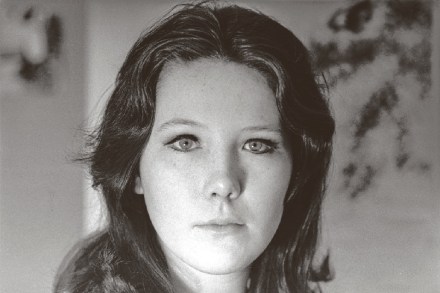
Who killed Jane Britton in 1969?

From our UK edition

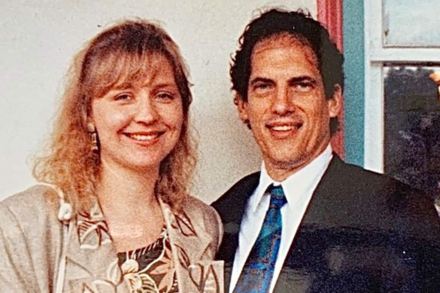
The problem with telling stories about Harvard is that Harvard, if it teaches anything these days, teaches distrust of stories. So, for example, two thirds of the way through Becky Cooper’s long, ambitious book about the murder of a Harvard graduate student, the author explains that ‘we’ — those attempting to fashion a narrative about the gruesome fate of a 23-year-old woman bludgeoned to death in her Cambridge apartment in the late 1960s — ‘had unconsciously been perpetuating a story whose moral derived from the very patriarchal system we thought we were surmounting by telling the story in the first place’. This is a book that twists itself into a succession of knots — some elegant, some awkward, and some that simply can’t be untied.

Meet the women caught in the joint enterprise trap

From our UK edition

Sarah, a 15-year-old victim of sexual exploitation by grooming gangs is pimped out and degraded by scores of men every week, beaten by her exploiters, and alienated from her friends and family. After a year of hell, Sarah is given an option: recruit two more girls for the gang and she can go free. Out of absolute desperation she agrees. But when the gang is finally caught, rather than treated as a victim, Sarah is charged with procurement of girls into prostitution and convicted by a jury. Amy, a vulnerable young woman is trapped in a relationship with an abusive man who controls her every move. Amy is scared of him and has learned to do what he demands to avoid punishment and violence. This man is a criminal and asks her to hide a weapon he has just used to kill a drug dealer rival.

Why New Yorkers are fleeing the city in droves

From our UK edition

New York Back when people used to read newspapers, they called it a ‘human interest’ story. Now it appears as just another statistic. The know-nothings on social media, who express utter drivel on a daily basis, will have pretty much ignored it, but a dreaded pro-Biden sheet actually published the full story. A young Japanese man came over to the Bagel from Tokyo to make it as a jazz pianist, and that he did. He started a trio of his own and toured with several bands until the fateful night of 27 September, when he rode the New York subway after a video shoot. Tadataka Unno is now 40, and a new father, but he most likely will never play an instrument as a professional again.

I’m now considered a freak in New York

From our UK edition

New York It’s nice to finally be in the Bagel, a place where the cows have two legs and no bells around their necks. I walk daily around the park two blocks from my house and stick to the Upper East Side in general. The park is by far the best part of Manhattan, and it’s better than ever because of you-know-what. Yes, the virus has chased away the tourists, and without tourists the rickshaws that had turned the park into a free-for-all have all but disappeared. Central Park is the only part of the city that Bloomberg’s three-term despotic reign didn’t change for the worse. Bloomberg was a so-so mayor but a lucky one.

New York is a paradise for criminals

From our UK edition

New York New York, New York, once a wonderful town/ The people are crap and the mayor’s a clown/ The only safe space is a hole in the ground… I could go on, but why be so negative? Arriving from bucolic Switzerland, Newark, one of America’s ‘murder capitals’, feels like Katanga circa 1960. If this isn’t a third-world airport, then I don’t know what is. My driver tells me I’m lucky that the virus is keeping people away otherwise it would take at least three hours just to get through customs. None of the electric signs that would tell us which terminal to collect our luggage from is working, so some very old people have to hike a mile or two to search for them. The airport itself looks grubby, shabby and worn.

Britain clambers aboard the BLM bandwagon

Middlesbrough, United Kingdom Gareth Southgate, the unctuous, horse-faced manager of the England soccer team, insisted that his players take the knee before their game against Denmark in the Nations League last month. They were at it before the match against Iceland, too, and the Icelanders joined in, bless them, despite the fact that there is only one black person in all of Iceland and he probably ended up there by mistake. It was important, Southgate ventured, to show support for Black Lives Matter. And so down they all went, as Portland burned and the looters, bullies, thugs and professional agitators ran amok across the US.

blm

New York has turned ugly

New York City In grim times such as these, New Yorkers tend to flatter themselves for possessing special reserves of moxie, an outdated word that connotes courage, brio and a kind of raffish know-how. Think of Humphrey Bogart as Rick, a nightclub owner in the film Casablanca, when he jousts with Major Strasser, the German bully who thinks he can outsmart and intimidate him. Pressed to reveal his background and political beliefs, the poker-faced Rick replies: ‘I was born in New York City, if that’ll help you any.’ Asked if he could imagine the Germans occupying New York, Rick retorts, with a little extra moxie, ‘There are certain sections of New York, Major, that I would not advise you to try to invade.

new york

Bas Javid: Why I joined the police

From our UK edition

There’s no such thing as a typical week in policing and this last one was no different. It started on a high and ended, tragically, on the lowest of lows. I’ve been asked recently why I joined the police — what or who inspired me. My first answer is: Lieutenant Carl Downing. He was my divisional officer in the Navy and one day, though I went on to be the most unlikely copper you could ever meet, he turned to me and asked: ‘Have you thought about the police? You’d be great at it.’ I remember thinking: where did that come from? Nonetheless, five years later I found myself signing up. Or perhaps my career began earlier, with the Javid brothers’ crime-busting gang.

A murderer among us: I was Dennis Nilsen’s boss

From our UK edition

How would you know if one of your colleagues was a murderer? When police announced the man they’d arrested for multiple horrific murders was Dennis Nilsen, many of his former colleagues — including me — were amazed, but perhaps not completely incredulous. Des worked with me at the Hotel and Catering Jobcentre in 1980 and he was unquestionably odd. My wife recalled him saying in the office one day: ‘You know it would be really easy to pick up some rootless young man in a bar and knock them off. Who’d notice? Who’d care?’ For his colleagues it was just another rant, a weird take on his continuing critique of Thatcher’s Britain. ‘Oh shut up, Des!’, they no doubt thought.

The tragedy of Aaron Coleman

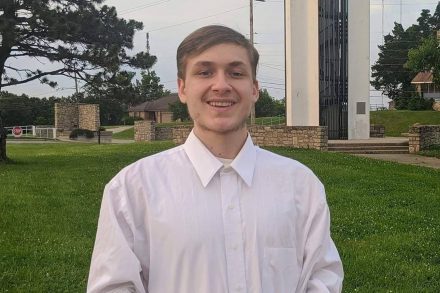
‘While it is true I was abusive to my ex-girlfriend,’ writes Aaron Coleman, the improbable candidate for a seat in the Kansas State House, ‘I do not agree with the characterization being made about our experience in the hot tub the day after Christmas.’ This is such a morbidly evocative sentence. Abusive. Hot tub. Day after Christmas. It is a novel in 30 words.Coleman, who is 19, first came to prominence when he was found, in the aftermath of an underdog triumph in a Kansas primary, to have committed acts of bullying and ‘revenge porn’ five years previous. ‘He got one of my nudes and blackmailed me with it,’ said a victim:‘And told me if I didn’t send him more he would [send] it to all of my friends and family...

aaron coleman

If anything, America has an under-incarceration problem

John Marvin Weed stood his ground as his assailants encircled him. He had already been pummeled and was bracing himself for more. Weed was with family that day, enjoying Maryland's Great Frederick Fair when a young man asked him for a dollar. When Weed refused, the young man and his brother attacked. In a video of the incident, Weed appears calm, hands low at his sides, as the brothers taunt him. Mild-mannered and middle-aged, Weed was a builder; he helped with his hands. 'He gave so much love to his young niece and nephew, four-wheeler rides, playing in the pool, reading bedtime stories, and so much more,’ said Weed's sister, Lori Hawkins.

incarceration

Letters: We must sing again

From our UK edition

Growing pains Sir: James Forsyth (‘Rewiring the state’, 4 July) shocked this loyal Spectator reader with the following: ‘Even before Covid, this country was in a productivity crisis and it’s nigh-on impossible to improve productivity without government involvement. Increasing productivity requires improvements to be made to physical and digital infrastructure and to the skill base, and those need public investment.’ James clearly has not studied the sources of productivity growth (or lack of it). In the 50 years to 2008, the UK experienced around 2 per cent p.a. growth in real Gross Value Added per hour worked — which is what politicians generally mean when they talk about productivity. Since then, productivity growth has effectively stalled.

Extra, extra — read all about us!

Instead of telling us about America, or even the world outside, American journalists now tell us about other American journalists. The dirty laundry of America’s journalists is aired hourly on Twitter, where it stinks the place out. None of it is news and nobody will remember any of it in 10 months, let alone 10 years. It’s amazing to watch adults setting their emotional temperatures by palace intrigues at the New York Times. A series of laughably esoteric conflicts have consumed the industry in recent days. Each has generated thousands of self-referential tweets, articles, think pieces and podcast episodes.

manhattan journalism

Letters: Why Hugh Dowding deserves a statue

From our UK edition

Police relations Sir: As a former Met Police officer, with a similar background to Kevin Hurley, I was surprised how much I disagreed with his article (‘Cop out’, 27 June). Central to this was the lack of emphasis he placed on the attitude of police officers. The emphasis on violent gang crime undoubtedly leads to a distortion in how young black men are perceived by the police, and this in turn can quickly lead to confrontation on the street. The attitude of young police officers is key to avoiding an escalating reaction between them and members of the public. Senior officers need to develop more holistic ways of addressing crime, and acknowledge that the police cannot arrest their way to safer communities. Communities need to be integral to policing solutions.

‘Defund the police’ just means ‘I’m rich’

Walk along the leafy streets of any neighborhood in so-called 'brownstone Brooklyn' — Park Slope, Carroll Gardens, Brooklyn Heights — and you’ll see 'Defund the Police' in many a home window. Owners of $3 million brownstones proudly proclaim their agreement with a fringe policy, designed to remove resources from police squads, as a solution to police violence. How exactly less funding for police will result in better policing is unclear, but virtue signaling of the kind that has rich people pushing for fewer resources for poor people doesn’t get tangled up in the details. The details are specifically grim. The New York Post reported on Monday that 'between Monday, June 29, and Sunday, July 5, the city saw 74 shooting incidents with 101 victims'.

defund Protesters hold up signs on June 3, 2020

Letters: Police must focus on deterring crime, not responding to it

From our UK edition

Deterring crime Sir: Rod Liddle is right to highlight the politicisation of the police as a source of their inadequacies, but I think he misses the crucial point (‘Defund the police’, 27 June). We simply do not have bobbies on the beat to even feel sympathy for, and this means that constructive relationships between a recognisable police officer and their community are a rarity. As Kevin Hurley describes, many black youths in our cities have nothing but hatred towards police officers, and this cannot be a surprise when the only interactions they have with them are being forced to empty their pockets after being suspected of criminal activity.

To save black lives, police top brass must face reality

From our UK edition

I was a borough commander in west London and come from a long line of officers — and I can tell you that it’s fast becoming impossible to police the streets. The police are attacked on all sides. They’re told both that they’re too aggressive and too politically correct; too understanding and too intolerant. They’re required to reduce the level of violent crime on the street and yet told they’re racist if they stop and search young black men and ‘put hands in pockets’ to check for knives. As a society we can shout and scream at the police, regulate them, scrutinise them, sack a few, bring in external bosses from industry. We can try to ‘re-educate’ them and have an independent complaints system.

The police have become too politicised to function

From our UK edition

Of the many admirable demands made by supporters of the Black Lives Matter movement, such as dismantling capitalism and making white people pay for centuries of vile oppression, none commended themselves to me more than the demand that we should defund the police. This is a hugely attractive proposition, I thought, as I watched the chief constable of Kent, Alan Pughsley, ‘take the knee’ in solidarity with people who want him abolished. I felt much the same upon hearing the words of Superintendent Andrew ‘Andy’ Bennett of Avon and Somerset Police, who watched as BLM protestors threw a statue of Edward Colston into the river.

Is change on the horizon in Baltimore?

Crime-ridden Baltimore finally dodged a bullet this week. The bullet, in this case, was former mayor Sheila Dixon, who nearly became mayor again, despite resigning from office a decade ago when a jury found her guilty of misdemeanor embezzlement. Perhaps this loss can undo the curse of the Baltimore mayor’s office.Considering the string of scandals plaguing recent mayors, curse may not be a strong enough word. Decide for yourself: 2010: Mayor Dixon, who assumed office in 2007 after Mayor Martin O’Malley was elected Maryland governor, resigns after soliciting gift cards from a wealthy developer that were intended for poor children but were used on shopping sprees while she was city council president. City Council President Stephanie Rawlings-Blake assumes the office.

baltimore