Crime

Let’s abolish parole

From our UK edition

The furore over the parole granted to John Worboys, the rapist taxi driver, misses the point entirely — that the system of parole is disgraceful in theory and irredeemably unwork-able in practice. The only thing that it is good for is the employment of large numbers of officials engaged in pointless or fatuous tasks who might other-wise be unemployed. The system is predicated on the ability of experts to predict the future conduct of convicted prisoners. Will they or will they not repeat their crimes if let out early? It is true that, using a few simple statistical measures, such as numbers of past convictions and age, you can predict this with an accuracy somewhat better than chance. But all further efforts to refine prediction actually reduce, not increase, accuracy.

London’s crime map tells a damning tale of two cities

From our UK edition

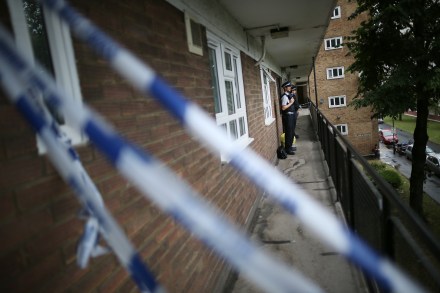
It’s just a few metres from Bartholomew Court, EC1, where a young man was one of four stabbed to death over the New Year, to trendy Hoxton, famous for its cereal bars and hirsute hipsters. It would be easy to say these two worlds – those of the trendy media types lampooned by 'Nathan Barley' and 'Its Grim up North London' and the large nearby estates – are separated by an unbridgeable gulf, but it would also be inaccurate. Areas like Hoxton became popular in part because of this edginess, this picturesque urban decay, where drugs can be bought cheaply from local youths and consumed in the safety of the adjacent wine bars and gated communities.

High life | 2 November 2017

From our UK edition

I have a message for the London mayor, Sadiq Khan: you and your policies stink! While the fuzz are busy scanning the internet for racist or sexist material, crime in the capital is up by six per cent over the past 12 months and the police — handicapped by PC orders from above — have made 20 per cent fewer arrests. Statistics show youth violence and murder soaring in London, with the latter up by 84 per cent on last year. But here’s a story that’s not a statistic. Last week, my little girl Lolly was viciously attacked and robbed near the World’s End pub on the King’s Road after going to dinner with her cousin. She had spotted a hoodie (does Cameron still wish us to hug them?) on her way to dinner, a man of North African or Middle Eastern appearance.

The death of cosy Christie

From our UK edition

This is not Midsomer Murders. The new film adaptation of Agatha Christie’s Murder on the Orient Express is thick with violence and sexual innuendo. It elevates Hercule Poirot, the diminutive, fastidious Belgian detective, with his egg-shaped head and pot belly, to part-time action figure, a man who chases bad guys down dizzying descents in exotic snowscapes before straightening his magnificent moustache with a twinkle in his eye. This is less cosy, golden age detective fiction than a cross between Daniel Craig’s 007 and Scandi noir. Kenneth Branagh, who stars and directs, has brought his experience playing the dejected Swedish police inspector Wallander to the fore, giving the usually reserved detective unusual passion and vulnerability.

When in Rome… | 12 October 2017

From our UK edition

I know I keep saying that in Decline of the West terms we’re all currently living in Rome, circa 400 AD. But now, on TV, there is actual proof of this in the form of a truly appalling reality series called Bromans (ITV2, Thursdays). Bromans is like a cross between Love Island and Carry On Cleo, so shamelessly low, tacky and brain-dead that it makes Geordie Shore look like Kenneth Clark’s Civilisation. Basically, a bunch of ridiculously buff lads strip off and participate in crap gladiatorial contests in which no one dies (thus entirely defeating the object), while their hot blonde girlfriends smoulder pointlessly in scanty outfits, and say stupid things like ‘I’ve gone 2,000 years back. I’ve never lived that far back.

Made in Port Talbot

From our UK edition

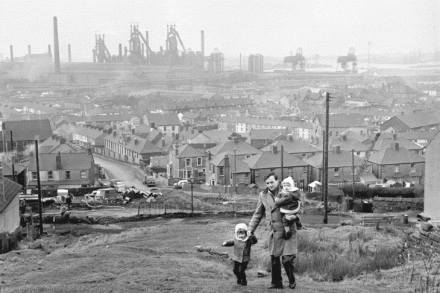
Port Talbot, on the coast of South Wales, is literally overlooked. Most experience the town while flying over it on the M4, held aloft by concrete stilts planted in terraced streets. From that four-lane gantry, the only landmarks are the dockyard cranes and belching steelworks. Over Easter in 2011, National Theatre Wales staged a piece of street theatre that was crafted as a civic resurrection. The Passion of Port Talbot featured Michael Sheen as a Messiah-like teacher who harkens to oral memories. ‘I remember!’ he hollered on the third day, while attached to a crucifix on a traffic island by Aberavon beach, before reeling off a litany of local names: of villages, streets, sweet shops, pubs, clubs, mountains.

The Chloe Ayling story masks slavery’s sad truth

From our UK edition

Do you believe Chloe Ayling? She is the 20-year-old glamour model whose dramatic story has been all over the newspapers throughout August. She claims to have been lured to a fake photoshoot in Italy, injected with ketamine, stuffed inside a suitcase and shoved into the boot of a car. So far, so just about credible. But the story becomes ever more bizarre. Ayling says she was then driven to a farmhouse, where she was threatened with being sold via an online auction as a sex slave to a man in the Middle East, who – we must assume – has a taste for busty blonde British babes. Not only was he willing to stump up £273,000; he was also prepared to ‘feed her to tigers when he became bored’. In a thrilling twist, Ayling then apparently managed to charm her captor.

Torn between envy and contempt

From our UK edition

Arriving at boarding school with the wrong shoes and a teddy bear in his suitcase, the hero of Elizabeth Day’s fourth novel is the latest in a long literary line of suburban lost boys sucked into the intoxicating orbit of a wealthy friend. F. Scott Fitzgerald, Evelyn Waugh, Patricia Highsmith, Ian McEwan, Alan Hollinghurst and Gillian Flynn have all done it before and we know the story never ends well. Day drops references to them all into her book, like olives into an increasingly dirty martini. We know from the outset that a crime has been committed. We first meet Martin Gilmour in a police interview room, the day after his friend Ben Fitzmaurice’s 40th birthday party in the summer of 2012.

How can we put an end to all these dog attacks on sheep?

From our UK edition

This spring I wrote in the magazine about how sheep attacks were on the rise, as wayward dogs were becoming an increasing problem for farmers. Sadly, since I wrote the piece in March, the problem hasn’t got any better. Pictures of sheep that have been either mauled or killed by family pets still appear constantly on my social media feeds, and over the summer numerous dogs have had to be shot by farmers to stop them attacking their livestock. Things have got so bad in some places that in Wiltshire, for example, the National Trust has been forced to ban dogs from some of the areas it looks after close to Stonehenge.

Candid camera?

From our UK edition

Channel 4’s Catching a Killer offered the rare TV spectacle these days of a middle-aged white male copper leading a murder inquiry. Then again, it was a documentary rather than a drama. In its resolutely sober way, it also proved a riveting one, if at times piercingly sad. The programme followed the Thames Valley police as they investigated the killing of Adrian Greenwood in April 2016. The fact that Greenwood was an Oxford historian and book-dealer, and that the motive was the theft of a first edition of The Wind in the Willows, led one detective to suggest early on that ‘It’s like an episode of Morse.’ In the event, it proved a lot more straightforward, and a lot grimmer, than that.

Latest crime fiction

From our UK edition

Wolfgang Herrndorf’s Sand (Pushkin Press, £14.99) is set in 1972 and moves back and forth between a North African city and a small unruly town surrounding an oasis. One man is on the run through the desert regions: he has no name, no memory and no clue as to why he’s being pursued by at least three different parties, all intent on doing him harm. Other characters inter-mingle with this tale of woe: ineffectual detectives, a glamorous sales agent, a commune of hippies, and a paranoid spy whose sense of purpose evaporates in the midday heat. The sun bakes the streets, the sand, people’s faces. And their minds. The amnesiac really does suffer, painfully at times, running blindly from one problem to the next.

Fantastic Mr Fox

From our UK edition

Sand in the Sandwiches is the perfect show for those who feel the West End should be an intellectual funfair. It sets out to amuse, surprise, divert, uplift and nothing more. Edward Fox’s biographical portrait of John Betjeman has a smattering of his most famous poems ingeniously woven into the narrative. Fox knows his stuff. His shrill, elongated upper-middle-class accent is 99 per cent impersonation and 1 per cent exaggeration. He reminds us that when Betjeman said ‘Edwardian’ he rhymed the second syllable with card, not sword. From early boyhood Betjeman knew that poetry would be his trade. Aged 14, he read the sonnets of Oscar Wilde’s chum, Bosie, and judged them superior to Shakespeare’s. He sent the ageing poet an admiring letter.

Barometer | 4 May 2017

From our UK edition

Spend, spend, spend London mayor Sadiq Khan ended support for the Garden Bridge, probably killing it off. How are other public projects going? — Manchester City Council spent £3.5 million blocking a right of way with a glass pod and iron gates likened to Edvard Munch’s ‘The Scream’. — Birmingham City Council proposes to spend £10 million on a water feature and new lights in Centenary Square. — Trafford Council spent £16,000 on a stone in Altrincham bearing the words ‘market’ and ‘1290’. — Since 2005, Belfast City Council has spent £104,650 on portraits of its lord mayors. Gap years Emmanuel Macron’s wife is 24 years older than him. How unusual is this?

Civil life in London is now balanced on a knife edge

From our UK edition

I'm a member of a small and weird minority, the conservative urbanophiles. Obviously cities are nests of degeneracy and, even worse, the false faith of progressivism - my postcode voted 82 per cent Remain and the Tories finished fourth in 2015 - but nevertheless urbanisation is glorious, the best thing our species ever did. City life means socialising, culture and prosperity.  But the English-speaking world forgot two important things about city life in the 20th century, lessons that have been painfully half re-learned: that cities should be beautiful and cities need to be civilised.

Who dares face down the teenage gangsters?

From our UK edition

The baby, unbothered by diesel fumes, enjoys an outing down the main road through London N1. Each passing bus is marked by a fat and pointing finger: ‘There!’ On the way to our local park last Thursday, we had just begun to cross the road, pointing up at the green ‘walk’ man, when a scooter tore straight through a red light and cut across in front of the pram. ‘What the hell?!’ I shouted and raised an angry hand. To my surprise, instead of speeding off, the driver jammed on his brakes and skidded round to face me. He was a boy of about 15 or 16, black, slight, and snarling with fury. He said: ‘You want to start? You really wanna start this?’ The baby and I were mid-road.

A choice of recent thrillers | 30 March 2017

From our UK edition

A young Norwegian police officer finds a rusting vintage car inside a locked and disused barn, and the presence of bullet holes in the bodywork intrigues him enough to start an investigation in his spare time. This is the central puzzle of Jorn Lier Horst’s When It Grows Dark (Sandstone Press, £7.99), and it offers a perfect introduction to his Detective Wisting series. Who owned the vehicle? Why was it abandoned? Was somebody murdered in the car? This is a case without a corpse, without suspects, and Wisting has to piece it together from the tiniest scraps of information, uncovering secrets and emotions kept hidden for decades. He can ill afford the time: his wife has just given birth to twins, and he tries his best to help around the house.

Little birds, big trouble

From our UK edition

A British military base is being used for a multi-million-quid criminal enterprise, possibly involving the Russian mafia — and Britain seems powerless to prevent it. Last year they had a crack at enforcement and had to give up. Mafia 1, British army 0. It’s happening in Cyprus, in the British Sovereign Base Areas. The situation in Cyprus is a bit like the Schleswig-Holstein Question, but with more complex problems of nationality, culture and power. It has let this criminal enterprise thrive and prosper on the fringes, with the result that Britain is providing the infrastructure for a major illegal business with suspected links to Russian criminal organisations. Which is a touch embarrassing. And it’s all about little birds.

Britain’s morals are regressing. We need a Social Highway Code

From our UK edition

Life in Britain has become much cruder, meaner and more spiteful practically everywhere. It can be seen in people’s behaviour on the street; in those abominable neighbours from hell; in companies piling up the profits with no care whatsoever for the degree to which they are sweating their workers on terms that, until quite recently, would have been unimaginable. The incivility of one to another can be seen most sharply and poignantly in the degree of cruelty to children which, at the beginning of my working life, would have had every alarm bell ringing wildly. Children have to be almost on the point of being murdered before they are taken into care. Outside that protection, some are subjected to brutal treatment by parents who are also brutal creatures.

Brutish Britain

From our UK edition

Life in Britain has become much cruder, meaner and more spiteful practically everywhere. It can be seen in people’s behaviour on the street; in those abominable neighbours from hell; in companies piling up the profits with no care whatsoever for the degree to which they are sweating their workers on terms that, until quite recently, would have been unimaginable. The incivility of one to another can be seen most sharply and poignantly in the degree of cruelty to children which, at the beginning of my working life, would have had every alarm bell ringing wildly. Children have to be almost on the point of being murdered before they are taken into care. Outside that protection, some are subjected to brutal treatment by parents who are also brutal creatures.

There’s one real way to stop gang crime: legalise drugs

From our UK edition

I covered another stabbing the other day, a particularly nasty one this time. An 18-year-old was repeatedly knifed in the stomach and beaten over the head with a baseball bat. Witnesses told me he’d been outside his mum’s tower-block flat in Islington, north London, when he was rushed by a group of about ten or 15 boys. He suffered serious head injuries and multiple stab wounds and was soon in hospital in a medically induced coma. By some miracle, he survived. Who would have committed such a brutal and pointless crime? A source told me police believed the attackers to be from two London gangs: the Hoxton N1 gang, whose turf is east of Kings Cross, and the Cally Boys, named for the Caledonian Road, which runs from Kings Cross north to Holloway.