Crime

The stop and search race myth | 13 November 2018

From our UK edition

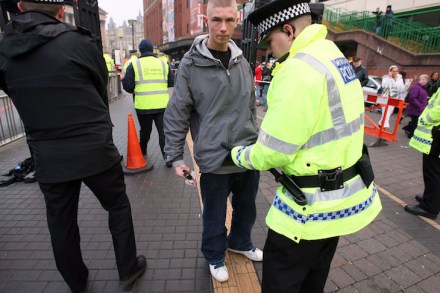
When I was working as a speech writer in the Home Office, under Theresa May, one of her special advisers told me that she wanted to give a statement to parliament on the police's use of stop and search. Part of the motive for doing this, he explained, was political: stop and search is a policy which consistently alienates members of the black community. I was told that it would help the home secretary's standing with Afro-Caribbeans if she made a statement that was critical of the police's use of stop and search. The grounds would essentially be that the tool was racist, or at least used by the police in a racist way: the statistics demonstrated that you were six or seven times more likely to be stopped and searched if you were a member of an ethnic minority.

In the bedroom, with a carving-knife

From our UK edition

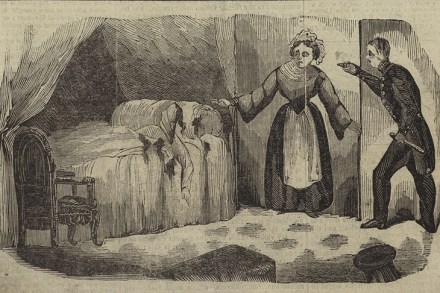
Early on the morning of 6 May 1840, a young housemaid in a respectable Mayfair street discovered that her master, the elderly and mildly eccentric peer Lord William Russell, had been murdered in his bed. His throat had been hacked at like a joint of meat, slicing through the windpipe and almost severing his head. It turned out not to be much of a whodunit. Within a few days, a young Swiss-born valet in the house named François Courvoisier was taken away for questioning, and faced by a pile of circumstantial evidence eventually he confessed to the crime. The real question is why he did it.

Another Robert Redford obituary for the heroic white misfit

The Old Man and the Gun is a second farewell to film for Robert Redford. His first farewell, All is Lost (2013), made occasionally heavy weather of allegory on the high seas — the lone American yachtsman, asleep in his cabin despite the storm warning of 2008, springs a leak when his boat collides with a Chinese shipping container. This time, Redford is back on American soil, and on familiar ground, as the geriatric bank robber Forrest Tucker. After an allegory about the old man and the sea, the myth of The Old Man and the Gun. In Oklahoma in the early 1980s, Forrest meets the widowed Jewel (Sissy Spacek) when her car has broken down and his is being pursued by the police.

robert redford the old man and the gun

The problem with hate crime | 16 October 2018

From our UK edition

It always amazes me that people think it is normal and acceptable to have hate-crime legislation. To have laws which allow for the harsher punishment of people who entertain prejudiced thoughts while committing an offence. To have it written into the actual statute books that the man who punches a Buddhist because he hates Buddhism can be punished more severely than the man who punches a Buddhist because he hates that individual Buddhist for some reason. When are we going to twig that this represents the punishment of thought, of ideology, of belief (warped belief, but still)? I don’t like that Britain has become a country in which people, especially the political class, think it is okay for the state to punish individuals for what they think.

Could this summer see a repeat of the 2011 riots? | 24 July 2018

From our UK edition

The heatwave is on and reports of London's crime wave are widespread, with crime up dramatically in the last year: could a repeat of the 2011 riots be on the cards? Predicting riots is tricky but sometimes there are clues: the weather plays a part; and so too does the economy, community cohesion, social morals and other factors that can combine to lead to outbreaks of widespread disorder, just as they did seven years ago on the streets of the capital. Of course, 2011 wasn't the only time people intent on violence have taken to the streets of Britain in recent years.

Trigger-happy madcap

From our UK edition

This is a biography that begins with a bang, swiftly followed by puddles of blood, shrieks of ‘Murder!’ and a chase through the foggy streets of Victorian London. On 8 December 1854, a French émigré was walking through Fitzrovia, close to the heart of radical London, having recently left a pistol-shooting range in Westminster. He had a companion: a mysterious woman with a letter in her pocket and unknown intentions in her heart. It was a cold, wet night. At just past eight o’clock, they arrived at 73 Warren Street, a narrow town house near Tottenham Court Road, where George Moore (a soda water manufacturer who had employed the émigré as an engineer) lived, and were shown into the plush parlour to wait for him.

The Spectator Podcast: Trump vs Iran

From our UK edition

What comes after the end of the Iran nuclear deal? Is Donald Trump an expert diplomat worthy of a Nobel Peace Prize, or a maniac let loose? Why don’t ethical millennials care about the moral cost of their drug habits? And are emojis ruining children’s abilities to communicate? Find out about all this and more in this week's Spectator Podcast. On Tuesday, President Trump announced his decision to take the US out of the Iran nuclear deal. The decision has come despite appeals from Angela Merkel, Emmanuel Macron, and even our own Boris Johnson, for the US to stay in the deal. Christopher de Bellaigue writes in this week’s magazine that this was a gross miscalculation, but Dominic Green can understand why Trump did it.

Britain is still broken. Here’s how to fix it

From our UK edition

Nearly six years ago, in The Spectator, I explained how and why the gang culture that exploded in the 2011 riots was a ‘taste of the Britain to come.’ I also explained how the left-liberal establishment had allowed the conditions for gang crime to flourish while ignoring the solutions. Sadly, this wasn’t difficult to predict and with the 2018 killing toll in London passing 50, the same questions need to be asked again. The good news is that we can stop the carnage on our streets within a week. But firstly it is important to draw a clearer picture of the causes.

The Tories’ reputation for law and order is in tatters

From our UK edition

Historically the Conservative party has been known as the party of law and order. It is now in the process of losing that reputation and Home Secretary Amber Rudd’s recent remarks show why. Stung by complaints that cutting the number of police officers by over 20,000 since 2010 has contributed to the rise in violent crime, she said: ‘In the early Noughties, when serious violent crimes were at their highest, police numbers were rising. In 2008, when knife crime was far greater than the lows we saw in 2013/14, police numbers were close to the highest we’d seen in decades.’ Reduced resources were not, therefore, to blame for rising violence.

Sunday shows round-up: Christopher Wylie – ‘I want a democratic mandate for Brexit’

From our UK edition

The former director of research at Cambridge Analytica, the data-mining firm notoriously suspended by Facebook for harvesting details of up to 87 million Facebook accounts without their consent, has told Andrew Marr that the 2016 referendum on the UK's membership of the EU should be re-contested. Wylie's suggestion comes after it was highlighted that Vote Leave - the official Leave campaign - had employed the services of AggregateIQ (AIQ), a company which Wylie claims to have founded in order to support Cambridge Analytica. AIQ was also suspended from Facebook on Saturday for improperly receiving users' data, charges which AIQ denies.

How should the police and the politicians respond to this spate of murders?

From our UK edition

With more than fifty murders in London already this year and knife crime up by 21% in England and Wales according to the latest figures, there’s a clear need for action on violent crime. As I write in The Sun this morning, the government’s long awaited violent crime reduction strategy is out next week. The Home Secretary Amber Rudd briefed the Cabinet on this strategy a few weeks ago. Cabinet Ministers tell me that it is impressive but very much focused on early intervention: the aim is to stop people from turning into violent criminals in the first place. This is a sensible strategy. But there is a need for action now. First, there needs to be more use of the Section 60 power which allows the police to stop anyone in a given area.

The gang in our park have united us… in impotence

From our UK edition

The baby, unbothered by diesel fumes, enjoys an outing down the main road through London N1. Each passing bus is marked by a fat and pointing finger: ‘There!’ On the way to our local park last Thursday, we had just begun to cross the road, pointing up at the green ‘walk’ man, when a scooter tore straight through a red light and cut across in front of the pram. ‘What the hell?!’ I shouted and raised an angry hand. To my surprise, instead of speeding off, the driver jammed on his brakes and skidded round to face me. He was a boy of about 15 or 16, black, slight, and snarling with fury. He said: ‘You want to start? You really wanna start this?’ The baby and I were mid-road.

The DPP was never much cop

From our UK edition

An interesting development for our police force, then. In future they do not have to believe everything someone tells them, in the manner of a particularly credulous village idiot. They may be allowed, possibly encouraged, to exhibit a degree of curiosity in their line of work — have a bit of a think about things, maybe even ask questions. I do hope they are able to cope. They have been institutionally cretinised for a long while now — ever since Alison Saunders was appointed Director of Public Prosecutions in 2013. She is stepping down when her contract comes to an end in October and is anxious to take up her new career opportunity as under-manager of a whelk stall in Cleethorpes (I think I’ve got that right).

City slacker

From our UK edition

According to people at City Hall, Sadiq Khan writes some of his own press releases. I can believe it: they’ve certainly become a lot more excitable since he took over. I like to imagine the Mayor of London, late at night, combing the thesaurus for fresh superlatives to bugle his ‘unprecedented programme of far-reaching improvements’ for the taxi trade (allowing black cabs in more bus lanes) or his ‘bold package of measures’ to revive street markets (creating a London Markets Board and an interactive map). One release even panted that Khan had ‘personally scrutinised’ the New Year’s Eve fireworks display ‘to make the acclaimed event the most exciting yet’.

The Tories are risking their reputation as the party of law and order

From our UK edition

Theresa May’s Home Office record is normally off limits at cabinet. But when ministers discussed the government’s strategy for reducing violent crime on Tuesday, Boris Johnson took issue with what the Prime Minister regards as one of her key legacies: the dramatic reduction in stop and search. He argued that more stop and search was needed to deal with a spike in crime. What went unsaid — but what every-one around the cabinet table was acutely aware of — was that this was the opposite of Mrs May’s approach as Home Secretary. The exchange was pointed. ‘They irritate each other,’ one cabinet minister observed to me afterwards. They also have form on these matters.

The very thing keeping tourists safe in Jamaica? Crime

From our UK edition

Are you looking at your tickets to Jamaica and thinking: why on earth did I decide to go there, with its army curfew, state of emergency and spiralling homicide rate? The Jamaican government has just extended its state of emergency until May and has advised tourists not to leave their hotels unaccompanied. But don’t go online just yet to see if you can scrabble some money back on your flight. I am writing this while sipping a rum and listening to laughter and reggae in my local bar a few miles from the picturesque parish of St James, where in the past six months 335 people have been murdered, and no one here, me included, feels the least bit scared.

Books Podcast: Mick Herron

From our UK edition

My guest in this week’s podcast is the incomparable spy writer Mick Herron - these days, happily, a less and less well kept secret. He’s the author of the Slough House stories - funny and gripping novels about an awkward squad of failed James Bonds under the aegis of the wonderfully unspeakable Jackson Lamb. The latest is London Rules, and Mick joins me to talk about crap spies, finding a voice, the necessity of killing off the odd main character, and the real life Slough House. You can listen to our conversation here: And if you enjoyed that, do subscribe on iTunes for a new episode every Thursday.

Our best weapon

From our UK edition

According to the latest recorded crime figures in England and Wales, there has been a steep rise in violence. Knife offences are up by 21 per cent in the year to September 2017; in London alone the increase is 30.2 per cent — that’s 13,715 incidents. How should police deal with this disturbing trend? One view is that they need to target likely offenders, especially through an increase in the use of stop and search. However, this has been resisted by human-rights and anti-racism campaigners, who regard the use of such powers as heavy-handed and intrusive. Tottenham MP David Lammy has been particularly vocal, calling stop and search ‘inherently unfair’ because it is used disproportionately to target BME people.

Living in fear

From our UK edition

January was a particularly violent month in Sweden. A 63-year-old man was killed in Stockholm by a hand grenade lying in the street. A Dutch exchange student was hit by a stray bullet during an execution-style killing at a pizza restaurant in Uppsala. In Gothenburg, a hand grenade was thrown into a flat and exploded in the kitchen — the same predominantly immigrant-populated suburb where an eight-year-old British boy was killed in a grenade attack less than two years ago. In Malmö, a grenade was tossed at a police station and exploded outside. So it has not, so far, been a very happy new year. For Swedes, this has become a familiar theme. Gun violence is on the rise, with daylight shootings and without regard for bystanders.

Theresa May’s stop-and-search shake-up is costing lives

From our UK edition

Theresa May has a very big failure to her name, but strangely few people seem to want to pick her up on it. The latest crime figures show a sharp increase in recorded offences in England and Wales, especially in knife crime, which rose 21 per cent to 37,443 incidents. This continues a trend which began four years ago, since when the number of recorded knife offences has risen by half. It reverses an equally sharp fall in recorded knife crime between 2010, when Theresa May became Home Secretary, and 2014. What happened to bring about the end of what looks like a very successful period of tackling knife crime?