Capitalism

New York crime caper: Cool Machine, by Colson Whitehead, reviewed

Cool Machine, the final novel in Colson Whitehead’s Harlem trilogy (following Harlem Shuffle and Crook Manifesto), is another tour de force and a fitting conclusion to the Uptown peregrinations of his endearing protagonist Ray Carney, a successful Harlem furniture salesman and part-time fence. It’s an old-school crime caper, set in 1980s New York against the backdrop of Mayor Koch’s rapidly gentrifying city, told in three interconnected sections excoriating Reagan-era capitalism. The ubiquitous construction works, graffiti and corruption are fuelled by the twin deities of power and money.

My Memorial Day pilgrimage to a Pennsylvania Walmart

From our US edition

Here in the US, Memorial Day – which falls on the last Monday in May – is, officially, an occasion for mourning and honoring military personnel who have given their lives in service to this great country. Unofficially, it is an occasion for charred hot dogs, 24-packs of Bud Light and nationalistic merchandising usually confined to airport gift shops. In our household, however, Memorial Day marks something different entirely. It’s the day we make our annual pilgrimage into the heart of consumer capitalism: a Walmart in East Stroudsburg, Pennsylvania. By now you might know that I live in Manhattan. You might, therefore, be wondering why exactly we’ve adopted this strange ritual, necessarily involving a rental car and gridlocked traffic on the George Washington Bridge.

Among the green conservatives

From our US edition

The American Conservation Coalition last week held its first official summit, hosting a vibrant crowd of over 250 people. The organization boasted speakers such as Michigan congressman Peter Meijer, New Hampshire governor Chris Sununu and conservative radio host Jason Rantz. Cockburn was lucky to attend — and even luckier to partake in the open bar. The many speakers held talks and panels on topics such as China as a player in the clean energy arms race, nuclear power as an alternative to fossil fuels, and the deregulation of free market economies. While it is still far from the mainstream attitude in conservative thought, the ACC represents a growing minority of people who recognize climate change as a threat, only without the left's “doom and gloom.

How the 18th-century Panopticon inspired today’s giant distribution hubs

The future of work is increasingly on our minds. Now that AI is coming for our jobs, will we end up supervising or being supervised by it? One way of spending the time freed up by smart tech is to read Control Science, an economic history showing how work rules were established and have since come to dominate our lives. The book’s timeline covers the past 400 years, its settings ranging across the world from North America to Europe to Japan and back to the US. A historian of labour, Henry Snow dissects four entrenched ideas: that society is a mere collection of individuals; that they are solely driven by selfishness; that they are therefore incapable of self-administered planning; and that ‘everything is – and should be – a market’.

Will we ever stop predicting the end of civilisation?

In the sphere of British environmentalism, Paul Kingsnorth is admired as a maverick in thought and deed. Starting out as a journalist with the Ecologist magazine, he co-founded the Dark Mountain Project, an online portal devoted to stories about the more-than-human world in a time of ecological collapse. On resigning from both, he retreated as a self-proclaimed ‘recovering environmentalist’ to an Irish smallholding, where he has embraced the Romanian Orthodox church. Against the Machine, his tenth book, is billed as a summary of his intensifying disillusionment with events in the past 30 years. It is a serious work leavened with sardonic humour and is by turns rich in unsettling ideas and deeply pessimistic.

Bolivia votes for ‘capitalism for all’

From our US edition

Bolivia has taken a decisive turn to the right after the Christian Democratic Senator Rodrigo Paz won the second round of the presidential election after years of left-wing rule left the country’s economy in chaos. Paz, 58, narrowly beat another right winger, Jorge "Tuto" Quiroga by 54.6 percent to 45.4 percent to take the presidency in the second round run off. He will be inaugurated on November 8. The landlocked country had been ruled by the leftist MAS (Movement Towards Socialism) party since 2006, which enjoyed enormous support from Bolivia’s indigenous Indian majority.

Bolivia

Can tariffs replace income taxes?

From our US edition

Can tariffs replace income taxes paid by Americans earning an income under $200,000 annually, as President Trump has suggested? We seem to have entered a new world in 2025, or rather, reincarnated an older America whose tax receipts were heavily built on tariff payments. U.S. Secretary of Commerce Howard Lutnick recently stated that tariffs could replace income taxes paid by Americans making up to $150,000 per year. And certain economic nationalists have urged that there is a vital causal connection here worth recalling in an “American system” of tariffs and protectionism, and the growth of American industry. They argue that America’s Gilded Age wasn’t regressive economically; in fact, the country exploded in growth, commerce and inventions.

Tariffs

Progress is destroying the planet: the rants of a self-hating American

In what may be the only joke in this book – it is hard to tell, because quite often reading it I started to believe the whole thing was an elaborate parody – Samuel Miller McDonald begins his acknowledgements by expressing his ‘infinite thanks’ to his editors (he merits six of them) on the grounds that ‘no work can be good without good editors’. Apparently some works can’t be good even with good editors – unless the author is trying to tell us that his, like his oeuvre, weren’t especially good at all. Progress is a prolix, tendentious book, radiating self-regard, arrogance and flannel.

What a slippery, hateful toad Fred Goodwin was

Make It Happen is a portrait of a bullying control freak, Fred Goodwin, who turned RBS into the largest bank in the world until it came crashing down in 2008. Fred the Shred’s character makes him a tough subject for a drama. His morning meetings were called ‘morning beatings’ by terrified staff. He ordered executives to pitch him an idea in the time it took him to eat a banana. Inciting arguments between staff amused him and he once sacked an employee for saying ‘I tried’ instead of ‘I succeeded’. He was obsessed with colours and fabrics and he personally oversaw the design of the carpets and even the handwash at the bank’s headquarters. But James Graham’s play offers us very few clues about the origins of his character flaws.

The mask slips at Socialism 2025

From our US edition

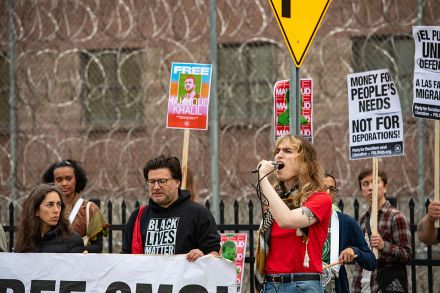
From college campuses to the media, socialism is increasingly getting repackaged as a solution to every problem: homelessness, housing, policing and education. For a generation grappling with high rent, student debt and political distrust, the collectivist utopia may sound like the moral, modern choice. But it isn't – and this year’s Socialism 2025 conference in Chicago proved just why it is doomed to failure. The conference brought together scholars, activists and self-styled revolutionaries to sketch out what a “just” society might look like. The vision was as radical as it was impractical.

Socialism

Rumpelstiltskin retold: Alive in the Merciful Country, by A.L. Kennedy, reviewed

For Anna, wickedness istypified by the villain ofa fairy tale –Rumpelstiltskin The narrator of Alive in the Merciful Country is a woman weighed down by past trauma ‘like a bag full of broken kaleidoscopes’. Anna is a teacher steering her nine-year-old pupils through the 2020 lockdown while coping with life as the single mother of a troubled teenage boy, trying to rebuild trust after a shattering betrayal: ‘I didn’t ask to be in a spy scenario, or an action scenario, or a political thriller, but I recurringly have been.’ Damaged by life, she has learned to question misuse of power, personal and political: quis custodiet ipsos custodes indeed. Fans of A.L. Kennedy will love this book.

Why America has more lawyers per capita than any other country

From our US edition

Despite the sharp polarization of American politics, there is surprising agreement on what went wrong with capitalism. Whether the writer or politician is coming at this question from the left or right, the blame often falls on four decades of “small government” ideology and free market orthodoxy since Ronald Reagan and Margaret Thatcher. Whether the flaw in question is slowing productivity growth, the rise of oligopolies, the export of jobs, or income and wealth inequality, its source is traced to excessive faith in the “magic of the market.” Capitalism’s flaws are “market failures.” The problem: this narrative is wrong on the facts.

lawyers

Western economies are failing – but capitalism isn’t the problem

Real wages have barely increased for more than a decade. Banks have had to be bailed out, and many still exist on a form of state life support. Growth has stalled, taxes are at 70-year highs, yet governments are still bankrupt. Unless you happen to be part of a tiny plutocracy made up mostly of tech entrepreneurs and financiers, there has rarely been a point, at least since the nadir of the mid-1970s, when the economic system seemed beset by quite so many challenges as it is today. The left has smartly stepped into the intellectual space that has been created with a series of well-timed polemics, which, while they vary in precise analysis and on solutions, have at least one thing in common. They argue that the system is fundamentally broken, and it will take radical action to fix it.

Milton Friedman – economic visionary or scourge of the world?

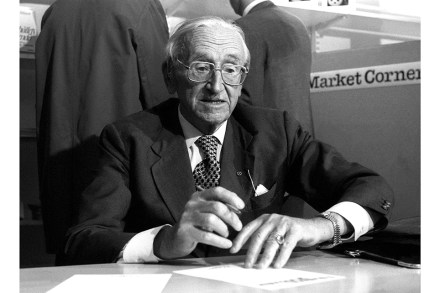
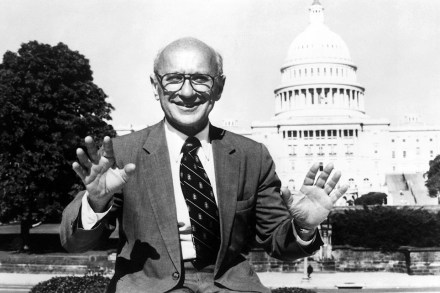
The Keynesian economist Nicholas Kaldor called Milton Friedman one of the two most evil men of the 20th century. (Friedman was in distinguished company.) The ‘scourge’ he inflicted on the world was monetarism, a product of what Kaldor called Friedman’s Big Lie – of which more later. Moral judgments aside, how does Friedman rank in the world of 20th-century economists? By common consent, he stands with Friedrich Hayek and John Maynard Keynes at the apex of his profession. All wrestled with the defining problem of their age: the radical economic and political instability of the 1920s and 1930s. Their responses reflected their national situations.

A vigorous and persuasive defense of capitalism

From our US edition

“Under capitalism,” John Kenneth Galbraith once quipped, “man exploits man. Under communism, it’s just the opposite.” For a left-wing economist such as Galbraith, this was about as close as one might get to exalting capitalism — damning by faint praise. But in The Capitalist Manifesto, a lively, closely argued polemic by the Swedish historian Johan Norberg, we find a much more vigorous and persuasive defense of the most successful economic system the world has ever seen, a mechanism for sowing widespread abundance and lifting billions out of penury. “The argument for capitalism,” Norberg boldly declares in his preface, “is not that capitalists always behave well... but that they often do not behave well unless they have to.

capitalism

The astonishing truth about 007

The novel as a form is a fundamentally capitalist enterprise. It was invented at the same time as capitalism – Robinson Crusoe tots up his situation in the form of double-entry bookkeeping. Its interests dwell on the disparate and unequal natures of human beings and feed off rivalry, social transformation, moneymaking, profit and loss. No rigid feudal society has managed to create an effective school of novelists; and having once struggled through Cement, Fyodor Gladkov’s classic of socialist Soviet literature, I would say that systems dedicated to forcible equality also struggle.

The new corporatism that’s killing capitalism

From our US edition

Over the years since the financial crisis, economic power and wealth has become ever more concentrated in fewer hands. This is something leaders have acknowledged, and policymakers have tried to do something about. And yet, despite brave talk of breaking up mega-giant companies, anti-trust efforts have been anemic, as most recently demonstrated by the failure to stop Microsoft from swallowing game maker Activision. The future looked a little brighter in the immediate aftermath of the pandemic. There were signs of a grassroots resurgence, with a strong uptick in new business formations in the United States. But since then, as interest rates have risen and regulatory pressures have increased, there has been a slackening off of new firms.

the new corporatism

Guardian writer doesn’t get why Americans love fall

From our US edition

We Americans are used to the Brits weighing in on our affairs. I try to view their concerns with compassion, as a hard-to-kick habit leftover from the pre-Revolution days, or an endearing tendency they can’t help, like when your mother continues to remind you to wear a coat in winter even after you’re well into your forties. But our English cousins have finally crossed the line. Writing for the Guardian, Arwa Mahdawi vilifies that which we Yanks hold most sacred: “the season they call ‘fall.’” According to Mahdawi, autumn is “overrated” “rubbish.” Instead of pumpkin-spicing everything, she suggests we elevate another squash variety, “the humble courgetti,” as our favorite flavor profile of the season. I simply cannot let such abuse go unchallenged.

Four vectors of danger for America and the West

From our US edition

Fifty years ago, everything seemed to be breaking down, kind of like it is now. In fact, it can feel like the 1970s redux. Searing issues of war, ecology, race, and “malaise” have never really disappeared. A silent majority, political schism, limits to growth, and price inflation — all are here. Yet there are new uncertainties too. Even to optimists, debt-induced fragility clouds the economic horizon. Investor Charles Munger notes that bitcoin actively undermines the Federal Reserve System; any gain comes from trading, not from creating products, crops or rents. As fantastic as non-binary sexuality, cryptocurrency points to additional contemporary follies.

Modern capitalism has failed my son

A light was on in the caravan site office so I went over to try and buy a gas canister. Come Easter the little Cornish seaside resort will be heaving. Now a stiff north wind blew in off the sea and it felt like the dregs of winter still. The site office was shut but a woman came out and said she was expecting a delivery tomorrow but she didn’t know yet how much a canister would cost. Nor did she know of anywhere open where we could get something to eat. She thought there might be a place down by the beach. Nobody had managed to get any seasonal staff yet and everything was a bit uncertain, she said. So me, my son and my two grandsons went down to the parade of seaside shops with our chins in our collars. There were no lights on or any people about.