Cancer

Decluttering is the ultimate act of love

“You are going to die before me and leave me to deal with this, and I will curse your soul for all eternity,” I once said half-jokingly to my husband over a glass of wine. We were having one of our regular conversations about what he was going to do about his late uncle’s possessions, which had arrived at our house in lorry-loads about a year after we had married. “Why don’t you do half an hour of sorting every weekend? I will help you,” I would suggest in reference to the multiple barns, basements and attics at our farm, which were now piled high with three generations’ worth of male hoarding. But with an increasing number of children in the house and no sense of urgency, progress was slow.

declutter

Is your wellness smoothie giving you cancer?

There’s a question I’ve started being asked at work. Given I’m a psychiatrist, it isn’t one I’d ever expected to hear: ‘Do I have cancer?’ A young woman with anxiety wants to know whether the lump on her neck is sinister; she has been watching a great deal of TikTok. A man in his late thirties, in for a routine review, mentions in passing that his sister has been referred for a colonoscopy and wonders whether he should be too. At a dinner party a few weeks ago, a friend leant across halfway through her low-alcohol natural wine and asked me, in a small voice, whether it was true her generation was getting cancer in their thirties. Yes, I said, perhaps a little too bluntly. She looked rather panicked for the rest of her evening.

The life of Karl Zinsmeister

From our US edition

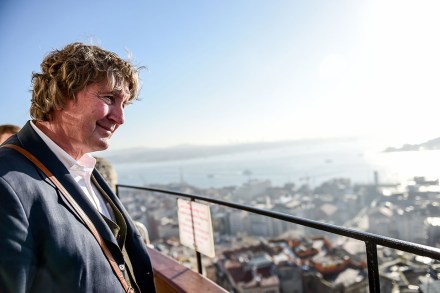
It’s strange interviewing a friend who is dying, but Karl Zinsmeister is at peace. I met Karl in Washington, DC, in the spring of 1981, when we two Upstate New York hicks were new to the staff of Senator Pat Moynihan. The first thing I learned about him was that he and his girlfriend (and later wife) Ann, while on some do-gooder mission in Africa, had wandered into Tanzania and been held on suspicion of being spies. (They weren’t.) Karl threw himself into both intellectual and manual labor with fierce enthusiasm, doggedness, even hard-headedness. Over the past 45 years he has edited magazines, renovated ruined tenements, been embedded in Iraq, raised three kids, lived with Ann on a houseboat, served as White House chief of domestic policy and produced more than 20 books.

karl zinsmeister

A supernatural western: Tom’s Crossing, by Mark Z. Danielowski, reviewed

Mark Z. Danielewski is best known for his House of Leaves, a typographically delirious horror novel about a manuscript written by a blind man describing a film which showed an impossible house. It seemed to exhaust a particular kind of postmodernism of footnotes, cryptography, metatexts, pop culture and more, yet remained at heart a story about grief. Tom’s Crossing is more immediately accessible, but it is every bit as clever and even more emotionally devastating. The bulk of the action takes place over five days running up to Halloween in 1982, although with a preface, ‘Some of what happened before’, and a longer epilogue, ‘Some of what happened after’.

Hands off my prostate

Too much information. That’s what you’re about to get. I wouldn’t read another line if I were you. I will be talking, at length, about my prostate and, by extension, my old fella and why I will not let the medical clergy anywhere near either of them, not the private medics or the chaotic maniacs who work for the NHS. I don’t mind whipping it out for you, though – and so this is an article which is both repulsive in its personal revelatory details and will also, if anyone takes it seriously, result in 230 premature deaths over the next decade or something. I don’t think it’s going to get me on the shortlist for the Orwell prize, then. But telling unpopular truths hasn’t worked very well either, so never mind.

Joe Biden’s puzzling legacy

From our US edition

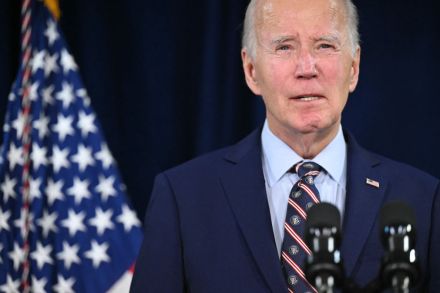
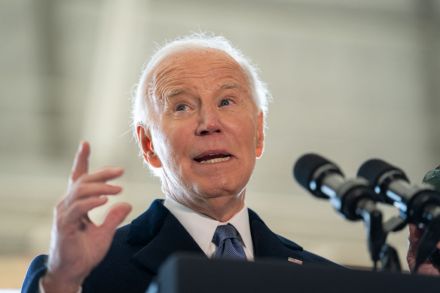
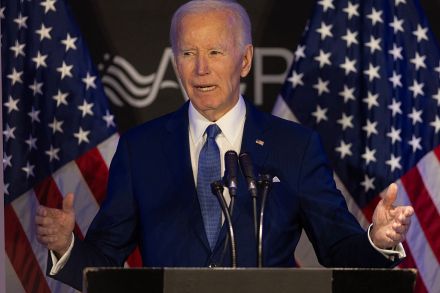
The commentariat is awash with experts on prostate cancer. What precipitated this sudden acquisition of specialized medical expertise? Why, the announcement that former president Joe Biden is suffering from stage four of the big PC which, the news reports are gasping, has metastasized to his bones. Let me pause to join Donald Trump in expressing my best wishes to the former president for “a fast and successful recovery.” Let me also recall how suddenly the world became populated with epidemiologists after the Wuhan flu led Anthony Fauci, Deborah Birx and the entire bureaucratic establishment to discover their inner totalitarian hankerings. The revelation about Biden’s health is a sort of synecdoche for a much larger universe of pain.

Biden

Will the Democrats learn anything from the Biden decline cover-up?

From our US edition

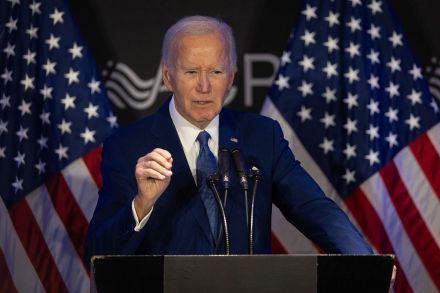
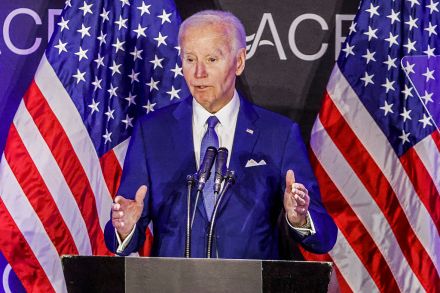
As Jake Tapper and Alex Thompson kicked off the promo tour for Original Sin, their explosive new book exposing the far-reaching cover-up of Joe Biden’s decline during his final years in the White House, some tragic news broke regarding the former president’s health. Biden had been diagnosed with an aggressive form of prostate cancer that has already spread to his bones.  The revelation naturally generated sympathy. But it also gave rise to an argument that often accompanies tragedy in the lives of the powerful: that tough questions about their record should be shelved out of respect.

democrats

Why Biden’s cancer diagnosis has been greeted by a dose of skepticism

From our US edition

Through the Covid-19 pandemic any dissent from the official medical story told by the CDC, Deborah Birx and Anthony Fauci would land you in detention. Other medical experts who went against the recommendations, no matter how they were being presented, found themselves censored by the government, demonetized by social media platforms and vilified by their colleagues. This did enormous damage to the idea of “expertise.” We are still coming to grips with the effects of Joe Biden’s office’s announcement this past Sunday that the former president had just been diagnosed with stage-four prostate cancer. The revelation grabbed the attention of not only the usual political and media pundits, but of medical professionals as well.

biden

Democrats should call for more honesty about Joe Biden’s health

From our US edition

The announcement of former president Joe Biden’s diagnosis for advanced prostate cancer is of course a sad event, as it would be with any president’s cancer diagnosis. For the human side, the prayers and sympathies of the nation should be with him and his family. But coming as it does after years of hiding the true nature of Biden’s health – including repeated lies told by his staff, family and those closest to him to the American people – it should lead to even more questions about the truth of his condition, and what we were not told as voters who deserve to trust our top institutions to be honest to us.

‘Highly likely’ Biden had prostate cancer diagnosis in the White House

From our US edition

How does metastatic prostate cancer “suddenly” appear in someone like Joe Biden? It doesn’t appear overnight, it festers. In rare but dangerous cases, prostate cancer bypasses the usual slow growth and strikes fast, especially in older men. If he wasn’t screened regularly, or had an aggressive subtype that evaded PSA detection, it could have advanced under the radar. But how can we imagine that a President was not screened properly? Prostate cancer is the easiest cancer to diagnose. The PSA blood test shows the rate of cancer cell growth. Even with the most aggressive form, it is a 5-7 year journey without treatment before it becomes metastatic. Meaning, it would be malpractice for this patient to show up and be first diagnosed with metastatic disease in May 2025.

Joe Biden
joe biden

Joe Biden’s cancer diagnosis is already being exploited

From our US edition

This afternoon Joe Biden’s private office announced that the former president has been diagnosed with prostate cancer. “The cancer appears to be hormone-sensitive which allows for effective management,” according to his team. “The president and his family are reviewing treatment options with his physicians.” The details provided feel important. Most men who are diagnosed with prostate cancer in the United States – roughly one in eight over a lifetime – do not die from it. Yet Biden’s team specified in the release that the cancer has spread to other tissue in the body. This suggests the former president is battling a more aggressive form of cancer. So this release is not simply a health update: it is preparing the public for potentially worse updates in the future.

Activist-academics push to Make America Teetotal Again

From our US edition

What constitutes a safe level of drinking? For some activist-academics there is none – and they are loudly lobbying for alcohol to be treated like tobacco in official US health advice. The Dietary Guidelines for Americans are under review and will be updated this year. Currently they recommend moderation: two drinks or less in a day for men and one drink or less in a day for women. Pressure, however, is being applied for a new recommendation: no safe level.But that would fly in the face of decades of evidence that has shown those who drink in moderation live longer than those who do not, mostly because alcohol consumption lowers the risk of heart disease, stroke and diabetes. The current guidance from 2020 is roughly where the sweet spot is from a health perspective.

pregnancy

Is it time to clean up my act?

I was having a drink in the Bishops’ Bar in the House of Lords last month when I was introduced to a 92-year-old peer called Lord McColl of Dulwich. I asked him if he’d known my father, Michael, who was made a life peer in 1978. Had they overlapped? He told me he hadn’t merely known him; he’d operated on him. If I have mild indigestion I think I’ve got stomach cancer; if I get a headache I decide it’s a brain tumour I realised with a start that the man I was talking to was the famous surgeon Ian McColl, who was made a life peer in the Queen’s birthday honours list in 1989. As professor of surgery at Guy’s Hospital, he treated my father for bowel cancer in 1983, an operation so successful that Michael had gone on to live for another 19 years.

Fools will love it: We Live in Time reviewed

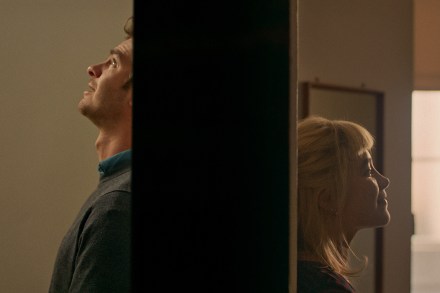
We Live in Time is a rom-com (of sorts), starring Florence Pugh and Andrew Garfield. They have terrific chemistry and elevate the material by around 1,000 per cent (a conservative estimate), but it’s still deeply annoying. It’s a weepie – a cancer story as well as a love story; at some screenings tissues were handed out beforehand. But though I am a crier by nature, my tears were not jerked. I checked – and double-checked: eyes dry as anything. I couldn’t get beyond the phoniness. You might do better. Pugh (Almut) is an ambitious, high-end chef about to open an ‘Anglo-Bavarian restaurant’ serving ‘Douglas fir parfait’. (Each to their own.

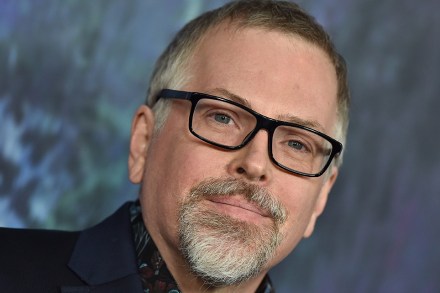
The mystery of Area X: Absolution, by Jeff VanderMeer, reviewed

I have to confess that I am not a fan of horror fiction. I have a stack of unread H.P. Lovecrafts sent to me by enthusiasts. M.R. James scares me silly. Even Elizabeth Bowen’s ghost stories remain neglected among her other much-loved books. I have, however, been impressed over the years by writers usually identified as belonging to the movement described in the late 1990s by M. John Harrison as the New Weird, which marries chiefly supernatural themes to realism or naturalism. As a stylist, Harrison remains the greatest of these writers. They included Angela Carter, China Miéville and Jeffrey Ford. The movement is naturally associated with the science fiction New Wave, whose best known practitioner was J.G.

Politicians aren’t discussing Britain’s woeful cancer survival rates

Last week, amid a flurry of election policies and debates, a striking report found that cancer survival in England currently lags up to 25 years behind European countries like Sweden, Norway and Denmark. From bowel cancer to breast diagnoses, England is firmly lagging behind our Scandinavian neighbours. What’s to blame? Why aren’t major parties discussing how this decline could be reversed in their manifestos? The revelation by Macmillan Cancer Support is the legacy of many years of underfunding, resulting in delays to diagnosis and treatment. England has less scanners, beds, cancer specialists & nurses per head of population than comparable countries.

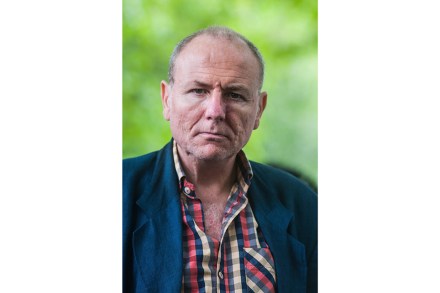
The diary of a dying man: Graham Caveney’s poignant cancer memoir

Reading this third memoir by Graham Caveney, a knot in my chest tightened. It wasn’t only because it’s a cancer memoir; it was because the unfolding of history so often shows that abuse begets self-destructive behaviour. To parody Auden: I and the public knowWhat all healthcare staff learnThose to whom evil is doneDestroy themselves in turn. Caveney’s two previous memoirs, The Boy with the Perpetual Nervousness and Agoraphobia, outlined his working-class childhood in Accrington, Lancashire, and his winning of a place at a Catholic grammar school. But where the school succeeded in helping him achieve his aim of becoming a writer, it also screwed with his head, because he was not only taken to plays but also played with by a member of staff.

King Charles’s cancer and the future

From our US edition

On September 23, 1951, King George VI was operated on for cancer. It was a grueling, dangerous procedure, conducted at Buckingham Palace by Clement Price Thomas, a leading chest surgeon. The king, unsurprisingly, was miserable at the idea, saying, “if it’s going to help me get well again, I don’t mind, but the very idea of the surgeon’s knife again is hell.” Yet he was kept unaware of the seriousness of his illness, instead being informed that the cause of his health problem was nothing more urgent than obstruction in one of his bronchial tubes, which would require a “resection” of the lung, and that it would cure the “pneumonitis” that he believed he was suffering from.

Charles

A war reporter bravely faces death – but not from sniper fire

When you are a foreign correspondent and have covered wars in dozens of countries, the last place you’d expect a threat to your life to come from is your own cells. Yet this was the predicament in which the New York Times reporter Rod Nordland found himself in July 2019. Despite close shaves in Lebanon, Iraq, Afghanistan, Central America and Darfur, he only really became aware of his mortality after collapsing with a seizure in India and discovering the existence of a ‘space occupying lesion’ (SOL) in his brain – a euphemism for a growth, benign or malignant. On transfer to a hospital in Manhattan, Nordland learned that his was a stage 4 glioblastoma multiforme, a primary brain cancer with a poor prognosis.

Fani Willis self-immolates in Georgia court

From our US edition

Against the advice of her lawyers, Fani Willis just gave an incredible display in court. Her rise to the stand in Georgia to defend herself against her surrounding foes played out like a scene from a latter-day Tom Wolfe novel. The erstwhile recipient of laudatory coverage from the New York Times, TIME magazine and the rest of the #Resistance media was now in the sights of an antagonistic case that the Gray Lady framed through a classically racist lens: the strong black woman, set upon on all sides by the judgement of mostly white and almost certainly racist southerners.

fani willis