Cancer

‘Maybe I have the healing I need’: speaking to Father Paul Wierichs

From our US edition

It used to be you had to get in close to hear Father Paul Wierichs speak. For two years the former FBI chaplain couldn’t talk above a whisper. Now he is a little louder, but very hoarse; though he still struggles to swallow you can at least hear his voice. Bell’s Palsy keeps him from moving the left side of his face, and he has a difficult time seeing out of that eye. His scalp is bandaged where the doctors removed a growth. There’s cancer in his prostate, too. He’s still held onto a good amount of hair for his age and his troubles — but he expects to lose it to surgeries by the end of the month. “I wore my collar on 9/11,” Father Paul recalled on a frozen January morning in Queens. “I had to throw them out, because they were covered in dust.

Wierichs

Steve Scalise faces a few more obstacles

From our US edition

The likelihood of Steve Scalise's ascent to the speakership is high at this hour, with his 113-99 victory over Jim Jordan in the House Republican Conference meeting. But there are a few challenges ahead that could prove difficult in an upcoming afternoon of voting on the floor. Jordan's total was disappointing for his supporters, who had hoped the vote would effectively be flipped, leading Scalise to bow out and wait for another day, content with his continued role as majority leader. But Jordan's team is not exactly expert at whipping votes, and the abstention of eight members didn't help him any.  What Scalise brings, effectively, is a normal continuity of leadership.

steve scalise

Could I be pregnant?

At the age of 59 I thought it was time to get my body thoroughly examined. So last week I trotted off to a health clinic in west London. Not surprisingly, I got a mixed report. Mostly As and Bs, a couple of Ds, and several must-try-harders. The health check consisted of an hour with a man in green hospital scrubs, who I think was a nurse, followed by an hour with a female doctor. It was all trundling along nicely – my weight and BMI were both within the ‘healthy’ range – when something unexpected happened. After attaching electrodes to my body for the purposes of carrying out an ECG, the nurse asked me if I was pregnant. ‘I’m sorry?’ ‘Are you pregnant?’ he repeated.

Tales of the Midwest: The Collected Works of Jo Ann Beard, reviewed

Jo Ann Beard has said that one of the stories in this collection, although she does not specify which, took her more than 20 years to write and that there was a gap of eight months – during which she was working on the piece five days a week – between two of its sentences. It is true that her writing is remarkably condensed, not least in ‘Cheri’, the story of a real woman who had a particularly hideous case of terminal cancer (exacerbated by the fact that all pain medication made her vomit). Cheri Tremble contacted Jack Kevorkian, a euthanasia expert sometimes nicknamed ‘Dr Death’, so that he could help her end her life. As she begins to die, Cheri, in Beard’s version, wryly reflects: ‘The fear of dying tonight is nothing...

It’s not that hard to not be overweight

From our US edition

Being overweight, unless you’re a sixteenth-century Rubens model, ain’t the thing. But looking at America, where more than two-thirds of people are obese or overweight, you’d think thin is definitely not in. It’s well known extra pounds increase a person’s chance of heart disease, stroke and diabetes, along with the general discomfort of carrying around extra heft for which your frame wasn’t designed. Being overweight is also linked to increased cancer risk, and the New York Post reports: “In all, thirteen types of [cancer] were previously known to be associated with overweight body types — but now, that number has climbed to eighteen different cancers. And the risk of developing cancer begins when people are young — between the ages eighteen and forty.

overweight

One government agency is undermining Biden’s cancer moonshot

From our US edition

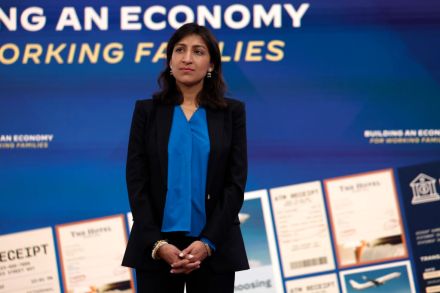
“I promise you if I’m elected president, you’re going to see the single most important thing that changes America: we’re gonna cure cancer,” then-candidate Joe Biden pledged in 2019. Virtually no one believed him at the time — and his administration is both complicating this promise and allowing China to leapfrog American medical innovation, potentially exposing the most sensitive health data of anyone who relies on Chinese companies for early cancer detection. Over halfway through his term in office, Biden’s own Federal Trade Commission, or FTC, is blocking a merger involving what advocates call a “cancer miracle” that could save up to 100,000 lives every year, concretely jeopardizing Biden’s already-unlikely promise to cure cancer.

ftc cancer moonshot lina khan

The farming year in 18th-century Sussex

You may (or may not) already know this, but researching the long 18th century in 2023 is rarely a life-affirming, paradigm-shifting conversation over wine with Plato in the groves of academe. It is seldom, even, a couple of tins of warm lager on the train home after guesting on an episode of Start the Week. It is sometimes, though, sitting in an archive transcribing the traces of long-vanished lives, conscious of the passing of time, quietly excited but still wondering if any of this actually matters, whether the partial recovery of someone else’s life really is the fullest way of living your own.

My week alone in a mess of morphine foils

After commuting to Marseille for nine days of radiotherapy, I spent the week alone in the cave, in bed, in a mess of morphine foils and empty coffee cups. Sister Catriona was in the UK overseeing the birth of her first granddaughter. Friends and neighbours kindly kept me supplied with staples. Every day the sun shone. The astounding insolence of the mosquitos and flies in this Indian summer has to be seen to be believed. Maybe I ought to change the sheets. The martins who live up here on the cliff are enjoying the unseasonal airborne feast, circling and swooping just outside my permanently open bedroom windows. Far below, the village celebrated its annual quince fair. From up here I could hear music and cheering.

The 100-year-old opiate had lost none of its potency

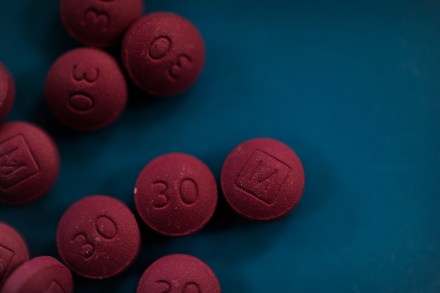
Our neighbour Michael is a keen and knowledgable attender of vides-greniers, the equivalent of our car-boot sales. His focus is on old bottles, full or empty, and old china, but he’ll pick up anything that piques his fancy. Some months ago, for example, he bought for €1 a glass tube of opium tablets issued to the French infantry during the Great War. Last week he reissued me with three of these little brown pills knowing that I had an abiding interest in the first world war and was using a modern version – white crystals of morphine sulphate in a red gelatine pill – to mask the pain I was experiencing due to the metastases in my bones.

My battle with an ant

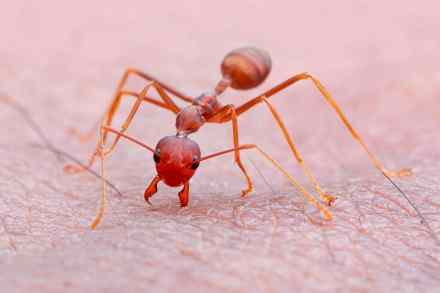
At eight o’clock in the morning a nurse injected me with a radioactive marker and told me to go away and amuse myself for three hours. The metal chairs in the waiting room were uncomfortable and there was nothing to rest my head against. So I wandered outside the 19-storey hospital to look for somewhere to lie down. Every outside space was taken up with parked cars, thousands of them everywhere you looked, some of them jammed in opportunistically at fantastic angles. Eventually I found a patch of rough grass between two car parks. The grass was strewn with stones, rubble and litter but I lay down gratefully, resting my head on my folded hoodie.

The joy of morphine sulphate

Two football friends, brothers, Mick and Pete, came to visit last week. We’ve been going to matches together since 1969, aged 12, in the good old skinhead days when the police enjoyed a punch-up as much as anybody. We used to travel all over the country on Lacey’s Coaches for away games and looked up to the older hooligans as gods. Those dockers were good honest scrappers, kind, fearless and very fun, in an era long before the sociologists or politicians started paying attention or hooligans wore designer jumpers. Mick still goes with Arthur, his son. Me and Pete haven’t been to a game since the team moved to its soulless new stadium. They were staying in Languedoc and made a day-long detour to see their old mate, whom they’ve always known as Clarice.

Richard E. Grant’s tribute to his wife leaves us shattered for his loss

Richard E. Grant pulls off a feat here. The title is twee but the content isn’t. With unselfpitying dash the actor-writer recounts caring for his wife, the dialect coach Joan Washington, through lung cancer last year (‘Living grief. Raw. Savage.’). He thoughtfully interleaves the heartbreak with glitzy showbiz recollections which help keep our peckers up, so we ricochet through time, from the Golden Globes to the Royal Marsden, from sedative injections to Star Wars. It’s an unusual structure, but it works – so, to use one of the author’s expressions, ‘Why bloody notsky?’ Grant’s daily diary-keeping is what makes the book.

When the bone pain gets bad, my inner NCO keeps me in check

In Frederic Manning’s classic Great War novel, The Middle Parts of Fortune, the shattered battalion shambles out of the line after battle to parade briefly before being dismissed. Noting a general loss of soldierly comportment as the infantrymen limp into camp, a watching NCO urges: ‘Come on, get hold of it now.’ As my bone pain worsens, passing milestone after milestone with dismaying rapidity, Manning’s anonymous fictional NCO speaks that expressive army phrase into my mind. He gives the order sternly, with unmistakeable undertones of regimental pride and kindliness.

Bittersweet memories: Ti Amo, by Hanne Ørstavik, reviewed

This is a deceptively slim novel. Its 96 pages contain multitudes: two lives, past and present, seamlessly interwoven. The narrator, a Norwegian novelist, and her Italian husband live in Milan. ‘Ti amo,’ they frequently tell each other. Easier to say ‘I love you’, than for him to say he’s dying, and her to say she doesn’t know what she’ll do without him. When did it all start, she wonders. ‘When did you actually become ill?

A dying doctor’s last words

Facing up to the prospect of one’s own mortality is always jarring; but when you’ve spent your life trying, and sometimes failing, to save others from a terrible death, it carries the knowledge that the journey may be more traumatic than the fear or grief of the end. These are the concerns with which Henry Marsh, the eminent neurosurgeon and author, grapples after his own diagnosis of advanced prostate cancer more than a year ago. He believes this book will be his last and, unsurprisingly, he seems to be cramming everything into it. It makes for a discursive read and jumps about chronologically and topically, as if he wants to include all his important final thoughts.

Does Biden have Covid, cancer and dementia?

From our US edition

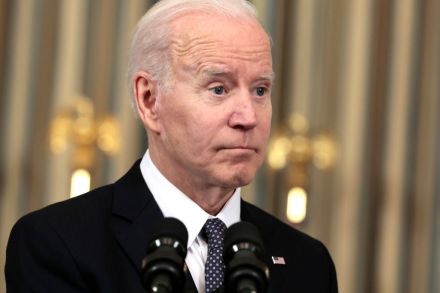
Joe Biden has had a lot to worry about lately. First, according to his own account, he has cancer thanks to emissions from oil refineries near his childhood home in Delaware: "That’s why I and so damn many other people I grew up with have cancer and why for the longest time Delaware had the highest cancer rate in the nation." A White House spokesman later clarified that Biden had had "non-melanoma skin cancers" removed before he took office, though that doesn't explain why he claimed he has cancer now. Apparently he's contracted Covid too. The president tested positive today and will be isolating at the White House.

budget

The power of prayerful washing-up

My days pass largely in a state of inanition. The fit and able-bodied express their sympathy, claiming it’s much the same for them. ‘How are you?’ ‘I’m sleeping all the time.’ ‘Oh, but so are we in this terrible heat!’ Meanwhile the young get browner and more beautiful every day while going on with their energetic lives as if affected by the heat scarcely at all. For instance, I look at the cheerful lads digging up our road, putting in fibre broadband in 40 degrees of heat. I want to run up to them and implore them, with the fervour of a dying man preaching to dying men, to enjoy it while it lasts. When I was a binman elderly people used to come to the back door and say that to me often.

It is time for me to ‘get right with the Lord’

‘But you look so well!’ How many times have I heard that lately. Kindly meant by most, but for a few it’s outrageous, after all they have heard or read about my health, and they feel cheated of the mushrooms growing out of the side of my head that they’d been hoping for. Either way I’m surprised by the compliment. Yes, the tan and this expensive shaving balm Catriona bought me, and now hair again, make me appear unravaged from the neck up.

The art of oncology

The main side effect of the six-month course of chemotherapy was ‘fatigue’. The main side effect of the three-monthly hormone injection is ‘fatigue’. The one and only side effect of the expensive, new-generation, last-chance-saloon anti-prostate cancer drug that I’ve been started on is ‘fatigue’. I’m clapped out. At night I sleep for 11 hours and wake up tired. Then I have about three hours to spend doing things in an upright position before lunch. After lunch I sleep for another two or three hours. After a long afternoon nap I wake up tired again. But I can read lying down on the bed or the terrace recliner. Then it’s a gin and the crossword, supper, and I’m looking forward to going back to bed for another 11 hours.

The call of opium-based analgesics and introspection

On the morning of my last day in England, I drew back a curtain and there in the garden, browsing one of the flower beds, was a brown hare. It hobbled cautiously but not timidly among the spring bulbs, choosing thoughtfully like a discriminating shopper. I leaned on the window sill and watched it for perhaps ten minutes. The hare was in the process of exchanging its tatty winter fur coat for a shorter, smoother, lighter-brown one, visible underneath. Overnight late spring had turned to the softer air of early summer and I was sorry to be leaving the country at the exact point of the season’s changing. In the bedroom I regretfully set about packing my trolley bag for the flight back to Nice.