Boris johnson

Boris Johnson’s greatest challenge is nothing to do with Brexit

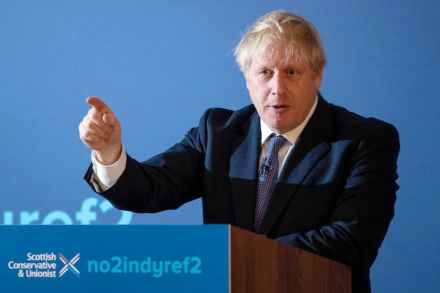
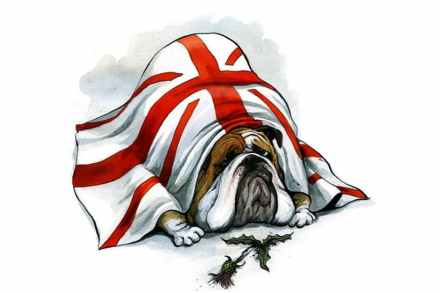
The Scottish papers carry two difficult polls for Downing Street. One, from Survation, puts support for independence at 50/50; another, from Panelbase, has it at 52 per cent in favour and 48 per cent against. The cursed percentages. I say difficult polls for Downing Street rather than Westminster in general because the Union — not Brexit, or terrorism, or northern regeneration — is the number one challenge facing Boris Johnson’s government. I appreciate that I banged on about this as recently as Friday but I intend to keep banging on about it because a) it’s true, and b) I cannot bring myself to care about Nish Kumar.

It’s time to pick a side in Boris Johnson’s war on the media

Boris Johnson is the first party leader of the media age. Winston Churchill and Michael Foot wrote extensively. But Johnson is a journalist. Before he went into politics, producing Tory commentary and editing this magazine were the achievements that defined him. And yet no modern prime minister has shown a greater determination to limit media scrutiny. Whether it is banning ministers from appearing on the Today programme and Good Morning Britain, or banning them and their special advisers from talking to journalists, Johnson is revealing himself to be a brooding suspicious politician, wholly at odds with his cheeky chappie persona. Even when a terrorist attacked civilians on a London street, ministers were “not available” to speak to the public.

Emergency terror laws set to end early prisoner release

The government has this afternoon unveiled its response to the Streatham terrorist incident on Sunday – which saw a man recently released for terror offences stab civilians in south London. Speaking in the Chamber, Justice Secretary Robert Buckland said that the government will table emergency legislation to end automatic early release for convicted terrorists. Under the plans, terror offenders will only be considered for release if they have served two-thirds of their sentence rather than half and then it will be subject to the approval of the parole board. Crucially, this will retrospectively end automatic early release for 220 convicted terrorists who are currently behind bars.

How the deadlock can be broken in trade talks with the EU

Michel Barnier’s press conference this morning and Boris Johnson’s speech served as reminders as to how far apart on a trade deal the EU and the UK currently are. The EU view is that any tariff free, quota free trade deal must include ‘robust commitments to ensure a level playing field’. The EU seems to be implying that it wants more than just non-regression on this front. But the UK negotiating position, as set out in a written ministerial statement, is that the trade deal cannot include ‘any regulatory alignment, any jurisdiction for the CJEU over the UK’s laws, or any supranational control in any area’. These two positions are incompatible.

Boris Johnson: Britain must become the Superman of global free trade

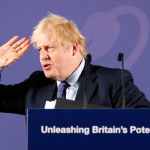
This morning Boris Johnson spoke at the Old Royal Naval College in Greenwich, setting out Britain’s plans for a trade deal with the EU. Below is a transcript of the speech: "It is great to welcome everyone here to Greenwich and I invite you first to raise your eyes to the heavens. The Vatican has Michelangelo. Greenwich has Thornhill who spent 20 years flat on his back on top of the scaffolding, so rigid that his arm became permanently wonky, and he’s left us this gorgeous and slightly bonkers symbolic scene that captures the spirit of the United Kingdom in the early 18th century. This painting above you was started in 1707, the very year when the union with Scotland was agreed – and does it not speak of supreme national self-confidence?

Brexit talks resume – and the war of words is back on

Downing Street briefings that the EU is 'moving the goalposts' for a free trade agreement and is belatedly demanding that the UK should not be compelled to maintain standards on state aid, competition, workers rights and environment seem either flaky or deliberately designed to once again cast Brussels as a duplicitous enemy. If you look at the March 2018 EU Council guidelines (below) for the future relationship between the EU and the UK and the actually-agreed framework for the future relationship agreed in October 2019 (also below), the importance for the EU of maintaining a level playing field between the UK and EU is explicit.

Boris Johnson: This is the dawn of a new era

Below is a transcript of Boris Johnson's address to the nation, as we prepare to leave the EU at 11pm. Tonight we are leaving the European Union. For many people this is an astonishing moment of hope, a moment they thought would never come. And there are many of course who feel a sense of anxiety and loss. And then of course there is a third group – perhaps the biggest – who had started to worry that the whole political wrangle would never come to an end. I understand all those feelings, and our job as the government – my job – is to bring this country together now and take us forward. The most important thing to say tonight is that this is not an end but a beginning. This is the moment when the dawn breaks and the curtain goes up on a new act in our great national drama.

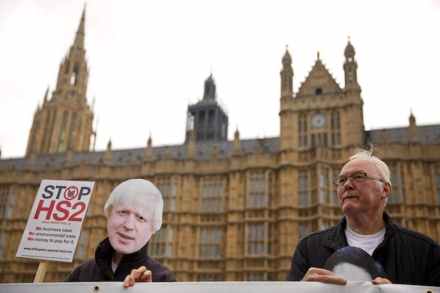
Boris lets slip HS2’s future

No. 10's relationship with the media has been frosty at times, with ministers reportedly banned from appearing on shows like the Today programme. Boris Johnson has now taken that antipathy a step further. The PM has been caught on Sky News talking to a school children about one of the biggest long-running news stories of the moment. During the discussion, Mr Johnson was asked by ten-year-old Braydon Brent about HS2. Much has been made in recent weeks of the government's potential plans to scrap the scheme. However, instead of revealing the fate of the troubled project to an established journalist, Boris decided that young Braydon should be the first to know. The schoolboy reportedly asked what HS2 was, to which the Prime Minister replied: 'It's a colossal railway line.

Boris Johnson must start taking Scexit seriously

Polls come and go and the YouGov survey showing support for Scottish independence at 51 per cent should be read with that in mind. The Nationalists have been ahead before and have fallen behind again. What Downing Street cannot take in its stride is this: five years since the Scottish referendum, and with the SNP government in Edinburgh plagued by crises in health and education, support for secession has not fallen away. The separatists still enjoy a solid base of support, around 45 per cent, which delivered them 47 of Scotland’s 59 seats in the general election. They lost the 2014 referendum 55 per cent to 45 per cent and have been inching forwards ever since.

Boris Johnson’s Blairism is bamboozling Labour

Is Boris Johnson the Blairite who may not speak his name? All the PM's talk of levelling up rather than levelling down? That is pure, plagiarised Blairism. Fixing public services – like chaotic Northern Rail – with a focus on what works, rather than an ideological attachment to private sector or public sector ownership? That would be Blairism mirrored – inverted in the sense that Blair's mission with Labour supporters was to make the case for the private sector, whereas Johnson needs to remove the stigma of public ownership for Tories.

PMQs: Boris relishes his new-found power

Jeremy Corbyn has stopped asking questions at PMQs. The lecture-circuit now looms for the Labour leader, so he uses the Wednesday sessions to practise the Grand Orations he will soon be making to drowsy socialists in overheated conference-halls around the world. He’s unlikely to match the fees commanded by the world’s top lecture-stars, Tony Blair and Barack Obama. His performance lacks bounce or crackle. He’s incapable channelling either passion or excitement and he simply recites his bullet-points like a sleep-deprived Bingo-caller. And his jokes misfire. Today he opened with a gag about the presenter of Just A Minute who died yesterday, aged 96. ‘Mr Speaker,’ said Corbyn, ‘can we take a minute to pay tribute to Nicholas Parsons.

Boris risks backbench rebellion if he doesn’t get Huawei right

Tory MPs are not happy with the Huawei decision. Normally loyal MPs are expressing their bafflement at the announcement. As one of them put it to me yesterday: if they're not safe to be at the core of the network, how are they safe to be in any of it? The crucial determinant of whether this row continues or not is what this 35 per cent cap on ‘high risk vendors’ means. The government has said that these 'high risk vendors' should be: 'Limited to a minority presence of no more than 35 per cent in the periphery of the network, known as the access network, which connect devices and equipment to mobile phone masts.'...'The recommended cap of 35 per cent will be kept under review to determine whether it should be further reduced as the market diversifies.

Boris is failing a crucial One Nation test in Scotland

Yesterday, Nicola Sturgeon unveiled a proposal to devolve certain aspects of our post-Brexit immigration policy to Scotland. Well, you might say, she would say that, wouldn’t she? But Sturgeon’s argument has some merit, for Scotland has a demographic problem that is not shared by the rest of the United Kingdom. A few thousand Scotland-only visas issued each year has the potential, assuming they proved sufficiently attractive, to address that. This is not just an SNP ploy, either. There is a widespread acceptance in Scotland that the country needs to be able to do more to attract more immigrants. On current trends, immigration is likely to be essential for the population growth Scotland is likely to need.

HS2 does nothing for the new Tory heartlands in the North

If there is one thing that could yet save HS2 it is the 'letting down the North' argument. Didn’t Boris make a speech in the early hours of 13 December promising the party’s new-found voters in the north that he would never take their votes for granted and never forget them? How, then, would he escape the onslaught that would be launched against him if he decided to dump a high-speed rail line to the north? We’ve had endless open letters from council leaders, business people and so on in recent months begging the government to go ahead with the scheme.

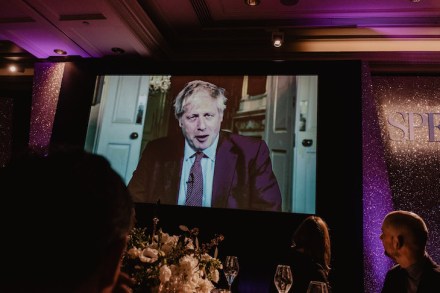
Watch: Boris Johnson’s acceptance speech for Parliamentarian of the Year

Prime Minister Boris Johnson won The Spectator’s much-coveted Parliamentarian of the Year award at a ceremony in London last night. The former Spectator editor was sadly unable to attend the event but sent a pre-recorded message in which he thanked the publication, calling it 'the greatest magazine in the English language'. The video also featured Boris and Carrie Symonds' pet dog Dilyn tearing into a copy of the Christmas edition. Perhaps the Welsh rescue puppy could be set loose on another notable publication. Former speaker John Bercow used a pre-recorded acceptance speech to plug his upcoming book Unspeakable. Mr S would be more than happy to see the pooch get his paws on a copy...

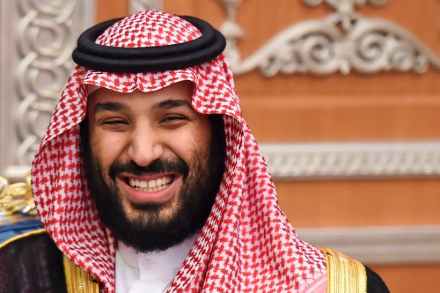
Did MBS kompromat Boris?

Boris Johnson is a big fan of Mohammed bin Salman. But why? Back in 2018, the then-foreign secretary was keen to sing the praises of the Saudi Crown prince. In an article for the Times, Boris was clear that MBS was good news: ‘I believe that the crown prince, who is only 32, has demonstrated by word and deed that he aims to guide Saudi Arabia in a more open direction.’ A few months on, Boris came under fire for accepting a £14,000 trip to Saudi Arabia from the country’s foreign affairs ministry. Only days later, Saudi dissident and journalist Jamal Khashoggi was murdered inside the Saudi consulate in Istanbul. Boris has, to be fair, since mellowed in his warm words for MBS. But why was he so keen on MBS?

Boris Johnson’s conciliatory approach takes the sting out of PMQs

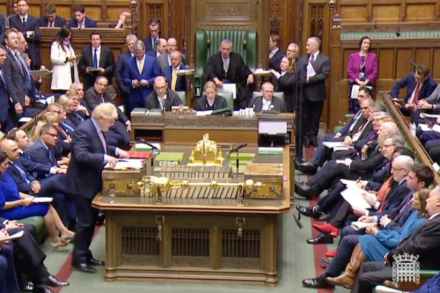
Boris Johnson has been Prime Minister since July, but he has done PMQs relatively few times. This means that he is still developing his style. What was striking about his appearance today was just how conciliatory his tone was with everyone but Jeremy Corbyn and Ian Blackford. When Wera Hobhouse asked about the difficulties facing a Kurdish refugee in her constituency, Johnson replied that she should send the details of the case to him personally. Teesside Labour MP Alex Cunningham pushed him on a campaign to prevent nuclear waste being dumped in the region. The PM expressed sympathy and asked him to send the campaign to him. SNP MP Dave Doogan argued that the seasonal workers' scheme for agriculture was nowhere near generous enough, Boris Johnson didn’t disagree.

Boris Johnson is the real heir to Blair

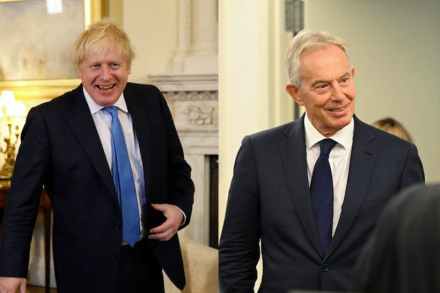
Boris Johnson is to 'take personal charge' of a new crackdown on crime and gangs. So reports Steve Swinford of the Times, one of the Lobby’s best reporters. While this is a good and new story, for a jaded and ageing ex-hack like me it crystallises a vague feeling that’s been nagging at me for a few weeks and prompts this realisation: Boris Johnson is turning into Tony Blair. These days Blair is often remembered as the quintessential metropolitan liberal politician, a champion of globalisation, economic openness and, above all, the EU. I became a Lobby reporter in 2001 and my memory of the Blair government that I covered is was rather different. On the economy, he oversaw an expansion of state spending and state provision.

Six things we learnt from the Boris BBC Breakfast interview

Boris Johnson has just given a wide-ranging interview to BBC Breakfast in which he signalled support for a new Trump nuclear agreement with Iran and promised to bring forward plans for social care by the end year. Here are the six things we learnt from the interview: 1. Boris backs Trump's Iran strategy The Prime Minister told viewers that the US had been right not to notify the UK before the assassination of Qasem Soleimani, saying 'This was not our operation. There was no reason for us to be involved.' Addressing the nuclear deal negotiated by Obama, the PM said: 'If we're going to get rid of it, let's replace it - and let's replace it with the Trump deal. That's what we need to see and I think that would be a great way forward.' 2.