Boris johnson

The strategy behind Boris Johnson’s incoming government shake-up

Boris Johnson's first week back in Parliament did not lead to the type of fireworks many had been expecting after the Prime Minister's decisive election victory. Over Christmas, there was chatter that Johnson was building up to a mass restructuring of Whitehall, a cull of the Cabinet and a reorganisation of the civil service. This was expected to take place in what had been dubbed the 'Valentine's Day massacre' by government insiders. Next month, changes are still expected – with a reshuffle coming and a reorganisation of departments. However, it will likely not meet initial expectations in terms of scope. Over the weekend, Boris Johnson met at Chequers with key members of his team and government officials to discuss the changes.

The Brexit drama to come

This week has shown how much the election has changed. The withdrawal agreement has sailed through the Commons and in Northern Ireland, there has been an agreement to get the assembly and the executive back up and running. As I say in The Sun this morning, ministers were struck by how Brexit got only the briefest of mentions at Cabinet this week despite the legislation being before the House. Pre-election, the whole conversation would have been about whether the government had the votes and what it should do if it did not. Boris Johnson is very keen that this year isn’t dominated by Brexit. Sat Cabinet this week, he again emphasised that ministers should ‘banish Brexit’ from their lexicons after January 31st.

Judge Boris by what he does, not how he does it

The night before our last issue went to press, I received a message from the Prime Minister saying that he was sorry, that he had hoped to write the diary but couldn’t find time. No problem, I replied, he’d just seen off Jeremy Corbyn and had a Queen’s Speech to agree and deliver and our print deadline was 10.30 a.m. At 7 a.m. the next morning, I woke up to find a new message ‘Have done diary. Am finishing now.’ At 10.20 a.m.: ‘It’s done. 860 words.’ Then another message: ‘Still in car.’ At 10.28 a.m., with two minutes to go, I gave up hope. Then, at 10.29 a.m., it landed, word-perfect. Boris Johnson likes to take things close to the wire, often to the despair of those around him.

Revealed: Boris’s blueprint for Brexit

For the first time since the referendum, the United Kingdom has a strong government that knows what it wants from Brexit. This will make the second round of the negotiations with the EU very different from the first. Theresa May famously declared, and repeated, that ‘Brexit means Brexit’. This was a soundbite designed to conceal fundamental differences within her cabinet about what it did actually mean. They were never resolved. Many in her cabinet, and especially the Brexiteers, thought that Brexit must mean fully leaving the customs union and the single market. But Philip Hammond, her Chancellor, and Greg Clark, the Business Secretary, thought that it was essential to avoid ‘friction’ at the border and so rallied other Remain colleagues against this approach.

For cod’s sake, don’t sacrifice the fish

One of the more dispiriting experiences of the British supermarket is a visit to the fish counter. On a  historically seagoing island, the selection is often abysmal, frequently imported, and always expensive: farmed Norwegian salmon, farmed Vietnamese basa (blech), cod gone a suspicious taupe and priced like its weight in saffron (83 per cent of the cod consumed in the UK is also imported; why?) and maybe a few locally sourced mackerel or sardines, depending on the day. Otherwise, vinegary cockles, leathery kippers and smoked haddock the garish colour of a child’s toy substitute for a fresh catch from British waters. Worse, at my nearest Tesco, as of two months ago there is no fish counter.

My fellow Remainers should not aim for a ‘soft Brexit’

‘I like to write when I’m feeling spiteful,’ remarked D.H. Lawrence. ‘It’s like having a good sneeze.’ A perennial challenge for a Fleet Street columnist is how to walk the fine line between writing as though your opinion mattered, and writing as though it were just an entertaining sneeze. My fellow Spectator columnist, Rod Liddle, has developed a very marketable pitch in the columnar sneeze. I perhaps err on the other side: writing with the implicit suggestion that the nation waits upon my verdict.

Full text: New EU president says full trade deal not possible by end of 2020

The new president of the European Commission Ursula von der Leyen made a speech to the London School of Economics earlier today. During the speech, von der Leyen said: 'Without an extension of the transition period beyond 2020, you cannot expect to agree on every single aspect of our new partnership. We will have to prioritise.' You can listen to the speech and read the full transcript below: Ladies and Gentlemen, It is a great pleasure to be back here at the London School of Economics – a place which brings back so many happy memories for me. The year I spent here taught me so much – both in and out of LSE. As anyone who knew me at the time will tell you, I spent more time in Soho bars and Camden record stores than I did reading books in Senate House Library.

Three ways Britain should refuse to stick to the EU’s rules in trade talks

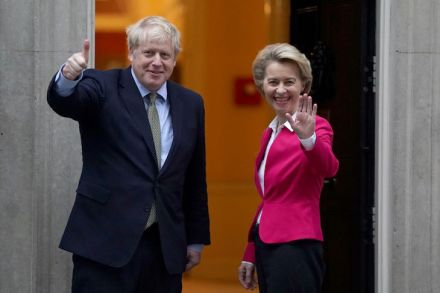
It is hard to imagine there will be much of a meeting of minds. As the new president of the European Commission Ursula von der Leyen meets with the newly re-elected British Prime Minister Boris Johnson today the pleasantries will quickly give way to a strong clash of views. With our departure from the EU set for the end of the month, trade talks are about to open. Brussels is desperate to lock the UK into its regulatory system. But quite rightly, the government is resisting that. After all, there was no point in leaving only to accept all the EU rules and regulations, except this time with no say over how they are made. In fact, the UK government should make it absolutely clear there are a whole series of industries where we are determined to break free.

Boris Johnson’s dismal response to Qasem Soleimani’s assassination

Two weeks ago, I asked what kind of prime minister Boris Johnson might be and whether he could be ‘the great disruptor’ on foreign policy, defying standard practices and elite assumptions as Donald Trump has. I think I might have my answer. On Trump’s decision to take out Iranian terrorist-in-chief Qasem Soleimani, the Prime Minister was silent for two days. When he finally spoke, it was hardly worth it. Of course Johnson was right to say, given the Quds Force head’s role in the killing of thousands of civilians, ‘we will not lament his death’. He was right too to warn Tehran against escalation.

Nine lessons from the election: Boris was lucky – but he also played his hand right

The 2019 general election will be remembered as one of the most consequential elections in Britain's recent history. Aside from rejecting a more economically radical Labour Party, the British people used the election to provide what their elected representatives had been unable to provide: an answer to Brexit. For Boris Johnson and the Conservative party, the election was a triumph. They won their largest majority since 1987 and the largest majority for any party since New Labour's second landslide in 2001.

On foreign policy, Boris can be the great disruptor

Much of the post-election attention has gone on the next stage of Brexit and the government’s attempts to set down a domestic reform agenda that works for the Tories’ new northern constituencies. As such, the Integrated Security, Defence and Foreign Policy Review, briefed as ‘the deepest review of Britain's security, defence, and foreign policy since the end of the Cold War’, has so far been somewhat overlooked. Yet, as the terms of both the Queen’s Speech and Downing Street’s briefing underscore, this review will ‘reassess the nation’s place in the world’, a pretty significant remit. The Sovereign committed her ministers to ‘promot[ing] the United Kingdom’s interests...

How the Tories plan to hold together their new electoral coalition once ‘Brexit is done’ and Corbyn gone

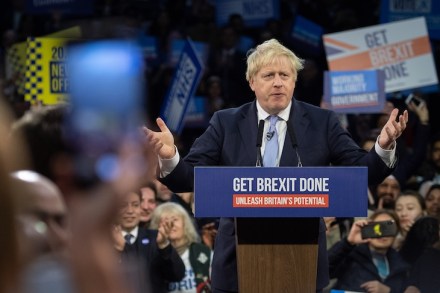
The thumping majority by which both the second reading and the programme motion for the Withdrawal Agreement Bill passed yesterday, confirmed that Boris Johnson will have no problem taking the UK out of the EU on January 31st. This sums up the remarkable position that this government is in. It will have done the main thing that it was put in power to do within less than two months of taking office. The danger for the Tories, as I say in The Sun this morning, is that their new electoral coalition was held together by a desire to ‘Get Brexit Done’ and fear of Jeremy Corbyn, and both of those issues will soon be resolved.

Why Boris Johnson is talking about ‘ten years’ time’

One of the most striking things about the government's Queen's Speech was Boris Johnson's focus on where the country could be in ten years’ time: 'Mr Speaker, this is not a programme for one year, or one Parliament it is a blueprint for the future of Britain. Just imagine where this country could be in ten years’ time. Trade deals across the world, creating jobs across the UK, 40 new hospitals, great schools in every community, and the biggest transformation of our infrastructure since the Victorian age.' Rather than simply focus on what his government would do in the five-year term he won last week, the Prime Minister talked about longer term change. This chimes with what Johnson allies privately hope for – a fifth term for the Tories.

Watch: Boris Johnson on the Queen’s Speech

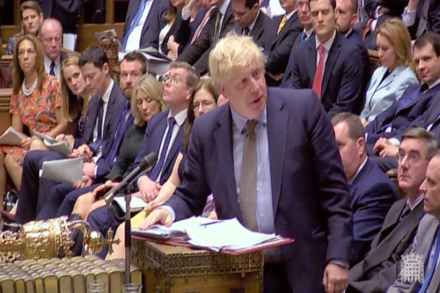
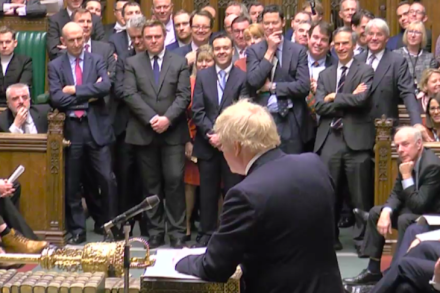
The Prime Minister took to his feet in the House of Commons earlier this afternoon to lay out his government's agenda for the next five years. Johnson called the plans 'a blueprint for the future of Britain' before embarking on a whistlestop tour of his ambitions. Those seeking to probe the government's policy agenda in more detail could do a lot worse than reading through this accompanying 151-page briefing document. The PM extolled the virtues of his plan, calling it 'the most radical Queen's Speech for a generation'. He told the chamber that his government was committed to 'building hospitals, renewing our schools, modernising our infrastructure, making our streets safer, our environment cleaner, our union stronger.' Certainly not short of ambition.

Portrait of the year: From May to a December election

January ‘If parliament backs a deal, Britain can turn a corner,’ Theresa May, the Prime Minister, said. The Commons defeated her withdrawal agreement with the EU by 432 to 202. Patrols found 15 people on inflatable craft off Kent. The Argentine footballer, Emiliano Sala, 28, died when a light aircraft crashed into the Channel. Off Libya and Morocco, 170 migrants drowned in two shipwrecks. Patisserie Valerie went into administration. US President Donald Trump refused to approve a federal budget without funds for a wall with Mexico. A fatberg 210ft long was found blocking a sewer beneath Sidmouth. February Seven MPs resigned from the Labour party, objecting to anti-Semitism and lukewarmness towards a second referendum on Brexit.

Democracy redux: the lessons of 2019

Britain’s parliamentary democracy is easily mocked: the medievalisms, the men in tights, the ayes to the right. But it has been preserved because it tends to work. It focuses minds and makes order out of chaos. Yet again we have a general election result that almost no one predicted — and one that offers plenty of lessons for those with an eye to see them. The communities so often patronised as ‘left behind’, typically in northern and coastal towns, have now demonstrated that they are powerful enough to decide elections. During the Blair and Cameron eras they were written off as a declining demographic: older, poorer, less educated and often stuck in the past. The ‘modernising’ politicians, it was argued, needn’t worry too much about them.

Boris Johnson: Perhaps my campaign was ‘clunking’. But sometimes, clunking is what you need

You may wonder why I am up at 4.45 a.m. writing this diary when I have a country to run, Queen’s speech to prepare, vast mandate to deliver, and so on. The answer is simple. It is a question of obligation. When I bumped into the editor (at Sajid Javid’s 50th birthday party) a couple of nights ago, he explained — with a slightly glassy expression — that he had taken a gamble. He had already printed the cover of the Christmas treble issue, he said. I know all about the Xmas cover. It is lavish, laminated, and on much thicker stock than the normal cover. It costs a bomb. Once you have printed it, you can’t change it. ‘Your name is on it,’ said Fraser. What could I say? I became editor 20 years ago. I owe this magazine.

Petronella Wyatt: The time I saw Boris cry

Boris Johnson is nothing like Churchill, a view with which my friend Andrew Roberts concurs. But in the 20-odd years I have known Boris, I have often been struck by his similarity to John Wilkes, 18th-century politician, journalist and catnip to women. A wit and a showman, Wilkes, who denounced European entanglements and championed the rights of the electorate over parliament, was the first politician to achieve celebrity status. One of Boris’s endearing traits is that he has never regarded himself as an enticing proposition in the looks department. Wilkes had a squint, but he said: ‘Give me half an hour to talk away my face and I can seduce any woman ahead of the handsomest man in England.