Book review

Hit for six | 5 January 2017

From our UK edition

Frankie Howerd, the great, if troubled, comedian, was once asked whether he enjoyed performing. ‘I enjoy having performed,’ he replied. Many top-level sportsmen would say something similar. The satisfaction often comes from having done, not always from doing. Performing offers great rewards, but it can also leave scars that heal slowly, and sometimes not at all. Jonathan Trott was a good cricketer in a strong England team that beat Australia in three successive series between 2009 and 2013. Batting at No. 3, he made a century on his Test debut, and became a dependable, if minor-key player in the side that vanquished the Aussies Down Under two winters later. Then, frightened by the view, he fell off that high wire.

An unmagnificent seven

From our UK edition

One of the most interesting developments in modern publishing has surely been the revival of interest in women writers of the past. Beginning with Virago Press, publishers have delved back and rediscovered exceptional female writers from the 17th century onwards. These have either been rescued from oblivion, or from the frequent fate of being dismissed as middle-brow and narrowly domestic. Editors and a new generation of scholars have unearthed excellent writers, from Fanny Burney to Elizabeth Taylor, and have changed literary taste forever. The success of the enterprise probably means that it is now easier to find a new readership for a once-popular female author than for a largely forgotten male author.

Cuckoo in the nest

From our UK edition

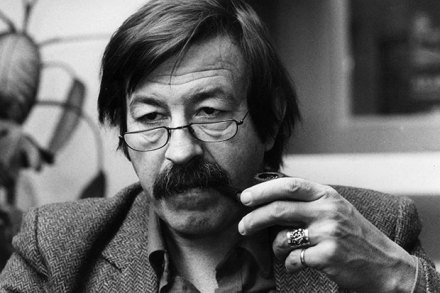
‘Light as a feather, free as a bird.’ Günter Grass starts this final volume of short prose, poetry and sketches with a late and unexpected reawakening of his creative urge. After peevish old age had brought on such despondency that ‘neither lines of ink nor strings of words flowed from his hand’, he was gripped — out of the blue, and to his evident relish — by the impulse to ‘unleash the dog with no sense of shame. Become this or that. Lose my way on a single-minded quest.’ It makes for an invigorating opening: a three-paragraph paean to the unruly and questioning spirit which drove Grass’s writing throughout his hugely productive career.

A fresh start

From our UK edition

Most of us lead lives of quiet desperation. So we’re told. Frits van Egters apparently leads a life more desperate than most. He lies in bed too long. He eats green pickled herrings and brown onions. He turns the radio on. He turns it off. Half the day gone already. He squeezes his spots. He tells bad jokes. He takes cod-liver oil. He makes custard from packet powder. He obsesses about going bald. He is annoyed by his parents: his mother darning socks, the warts on the back of his father’s neck. He has nightmares. He wakes the next morning and starts again. In Gerard Reve’s The Evenings: A Winter’s Tale, we spend ten days and nights at the end of 1946 with 23-year-old Frits as he picks up and drops books and newspapers, and walks circuits of Amsterdam.

A truly monstrous regiment

From our UK edition

When George Omona first saw soldiers in the infamous Lord’s Resistance Army, he was amazed. The scary fighters who had terrorised people for decades across a big chunk of Africa turned out to be emaciated teenagers with dirty clothes who could hardly hold the big guns they carried. Some were unarmed children, barely ten years old. He felt sorry for them. ‘They could not have known anything else but living in the forest like wild animals.’ Soon he had joined their pack, a reluctant member of one of the world’s most notorious rebel groups. A bright boy who dreamed of becoming a teacher, George ended up a bodyguard to one of the world’s most bloodstained killers.

Put out more flags

From our UK edition

Did you know that 190 out of 200 nations in the world have either red or blue on their flags? (The wheel in the middle of India’s flag is blue, for example, and the Vatican flag has a red cord hanging from the keys.) Did you know that four of those 190 — Andorra, Chad, Moldova and Romania — have pretty much the same blue-yellow-red tricolour? Or that the stripes of the French flag are not of even width, but are proportioned 30-34-37? It’s an optical illusion: if the red, white and blue are of equal breadth, the flag looks curiously unbalanced. These are among the facts that you won’t find in Tim Marshall’s Worth Dying For, a vexillological miscellany. I bring them up in no carping spirit.

Homage to Mad Madge

From our UK edition

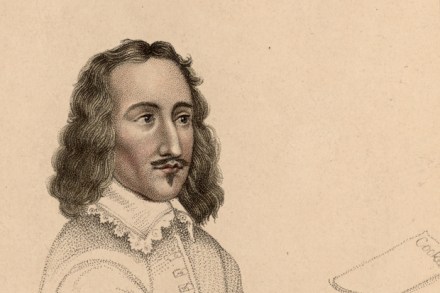
There has never previously, I believe, been a novel about Margaret Cavendish, Duchess of Newcastle, one of the 17th century’s foremost female authors, philosophers and eccentrics. But there have been several near misses. Virginia Woolf’s Orlando tips its cap to her: Orlando, just like Cavendish, is a feverishly imaginative, androgynous aristocrat afflicted by the ‘honourable disease’ of writing, filling folios with the speed of an addict. Writers from Pepys to Lamb have tended her flame, as have two recent biographies. Siri Hustvedt paid extensive homage to Cavendish in her 2014 novel set in New York’s art scene, The Blazing World — a title, devotees of the Duchess will notice, appropriated from Cavendish’s fantasy novella of 1666.

Whisper who dares

From our UK edition

Stand aside, Homer. I doubt whether even the author of the Iliad could have matched Alexis Peri’s account of the 872-day siege which Leningrad endured after Hitler’s army encircled the city in September 1941. I never knew, for example, that if an adult starved for months on a few ounces of bread daily, a sip of soup and very little water — if they were lucky enough to get their daily rations — you couldn’t tell when they were naked whether they were male or female. I wouldn’t have believed that starving parents might eat their dead children, or vice versa; yet 1,500 Leningraders were arrested for cannibalism.

A marvel and a mystery

From our UK edition

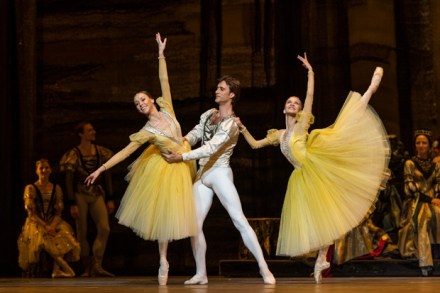
In 2013, Pavel Dmitrichenko, disgruntled principal dancer of the Bolshoi, exacted a now infamous revenge on the company’s artistic director, Sergey Filin, for overlooking his girlfriend in casting the starring role in that most Russian of ballet classics, Swan Lake. The circumstances surrounding the acid attack, which seemed to combine ballet’s glamour with a murky underworld of intrigue, conspiracy, villains and victims, quickly became a contemporary metaphor for the Bolshoi itself. It’s irresistible as a lens through which to consider this intriguing institution at the heart of Russian politics, culture and life.

The lonely passion of Beatrix Potter

From our UK edition

The story of the extraordinary boom in children’s literature over the last 100 years could be bookended with a ‘Tale of Two Potters’ — Beatrix and Harry. The adventures of the latter have sold millions, but the foundations of his success were laid by the former, whose series of ‘little tales’ Matthew Denison estimates in his equally condensed new biography, ‘are purchased somewhere in the world every 15 seconds’. That is not bad for an author whose first book, The Tale of Peter Rabbit, came out in 1902 — 40 million copies sold so far, and counting — with neither the benefit of the internet or a movie franchise to spread the word. Much has been presumed about the effect of J.K.

Rhinoceros pie, anyone?

From our UK edition

Forgotten? Though I can rarely attend their dinners (in Birmingham), I am a proud member of the Buckland Club (motto: Semper in ventrem aliquid novi). Dedicated to the memory and gastronomic exploits of Francis Trevelyan (Frank) Buckland (1826–1880), the Oxford-born surgeon, natural historian and popular writer who aspired to eat a member of every living animal species, the Club’s repasts are unfailingly interesting, if seldom so ambitious. Frank’s penchant for zoöphagy came from his father, William (1784–1856), a Canon and Dean of Christ Church, where he served up delicacies such as mice on toast, pickled horse tongue, puppies, hedgehog, crocodile and bear.

Poor bewildered beasts

From our UK edition

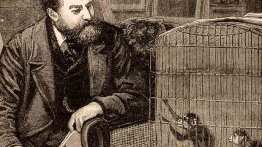
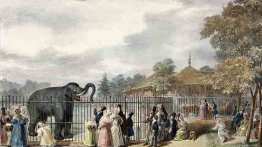
If you’ve ever read a history of the early days of the Foundling Hospital, you’ll remember the shock: expecting to enjoy a heartwarming tale of 18th-century babies being rescued from destitution and brought to live in a lovely safe place, you will have found instead that the tale was mostly about babies dying after they arrived. So it is with this fascinating book about the early days of London Zoo. Expecting to read about lions, tigers and monkeys in all their boisterous aliveness, you wade instead into disturbing descriptions of the illnesses they suffered and their pitiful early deaths.

Little and large

From our UK edition

Here are two approachable and distinctive books on our churches, great and small. Simon Jenkins’s cathedrals survey follows his earlier volumes on England’s best churches and houses, and like them includes fine photography by the late Paul Barker of Country Life. Too hefty to serve as a guide book, it can be consulted as a reference work, or read with pleasure for its vivid and well-informed descriptions. Jenkins’s parish churches book was a publishing hit in 1999 — partly, one suspects, because it stimulated parochial rivalries with its five-star rating system. The cathedrals are ranked too.

Arms and the woman

From our UK edition

In August 1939, Clare Hollingworth, a 28-year-old aid-worker, had been employed as a reporter for less than a week by the Daily Telegraph when she landed her first serious journalistic coup. Using feminine wiles and diplomatic skills extraordinaire, she convinced a friend in the Foreign Office to lend her his chauffeured car. Stocking up with supplies in soon to be starving Poland, and charming the border guards, she crossed into Germany with nothing but her gut instinct and her smarts — the most important of a reporter’s tools (together with ‘ratlike cunning, a plausible manner and a little literary ability’, in the words of the late Nicholas Tomalin). She didn’t disappoint her editors.

Port in any storm

From our UK edition

Cometh the hour, cometh the book, and so Christmas brings us once again a tidal wave of titles relating to food and drink: cookbooks of seasonal dishes from around the world, never once to be consulted, and endless tomes of wine connoisseurship for all of us dedicated cheapskate consumers of Lidl and Aldi plonk. So the question is: are Thomas Tylston Greg’s Through a Glass Darkly and Henry Jeffreys’s Empire of Booze destined to last any longer than your turkey carcass and your festive case of supermarket Prosecco? Both books are undoubtedly charming.

Snow on snow

From our UK edition

Here is William Diaper in 1722, translating Oppian’s Halieuticks (a Greek epic poem on the loves of the fishes): As when soft Snows, brought down by Western Gales, Silent descend and spread on all the Vales . . . Nature bears all one Face, looks coldly bright, And mourns her lost Variety in White. Unlike themselves the Objects glare around, And with false Rays the dazzled Sight confound. Lost variety is the nub: before it is anything else, snow is Nature’s alienation-effect, making all things look the same and ‘unlike themselves’ — even while we watch, or else behind our backs, noiselessly.

Crime fiction for Christmas

From our UK edition

Imagine receiving an anonymous suicide note addressed to you by mistake. Would you try to find that person, to help them in some way? This is the opening dilemma in Bernard Minier’s Don’t Turn Out the Lights (Mulholland Books, £14.99), and Christine Steinmeyer’s failure to locate the letter’s sender turns her life in Toulouse upside down. Her dog disappears, she’s accused of harassment at work and her fiancé walks out on her. She believes that someone — some unknown person — is to blame for her misfortunes; but are the threats real, or is Christine losing her mind? This is a super-accelerated version of a Hitchcock thriller, with thrills and shocks on nearly every page.

Love at first bite

From our UK edition

Legends cling to Bram Stoker’s life. One interesting cluster centres on his wife, Florence. She was judged, in her high years, a supreme London beauty. She preserved her Dresden perfection by denying her husband conjugal access. Bram consoled himself with warmer but more dangerous ladies of the night; such satisfactions came at greater cost than a few sovereigns. According to David J. Skal, a quarter of men of Stoker’s bohemian class (including all of those central to his book) were infected with syphilis. And Bram? Skal thinks so too. Florence Balcombe, when a young Dublin beauty, was courted by Oscar Wilde as well as Bram. Oscar she was not inclined to — because of his ‘curly teeth’ quite possibly.