Michael Henderson

Brian Cox is a world-class bore

From our UK edition

One of these days, dismounting from his high horse, Brian Cox is going to suffer a terrible injury. The Scottish mummer, long resident in New York, cares so deeply about the state of our world that he pins up notices weekly, like a headmaster riled beyond endurance by rotters in the lower fifth. Cox has every reason to be in a frightful bate. Critics have dismissed Glenrothan, his first film as director, as twee Jockery. Along with Alan Cumming, another Scot who prefers to view the Trossachs from the commanding heights of uptown Manhattan, he has honoured his home with an unintentionally hilarious movie that leaves no eye dry.

Why is the Barmy Army disowning this Reform candidate?

From our UK edition

When it comes to making friends on foreign fields the Barmy Army plants flags of conquest all over the world. Although it exists primarily to organise overseas tours for followers of the England cricket team, this regiment of happy wanderers is essentially a glee club for people who enjoy watching cricket abroad in the winter months. Would the Barmy Army have acted so decisively, one wonders, if someone had declared support for the party led by Zack ‘the tit-whisperer’ Polanski? Established in 1995 by folk who considered themselves ‘barmy’ to support players who lost more Tests on the road than they won, this rag-tag-bobtail operation swiftly developed into a commercial apparatus of some clout. Wherever England played cricket people were drawn like moths to a flame.

Cricket has banned naughty jokes

From our UK edition

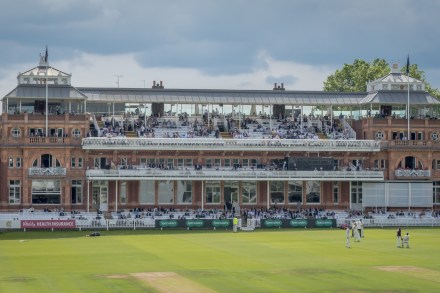
English cricket, in its joyless pursuit of moral purity, has banned naughty jokes. There can be no other explanation for its punishment of Phillip Hodson, a man who has given his life to the summer game as player, administrator, and benefactor, and now finds himself fined £1,000. Hodson, a former president of Marylebone Cricket Club, which owns Lord’s, and serves as custodian of the game’s laws, has been named, shamed, and forced to cough up for saying the kind of things at a cricket dinner that people have been saying at cricket dinners since W.G. Grace shook crumbs from that famous beard.

The joy of the jukebox

From our UK edition

One of the peachiest moments in a life of unrepentant tavern-dwelling was my introduction to P.J. Clarke’s on Third Avenue. Here was a bar from central casting – Billy Wilder mocked it up, after a fashion, in The Lost Weekend – and the dollop of cream on this peach was the jukebox. P.J. Clarke’s was described to me by one regular as ‘a midtown saloon for the tasselled-loafer set’. It remains the glory of Manhattan, which will never run short of places to hang one’s hat. And its jukebox had plenty of hits, but not the obvious ones. Americans love their jukeys. One of the most generous belonged to Sterch’s, in Oak Park, Chicago, where a couple of bucks bought a dozen plays. Chicago is a famous music town, so you didn’t struggle to find something decent.

Amol Rajan never quite suited the Today programme

From our UK edition

The fairground attendant has stepped off the carousel. Amol Rajan, with all his honours on, is standing down from Radio 4’s Today programme, the breakfast show that sends us out into the world feeling a little bit braver, to set up his own company. What took him so long? Many listeners may think he established that business many moons ago, for Rajan Enterprises (Me Me Me) is not exactly a secret in metropolitan media world. In the past two decades the Cambridge-educated south Londoner has plucked some of the juiciest plums in the journalists’ orchard. Editor of the Independent, BBC media editor, and for the past five years a Today host. Presenting University Challenge on BBC2 is a mere bagatelle to pay a few bills.

Northern pride is becoming a parody

From our UK edition

The Ship of Fools lies rigged and masted, awaiting departure for Cloud Cuckoo Land. But lo! here come a few stragglers. They’re wearing cloth caps and clogs, and carrying buckets of coal. By ’eck, they must be northerners! Clamber aboard, noble savages, we are ready to cast off. Steerage, purser. You can’t beat a good old stereotype, and when it comes to stereotypes it appears you can’t whack those northern students at the University of York who feel, boo hoo, they are surrounded by intruders from the south. ‘We’re being overrun’ is the gist of it, so they have revived the university’s Northern Society to assert their independence. Nor are they alone.

2025 has been a fantastic year for music

From our UK edition

Norman Lebrecht, who attends concerts as frequently as falcons swoop over St John’s Wood, has declared 2025 to be a terrible year for music. We are at the mercy of political activists, he thinks, and he has a point. Zealots, particularly those who pursue pro-Palestinian causes, are relentless troublemakers for whom an undefended concert hall or opera house offers an easy target for protest. But for this concert-goer, 2025 was a wonderful year, in terms of quality and variety. So far the inventory reads 43 concerts and nine operas. Not the grandest of totals, and nowhere near a personal best, but a decent tally – with power to add, too. December is full of plums, including a first-ever Messiah.

England’s remarkable Ashes fightback

From our UK edition

It was a madhouse in Perth, in the latest instalment of sport's oldest international skirmish. England, who opted to bat after Ben Stokes won the toss, were skittled before tea for 172: no score at all. Stokes then galvanised his men to take nine wickets before stumps, the captain leading the way with five strikes in six overs as a tumultuous day ended with the tourists holding a lead of 49 runs. And this was merely the opening day. The Australians, players and spectators alike, think little of the phenomenon known as Bazball, which is the term applied to England's Test cricket since the New Zealander Brendon McCullum became coach three years ago. There is nothing new under the sun, they have said repeatedly, and they are not wrong. Except...

The unravelling of Tom Daley

From our UK edition

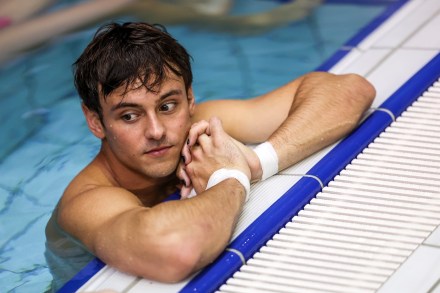
Poor Tom Daley. The cherubic diver, who dazzled as a 14-year-old at the Peking Olympics, turning the heads of Chinese girls like spinning jennies, seems to have banged his head on the board once too often. He won friends everywhere with his easy manner and Colgate smile. The boy next door, people thought, who ran errands for neighbours and lit candles on feast days. But it gets them all in the end, celebrity. He’s gone bonkers. Daley is now 31 and based in California, where he claims to have found a contentment which eluded him in his sporting endeavours, despite grabbing a gold medal at Tokyo five years ago. The pup from Devon has become a transatlantic crasher.

Max Jeffery, Sam Leith, Michael Henderson, Madeline Grant & Julie Bindel

From our UK edition

37 min listen

On this week’s Spectator Out Loud: Max Jeffery examines Britain’s new hard left alliance; Sam Leith wonders what Prince Andrew is playing; Michael Henderson reads his letter from Berlin; Madeline Grant analyses the demise of the American ‘wasp’ – or White, Anglo-Saxon Protestant; and, Julie Bindel ponders the disturbing allure of sex robots. Produced and presented by Patrick Gibbons.

My debt to the teacher who introduced me to Wagner

From our UK edition

We saw the world end in Berlin, again. Another Ring Cycle – hurrah! – in the beautiful Staatsoper theatre on Unter den Linden. Christian Thielemann led the house’s superb orchestra from the dawn of Creation in Das Rheingold to the downfall of the Gods in Götterdämerung. It was a brisk Ring, coming in at seven minutes over 14 hours. The playing was magnificent, the singing of a very high order and the anti-mythological staging by Dmitri Tcherniakov startling. Particular praise must go to the Sieglinde of Lithuanian soprano Vida Mikneviciute – try saying that after a few scoops of pilsner. Thrilling hardly does her justice.

The scourge of the blurb

From our UK edition

‘Books are a load of crap’, wrote Larkin the librarian, for a bit of fun. But some books are not very good, no matter what guff they put on the cover. Those promotional blurbs, where adverbs and adjectives jostle for supremacy, are often as false as Judas. Shami Chakrabarti, for instance, plugs With the Law on Our Side, the new book by Lady Hale, as ‘accessible, forensic, and breathtakingly humane’. Line-and-length humanity is clearly for those poor souls below the salt. Her ladyship is a grandee with a natty brooch, and must therefore be breathtakingly humane. It’s verbal sludge. Also, do the publishers really think that Little Bo Peep’s approval will shift a single copy?

The decline of the Booker Prize

From our UK edition

‘Prizes are for little boys,’ said Charles Ives, the American composer, ‘and I’m a grown-up.’ It’s a pretty sound rule of thumb. The prizes worth having are usually those which reflect a body of work, not a single achievement. Cary Grant, the greatest leading man in the history of cinema, never won an Academy Award. Neither did Alfred Hitchcock, who made a few half-decent films. They received ‘lifetime awards’ from the red-faced academicians, but those gestures merely endorsed William Goldman’s view that, in Hollywood, nobody knows anything. As Billy Wilder told the producer who asked what he had been up to: ‘You first.’ Nobody takes much notice of the Grammys, which were designed to reward commercial success.

Shouldn’t we celebrate Rising Damp?

From our UK edition

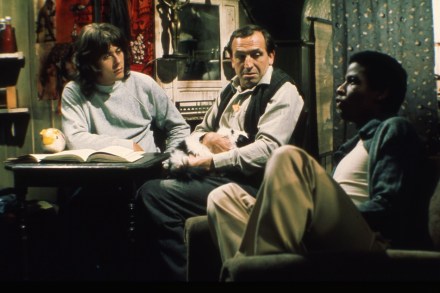
They have been blowing out candles for Fawlty Towers, and it is meet and right so to do. Fifty years old this month, John Cleese’s portrait of a Torquay hotelier at war with the world remains a masterpiece of British comedy. But there’s another Seventies romp we should not ignore, which was just as funny, and featured a central performance every bit as convincing. Leonard Rossiter may be better known as Reggie Perrin in David Nobbs’s series about a dreamer who longs to escape suburbia, but his greatest role was Rigsby, the seedy landlord, in Rising Damp. Eric Chappell adapted the show, which ran for four years from 1974, from his stage play, The Banana Box.

Miriam Margolyes has nothing to say and is determined to say it

From our UK edition

Miriam Margolyes is on the road, bringing joy to every corner of the kingdom, and aren’t we the lucky ones? It’s a kingdom she no longer has much time for, if she ever did, however hard the coiners of trite phrases try to dress her in the garb of a ‘national treasure’. When the tour is over she’s off quick-smart to a new life in Tuscany, where British folk who dislike their native land have always found a bed. There’s a book out as well, so there is no excuse for not paying attention. As dozens of chat shows have tried to persuade us, she is a bona fide ‘character’, fitting into the English pageant somewhere between Lady Godiva and a bearded lady. Have your tummy tickled as she farts merrily along the rolling English road.

What’s the point of Notting Hill Carnival?

From our UK edition

Like the fearful townsfolk of Dodge City awaiting the arrival of outlaws, the residents of Notting Hill have been chalking off the hours. Many have resorted to drilling wooden boards over their windows and doors. Some have hired private security and left the city for the weekend. It’s Carnival once again, that annual ritual of comradeship which often degrades into violence, passed off as a community triumph. Yes, it’s time for the traditional bank holiday fib. If only those most directly affected could speak freely. The police officers, for instance, who must wear coat-hanger smiles, even as they see drugs dealt openly by aggressive young men. These smiling officers sometimes find themselves spat at, punched and headbutted. But they must continue grinning.

The vapidity of New York’s intellectuals

From our UK edition

Fran Lebowitz, the apparently acid-tongued commentator on Manhattan manners, will slip through British customs next month to dazzle the easily dazzled. Though to judge by the interview she granted an earnest lady in the Observer, other verbs leap to mind. From this distance it looks suspiciously like a fog of self-regard. According to the profiler, Megan Nolan, Lebowitz is ‘a poster girl for a certain kind of crusty but erudite and essentially good-natured New York archetype, intellectual and judgmental, and walking the line between rudeness and frankness with engaging grace’. Cor! Is this a private ritual between consenting adults, or can we all join in?

It’s hard to beat a drawn Test series

From our UK edition

‘You can always tell a proper lover of cricket’, Michael Kennedy, the great music critic, liked to say. ‘It’s whether they can appreciate a draw.’ A hit, a palpable hit. By concluding a magnificent Test series at two matches each, after India’s victory in the fifth game at the Oval, even England’s disappointed players may nod in agreement. They fell seven runs short, but nobody lost. Everybody who took part in this contest of equals should feel proud. ‘Proper’ cricket-lovers will have no doubt, for this contest was one for the annals. All five matches went into the fifth day, and India eventually prevailed by the tightest winning margin in their history after Mohammed Siraj, their leonine fast bowler, took his fifth wicket, and ninth in the match.

The BBC’s mistreatment of the Proms

From our UK edition

The Proms – the BBC Proms, to stick a handle on its jug – remains a good deed in a naughty world. Eight weeks of orchestral music, mainly, performed nightly at the Royal Albert Hall by artists from every continent, for as little as £8 if you are prepared to stand. One of those artists, the Georgian fiddler Lisa Batiashvili, supplied the highlight of this year’s ‘first night’ with a mighty performance of the Sibelius concerto. The concert ended with Sancta Civitas, a rarely heard choral work by Ralph Vaughan Williams, performed with love by the BBC Symphony Orchestra under its principal conductor, Sakari Oramo. Musically, it was a good start, despite the tiresome clapping between movements of the Sibelius. So why did the occasion, carried live on BBC2, fall flat?

Why are so many English people pretending to be Irish?

From our UK edition

The Irish problem has existed for centuries, though the nature of that problem is not always easy to define. It used to be political, though relations between English and Irish people on a personal level have usually been harmonious. There are still political problems, because identity – the question of to whom we owe our loyalty – shapes lives and creates communities. But now there is a different problem, and it’s one-sided. Many English people are suddenly keen to present an ersatz Irishness to the world, as a form of civic virtue, to the point of claiming citizenship. Some claim to feel ‘European’, in a vague way. Others feel that being green offers the swiftest route to an ill-defined ‘romanticism’. Ah yes, it’s that old favourite, the Celtic twilight!