Kate Maltby

Kate Maltby

Kate Maltby writes about the intersection of culture, politics and history. She is a theatre critic for The Times and is conducting academic research on the intellectual life of Elizabeth I.

With Elizabeth Stuart as monarch, might the English civil war have been avoided?

From our UK edition

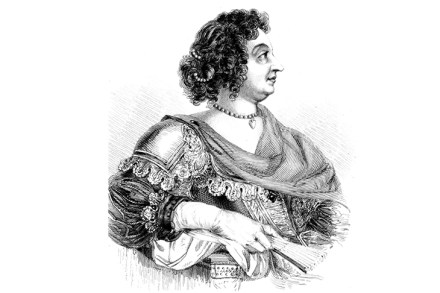
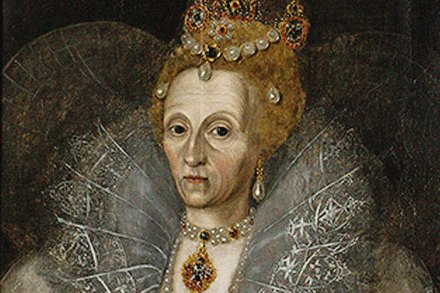
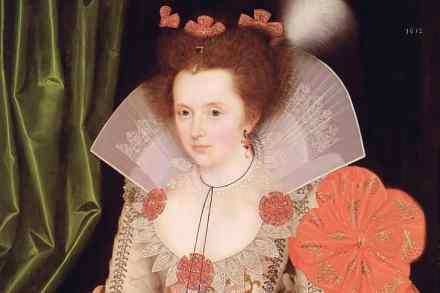
Many girls dream about their favourite princesses. Elizabeth Stuart, a princess herself, took this fantasy a step further and modelled herself from childhood on her godmother and namesake, Elizabeth I. The young daughter of James I plucked her hairline to imitate her father’s predecessor, the great Tudor queen. Aged ten, she was painted with a vivid red wig, dripping in jewels recognisably inherited from her godmother. She even practised her signature until it was almost indistinguishable from Elizabeth I’s famous flourishes. At 13, grandeur got the better of her when she signed herself ‘Elizabeth R’, her most exact copy yet of the queen’s mark.
Has George III been seriously maligned?

From our UK edition

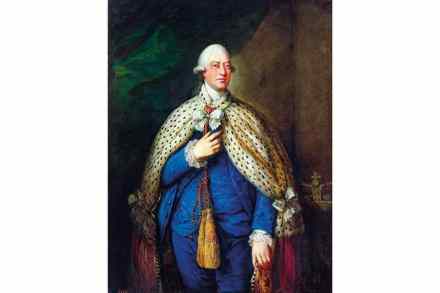
Every British historian has a story about the witlessness of Americans when it comes to our Georgian kings. The fate of Alan Bennett’s play The Madness of George III is notorious — Hollywood turned it into a film entitled The Madness of King George, in part lest American audiences assume it a tertiary sequel to The Madness of George I. A few years ago I encountered a highly educated editor at a reputable American news outlet who was under the impression that George V and George VI were ‘Hanoverian’ sovereigns, for surely they had been the son and grandson of George IV. I have deep sympathy, therefore, with the impulse behind Andrew Roberts’s biography of George III.

You be the judge

From our UK edition

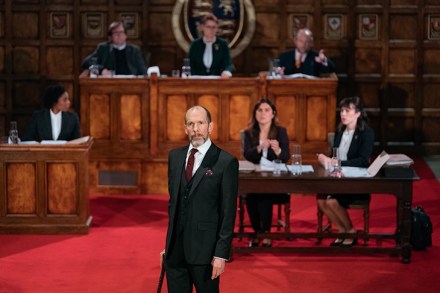
James I and VI liked to term himself Rex Pacificus. Like most politicians who talk a lot about working for peace, he was an appeaser. Inheriting the English throne after Elizabeth, whose foreign policy was defined by breaking Spanish dominance, James appears to have seen the purpose of his own Whitehall government as being to facilitate every Spanish demand. The first high-profile victim of James’s Iberophilia was the war hero and poet Sir Walter Raleigh. Within four months of Elizabeth I’s death in 1603, Raleigh was on trial for treason under the new regime. His death sentence was commuted until 1618, when it was carried out at the direct request of the Spanish ambassador. Shakespeare’s Globe is staging the trial of Walter Raleigh as a piece of theatre this month.

The Stuart supremacy

From our UK edition

Few twists of political fortune are as discombobulating as the youngest child making off with the family inheritance. Richard III, George W. Bush, Ed Miliband: monsters all three. Sophia, Electress of Hanover — bright, lively and self-indulgent — left a no less divisive legacy. The 12th child of an exiled Mittel Europa princeling, Sophia had scarce prospects when she was born in The Hague in 1630. Yet through her mother Elizabeth, daughter of James I, Sophia was able to pass the newly unified British crown to her son George I. (She missed out on the throne herself when she predeceased her cousin Queen Anne by less than two months.

A gentle reproach to Shakespeare

From our UK edition

A few years ago, I fell hopelessly in love with Harriet Walter. It only lasted an hour or two: she was playing Brutus in Phyllida Lloyd’s all-female production of Julius Caesar, and there she was, aloof, damaged, burning with pride and suppressed sorrow. The Donmar theatre’s production was set in a women’s prison, as if performed by inmates. In Walter’s mind, we learn in her latest book, she was not playing white, older, educated Brutus, but ‘Hannah’, a long-term prisoner whose presence in the jail she based on the story of Judith Clark, an anti-capitalist revolutionary imprisoned for driving the getaway car at a fatal bank robbery.

Sorry, Jeremy, but comparing Theresa May to Henry VIII is depressingly ignorant

From our UK edition

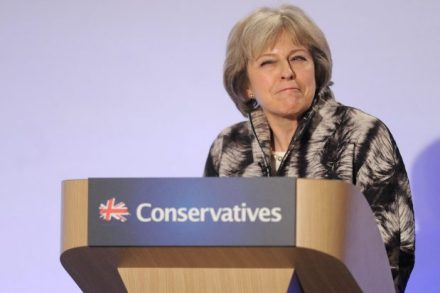
Another day, another Tudor throwback. This time, Jeremy Corbyn has accused Theresa May of acting like Henry VIII by avoiding a vote in Parliament over the triggering of Article 50. 'She cannot hide behind Henry VIII and the divine rights of the power of kings on this one', he told the Guardian this week. 'The idea that on something as major as this the prime minister would use the royal prerogative to bypass parliament is extraordinary – I don’t know where she’s coming from.' We’ve been here before. Our politicians are addicted to Tudor comparisons: only last August, the Labour MP Barry Gardiner accused Theresa May of seeking ‘to diminish parliament and assume the arrogant powers of a Tudor monarch.’ (Can powers be ‘arrogant’?

Emma Rice was never as radical as she thought she was

From our UK edition

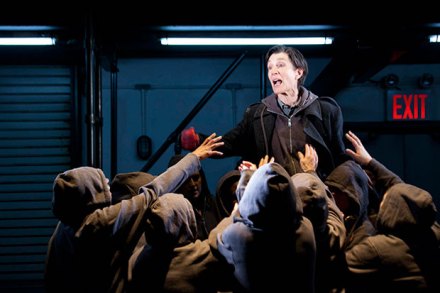
Towards the end of Emma Rice’s recent production of A Midsummer Night’s Dream, one of the mechanicals decides to give us a piece of her mind. ‘It’s a visual concept!’ screams Nandi Bhebhe’s Starveling (for it is She), as the young lords and ladies mock her costume in the play within a play. ‘Why is everybody so obsessed with text?’  This was Rice’s gauntlet, thrown to her critics as she arrived as the controversial new artistic director of Shakespeare’s Globe. But Rice, as usual, was tilting at a straw man. None of her serious critics in theatreland have a problem with textual experiment, nor with Rice’s yen for cross gender casting.

Donald Trump’s sinister threat to jail Hillary should worry us all

From our UK edition

In the autumn of 2008, a gaggle of American conservatives gathered for a conference at that most godless of progressive institutions, Yale University. The mood was sombre: four days beforehand, President Obama had swept to victory; the outgoing Republican President, George Bush, was shadowed by a Middle Eastern war gone disastrously wrong. The title of the conference, ‘The Next American Conservatism’, already felt like a bad joke.  Outside, protestors gathered. Iraq was a popular theme – I spotted a few 'no blood for oil' placards, recycled from Tony Blair’s latest flying visit to campus. Eventually, a pair of students invaded the main hall, cursing and spluttering a demand for both Bush and Blair to face war crimes trials.

Theresa May really is acting like a Tudor monarch over Brexit

From our UK edition

Over the weekend, it emerged that Theresa May likes to compare herself to Elizabeth I (although as I argue in my Telegraph column today, she’s been behaving more like the young Queen Victoria lately). The PM clearly meant the association as a compliment to herself, but on Saturday, Labour MP Barry Gardiner went in for a far more negative comparison. Complaining about Theresa May’s proposed plan to trigger Article 50 without a new parliamentary vote on the matter, Gardiner went full Philippa Gregory on us, accusing May of acting 'to diminish parliament and assume the arrogant powers of a Tudor monarch.' Next he’ll be accusing her of throwing a tantrum over her wig.

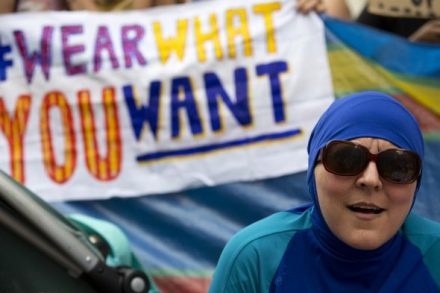
France’s burkini ban was an own goal for secularism

From our UK edition

I’ve always hated the beach. The water? Great. The sunshine? Terrible. It starts with the hot trek across the sands to find a square of free ground – loaded up with factor 60, several books, a comedy floppy hat, two towels, three bottles of water and the rusty family parasol. Then there’s the bodily anxiety. Find me a woman who doesn’t fret about her body on the beach, and I’ll find you a liar. Just over a year ago, I wrote a post for The Spectator about my own fraught history with my body on the beach. I still don’t understand how it ever became acceptable to wear an itsy bitsy bikini around one’s dad. And even in a one-piece, if I don’t draw attention to my thickening waist, my mother will.

Five phrases to ban from the Tory leadership race

From our UK edition

The race is on to get out of the bottom, as the Spice Girls never quite sang about Liam Fox. And isn’t it depressing? I don’t just mean the Conservative leadership contest itself – unlike the Labour Party, the Tories seem to be able to organise a sack-race in a nursery playpen, which will prove a plus when negotiating with Vlad from Moscow. But Lord, some of the headlines are getting lazy. Here, at least, are five phrases I’d like never to see in a headline again. 1. Lady Macbeth Has a literary character ever done more disservice to women? On Fleet Street, Lady Macbeth seems little more than a lazy shorthand for man’s worst fears about persuasive women. Look how often she crops up when a man in politics is heard actually listening – listening!

Forget the fighting. We’re entering a period of unparalleled opportunity for the Tories

From our UK edition

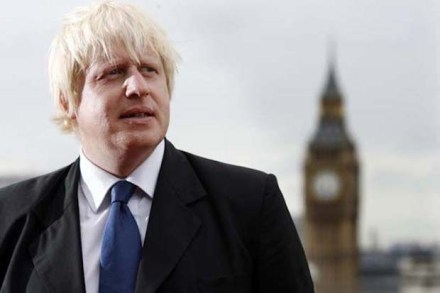
Auf wiedersehen, Boris. He’ll be back, like a blond, bloated Voldemort inhabiting another life form – Top Gear host? Archbishop of York? Or endless BBC camping tours of Britain on a bike, the Portillo of the Portacabin? As Boris’ agent collects the offers – and his publishers are still owed a Shakespeare biography by the end of this anniversary year - he leaves behind him a Conservative Party scarred but resilient. There’ll be recriminations this week. Yet there’ll also be enduring relief, as one of Britain’s oldest institutions finds itself finally free of wrangling Etonians, chaps whose Brobdingnagian entitlement so undermined the gospel of One Nation inclusivity that both presumed to preach.

Elizabeth alone

From our UK edition

If you’ve been watching Game of Thrones recently, you’ll have seen an old folkloric fantasy in which a bewitching young prophetess, a charismatic war leader, slips alone into her private chambers and removes an enchanted necklace. Beneath it, she’s just one more withered crone. We, the viewers, having happily feasted on her naked body, now congratulate ourselves on seeing it for what it is: another whore’s trick. This moralistic antipathy towards the over-preserved female body haunts popular studies of the last years of Queen Eliza-beth I. Nearly a century ago, Lytton Strachey kick-started the grotesquerie genre with Elizabeth and Essex: ‘As her charms grew less, her insistence on their presence grew stronger.

Shakespeare400

From our UK edition

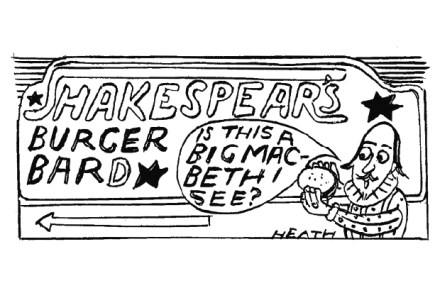
The feeding frenzy over the 400th anniversary of William Shakespeare’s death has reached its peak. Recently we’ve had Shakespeare’s complete works performed through the puppetry of kitchenware. On books pages, you can read about everything from Edward Wilson-Lee’s Shakespeare in Swahililand (surprisingly beguiling) to Simon Andrew Stirling’s Shakespeare’s Bastard: A Life of Sir William Davenant (he wasn’t). Meanwhile, the Royal Mail is launching a set of stamps emblazoned with snappy quotations. And it’s this glib series that encapsulates the anniversary problem.

Is the West ever going to stand up to Vladimir Putin?

From our UK edition

If you walk down Holland Park Avenue, down the hill to Shepherd’s Bush, you’ll come across a statue wreathed with peonies, lit by a single candle. Two years ago, in February 2014, the flowers stretched almost to the street curb; the candles were myriad, ringing the statue in ever-widening concentric circles. This is the statue of St Volodymyr, founder king of the Ukrainian nation, set up in the old heart of the British Ukrainian community. In the days around the fall of the Yanukovych government, and Russia’s subsequent annexation of Crimea, St Vlad was the site of nightly vigils, passionate and prayful protests, many of them led by orthodox priests. Gradually, the wreaths shrunk, the candles disappeared one by one. Someone still replaces the last cluster of flowers.

There’s nothing patriotic about William Blake’s Jerusalem

From our UK edition

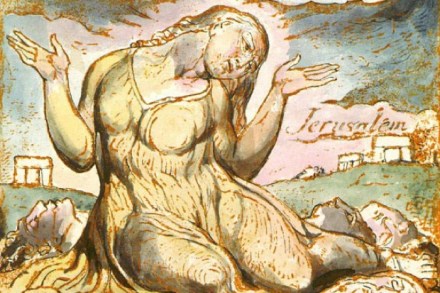
In this week’s diary, Tristram Hunt puts his money behind Jerusalem as a new English National Anthem. 'God Save the Queen' isn’t going anywhere as the United Kingdom’s theme, but there’s room for a local melody when Team England take to the field (as the MP Toby Perkins pointed out, it’s hard to square English rugby fans singing 'God Save The Queen' as we face off against the Welsh). But Tristram, for the love of the Holy Lamb of God, please don’t let it be Jerusalem. The truth about Jerusalem is that it isn’t a patriotic poem at all.

There’s nothing confusing about a black actress playing Hermione Granger

From our UK edition

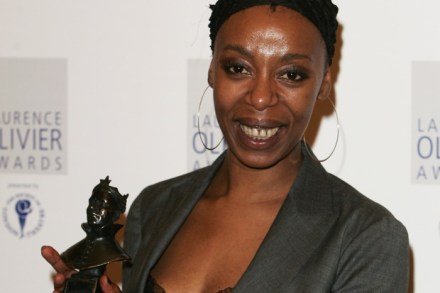
A news producer rang up this morning, asking me to talk about ‘colour-blind casting’. Noma Dumezweni has just been cast as Hermione in Harry Potter and the Cursed Child, the stage sequel to JK Rowling’s novels. So there I was, listening to a hack ask ‘isn’t it confusing when black actresses play white roles?’ When I was too stunned to answer, he added, encouragingly, 'we thought you’d be happy to come on and criticise Sonia Friedman'. True, if you follow theatre, you’ll know that Sonia Friedman, the super-producer who brings Hollywood’s most commercial franchises to the West End stage, won’t be sending me a Christmas card this year. But for very different reasons.

‘National security’ has become our main justification for war

From our UK edition

I’ve been in touch with Anisa for just over a year, ever since I met her in a dingy refugee compound on the outskirts of Amman. She’s a super-educated young woman from Damascus (most of the early wave of refugees were) and she’s never had much time for self-styled IS ('none of them are actually Syrian, they’re invaders,' she insists). Today Anisa is more depressed than ever. If Britain joins the coalition of airstrikes against IS territory in Syria, it will largely be symbolic, as The Spectator’s leader explains. The US has already been bombing Raqqa for nearly a year and a half.

How can we defend our liberal heritage by abandoning its values?

From our UK edition

Yusuf, when I last saw him, was still smiling, a middle-aged man with the greying pony-tail of a rock roadie. He described himself as a feminist: he met his wife through work, where, he told me proudly, she was a better computer engineer than he. Yusuf had the stoop of a tall man who’d spent most of his life under ceilings too low for him, and the corrugated iron hut his family now called home was no exception. So we sat cross-legged on the floor, while I asked him about religious tensions in a southern Turkish refugee camp. 'If you want to know, I’m an atheist. I mean, in Damascus, my friends all were - it’s not like you’re living in a village, your grandfather checking you’re in mosque. I don’t believe in any of it. But I never shouted about it.

Boris shows a hint of Euroscepticism — but he still can’t beat Mary Beard

From our UK edition

Thank God for Mary Beard. Sure, she’s wrong about Jeremy Corbyn. She was wrong about 9/11. She’s wrong about plenty. But let’s talk about what matters. She’s right about Ancient Rome. It’s rare to see Boris Johnson lose a popular vote. Last night, Beard trounced him at the Intelligence Squared Greece vs Rome debate, winning the day for Rome with a 9% swing. This was also a fundraiser for one of the most worthy educational charities I know: Classics for All encourages access to ‘elite’ classical subjects in state schools, teaching teens that you don’t have to be Bullingdon material to 'get' Boethius.