Jonathan Mirsky

The neighbour from hell

Blessings from Beijing will inform readers who know little about Tibet, and those who know a great deal will discover more. Both groups will be surprised. The newcomers especially will be disabused of any belief that Tibetans were always non-violent, deeply spiritual and unworldly. Tibetanists and advanced students will learn that, decades after the Chinese conquest of Tibet in 1950 and the escape of the Dalai Lama in 1959, the diaspora of about 130,000 Tibetan refugees, battered by decades of Chinese oppression and ‘soft’ propaganda, is riven by confusion. Some cling to their hope that Tibet will again be sovereign and they will be able to return to their homeland.

Theresa May and the curious case of human rights in China

From our UK edition

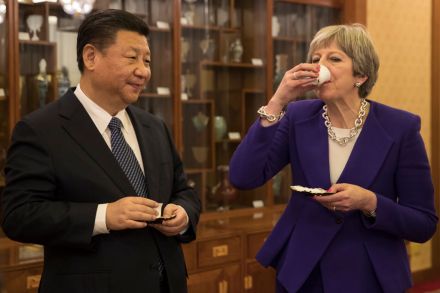
Did Theresa May raise human rights with China during her visit to Beijing this week or not? The Chinese press has praised her for not mentioning the most neuralgic issue between China and all visiting officials. Downing Street sources, however, stated flatly that Mrs May raised the issue with both President Xi Jinping and Premier Li Keqiang. The Global Times, a voice of the Chinese Communist Party, said the 'Sino-UK partnership transcends media mudslinging over human rights...May will definitely not make any comment contrary to the goals of her China trip'. It contended, too, 'while the government is responsible for public well-being, the media tends to whip up sensations while disregarding sound international relations.

BBC4’s The Vietnam War was unique, informative and shattering

From our UK edition

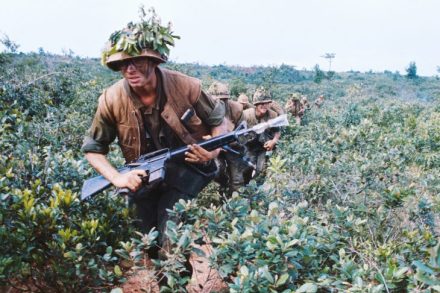
The Vietnam War BBC4 The BBC should be praised for showing all ten episodes of this unique, informative and shattering American series on the Vietnamese war, despite screening eight fewer hours than in the original. Before each episode the BBC warned that 'some viewers may find some scenes upsetting'. Which ones? A frog jumping in a pool of blood from the head of a dead Vietcong (NLF) fighter? The Saigon police chief shooting a prisoner in the head? The American colonel offering a case of whiskey to the first man to bring him the severed head of an enemy soldier? Which he gets. The eager US soldier on his first day in Vietnam noticing strings of what he thought were leaves, which he realised were the ears of dead enemies?

His dark materials

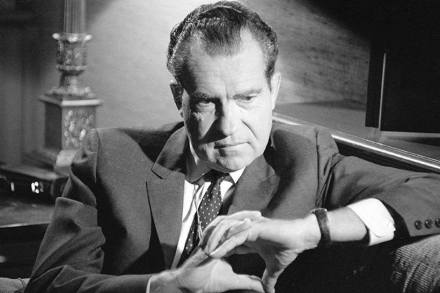
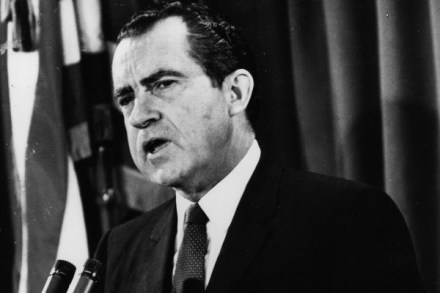
In this giant, prodigiously sourced and insightful biography, John A. Farrell shows how Richard Milhous Nixon was the nightmare of the age for many Americans, even as he won years of near-adulation from many others. One can only think of Donald Trump. Nixon appealed to lower- and  lower-middle-class whites from the heartland, whose hatred of the press and the east-coast elite, and feelings of having been short-changed and despised by snobs, held steady until their hero and champion unmistakably broke the law and had to resign his second-term presidency. Nixon won a smashing re-election in 1972, even as it was apparent that the White House was awash with skulduggery.

Richard Nixon: the nightmare president of his age

From our UK edition

In this giant, prodigiously sourced and insightful biography, John A. Farrell shows how Richard Milhous Nixon was the nightmare of the age for many Americans, even as he won years of near-adulation from many others. One can only think of Donald Trump. Nixon appealed to lower- and  lower-middle-class whites from the heartland, whose hatred of the press and the east-coast elite, and feelings of having been short-changed and despised by snobs, held steady until their hero and champion unmistakably broke the law and had to resign his second-term presidency. Nixon won a smashing re-election in 1972, even as it was apparent that the White House was awash with skulduggery.

His dark materials | 12 October 2017

In this giant, prodigiously sourced and insightful biography, John A. Farrell shows how Richard Milhous Nixon was the nightmare of the age for many Americans, even as he won years of near-adulation from many others. One can only think of Donald Trump. Nixon appealed to lower- and  lower-middle-class whites from the heartland, whose hatred of the press and the east-coast elite, and feelings of having been short-changed and despised by snobs, held steady until their hero and champion unmistakably broke the law and had to resign his second-term presidency. Nixon won a smashing re-election in 1972, even as it was apparent that the White House was awash with skulduggery.

The lesson of Liu Xiaobo

From our UK edition

Liu Xiaobo, China’s only Nobel Peace Prize winner, has died, eight years into his 11-year prison term. He was the greatest champion of democracy in a country where there are many others also detained by the Communist Party, which insists those convicted are not dissidents but criminals. Tried in 2009 for subversion, Liu had just been moved under police guard into a hospital and diagnosed with inoperable liver cancer. While his original sentence aroused an international outcry, followed by the award of the prize in Oslo — where his chair was empty — the news of his fatal illness provoked demands that he be allowed to go abroad for possible treatment.

The ruin of a ruin

From our UK edition

In the welter of Syrian bloodshed, why should we remember the death of a single man? Because he was the archaeologist Khaled al-Asaad, tortured and beheaded by Isis two years ago when they destroyed the remains of Palmyra, one of the world’s most important ancient cities. Their victim was its director of antiquities. In an icy fury, Paul Veyne, a French expert on Palmyra, has dedicated this comprehensive, passionate, but concise book to the memory of the murdered Syrian scholar. In it he relates thousands of years of Palmyra’s history, describing those who lived there and pausing only briefly to underline what monsters Isis were to smash the site.

Whisper who dares

From our UK edition

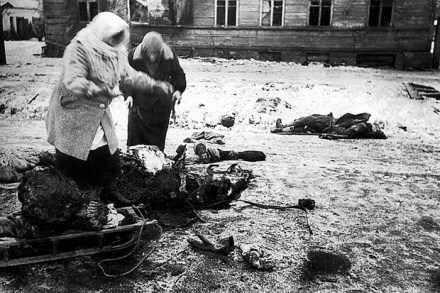
Stand aside, Homer. I doubt whether even the author of the Iliad could have matched Alexis Peri’s account of the 872-day siege which Leningrad endured after Hitler’s army encircled the city in September 1941. I never knew, for example, that if an adult starved for months on a few ounces of bread daily, a sip of soup and very little water — if they were lucky enough to get their daily rations — you couldn’t tell when they were naked whether they were male or female. I wouldn’t have believed that starving parents might eat their dead children, or vice versa; yet 1,500 Leningraders were arrested for cannibalism.

A girl in a million

From our UK edition

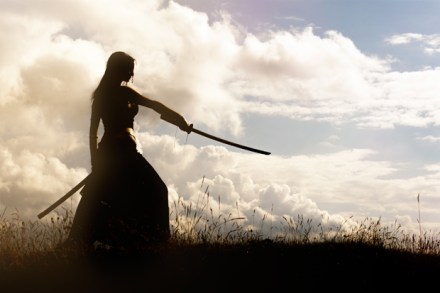
All readers know that good novels draw us into other worlds. I cannot think of another, however, which so alarmed me as this one, just as events alarmed and frightened its central character. She is Okatsu, a young woman from the samurai Satsuma Clan in mid-19th-century Japan. The country has been ruled by the shogunate, a military caste, since the early 17th century; the emperors were remote figures until their restoration to power in 1868. China is already under attack and exploitation by Britain and the US, and many Japanese fear they may be next. Some urge driving the foreigners off, while others — realists — insist that treaties must be signed that yield some sovereignty to the westerners even while Japan is modernising.

Untold tales of Tibet

From our UK edition

On the night of 17 March 1959, the 14th Dalai Lama, aged 23, slipped out of the Norbulinka, his summer residence in Lhasa, and began his flight to India, where he arrived on 31 March, after crossing some of Tibet’s most rugged terrain. He was so heavily disguised that the faithful crowds who had gathered to worship and protect him along the way mistakenly prostrated themselves before a monk in his entourage. Establishing in Dharamsala Tibet’s first democratically elected government, the Dalai Lama has ever since travelled the world making clear how the Chinese occupiers — who invaded Tibet in 1950 — eviscerated the country’s traditional culture.

Mao devours his foes

From our UK edition

Frank Dikötter, professor of humanities at the University of Hong Kong and winner of the Samuel Johnson prize in 2011, is the author of many studies on China, most notably two on Mao’s dark rule. This new book completes the trilogy. The first volume, The Tragedy of Liberation, made plain, more exhaustively than previous accounts, that from the beginning of his time as Chairman, Mao was paranoid and murderous, and that Zhou Enlai and Deng Xiaoping egged him on. The second volume, the prize-winning Mao’s Great Famine, examined, in characteristic detail, the Chairman’s responsibility for the 1959–1961 famine, which killed 30 to 50 million Chinese. Now we are shown that millions continued to starve for years after 1961.

‘Money, money, money’

From our UK edition

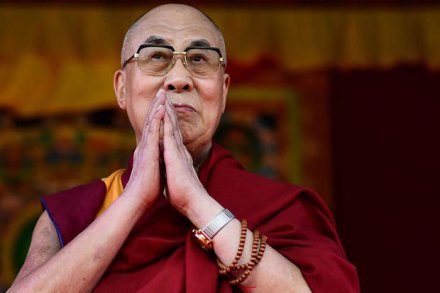
[audioplayer src="http://rss.acast.com/viewfrom22/thegreatbritishkowtow/media.mp3" title="Listen: Fraser Nelson and Jonathan Mirsky discuss Britain's attitude towards China" startat=35] Listen [/audioplayer] The Dalai Lama is a connoisseur of absurdity. When we met in London on Monday I reminded him that two years ago, desperate to resume relations with China, No. 10 said it had ‘turned the page on that issue,’ by which he meant the Dalai Lama. He responded with his celebrated chuckle but it became clear that he’s far from sanguine about being snubbed by Britain. He agreed with me that not even Beijing could have thought up a phrase like ‘turn the page’.

Cry havoc

From our UK edition

If you love dogs and or live with one — I declare an interest on both counts — there is enough here about what the authors too often call ‘doggies’ to keep you interested. But what I liked about this book, despite its trickle of cute language, is that the title exactly tells the story. The dogs indeed went to war, and they were trained to do unpleasant things, including committing suicide by charging into German strongholds carrying bombs, seeking out and identifying landmines, finding bodies under rubble, and guarding bases. But according to Clare and Christy Campbell, war dogs’ effectiveness, despite much heroic, sometimes false, publicity, is doubtful.

Monster of misrule

From our UK edition

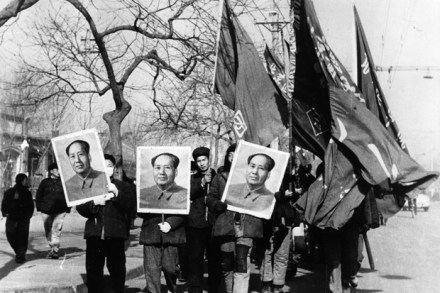
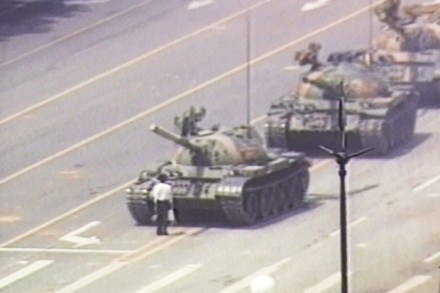
Mao Zedong, once the Helmsman, Great Teacher and Red Red Sun in Our Hearts, and still the Chairman, died in 1976. Even today his giant portrait gazes down over Tiananmen Square, where in 1989 his successors massacred hundreds of students and workers. After so many years and books and articles, can anything new be said about him? Although Andrew Walder, a Stanford sociologist and leading China scholar, writes that his comprehensive and deadly analysis is primarily for non-specialists, he has made me think. President Xi Jinping, who will make a state visit to London in October, speaks highly of Mao. Such praise, concludes Walder, requires ‘highly selective historical memory and a great deal of forgetting’.

Little brother’s helper

From our UK edition

Can there ever have been another book in which one of the authors (Anne Thurston in this case) so effectively pulls the rug out from under the other? Of course Gyalo Thondup is entitled to tell his story, beginning with his life as a boy in a small town near the Tibet-China border where, in 1937, his younger brother was identified as the 14th Dalai Lama. He recalls everything from then on without a shadow of doubt: his family’s long overland trip to Lhasa, their transformed, luxurious life there, his trips to China, India, Taiwan and Hong Kong, learning Chinese and about China, and marrying a Chinese woman.

Deng Xiaoping: following in Mao’s footsteps

From our UK edition

Much has been written about Deng Xiao-ping (1904–1997), most recently by Ezra Vogel in Deng Xiaoping and the Transformation of China. But apart from his fondness for eating croissants and playing bridge, and the fact that his second wife left him for a party colleague — Michael Dillon records the divorce only — we still know little about Deng himself. Mao Zedong’s personality, on the other hand, was often remarked on — from Edgar Snow’s first meeting with him in 1936 to Henry Kissinger’s in 1971(both men swooned in his presence). Dillon rightly notes that Vogel compressed a large part of Deng’s life into a mere 30 pages. In this biography the entire life and career are given appropriate space.

Spectator books of the year: Jonathan Mirsky on dogs

From our UK edition

The Great Grisby: Two Thousand Years of Exceptional Dogs by Mikita Brottman (William Collins, £16.99). I have read thousands of books in my 81 years and this is the only one that has made me happy. Brottman, a psychoanalyst, contends that her French bulldog, Grisby, ‘forms a bridge between my inner life and the real world out there, towards which I am increasingly ambivalent’. This book deals frankly and unsentimentally with the question of whether dogs really love us and describes close relationships between dogs and their owners, going back to Alexander the Great and including Virginia Woolf, Galsworthy and Dickens. And into each learned, sprightly chapter pads Grisby. The New Emperors: Power and the Princelings in China by Kerry Brown (I.B.

Am I wrong to fear another Tiananmen?

From our UK edition

For Beijing, the tens of thousands of protestors choking the centre of Hong Kong are such a dangerous outrage that mainland media cannot report on them. The real outrage is this: China agreed to hold free elections in 2017, but now a Beijing-appointed committee will determine whether candidates for chief executive can be relied on to toe Beijing’s line. On 6 September, a Chinese embassy official wrote to the Times that in 2017 there would be a one-man one-vote election in Hong Kong. He omitted to mention that Beijing has selected the committee that will approve the candidates.

Talking to the ghosts of Tiananmen Square

From our UK edition

Twenty-five years ago, Rowena Xiaoqing He, then a schoolgirl, was participating in the Tiananmen-supporting demonstrations in Canton. Far from the capital, this was one of several hundred cities that rose up during that Chinese spring. Following the Tiananmen killings on 3–4 June 1989, she was warned by her teacher to remove the black mourning band she wore on her sleeve. After some years working in Canton she moved to Canada, where she secured advanced degrees; she now teaches an undergraduate course on Tiananmen at Harvard. Tiananmen Exiles is a brave book. It concentrates on the testimonies of three of the student leaders in Beijing and Canton, two of whom are still barred from their homeland.