Book review

An apologia for adultery

From our UK edition

What to make of this unexpectedly startling novel? Though you may be lured into a false sense of familiarity by mentions in the blurb of Trollopes J and A, and the comfortable middle-class settings (Sussex, Notting Hill), it turns out to be a diatribe against male selfishness, a meditation on approaching death, and an apologia for adultery. And that’s among other things. Set in the week beginning 6 May 2015 — the day before David Cameron’s unexpected general election triumph — it concerns three marriages well into maturity, each requiring a reappraisal of its sexual politics. Some of this, reading as a middle-aged male nearing 60, as is one of the characters, is close to the bone, if I may so put it.

Wild, wild women

From our UK edition

Who is the least likely candidate for an animated princess movie? That’s the question former DreamWorks animator Jason Porath asked his colleagues over lunch a few years back. Over the hour they kept one-upping each other with increasingly inappropriate heroines. Nabokov’s Lolita came out on top. Throughout the conversation, Porath kept throwing out the names of obscure warrior women he’d read about on Wikipedia binges. He suggested the female samurai Tomoe Gozeno, Josefina Guerrero, the ‘Leper Spy of the Philippines’, and Mariya Oktyabrskaya, the Soviet widow who sank her life savings into a tank she drove into frontline battle against the Nazis. But none of his colleagues had heard of them and he felt that needed to change.

Bridges and troubled waters

From our UK edition

During David Cameron’s years as prime minister, an unobtrusive figure could be seen slipping out of the back entrance to Downing Street. At the end of each day, Julian Glover, then Cameron’s chief speechwriter, made his way across St James’s Park to the Institution of Civil Engineers, a Palladian palace off Parliament Square. There, burrowing around in the archives, he wrote the biography of the institution’s first president: Thomas Telford, one of Britain’s forgotten great men. In his 77 years, Telford built a huge chunk of the infrastructure of Georgian and early Victorian Britain: 17 canals, 37 docks and harbours and 93 bridges and aqueducts. His friend the poet Robert Southey called him ‘Pontifex Maximus’.

Look back in anger | 19 January 2017

From our UK edition

Pankaj Mishra’s Age of Anger wants to explain how we got to a world in ‘a pervasive panic... that anything can happen anywhere to anybody at any time’. Everything seems to be spinning out of control, and hatred, racism, violence and lies have become common currency everywhere. Facts have become irrelevant and ‘individuals with very different pasts find themselves herded by capitalism and technology into a common present’. Mishra, an accomplished and well known Indian/English writer, comes from semi-rural India. He is ‘a late comer to modernisation... a step-child of the West’. He explains to his readers the less familiar crisis of ideas in non-western states. He argues that Ayatollah Khomeini was an entirely modern leader.

A shameful whitewash

From our UK edition

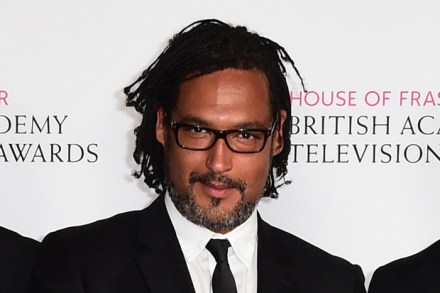
I have been researching and writing about black British history for over 30 years but never before have I been fortunate enough to review a 600-page book on the subject, published to accompany a recent major BBC documentary. The book and the four-part series give some indication of the extent of a history which David Olusoga presents as ‘forgotten’: the subject, he argues, has been largely excluded from the mainstream narrative of British history. Why it should be forgotten, and who might have forgotten it should give us all pause for reflection, since the denial of black British history by those who should know better could be considered tantamount to racism.

Perfect Sunday evening schmaltz

From our UK edition

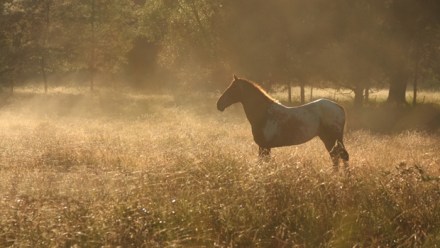
Set in rural England in 1911, Tim Pears’s latest novel tells of a friendship between 12-year-old Leo, a precocious carter, and Lottie, the daughter of the master of the farm on which he and his father work. The Horseman is the first instalment of what will be a trilogy, and it is perhaps for this reason that the pacing of its plot feels somewhat preambular: Leo and Lottie bond sporadically over a shared love of animals, but little else of note happens until the very end. It is the setting rather than the story that is foregrounded in these pages.

Sweat-drenching, muscle-aching stuff

From our UK edition

‘John, we need your autobiography.’ ‘I thought I’d express my life experience in song.’ ‘That’ll be fine.’ This would be an odd agreement, and one the world would (rightly) be less than thankful for. But though not everyone plays music, we all have a relationship with prose. And recent years have seen a trend in rock memoirs away from the traditional ‘as told to’ (the method responsible for the footballer’s hagiography that often, in Martin Amis’s phrase, ‘runs the full gamut of human emotions from “gutted” to “chuffed”’) and towards autobiography proper: books written by the artists. That can be a problem.

Licence to kill | 12 January 2017

From our UK edition

As I read the last chapter of this book, news broke that the Russian ambassador to Ankara, Andrey Karlov, had been shot multiple times at close range by an off-duty Turkish police officer. Despite shocking live footage of the incident, it was unclear immediately whether this was political assassination or terrorist attack, or who was ultimately behind it. The assassin was quickly ‘neutralised’. Speaking from the Kremlin, Putin praised the slain ambassador, ordered security at Russian embassies to be stepped up, and said he wanted to know who had ‘directed’ the gunman’s hand. This is the crucial question. Not who the killer was, but for whom he was acting and with what intent.

Body language

From our UK edition

Others goes straight to the head. Things start like this: with an article on a website called ‘Women and Film’, by someone called Meadow Mori. Meadow reveals that when she was fresh from her LA high school, she had an affair with a mountain-sized filmmaker, who ‘sounds like the voice of America’, and whose career was marked by genius and frustration. It is, of course, Orson Welles; but there’s more here than scrupulous cinematic referentiality. Is Meadow’s relationship with the F is for Fake filmmaker a truth or an untruth? And if it’s an untruth, does that make it a lie? A lie of invention, a lie about yourself, should not be called a lie, she says in the essay. Perhaps it is a kind of wish-story.

The best Brontë

From our UK edition

Fans of the novels and poems written by the sibling inhabitants of Haworth Parsonage always have a Top Brontë. Fame-seeking Charlotte and mysteriously reclusive Emily usually grab the limelight. My father reread Emily’s only novel every five years, annotating his student copy of Wuthering Heights and monitoring his opinions depending on how his own love life was going. He shared his choice with the playwright and journalist Samantha Ellis, until the day she read Anne’s final letter, and was taken aback as its sudden significance ‘catches at my heart’, making her wonder about the less wowed, less known, youngest sister. This wonderful biography begins at a disadvantage. All but five of Anne’s letters are missing.

Only obeying orders | 12 January 2017

From our UK edition

Spare a thought for the poor Gulag guard: the rifleman standing in the freezing wind on the outside of the wire, almost as much a captive of the Stalinist prison machine as the inmates he’s guarding. Alexander Solzhenitsyn, Evgeniya Ginzburg and Varlaam Shalamov have left the world a rich, searing portrait of the Gulag from the point of view of the prisoner. But the diary of Ivan Chistyakov is unique — a narrative of the brutal conditions in Stalin’s Gulag, told from the point of view of one of the captors. Chistyakov was a senior guard at the Baikal-Amur Corrective Labour Camp or BAMLag, and he wrote his personal diary in 1935–6, just as Stalin’s henchman Naftaliy Frenkel was putting his scheme for mobilising convict labour into high gear.

Restoration man

From our UK edition

Given that he wrote and published some of the most stunningly handsome books of the 17th century, John Ogilby has not been served well by literary history. The Fables of Aesop (1651), the first complete English translation of Virgil (1654), a two-volume edition of the Authorised Version of the Bible (1660) plus vernacular versions of the Iliad (1660) and Odyssey (1665) were all magisterial folios, produced with the clearest of type, the widest of margins and on the heaviest of paper. Ogilby wrote specifically for those with deep pockets and fine libraries, an elite book-buying public who could afford translations illustrated with copious and expensive engravings.

An astronomical feat

From our UK edition

Think of a computer and your mind might conjure the brushed steel contours of the latest must-have laptop or, for those of a certain age, a room full of whirring cabinets and reel-to-reel tape decks. The era of electronic computing has its roots in the code-breaking exploits of Bletchley Park; but the need for repetitive and reliable number-crunching did not suddenly begin with the wartime threat of Nazi submarines. For centuries, such everyday activities as banking, commerce, engineering and navigation have all relied on computing to manipulate large amounts of numerical information. But before there were machines to do the mathematical donkey-work, there were human brains, and in the 19th and early 20th centuries a computer was not a device but a person.

Emile in exile

From our UK edition

Michael Rosen, a poet, journalist and prolific author of novels for children, has written an account of Emile Zola’s year’s exile in England between July 1898 and June 1899, as a result of his involvement in the Dreyfus Affair in France. It is not a dispassionate work of history but a homage to Zola, ‘a hero in my eyes’, for his fight against anti-Semitism. Zola not only made ‘a brave, unpopular, self-sacrificing decision to support a wrongly convicted man’, but also persuaded the socialist leader Jean Jaurès to join the fight against anti-Semitism: at the time of Dreyfus’s conviction in 1894, both Jaurès and Georges Clemenceau had called for him to be shot.

Power to the people | 5 January 2017

From our UK edition

Jeremy Corbyn will probably enjoy this book — which doesn’t mean you won’t. Asked to name the historical figure he most admired when first standing for the Labour leadership, Corbyn answered that in English history a very interesting character is John Lilburne.Very interesting character, because of the way he managed to develop the whole debate about the English civil war into something very different. Lilburne, who should certainly be better known, was a leader of a group that came to be called the Levellers, which flourished at the height of England’s civil strife in the 1640s, and whose radical, democratising politics has sporadically appeared on the agenda of the left, invoked as the ‘Good Old Cause’, ever since.

A gentle reproach to Shakespeare

From our UK edition

A few years ago, I fell hopelessly in love with Harriet Walter. It only lasted an hour or two: she was playing Brutus in Phyllida Lloyd’s all-female production of Julius Caesar, and there she was, aloof, damaged, burning with pride and suppressed sorrow. The Donmar theatre’s production was set in a women’s prison, as if performed by inmates. In Walter’s mind, we learn in her latest book, she was not playing white, older, educated Brutus, but ‘Hannah’, a long-term prisoner whose presence in the jail she based on the story of Judith Clark, an anti-capitalist revolutionary imprisoned for driving the getaway car at a fatal bank robbery.

From Balzac to the Beatles

From our UK edition

All biography is both an act of homage and a labour of dissection, and all biographers are jealous of their subjects. Most keep it cool, but some like it hot and have created a distinct category in which jealousy becomes murder followed by necromancy: the one they hug is asphyxiated — but lo! — they breathe their own air back into it. Sartre’s book on Jean Genet is such a work, as are Brigid Brophy’s on Ronald Firbank and Roger Lewis’s on Anthony Burgess. Claude Arnaud’s on Jean Cocteau is yet another. Its approach is intensely romantic. Everyone is heaving in lurid colours.