Marek Kukula

Unearthly darkness

From our UK edition

Mask of the Sun: The Science, History and Forgotten Lore of Eclipsesby Norton, £20, pp. 336 On 28 May 1900 Mabel Loomis Todd, friend and editor of the poet Emily Dickinson, stood with her astronomer husband on the roof of a house in Tripoli to witness one of nature’s most spectacular events: a total eclipse of the sun. Afterwards she wrote: I doubt if the effect of witnessing a total eclipse ever quite passes away… A startling nearness to the gigantic forces of nature and their inconceivable operation seems to have been established. My own first experience of a total solar eclipse was also in North Africa, at a remote viewing site in the depths of the Libyan desert. As the resident astronomer on an organised eclipse tour, I had done my homework.
An astronomical feat

From our UK edition

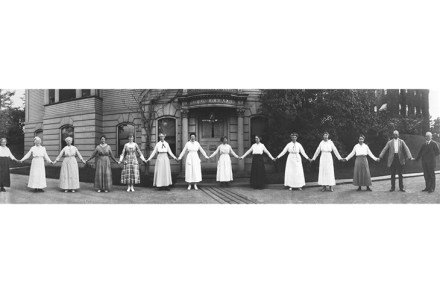
Think of a computer and your mind might conjure the brushed steel contours of the latest must-have laptop or, for those of a certain age, a room full of whirring cabinets and reel-to-reel tape decks. The era of electronic computing has its roots in the code-breaking exploits of Bletchley Park; but the need for repetitive and reliable number-crunching did not suddenly begin with the wartime threat of Nazi submarines. For centuries, such everyday activities as banking, commerce, engineering and navigation have all relied on computing to manipulate large amounts of numerical information. But before there were machines to do the mathematical donkey-work, there were human brains, and in the 19th and early 20th centuries a computer was not a device but a person.

Is there anybody out there?

From our UK edition

Fifty years ago this summer, a new show appeared on American TV screens. These, the opening titles explained, were the voyages of the starship Enterprise; its mission — to explore strange new worlds, to seek out new life and new civilisations. Half a century later the Star Trek franchise still rumbles irrepressibly on, but now the first part of the Enterprise’s mission has moved firmly from the realms of science fiction into those of fact. The change is profound: in 2016 we can look up at a night sky full of stars and know that almost every one of them has its own family of planets orbiting around it, just as the Earth and the other planets of our solar system orbit the Sun.

Following yonder star

From our UK edition

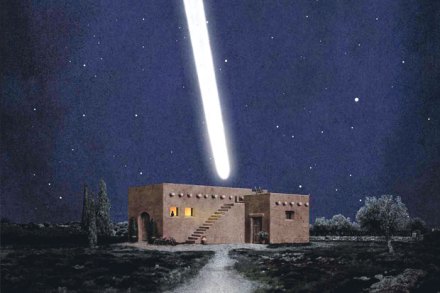
It’s hard to imagine Christmas without stars. They perch at the top of fir trees, glitter from greeting cards and dangle festively over shopping precincts. This year, even the John Lewis advert and Selfridges’ Oxford Street window display — two of the holiest icons of our modern, commercialised Christmas —both have astronomical themes. The origin of this celestial obsession is of course the Star of Bethlehem, whose apparition, according to the Gospel of Matthew, first alerted the Three Wise Men to the birth of Jesus, then guided them across the desert to pay homage to the new-born Messiah.

Some watcher of the skies

From our UK edition

We live in an age of astronomical marvels. Last year Europe’s Rosetta spacecraft made a daring rendezvous with the comet Churyumov-Gerasimenko, revealing a bizarre double-lobed mountain of ice and rock with landscapes of vertiginous crags and ashen scree slopes. In our image-saturated age it’s easy to forget that such views are only possible through the intermediary of sophisticated technology: cameras and computers and the spacecraft that carry them halfway across the solar system. And yet this is nothing new. Ever since the Italian mathematician Galileo Galilei first turned his telescope to the heavens in the autumn of 1609, advances in technology and great strides in knowledge have gone hand in hand.