Book review

Swash and buckle aplenty

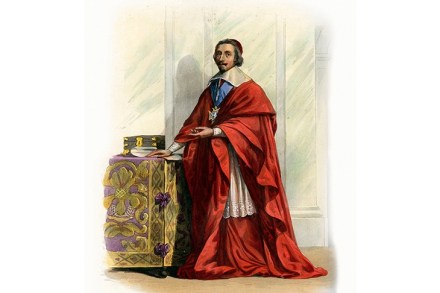
A feeble king and his scheming minister, a hunchback noble and the Daughters of Repentance, a botched assassination and a walled-up prisoner, some comic horse-sex, cross-dressing valets, a handful of gay jokes, a dwarf, and a literal éminence grise. The latest instalment of Game of Thrones? No, actually: a sequel to The Three Musketeers. December 1628, mere weeks after the great siege of La Rochelle, and attention has now turned to the goings-on in Italy, where France is being outmanoeuvred by Spain and the Austrian Habsburgs.
Tricks of the trades

Oddly enough, one of the most historically influential pieces of British writing has turned out to be an essay that appeared in the June 1800 issue of the Commercial, Agricultural and Manufacturers Magazine. Over the preceding decades, there’d been much anguished debate about the size of the country’s population. Many commentators were convinced that, thanks to the gin craze, it was in potentially disastrous decline. Others, led by Thomas Malthus, were convinced that it was on the potentially disastrous rise. The biggest question of all, though, was what the population actually was, with most estimates — or, as it transpired, wild guesses — ranging from four million to six million.

The nature of genius

On 21 December 1945, Ezra Pound was confined to St Elizabeths hospital in Washington DC. He had broadcast for Rome Radio from 29 January 1942 to July 1943. To avoid his almost certain conviction for treason (and the death penalty visited on William Joyce, Lord Haw-Haw), the superintendent Winfred Overholser testified that Pound was insane and unfit to stand trial. Overholser connived with Julien Cornell, Pound’s lawyer. He elided the testimony of six psychiatrists, whose verdict was more equivocal. He concentrated instead on Pound’s brief, understandable breakdown after being kept in a cage at the Disciplinary Training Centre’s stockade in Pisa. A.

A whirlwind life

The dust cover features one of the best-known caricatures of Richard Wagner, his enormous head in this version opened like a boiled egg, with a photograph of Simon Callow either emerging from his skull or sinking into it. The idea is that rather than just writing another book on this over-biographised figure, Callow will let us know what it was like actually to have been him, something he also tried in his one-man show at the Linbury Theatre, Inside Wagner’s Head. Callow tells us that he has been a lifelong Wagnerian, but that only in the last four years has he investigated him as a man, reading the most important biographical and, especially, autobiographical works, together with a fair number of critical studies.

The game of life

In the introduction to his new book Steven Johnson starts out by describing the ninth-century Book of Ingenious Devices and its successor, the 13th-century Book of the Knowledge of Ingenious Mechanisms by the Arab engineer al-Jazari. Here were books of extraordinarily advanced technology. The latter contained sketches of float valves that prefigure the design of modern toilets, flow regulators that would eventually be used in hydroelectric dams and internal combustion engines, water clocks more accurate than anything Europe would see for 400 years… But in both books, Johnson says, ‘the overwhelming majority of the mechanisms […] are objects of amusement and mimicry’: they are toys. A point to conjure with.

Righter of wrongs

I used to work for Ludo, as we all knew him on BBC2’s Did You See?, and was once thought to be his illegitimate son. In 1963, on a visit to Phnom Penh, he danced with my mother in a nightclub under the stars, but I was already six years old and, according to her, nothing happened, except that he made her laugh. ‘That’s always dangerous.’ A pioneer of the interviewing art, without whom there would have been no Jeremy Paxman, Ludo once told me: ‘There are two types of people who work for the BBC. Those who use it, and those who are used by it. Make sure you’re the former.’ Ludo made sure, even to the extent of bringing his dry cleaning to the office.

Thirtysomething blues

If ever there was a book for our uncaring, unsharing times, it is Gwendoline Riley’s First Love, in which Neve, a woman in her mid-thirties, struggles with a truly awful family and with the men in her life, while trying to make a career as a writer. That latter point might suggest some kind of bildungsroman approach, but in fact the meat of First Love is in its rich character depictions, from which Riley teases out a series of painful but exquisitely comedic episodes. Neve’s father is a crude, self-styled ‘socialist’, full of class resentment and personal bitterness, while her pretentious mother, now remarried to a condescending Sunday painter, is so utterly self-absorbed that she is blind to Neve’s difficulties, forever complaining about her own lot instead.

Cheating death

2016 was probably the year even the most optimistic of us — those who can genuinely square the new populist politics with a bright future for truth-seekers, scientists and rational thinkers — gave up on the possibility of time travel. Surely, on every rally stage there should have been at least one white man from the future (it’s generally a white man for the simple statistical reason that if you’re a woman or a non-white man and go travelling in time, there’s only about 0.

Old, unhappy, far off things

August Geiger led an unremarkable life. Born in 1926, the third of ten children of a Catholic farming family in western Austria, the most unusual thing about him was his unwillingness ever to leave Wolfurt, the village where he had grown up. He built a house there, for his schoolteacher wife and their children, and refused ever to go on holiday. His wife had suggested that they go on a walk and call it their honeymoon, but August rejected even this slight change in his routine. It was, therefore, particularly poignant that when he developed Alzheimer’s disease, August’s dominant obsession became his desire to go home. Nothing could convince him that he was already there.

A disgrace to feminism

‘I was single, straight, and female,’ Emily Witt begins, with all the élan of an alcoholic stating her name and what’s wrong with her. Only there isn’t anything wrong with Emily Witt. (The book jacket tells us she has three degrees and won a Fulbright scholarship to Mozambique.) Unless you count not having a fella in your fourth decade. Which she does. And doesn’t. Future Sex is a collection of essays about sex and society, originally published in magazines including N+1, GQ and the London Review of Books, packaged into book form. In America, it enjoyed rave reviews. Here, it’s had a sexy reprint by Faber.

Bad behaviour

Molly Keane achieved fame and critical acclaim in 1981 aged 75, when she published the novel Good Behaviour, a razor-sharp social comedy about the Anglo-Irish in the 1930s. Her success was the more sensational because it was unexpected. Twenty years previously her play Dazzling Prospect had flopped disastrously at the box office. A drawing-room farce in the era of the kitchen sink, it seemed so dated that Kenneth Tynan remarked that he could hear horses whinnying in the audience. Convinced that her writing career was finished, Keane had published nothing since. She wrote Good Behaviour in secret, for herself. When her friend the publisher Billy Collins turned it down as too dark, she put it away in a drawer.

The Baron is back

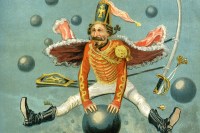
Sigizmund Krzhizhanovsky was born in the wrong place at the wrong time. Had his Polish ancestor not been exiled to Siberia, he might have become a figure in European literature; living in Soviet Russia he was, in his own words, ‘known for being unknown’. His fiction and plays, written in the 1920s–1930s, remained mostly unpublished — unpublishable — till 1989. That he can now be read in English is thanks to the translator Joanne Turnbull, who in collaboration with Nikolai Formozov has brought him out of obscurity. What Krzhizhanovsky lacks in popularity he makes up for in the fame of his hero, Baron Munchausen, an incorrigible fantasist created by the 18th-century author Rudolf Erich Raspe.

A diamond set in sapphires

I was a young, aspiring writer when I decided to leave everything behind and move to Istanbul more than two decades ago. I rented a tiny, dingy flat at the bottom of the Street of Cauldron Makers not far from Taksim Square, the heart of the modern city. That first night, I sat by the window under the anaemic light from a streetlamp, and wondered what this urban sprawl held for me. At midnight, I heard a loud voice from outside, full of anger and emotion. A transvestite was walking down the street, her miniskirt glittering in stark contrast to her raven hair. She was limping furiously, holding in one hand a shoe with a broken heel. The other shoe she insisted on wearing.

Recent crime fiction | 9 February 2017

There isn’t a clear line separating crime and literary fiction, but a border zone where ideas are passed from one genre to another. Flynn Berry’s debut Under the Harrow (Weidenfeld, £12.99) is set well to the literary side of this border, but doesn’t shirk on the thrills of a psychological mystery. Nora Lawrence expects to spend a few peaceful days in the countryside, staying at her sister Rachel’s house. Instead she finds Rachel dead, the victim of a brutal murder. A previous, unsolved attack on her sister has left Nora with very little faith in the police, and she is forced to undertake her own investigation. But is she driven by justice or revenge?

Flights of fancy | 9 February 2017

Michael Chabon’s back. He’d never gone away, of course — more than a dozen books in all — but it’s been a long time since The Amazing Adventures of Kavalier & Clay (2000), a book entirely true to its title, so amazing and adventurous, indeed, so full of pizzazz, that it seems to have taken the poor chap the best part of two decades to recover from it. Moonglow is a return to form. Nonetheless, some readers will doubtless find it easy to resist the book’s obvious charms. Chabon has described it in interviews as a ‘faux-memoir novel’. In his acknowledgements he calls it a ‘pack of lies’.

The great Norse soap opera

Norse myths are having a moment. Or should I say another moment; one of a long chain of moments, in fact, beginning in the primordial soup of the oral tradition of storytelling in Iceland and Scandinavia. This mythology is old; old and very tenacious. First chronicled by scholars and historians some centuries after the Christianisation of Scandinavia, it tells of the creation of the world from the flesh of a slaughtered giant; of the rise of Asgard, the stronghold of the gods, and of their struggle against the forces of evil; and it predicts the eventual death of the gods in a final battle, Ragnarók, in which all of creation will be destroyed.

And then there was one

After a long struggle to receive mainstream publication, Paul Auster’s first few novels were a genuinely significant contribution to American letters, his patented mix of postmodernism, deadpan comedy and metatextual homage to Kafka, Hamsun, Melville and Hawthorne so singular it invited parody. Among these books, The New York Trilogy and The Music of Chance seem likely to last many years from now. But the second half of his career has proved more problematic. Seemingly tiring of his own shtick, he spent a long time dismantling what made him great, sometimes to powerful effect (Oracle Night), but more usually in a way that seemed designed deliberately to test his biggest fans.

Still giving peace a chance

Tibetans were once fabled warriors. Their empire, at the summit of its power in the eighth century, extended to northern India, western China and central Asia. The Arabs, making inroads into central Asia, were in awe of them. And China, according to an inscription commissioned to memorialise Tibet’s conquest of the Tang Chinese capital of Changan in 763, ‘shivered with fear’ at their mention. But the Tibet annexed by Mao Zedong in the 20th century bore no trace of its imperial past. When the People’s Liberation Army struck in 1950, Tibet, having metamorphosed over a millennium into a reclusive hagiarchy, possessed neither the vocabulary to parley with the communists nor the strength to resist them. Its response to this worldly threat was to retreat into ritual.